
Basilica of Santa Maria Maggiore: Experiences and Useful Info
Quick Guide and Tours


The Basilica of Santa Maria Maggiore is one of the most important and fascinating churches in Rome: a masterpiece of sacred art and architecture, housing early Christian mosaics, Renaissance works, and centuries of history.
See also
- Archbasilica of Saint John Lateran
- Guide to Rome
- Itineraries: 1d, 3d, CT1, CT2
- See: Attractions
- Do: Experiences
- Eat: Where and What
- Getting Around, Pass, Stay
Main Attractions
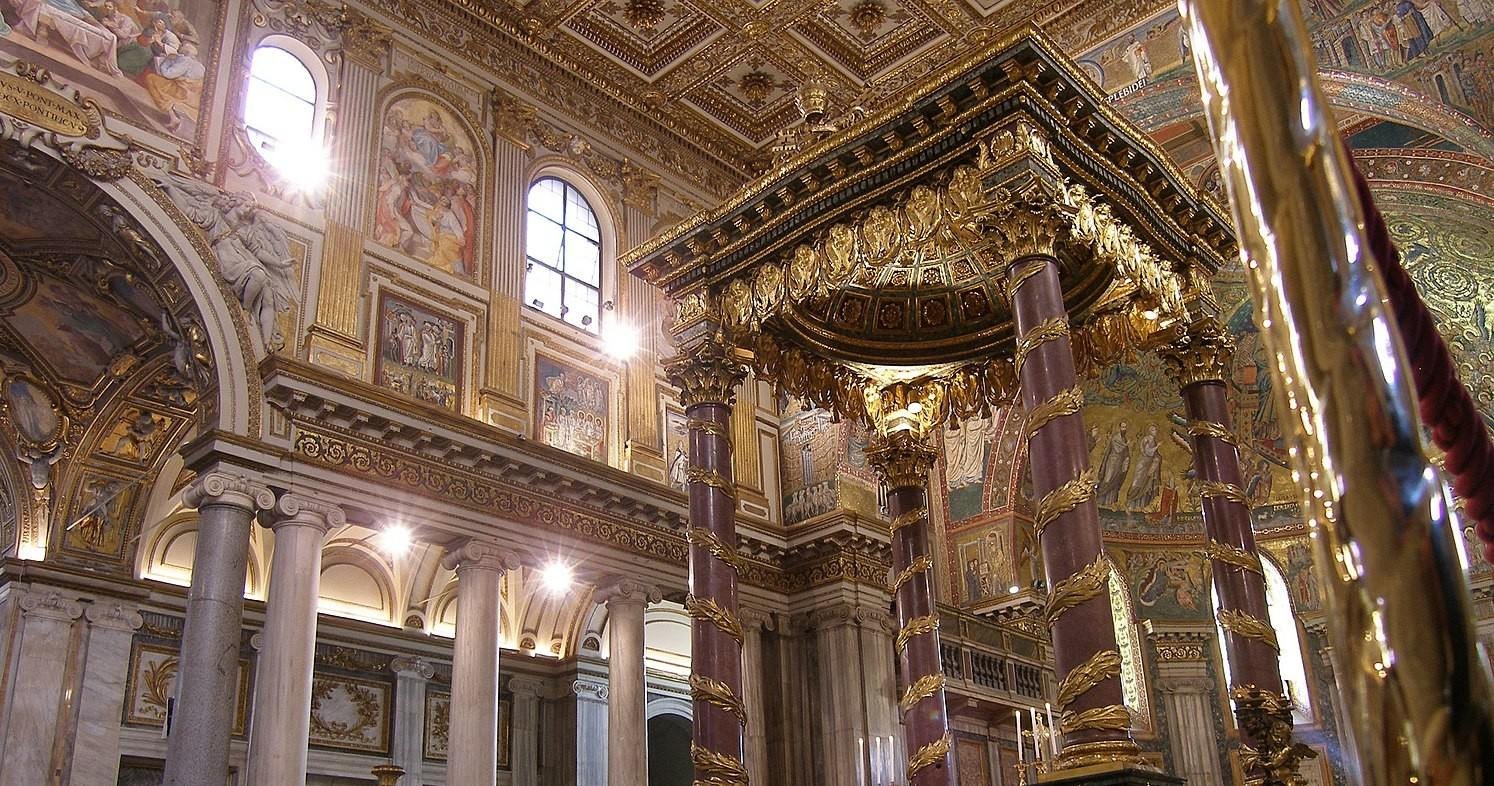
Basilica of Santa Maria Maggiore: Visiting the Basilica of Santa Maria Maggiore means discovering one of the four papal basilicas of Rome, an extraordinary place where art, faith, and history have intertwined for over sixteen centuries. Founded in the 5th century, the basilica has preserved its early Christian layout, offering a unique experience in the Roman landscape.
The early Christian mosaics: One of the basilica’s most precious treasures is the 5th-century mosaics decorating the central nave and triumphal arch. These works depict episodes from the Old and New Testament and represent one of the best-preserved early Christian mosaic cycles in the world.
The Sistine Chapel and the Pauline Chapel: Inside the basilica are two chapels of great artistic and spiritual value. The Sistine Chapel (not to be confused with the Vatican’s) houses the tombs of popes, while the Pauline Chapel preserves the icon of the Salus Populi Romani, one of the most venerated Marian images in Rome.
The golden ceiling and relics: The magnificent coffered ceiling, traditionally gilded with gold from the Americas, is one of the most striking features of the basilica. Beneath the main altar lie the relics of the Holy Crib, connected to the Nativity tradition.
The bell tower and the Loggia of Blessings: The Romanesque bell tower, the tallest in Rome, dominates the square in front of the basilica. The Loggia of Blessings, overlooking the façade, adds further grandeur to one of the city’s most iconic religious complexes.
An unmissable cultural and spiritual experience: Visiting the Basilica of Santa Maria Maggiore is perfect both independently and with a guided tour, allowing you to fully appreciate the artistic, symbolic, and historical details of this unique place. An engaging experience for anyone wishing to discover the most authentic and monumental Rome.
Selected Experiences
Discover the selected experiences at the Basilica of Santa Maria Maggiore to explore one of Rome’s most important papal basilicas:
- Rome: Priority Access Ticket to the Upper Areas of Santa Maria Maggiore – Skip the lines and explore the basilica’s upper areas, exclusive spaces, panoramic views, and architectural details often not included in the standard visit.
- Guided Tour of the Basilica of Santa Maria Maggiore – An expert-guided experience to explore one of Rome’s oldest places of worship, with clear explanations of art, symbolism, and papal history.
- Explore the Basilica of Santa Maria Maggiore and Additional Options – A flexible visit that allows you to customize the experience with extra content, guided insights, and special access according to your preferences.
- Rome: Guided Tour of the Basilica of Santa Maria Maggiore – A comprehensive tour to understand the basilica’s history, art, and spiritual value, focusing on early Christian mosaics and monumental chapels.
- Vatican: Tour of Papal Basilicas and Holy Doors with Transfers – A complete experience including Santa Maria Maggiore along with other papal basilicas in Rome, with transfers included and an expert guide.
Useful Information and Tips
Visit duration: Visiting the Basilica of Santa Maria Maggiore typically takes 45 minutes to 1 hour. Joining a guided tour or including access to the upper areas and monumental chapels can extend the visit up to 1.5 hours.
Opening hours, prices, and bookings: The basilica is generally open daily, though hours may vary during religious celebrations or holidays. Entry to the basilica is free, while certain areas and guided tours may be ticketed. For updated information, consult the official website or book in advance via the selected experiences.
Available services: Inside and near the basilica, you’ll find information points, a bookshop, and restrooms. The surrounding area offers numerous bars, restaurants, and cafés, ideal for a break before or after your visit.
Accessibility: The basilica is largely accessible to visitors with reduced mobility. However, some upper or underground areas may have limitations. It’s recommended to check accessible routes in advance.
Recommended attire: As a place of worship, modest clothing is required. Shoulders and knees should be covered. Comfortable shoes are recommended, especially if you plan to visit annexed areas.
Recommended time slots: For a calmer visit, it’s preferable to access the basilica early in the morning or early afternoon, avoiding major liturgical celebrations.
Photography: Photography without flash is allowed for personal use. Restrictions may apply during religious services. Professional equipment or video recording requires special authorization.
📌 Extra tip: Combine your visit to the Basilica of Santa Maria Maggiore with an itinerary that includes the other papal basilicas of Rome for a complete experience of sacred art, history, and spirituality (see selected experiences).
How to Get There
On foot: The Basilica of Santa Maria Maggiore is located in the heart of Rome and is easily reachable on foot from many central areas. It is about 5 minutes from Piazza Vittorio Emanuele II, 10 minutes from the Colosseum, and 15 minutes from the Trevi Fountain, making it ideal for inclusion in a walking itinerary.
By metro: The most convenient way to reach the basilica is by subway. The closest stops are Vittorio Emanuele (Line A) and Cavour (Line B), both about 7–10 minutes on foot. Alternatively, Termini station (Lines A and B) is less than 10 minutes away.
By bus: Numerous urban bus lines stop nearby, especially along Via Merulana and Piazza dell’Esquilino. The most frequently used lines connect the basilica with the historic center, Trastevere, and the Vatican area.
By train: If you are arriving from outside Rome, Termini Station is the main reference point. From the station, you can reach the basilica on foot in about 10 minutes or use the metro and urban buses.
By car: Driving is possible but less recommended due to the central location and restricted traffic zones (ZTL). Paid parking and private garages are available nearby, especially in the Via Merulana and Piazza Vittorio areas.
By taxi or private transfer: Taxis and transfer services are easily available throughout the city and are a convenient option, especially if traveling with luggage or in small groups. Travel time varies depending on urban traffic.
📌 Practical tip: The best way to reach and visit the Basilica of Santa Maria Maggiore is by combining the metro with walking, avoiding traffic and ZTL restrictions, and enjoying a stroll through some of Rome’s most charming historic neighborhoods.
FAQ
How long does a visit to the Basilica of Santa Maria Maggiore take?
A visit typically takes 45 minutes to 1 hour. With a guided tour or access to the upper areas, the duration can extend to about 1 hour and 30 minutes.
Is the Basilica of Santa Maria Maggiore accessible for people with reduced mobility?Yes, the basilica is largely accessible thanks to barrier-free entrances and dedicated pathways. Some upper areas may have limitations.
Where can I find updated hours and information?Hours may vary due to religious celebrations and events; it is recommended to check the official website or on-site information.
📌 For more details on these questions, see the section Info and Useful Tips.
Are guided tours available?
Yes, guided tours are available that explore the history of the basilica, its early Christian mosaics, monumental chapels, and relics.
Can I visit areas that are normally restricted?Yes, some experiences include access to upper areas and spaces normally closed to the public, with panoramic views and detailed explanations.
📌 To discover the available options, see the section Selected Experiences.
What is the best way to reach the Basilica of Santa Maria Maggiore?
The basilica is easily reachable on foot from the historic center or by metro (Line A, Vittorio Emanuele or Termini stations), bus, or taxi.
📌 For all details on connections and recommended transport, see the section How to Get There.
See also
- St. Peter’s Basilica
- Archbasilica of Saint John Lateran
- Basilica of Saint Paul Outside the Walls
- Rione Esquilino
- Guide to Rome
- Itineraries: 1d, 3d, CT1, CT2
- See: Attractions
- Do: Experiences
- Eat: Where and What
- Getting Around, Pass, Stay
Other Destinations
🔐 Some images on this page are used under Creative Commons licenses:
By Richard Nevell – Naples, panoramic view of the city and Mount Vesuvius – Own work – CC BY-SA 4.0 – Wikimedia Commons
By PROPOLI87 – Florence, panorama from Piazzale Michelangelo – Own work – CC BY-SA 4.0 – Wikimedia Commons
By Luca Aless – Venice, panoramic view of Doge’s Palace and St. Mark’s Campanile – Own work – CC BY-SA 4.0 – Wikimedia Commons
By Dnalor 01 – Rome, Basilica of Santa Maria Maggiore, altar – CC BY-SA 3.0 – Wikimedia Commons
