
Getting around Florence: Info and Tips
Quick Guide to Getting Around the City


Florence is a compact and elegant city, where most attractions are concentrated in the historic center, which is easy to explore with a few simple tips.
- Overview
- Getting There
- Airport +🔗
- Road, Train
- Getting Around on Foot
- Public Transport
- Getting Around by Car
- FAQ
See also:
- Guide to Florence
- Itineraries: 1d, 3d, CT1, CT2
- See: Attractions
- Do: Experiences
- Eat: Where and What
- Getting Around, Pass, Stay
Overview
Getting around Florence is generally easier compared to other large Italian cities, thanks to its compact size and urban layout. The Tuscan capital develops around its historic center, a UNESCO World Heritage site, where most cultural, artistic, and monumental attractions are concentrated.
Within the historic center of Florence, walking is the ideal way to get around: distances are short, streets are mostly flat, and the experience is more enjoyable and authentic, allowing visitors to discover hidden corners, historic squares, and artisan shops without time or traffic constraints.
A helpful support for first-time visitors can be a guided walking tour or a panoramic tour, useful to understand the layout of the city (see further info🔗).
To reach neighborhoods outside the center or cover longer distances, Florence has an efficient public transport network, mainly consisting of urban buses and a modern tramway. The system effectively connects the historic center with Santa Maria Novella train station, the airport, and the main residential areas.
Using a private car is strongly discouraged within the center, due to the presence of the Limited Traffic Zone (ZTL) and the scarcity of parking. Electronic gates control access to historic areas, so it is essential to check rules, hours, and authorizations in advance.
In recent years, alternative mobility solutions such as bicycles, electric scooters, and sharing services have spread, especially usable in flat areas and along dedicated routes. Although convenient, these means require caution in crowded central areas and on historic streets.
Getting There
Florence is easily accessible both from Italy and abroad, thanks to a well-organized network of air, rail, and road connections. Its strategic location in the heart of Tuscany makes it an ideal base for tourist, cultural, and business trips.
By plane
The Florence Amerigo Vespucci Airport (Peretola) (see info & tips 🔗) is the city’s main airport and offers national and international connections. Alternatively, Pisa Galileo Galilei Airport is a major additional option, well connected to Florence. From the airport, you can reach the city center by tramway, bus, taxi, private transfer, or rental car, with average travel times ranging from 15 to 60 minutes depending on the airport.
✅ To search or book a flight to/from Florence, you can consult Booking.com Flights.
By train
Florence Santa Maria Novella (SMN) is the city’s main train station and is served by high-speed, Intercity, and regional trains connecting Florence to major Italian cities such as Rome, Milan, Venice, Bologna, and Naples. Other relevant stations include Firenze Campo di Marte and Firenze Rifredi. From SMN station, the historic center and many main attractions are also within walking distance.
✅ You can check routes, schedules, prices, and buy tickets on Trainline.
By car
Florence is connected to Italy’s main highways via the A1 (Milan–Naples) and A11 (Florence–Sea). Drivers should consider the presence of a Limited Traffic Zone (ZTL) in the historic center and limited parking availability. It is recommended to use park-and-ride lots, private garages, or facilities in peripheral areas well connected by public transport.
✅ For car rental, you can refer to Booking.com Cars.
By bus
Florence is well connected to many Italian and European cities by long-distance buses. Major stops and terminals are located near train stations and peripheral areas, allowing easy access to the historic center via city buses or tramway.
✅ You can check routes, schedules, and buy tickets on Trainline.
By taxi or private transfer
Taxis and private transfer services allow you to reach Florence directly from airports, train stations, or other locations in Tuscany comfortably and without changes. Travel times vary depending on the starting point and traffic conditions, representing a practical solution, especially with luggage or during evening hours.
Getting Around on Foot
Walking is undoubtedly one of the best ways to explore Florence, especially within its compact historic center, where most monuments and points of interest are within short distances.
Historic center and neighborhoods
The historic center of Florence is ideal to explore on foot: areas such as Piazza del Duomo, Piazza della Signoria, Ponte Vecchio, Piazza Santa Croce, San Lorenzo, and the Oltrarno district are easily reachable with short walks. Distances between main attractions are short and allow frequent movement without effort.
Distances and walking times
In Florence’s historic center, many trips take little time: for example, from Piazza del Duomo to Piazza della Signoria it takes about 5 minutes on foot, while from Ponte Vecchio to Piazza Santa Croce around 10–12 minutes. Slightly longer routes, like from Santa Maria Novella to Piazzale Michelangelo, take 30–40 minutes considering the uphill sections.
Road surface and comfort
Florence has streets paved with stone, cobblestones, and historic slabs, especially in the center. Therefore, it is strongly recommended to wear comfortable shoes suitable for long walks, avoiding shoes with smooth or poorly cushioned soles.
Traffic and crossings
Despite the many pedestrian zones, it is important to pay attention to urban traffic, particularly at the boundaries between the center and the ring roads. Scooters, bicycles, and public transport often share space with pedestrians: always use crosswalks and cross carefully.
Bridges and crossing the Arno
Walking across the Arno river is an integral part of the Florentine urban experience. Bridges such as Ponte Vecchio, Ponte Santa Trinita, and Ponte alle Grazie connect the center to Oltrarno and offer beautiful views of the river and city, making walking trips also enjoyable from a scenic perspective.
Safety and livability
Florence is generally safe to walk around, especially in central and tourist areas. As in any highly visited city, it is advisable to stay alert in crowded areas and near major train stations, particularly in the evening hours.
Urban experience
Walking through Florence means immersing yourself in its unique atmosphere: Renaissance palaces, historic churches, iconic squares, and traditional workshops turn every journey into a continuous cultural experience, where the path itself is part of the discovery.
Public Transport
Florence’s public transport allows easy travel between the historic center, residential districts, and peripheral areas, efficiently covering a compact city. The public transport system mainly consists of urban buses and the tram, suitable for both short and medium-distance trips.
Urban buses
The urban bus network in Florence is extensive, connecting the historic center with peripheral districts, train stations, and main residential areas. Buses are particularly useful for reaching hilly zones like Fiesole or Piazzale Michelangelo, which are less served by the tram. During peak hours, however, they can be affected by city traffic.
Tram
The Florence tram is one of the fastest and most efficient ways to move around the city. Main lines connect the center with Florence Airport, Santa Maria Novella Station, and important peripheral districts such as Scandicci. Dedicated routes ensure regular and reliable travel, avoiding road traffic.
Taxi
Taxis are available at train stations, main squares, and tourist areas. They offer a convenient option for direct trips, in the evening, or when carrying luggage. It is recommended to use official taxis and check fares before departure.
Tickets and passes
The fare system includes single tickets, multi-ride passes, and subscriptions valid on buses and the tram. Convenient options are available for those staying multiple days and frequently using public transport. For updated information on fares, schedules, and lines, it is recommended to consult the official Autolinee Toscane website.
When to use public transport
Public transport is especially suitable for reaching districts outside the historic center, train stations, the airport, and attractions outside pedestrian areas. Within the historic center, walking often remains the most practical and enjoyable way to get around.
Getting Around by Car
Driving in Florence can be useful for arrivals, departures, or trips to the outskirts and surrounding areas, but it is not practical for visiting the historic center. The presence of the Limited Traffic Zone (ZTL), numerous pedestrian areas, and narrow streets makes careful planning necessary.
Limited Traffic Zone (ZTL)
The historic center of Florence is entirely subject to a ZTL active at different times, with access allowed only for residents and authorized vehicles. Electronic gates automatically monitor entry, and fines are common. It is essential to check updated rules and times before entering the city to avoid penalties.
ZTL and accommodations
Guests staying in hotels or accommodations within the ZTL can generally access the area only if the license plate is communicated by the property. It is important to coordinate entry with the hotel before arrival, respecting the indicated times and routes to avoid fines.
Pedestrian areas and historic center
Many central areas of Florence, such as those around the Duomo, Piazza della Signoria, Ponte Vecchio, and Santa Croce, are fully pedestrian or have strongly restricted access. In these cases, it is recommended to park outside the center and continue on foot or by public transport.
Traffic and peak hours
Florence’s traffic is heavier during weekday peak hours, especially in the morning and late afternoon. Main ring roads and access routes to the center can experience slowdowns. Planning trips outside peak hours helps reduce time and stress.
Parking and stops
Florence offers street parking, paid parking, and numerous multi-storey car parks, often located on the edges of the historic center or near tram stops. Blue lines indicate paid parking, while white lines are free where allowed. Park & Ride facilities connected to public transport are a practical solution.
When to use a car
A car is especially recommended for reaching the surroundings of Florence, the Tuscan hills, nearby villages, or for trips with luggage. To visit the historic center, walking, the tram, or public transport remains the most convenient and efficient choice.
🅿️ The box below shows our selection of strategic parking in Florence, chosen for their proximity to main city access points and public transport stops, ideal for optimizing your visit without stress.
✅ For more options and online bookings, you can check the ParkingMyCar service, which allows you to find parking throughout the city.
💡 Tip: For those who prefer not to drive into the center of Florence, we recommend the convenient and affordable Villa Costanza Parking, located in Scandicci, about 8 km from the city center.
From the parking area, the tram service runs directly to Santa Maria Novella Station. Trams run very frequently (about every 10 minutes) and offer a practical and convenient way to reach the city center without worrying about ZTL restrictions or city traffic.
FAQ
What is the best way to get around Florence?
The most practical way is to explore the historic center on foot and use public transport or the tram for longer distances.
Is Florence an easy city to get around?Yes, the city center is compact and well-organized, ideal even for first-time visitors.
📌 Learn more in the Overview section.
How do you reach the center of Florence from the airport?
From Peretola, you can reach the city center by tram, taxi, or private transfer in just a few minutes.
Is Santa Maria Novella station well connected?Yes, it is the main railway hub and allows fast connections across the city.
📌 Learn more in the Getting There section.
Which public transport is worth using in Florence?
The tram and buses are ideal for traveling outside the historic center or to park-and-ride facilities.
Are tickets valid on multiple modes of transport?Yes, tickets are integrated and valid on both buses and the urban tram.
📌 Learn more in the Public Transport section.
Is it worth using a car in Florence?
Only for arrivals or trips outside the city center, due to ZTL zones and pedestrian areas.
How to avoid fines in ZTL areas?It is essential to check the active times and gates and park in authorized facilities.
📌 Learn more in the Getting Around by Car section.
See also
- Guide to Florence
- Itineraries: 1d, 3d, CT1, CT2
- See: Attractions
- Do: Experiences
- Eat: Where and What
- Getting Around, Pass, Stay
Other Destinations

🔐 Some images present on this page are used under Creative Commons licenses:
By Maretta Angelini – Bologna, panoramic view of Piazza Maggiore – Own work – CC BY-SA 4.0 – Wikimedia Commons
By AliasXX00 – Perugia, view from Viale Indipendenza – Own work – CC BY-SA 4.0 – Wikimedia Commons
By Anne Offermanns – Panoramic view of Rome from St. Peter’s Basilica – Own work – CC BY-SA 3.0 – Wikimedia Commons
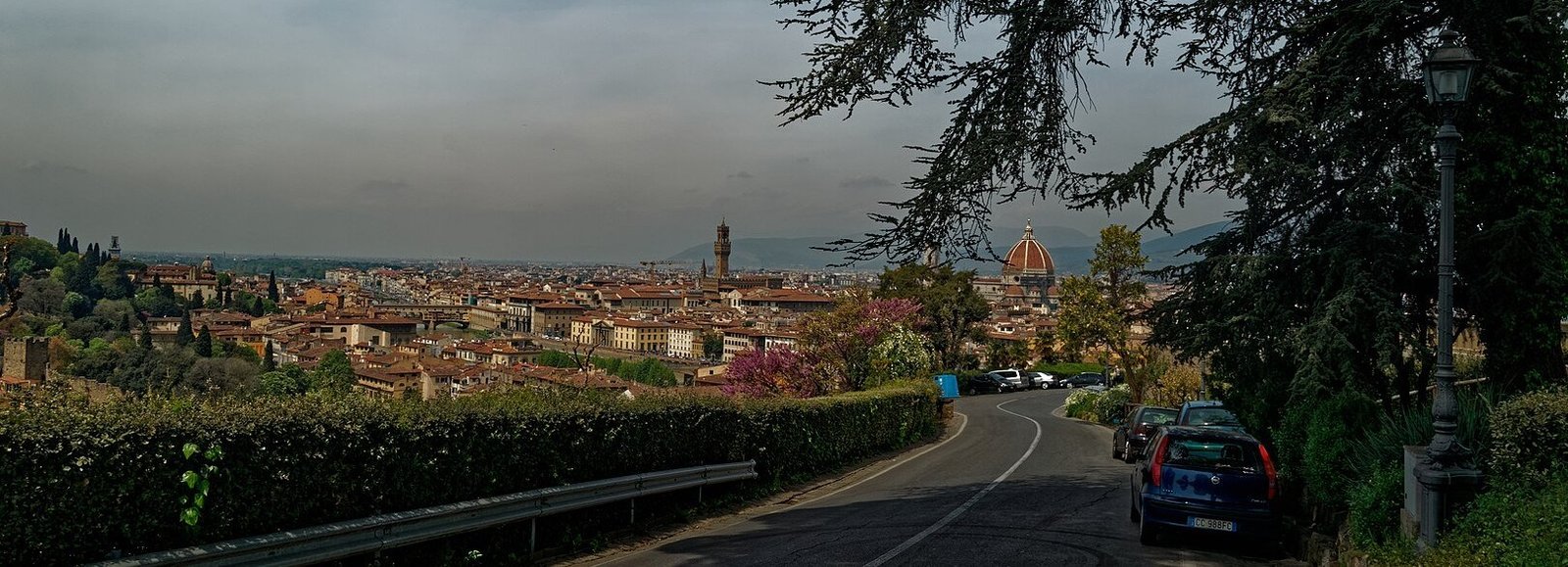
By Txllxt TxllxT – Florence, Viale Giuseppe Poggi with a view of Palazzo Vecchio and the Duomo – CC BY-SA 4.0 – Wikimedia Commons
