
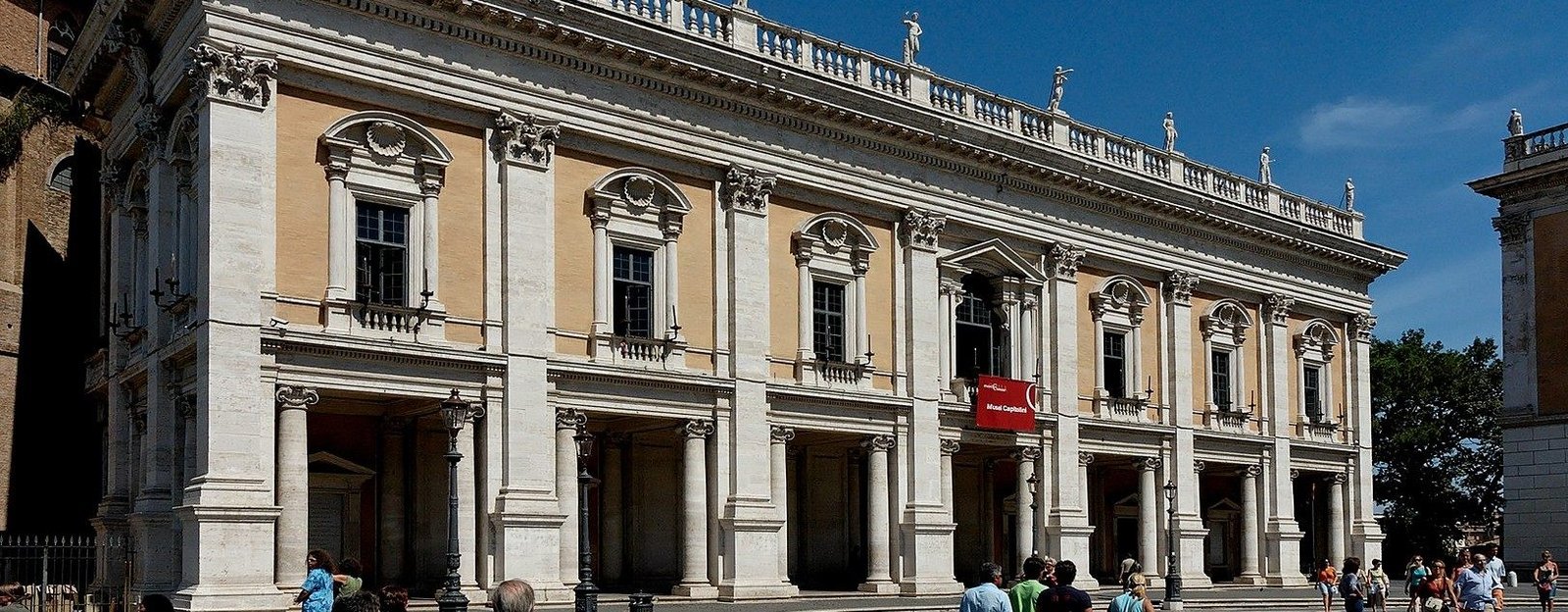
Capitoline Museums: Tours, Tickets and Useful Info
Quick Guide and Experiences


The Capitoline Museums are one of the most important museum complexes in the world: an extraordinary journey through art, history, and the civilization of ancient Rome, hosted in the historic palaces of the Capitoline Hill.
Main Attractions
Capitoline Museums: Visiting the Capitoline Museums means taking a unique journey into Rome’s millennial history. Founded in 1471, they are considered the world’s oldest public museum and house masterpieces that tell the story of the city’s artistic and political evolution.
The Palazzo dei Conservatori: This historic building houses some of the most famous works in the Capitoline Museums, including the Equestrian Statue of Marcus Aurelius and important Renaissance frescoes. The monumental rooms offer an extraordinary overview of ancient Rome’s grandeur.
The Palazzo Nuovo: Mainly dedicated to classical sculpture, the Palazzo Nuovo preserves iconic masterpieces such as the Dying Gaul, the Discobolus, and the Capitoline Venus. A fascinating journey through perfectly preserved Greek and Roman art.
The Capitoline Wolf: A universal symbol of Rome, the Capitoline Wolf is one of the museum’s most representative works. This famous sculpture depicts the legend of Rome’s founding and is a must-see during your visit.
The Capitoline Art Gallery: In addition to sculptures, the Capitoline Museums host a rich collection of paintings by Caravaggio, Titian, Guercino, and other great masters. An ideal area for those who love Renaissance and Baroque arAn unmissable experience: Guided tours and audio guides allow visitors to delve into the history of the artworks and palaces, also enjoying splendid views of the Imperial Forums. Visiting the Capitoline Museums is a complete cultural experience, a must for anyone exploring Rome.
Selected Experiences
Discover the most loved experiences at the Capitoline Museums to get up close to the history, art, and iconic masterpieces of ancient Rome:
- Rome: Capitoline Museums and multimedia video – An immersive experience combining a visit to the Capitoline Museums with an engaging multimedia video on the Roman Empire, ideal for understanding the historical context before the visit. Top Reviews 🏆
- Capitoline Museums: Entry Ticket – Easy and direct access to the permanent collections, perfect for those who want to visit the museum independently and at their own pace.
- Rome: Tickets for the Capitoline Museums and Centrale Montemartini – A complete tour combining classical art and industrial archaeology, perfect for discovering two Roman museum highlights in one experience.
- Rome: Private tour of the Capitoline Museums – Exclusive visit with a private guide, perfect to dive deeper into the most important artworks and enjoy a personalized, unhurried experience.
- Capitoline Museums and Centrale Montemartini with multimedia video – Combined ticket with multimedia content, ideal for a complete, educational, and engaging experience.
Useful Information and Tips
Duration of the visit: a visit to the Capitoline Museums typically takes 2-3 hours. The museum complex is very extensive and includes several sections; to fully appreciate the main collections and the most famous masterpieces, it is advisable to plan your visit calmly or opt for a guided tour.
Opening hours, prices and bookings: the Capitoline Museums are open all year round, with hours that may vary depending on the season and public holidays (see official website). Online booking in advance is recommended, especially during peak periods. For skip-the-line tickets and guided tours, see the section Selected Experiences.
Entrances and locations: the main entrance is in Piazza del Campidoglio, on the hill designed by Michelangelo. The museum route connects the Palazzo dei Conservatori and the Palazzo Nuovo through the scenic Underground Gallery.
Available services: inside the museums you will find ticket offices, cloakrooms, restrooms, and a bookshop. There is also a cafeteria with a panoramic view of the city, ideal for a break during your visit.
Accessibility: the Capitoline Museums are largely accessible to people with reduced mobility thanks to ramps and elevators. Some historical areas may have slight limitations; it is recommended to inquire at the ticket office about accessible routes.
Recommended clothing: no specific dress code is required, but comfortable clothing and suitable walking shoes are suggested, considering the duration of the visit and the presence of historic floors.
Recommended time slots: to visit the museums more peacefully, it is preferable to enter early in the morning or late in the afternoon. Weekdays are generally less crowded than weekends.
Photography: photography for personal use without flash is allowed. The use of tripods, professional equipment, or video recording requires prior authorization.
How to Get There
On foot: the Capitoline Museums are located in the heart of Rome, in Piazza del Campidoglio. If you are staying in the historic center (Imperial Forums, Pantheon, Piazza Venezia, or Colosseum), you can reach them comfortably on foot with a scenic 10–20 minute walk.
By metro: the nearest station is Colosseo (Line B). From there, walk about 10 minutes along Via dei Fori Imperiali to Piazza Venezia and then up to the Capitoline Hill. Alternatively, Circo Massimo (Line B) station provides a quieter access with a slightly longer walk.
By bus: numerous urban lines connect Piazza Venezia and the Capitoline Hill with the rest of the city. The most convenient lines stop at Piazza Venezia, from where the museums are a few minutes’ walk. This is one of the most practical options if you are not using the metro.
By tram: line Tram 8 connects Trastevere to Piazza Venezia. From the final stop, it’s about a 5-minute walk up to Piazza del Campidoglio.
By car: access by car to the historic center is limited by the ZTL. It is recommended to park in external areas or paid parking near the main metro stations and continue by public transport. Parking directly at the Capitoline Hill is very limited.
By taxi or private transfer: taxis and private transfer services can take you to the nearest allowed areas close to Piazza Venezia. From there, access to the Capitoline Museums is easy and quick on foot.
Practical tip: to avoid traffic and restrictions, using public transport or visiting on foot is the best option. Combining the visit to the Capitoline Museums with Imperial Forums and Colosseum allows you to optimize time and travel.
FAQ
How long does a visit to the Capitoline Museums take?
The visit typically takes 2–3 hours, depending on the collections you see and the time spent in the main rooms, such as the Picture Gallery, the Palazzo dei Conservatori, and the Palazzo Nuovo.
Are the Capitoline Museums accessible to people with reduced mobility?Yes, the museums are largely accessible thanks to elevators, ramps, and dedicated routes. It is advisable to indicate any special needs at the entrance to receive assistance.
Where can I find updated opening hours and prices?Hours and rates may vary depending on the season and events; check the official Capitoline Museums website for up-to-date information.
📌 For further information on these questions, see the section Useful info & tips.
Are guided tours available?
Yes, guided tours and themed visits are available, allowing you to discover the masterpieces of the Capitoline collection and the history of the Capitoline Hill in depth.
Is it possible to visit the Capitoline Museums without a guide?Yes, with a standard entrance ticket you can explore the museums on your own. Alternatively, audio guides are available for a more complete experience.
📌 For more details on available experiences, see the section Selected experiences.
What is the best way to reach the Capitoline Museums?
The museums are located in Piazza del Campidoglio, easily reachable on foot from the historic center or by bus and metro (Colosseo – Line B).
📌 For more details on how to get there, see the section How to get there.