
Getting around Turin: Info and Tips
Quick Guide to Getting Around the City


Turin is an elegant and lively city, where getting around may seem complicated at first glance, but once you understand the main means of transport and the layout of the city areas, getting around becomes quick, practical, and enjoyable.
- Overview
- Getting There
- Airport +🔗
- Road, Train
- Getting Around on Foot
- Public Transport
- Getting Around by Car
- FAQ
Overview
Getting around Turin requires some planning, as the city covers a large urban area with historic districts, modern neighborhoods, and suburban zones, each served by different means of transport.
In the historic center, where many of the main monuments and points of interest are concentrated, walking often remains the best option: distances are relatively short and allow you to experience the city more freely, avoiding traffic and delays.
For longer distances or to reach neighborhoods outside the center, Turin offers an efficient network of public transport, including metro, trams, and buses. This network effectively connects the main tourist attractions, railway stations, and strategic hubs of the city.
Using a private car is generally not recommended, especially in the historic center, due to traffic, limited parking, and Restricted Traffic Zones (ZTL). It is important to check schedules, permits, and fees in advance.
For first-time visitors, a guided walking tour or a panoramic tour can be useful tools to understand the city layout, navigate the main streets and squares, and acquire practical references for subsequent trips (see more info🔗).
In recent years, Turin has also developed numerous alternative mobility options, such as bicycles, electric scooters, and sharing services. These tools are especially useful in flat areas or along dedicated routes, but their use should be carefully considered in busy streets or on uneven surfaces.
Getting There
Turin is well connected both nationally and internationally, thanks to a network of air, rail, and road connections. Its location in Northern Italy makes it easily accessible for tourism, business, or study.
By plane
The Turin-Caselle Airport (see more info🔗) is served by numerous domestic and international flights, including low-cost connections. From the airport, you can reach the city center via shuttles, buses, taxis, private transfers, or rental cars, with average travel times of 20–40 minutes depending on traffic and the destination.
✅ To search or book a flight to/from Turin you can check Booking.com Flights.
By train
Turin Porta Nuova is the city’s main railway station, connected to all major Italian cities by high-speed, Intercity, and regional trains. Other important stations include Turin Porta Susa and Turin Lingotto. From the stations, you can quickly reach the historic center and main districts via metro, tram, bus, or on foot.
✅ You can check routes, schedules, prices, and book tickets with Trainline.
By car
Turin is connected to Italy’s main highways, including the A4 and A55. Those arriving by car should consider the presence of ZTL in the historic center and heavy traffic during peak hours. Using park-and-ride lots or private garages outside the center is recommended.
✅ For car rentals you can check Booking.com Cars.
By bus
Turin is connected to many Italian and European cities via long-distance buses, with main stops near railway stations and urban hubs. Services are integrated with the local bus and tram network, making it easy to reach the city center and main attractions.
✅ You can check routes, schedules, and book bus tickets with Trainline.
By taxi or private transfer
Taxis and private transfer services allow you to reach Turin from the airport or railway stations directly and comfortably. Travel times vary depending on the starting point and traffic, providing a convenient option for travelers who prefer a non-stop journey.
Getting Around on Foot
Walking is one of the best ways to explore Turin, especially within the historic center, where many of the main monuments and points of interest are relatively close to each other.
Historic center and main districts
The historic center of Turin is perfect for exploring on foot: areas such as Piazza Castello, Piazza San Carlo, Via Roma, Quadrilatero Romano, and Parco del Valentino are easily connected by short walks. Distances between points of interest are often shorter than they appear on the map, making the city ideal for urban strolls.
Distances and travel times
Many trips within the historic center require only a short time: for example, from Piazza Castello to Piazza San Carlo takes about 5 minutes on foot, while from Quadrilatero Romano to Parco del Valentino it takes approximately 15–20 minutes. Longer routes, such as from Mole Antonelliana to Stadio Olimpico, take around 40–45 minutes on foot.
Road surface and comfort
Turin has varied road surfaces, including historic cobblestones, paving stones, and asphalt. It is highly recommended to wear comfortable shoes suitable for long walks, avoiding stiff shoes or thin soles, especially in the historic center and under the porticoes.
Traffic and crossings
When walking, it is important to pay attention to urban traffic, especially on main streets such as Corso Vittorio Emanuele II or Corso Regina Margherita. Always use crosswalks and cross carefully, particularly during peak hours or near bus and tram stops.
Safety and livability
Turin is generally safe to walk around, especially in tourist and central areas. As in any large city, it is advisable to be cautious in crowded areas and during the evening, particularly near railway stations and transport hubs.
Urban experience
Walking through Turin means experiencing the city authentically: elegant porticoes, historic squares, traditional cafés, markets, and views along the Po River make every journey part of the travel experience, turning even a simple walk into a continuous discovery.
Public Transport
Turin’s public transport allows you to move between the historic center, residential districts, and suburban areas, covering a large but well-organized city. The public transport system consists of metro, buses, trams, and urban railways, suitable for both short and medium-long distance travel.
Metro
The Turin Metro mainly consists of an automated line connecting Porta Nuova to Fermi, passing through strategic stations such as Re Umberto and Lingotto. It is particularly useful for quickly covering the city center and reaching commercial, exhibition, and railway hubs.
City buses
Turin’s bus network is extensive and widespread, with lines connecting the historic center, Porta Susa station, Porta Nuova station, residential districts, and suburban areas. Buses are essential for areas not served by the metro, and travel times may vary depending on traffic.
Trams
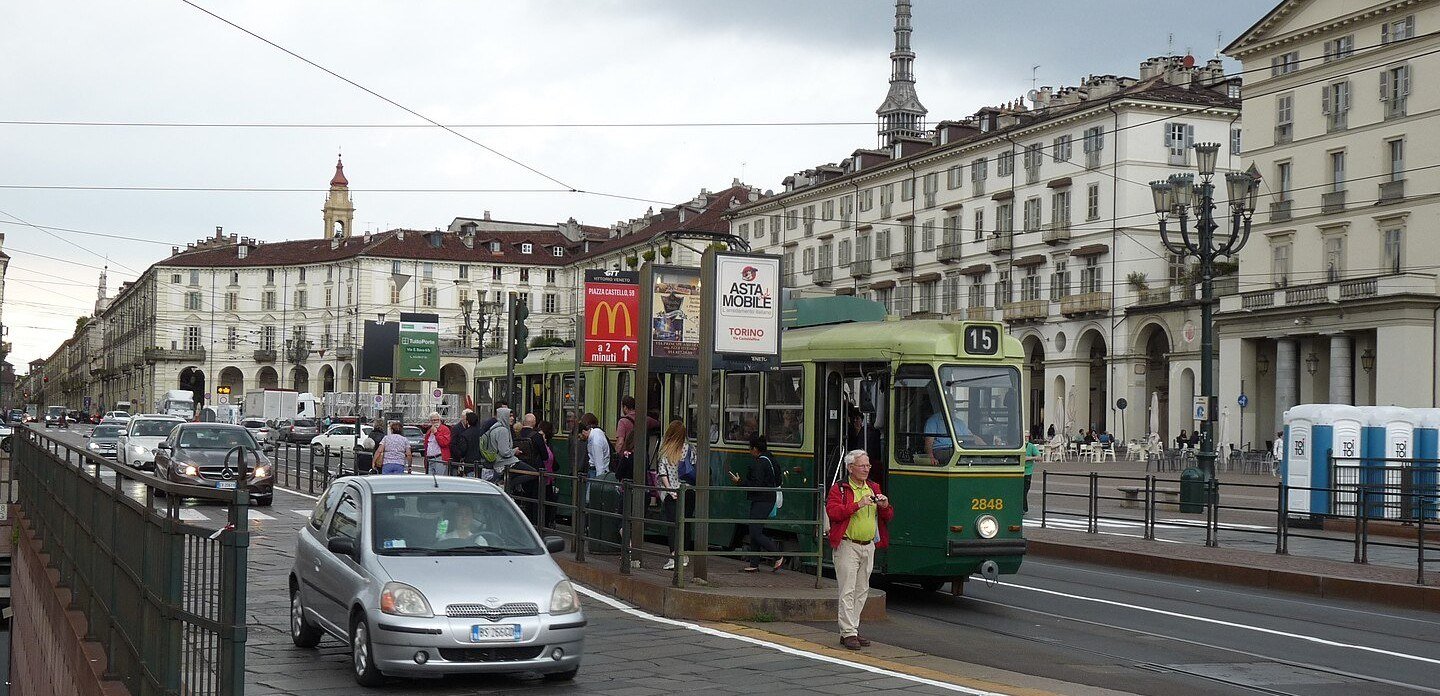
Both historic and modern trams cover some central routes and provide a reliable alternative to buses, especially along main streets and tourist paths. Lines crossing Via Roma or connecting Quadrilatero Romano to Crocetta are often appreciated by commuters and tourists for their regularity.
Urban and suburban railways
Turin has urban railway lines such as the Passante Ferroviario and suburban lines connecting the city center with the metropolitan belt and nearby towns like Rivoli, Chieri, and Ciriè. These connections complement the city’s public transport system and offer fast solutions for commuters and visitors.
Taxis and transfer services
Taxis and private transfer services are available at airports, railway stations, and main squares. They are particularly convenient for direct trips, luggage, or late-night travel. It is recommended to use official taxis and check the applied rates.
Tickets and passes
The fare system includes single tickets, daily passes, and subscriptions valid on metro, buses, trams, and urban railways. Affordable solutions are available for longer stays or frequent use of public transport. For up-to-date information on fares, schedules, and lines, it is recommended to consult the official GTT website.
Alternative mobility
Turin also offers bike sharing, electric scooters, and other shared urban mobility options, ideal for short trips or scenic routes along the Po and in pedestrian areas. It is important to follow traffic rules and check the allowed areas for electric vehicles.
When to use public transport
Public transport is particularly recommended for medium-long distances, reaching districts outside the center, railway stations, business hubs, and attractions not easily accessible on foot. In the historic center, walking often remains the most practical and enjoyable option.
Getting Around by Car
Driving in Turin can be convenient for arrivals, departures, or trips to suburban areas, but it requires attention, especially due to the presence of Limited Traffic Zones (ZTL), pedestrian areas, and heavy traffic during peak hours.
Limited Traffic Zone (ZTL)
The historic center of Turin is regulated by several ZTL active during specific time slots, with access reserved for residents and authorized vehicles. Electronic gates automatically monitor entries, and fines are frequent. Before entering the center, it is essential to check opening hours, activation days, and the type of ZTL.
Pedestrian areas and historic center
Many central areas, such as Piazza Castello, Piazza San Carlo, Via Roma, and Quadrilatero Romano, are fully pedestrian or have limited vehicle access. In these cases, it is recommended to park outside the center and continue on foot or by public transport.
Traffic and peak hours
Traffic in Turin is heavy, especially on weekdays during morning and evening peak hours. Main arteries like Corso Vittorio Emanuele II, Corso Regina Margherita, and the ring roads may experience slowdowns. Planning trips outside peak hours reduces stress and travel time.
Parking
Turin has on-street parking, paid parking, and numerous multi-story car parks, often near metro stations or strategic hubs. Blue lines indicate paid parking, while white lines are free. Park-and-ride facilities near metro or tram stops provide a practical solution to leave your car and continue by public transport.
When to use a car
Cars are recommended mainly for reaching suburban areas, zones not served by the metro, trips with luggage, or excursions outside the city. In the historic center, public transport and walking often remain the most effective options.
🅿️ The box below shows our selection of strategic parking in Turin, chosen for their proximity to the starting points of our guide itineraries. This way, you can leave your car in central or well-connected areas and make the most of your visit to the city.
✅ For more options and online bookings, you can check the ParkingMyCar service, which allows you to find parking throughout the city.
FAQ
What is the best way to get around Turin?
The most effective way is to combine different modes of transport: walk in the historic center, use the metro, buses, and trams for longer distances, and limit car use to when necessary.
Is Turin difficult to navigate for first-time visitors?Turin is fairly compact and well connected: once you understand the main public transport and the layout of neighborhoods, getting around becomes simple.
Which areas are best for walking?The historic center, with Piazza Castello, Via Roma, the Quadrilatero Romano, and parks along the Po River, is perfect for exploring the city on foot.
📌 Learn more in the Overview section.
How do you get to Turin city center from the airport?
From Turin Caselle Airport, you can reach the city center by shuttle bus, taxi, private transfer, or rental car.
Is Turin’s central station well connected to the city?Yes, Turin Porta Nuova and Turin Porta Susa are main hubs for national and international trains, with quick access to the urban metro, tram, and bus network.
Are the port or river connections relevant?Turin has no sea port, but it is connected via the Po River for limited tourist activities and river cruises.
📌 Learn more in the Getting There section.
What are the fastest public transport options in Turin?
The metro, trams, and express buses are the fastest ways to cover long distances, while walking remains ideal for the historic center.
Do buses and trams run efficiently in Turin?Yes, they cover most of the city. Some lines are more regular and reliable, especially the historic trams and main routes in the center.
Are there integrated tickets for multiple transport modes?Yes, the GTT fare system offers tickets valid on metro, bus, and tram, with daily tickets and weekly or monthly passes.
📌 Learn more in the Public Transport section.
Is it convenient to use a car in Turin?
Only for traveling to the suburbs, trips outside the city, or arrivals/departures. The center has ZTL zones and heavy traffic at certain hours.
Where is it best to park?In selected public or private parking areas, preferably near points of interest or public transport stops.
How to avoid fines and penalties?By checking ZTL zones, pedestrian areas, and parking regulations before driving.
📌 Learn more in the Getting Around by Car section.