
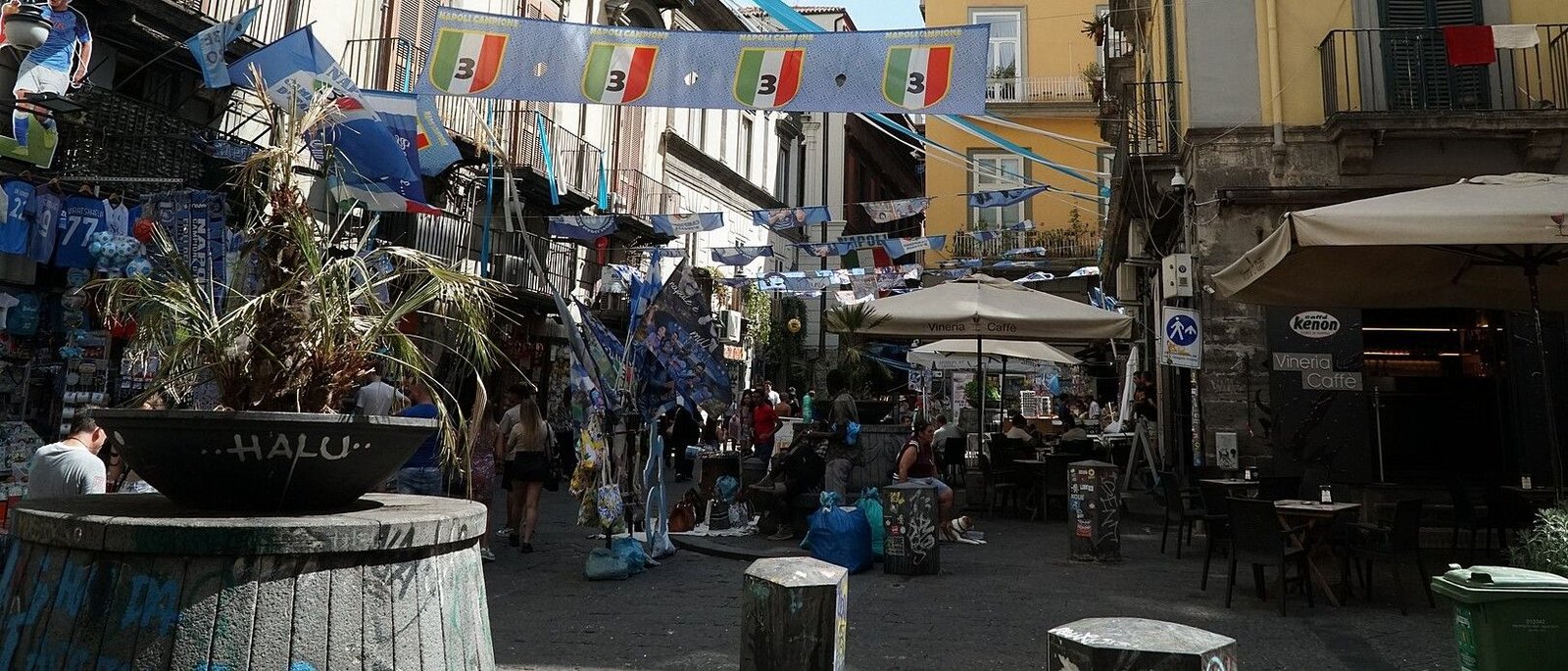
Getting around Naples: Info and Tips
Quick Guide to Getting Around the City


Naples is a vibrant, lively, and complex city where getting around may seem chaotic at first, but becomes surprisingly easy once you understand its structure.
See also:
- Guide to Naples
- Itineraries: 1d, 3d, CT1, CT2
- See: Attractions
- Do: Experiences
- Eat: Where and What
- Getting Around, Pass, Stay
Overview
Getting around Naples requires a bit of adaptation, especially if it’s your first visit. Traffic is often heavy, some areas of the historic center are a maze of narrow streets, and the flow of tourists and locals is constant throughout the day.
The main advice is to combine different modes of transport: walk in central areas, use public transport for longer distances, and limit private car use only when strictly necessary.
For a first approach to the city, it can be helpful to join a guided walking tour or a free walking tour, ideal for orienting yourself, identifying landmarks, and receiving practical tips from locals (🔗learn more).
Finally, keep in mind that Naples is a vertical city: hilly neighborhoods, elevation changes, and alternative connections (such as funiculars and urban elevators) are an integral part of city mobility and can significantly ease movement.
Getting There
Naples is easily accessible from both Italy and abroad thanks to air, rail, road, and sea connections. The city is one of the main hubs in Southern Italy and is well connected with the rest of the country and major European destinations.
By plane: Naples International Airport Capodichino (🔗read more) is about 6 km from the city center and served by numerous domestic and international flights, including low-cost connections. From the airport, you can reach the city center via direct buses, taxis, private transfers, or rental cars, with an average travel time of 20–30 minutes depending on traffic.
✅ To search or book a flight to/from Naples, check the Booking.com Flights service.
By sea: the Port of Naples (🔗read more) is one of the most important in the Mediterranean and receives ferries, hydrofoils, and cruise ships. The port is well connected to the city center and is the ideal entry point for travelers arriving from the islands of the Gulf of Naples or other coastal locations.
✅ Check schedules, companies, and available sea connections via DirectFerries.
By train: the main arrival station is Naples Centrale (Piazza Garibaldi), connected to major Italian cities by high-speed, Intercity, and regional trains. The station is a strategic hub for reaching the historic center, the seafront, or other destinations in Campania.
✅ You can check schedules, fares, and buy tickets online directly via Trainline.
By car: Naples can be reached via the main highways of Southern Italy, such as the A1, A3, and A16. Once in the city, it is advisable to pay attention to limited traffic zones and pedestrian areas, especially in the historic center.
✅ For car rental, check Booking.com Cars.
By taxi or private transfer: Naples can also be reached by taxi or private transfer services from airports, stations, or nearby towns. Travel times vary depending on the starting point and traffic conditions.
Getting Around on Foot
Walking is one of the best ways to explore Naples, especially in the central areas and historic center, where distances are short and many attractions are within walking distance of each other.
Historic center: neighborhoods such as Spaccanapoli, Decumani, San Gregorio Armeno, and the Duomo area are perfect to visit on foot. Narrow streets and numerous pedestrian areas often make walking faster than using public transport.
Hilly areas: some parts of the city, such as Vomero and Posillipo, feature significant inclines. In these cases, it is possible to alternate walking and public transport, taking advantage of funiculars and lifts to reduce fatigue.
Safety and awareness: as in all major cities, it is advisable to pay attention to traffic, scooters, and pedestrian crossings, especially in crowded areas. It is also recommended to keep personal belongings under control in tourist zones.
Footwear and comfort: Naples features cobblestones, paving, and uneven streets, especially in the historic center. Comfortable shoes are highly recommended to walk around safely and comfortably.
Urban experience: walking through Naples means experiencing the city authentically, among historic shops, markets, squares, churches, and panoramic views often missed by those who only use transport.
Public Transport
The public transport in Naples allows you to move between the city center, hilly neighborhoods, and peripheral areas, integrating buses, metro, funiculars, and taxis. In many situations, they are a useful alternative to walking, especially for covering longer distances or overcoming elevation changes.
Buses, trams, and trolleybuses: the road network connects much of the city, including neighborhoods not served by the metro. Buses run frequently but can be affected by traffic, especially during peak hours. Trams and trolleybuses operate on specific routes and are mainly used along main axes.
Metro: Naples has several metro lines, including Line 1, particularly appreciated by visitors as it connects the historic center with Vomero and hosts some of the famous art stations. The metro is one of the fastest ways to cross the city.
Urban lifts: in some hilly areas, public lifts facilitate connections between areas at different elevations, reducing the need to walk long uphill stretches.
Funiculars: funiculars are among the most characteristic transport systems in Naples and connect the center with Vomero. They are frequent, fast, and widely used by both residents and tourists.
Cable car: the cable car service is limited and mainly used for specific connections outside the central urban circuit, being less relevant for most visitors.
Taxis: taxis are easily available in main squares, stations, and tourist areas. They are a convenient solution in the evening or for direct trips, but it is advisable to check fares or request an estimated cost before departure.
Tickets and passes: the fare system allows the use of integrated tickets valid on multiple transport modes. Daily and multi-day options are available for those planning to move frequently with public transport (see official site).
Getting Around by Car
Driving in Naples can be convenient in some situations, but it requires caution due to heavy traffic, narrow streets in the historic center, and numerous restricted traffic zones (ZTL).
Restricted traffic zones (ZTL): the historic center and some areas of the city have ZTL active at specific times. It is essential to check the restrictions before planning car trips to avoid fines. Some ZTL only allow access to residents or authorized vehicles.
Pedestrian areas: Naples has many pedestrian streets, especially in the historic center and tourist neighborhoods like Spaccanapoli and via Toledo. In these areas, cars are generally prohibited, so it is advisable to park nearby and continue on foot.
Practical tips: driving in Naples requires caution and attention, especially for scooters, sometimes unclear signage, and double-parked vehicles. Limiting car use to what is strictly necessary and combining trips with public transport or walking is the most effective strategy to move around stress-free.
The city offers public and private parking, but these can be expensive and difficult to find during peak hours. To simplify your trips, below we suggest four interesting parking lots that we have selected, all located within a short distance from the center of Naples.
| Parking | Type | Spaces |
|---|---|---|
| Super Garage Naples | Underground | 350 |
| Gran Garage Incoronata Sas | Underground | 300 |
| Quick Morelli Parking | Underground | 250 |
| Garage del Lungomare | Outdoor | 300 |
✅ For more options and online bookings, you can check the ParkingMyCar service, which allows you to find parking throughout the city.
FAQ
What is the best way to get around Naples?
The most effective way is to combine different modes of transport: walk in central areas, use public transport for longer distances, and limit car use to only when necessary.
Is Naples difficult to navigate for first-time visitors?It may seem chaotic at first, but once you understand its layout, the city becomes surprisingly easy to explore.
📌 Learn more in the Overview section.
How do I get to the center of Naples from the airport?
From Capodichino Airport, you can reach the city center by direct buses, taxis, private transfers, or rental cars.
Is the Port of Naples well connected to the city?Yes, the port is linked to the city center via taxis, buses, and walking routes to stations and central areas.
Is Naples well connected by train to the rest of Italy?Yes, Napoli Centrale is served by high-speed trains, Intercity, and regional trains from all over Italy.
📌 Learn more in the Getting There section.
What are the fastest public transport options in Naples?
The metro, funiculars, and urban elevators are the fastest ways to cover distances and elevation changes.
Do buses work well in Naples?They cover many parts of the city but can be affected by traffic, especially during peak hours.
Are there integrated tickets for multiple transport modes?Yes, the fare system offers tickets valid across multiple transport modes, including daily and multi-day options.
📌 Learn more in the Public Transport section.
Is it convenient to get around Naples by car?
Only in certain situations. Heavy traffic, ZTL zones, and pedestrian areas often make a car impractical.
Where is it best to park?In authorized public or private parking lots, preferably outside the historic center, then continue by public transport or on foot.
How to avoid fines and penalties?By checking ZTL zones, pedestrian areas, and permitted access times in advance.
📌 Learn more in the Getting Around by Car section.
See also
- Guide to Naples
- Itineraries: 1d, 3d, CT1, CT2
- See: Attractions
- Do: Experiences
- Eat: Where and What
- Getting Around, Pass, Stay
Other Destinations


🔐 Some images on this page are used under Creative Commons licenses:
By Anne Offermanns– Panoramic view of Rome from St. Peter’s Basilica – Own work – CC BY-SA 3.0 – Wikimedia Commons
By Lasagnolo9 – Abruzzo, L’Aquila, panoramic view of the city – Own work – CC BY-SA 4.0 – Wikimedia Commons
By Francesco Di Stefano 08 – Bari, panoramic view of the Old Town – Own work – CC BY-SA 4.0 – Wikimedia Commons
By Adam Harangozó – Naples, street view in the historic centre – CC BY-SA 4.0 – Wikimedia Commons

