
Naples Complete Tour – Part 2: travel itinerary
What to see, opening hours, prices, map


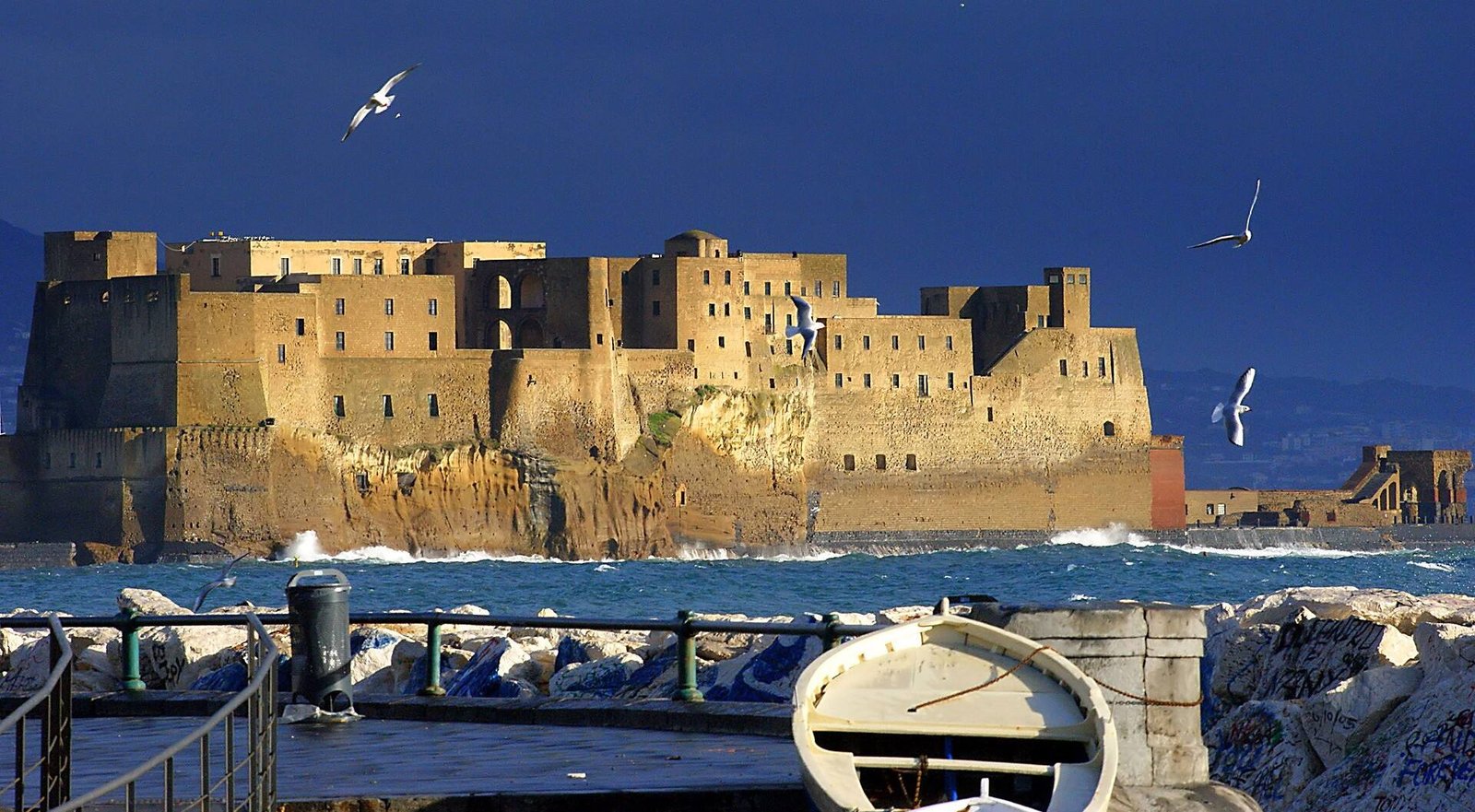
The spectacular image above of Castel dell’Ovo, 📱🔄️ an iconic symbol of Naples overlooking the Gulf, opens this second part of the Complete Tour, dedicated to discovering other wonders of the Neapolitan city.
- 📍 Chiaia 1
- 📍 Chiaia 2
- 📍 Capodimonte and Sanità
- 📍 Mergellina and Posillipo
- 📍 Posillipo, Vomero and Bagnoli
See also:
- Complete Tour 1
- Guide to Naples
- Itineraries: 1d, 3d, CT2
- See: Attractions
- Do: Experiences
- Eat: Where and What
- Getting Around, Pass, Stay
Overview
📌 Click on the route names to go to the brief description and detailed stops ⬇️.
Naples Complete Tour – Part 2 is divided into 5 routes that will accompany you over 5 days to discover the most authentic soul of the city, among historic districts and breathtaking views:
Chiaia 1 and Chiaia 2 – The first 2 routes of this second part of the Complete Tour develop in the monumental heart of Naples between the Bourbon center and the seafront, from the famous Maschio Angioino to the iconic Castel dell’Ovo, absolute symbols of the city.
Capodimonte and Sanità – This third route will show you the most authentic and historic Naples, between the Museo di Capodimonte and the Rione Sanità, guardian of the famous Catacombs of San Gennaro and the popular soul of the city.
Mergellina and Posillipo – An exclusively panoramic itinerary to capture the most scenic side of Naples, where the seafront of Mergellina opens towards the terraces of Posillipo and the Gulf becomes the absolute protagonist.
Posillipo, Vomero and Bagnoli – The fifth and final route that concludes the Naples Complete Tour is the only one of the 9 itineraries to be done by car or public transport, as it explores the hilly area of the city, among natural viewpoints and historic parks, up to the districts overlooking the sea and the most contemporary Naples.
Routes: Maps, Descriptions, Details
CHIAIA 1
- Open Route Map📍
- Distance: 3,4* km on foot
- Time: 0,5* min. on foot
- Visit duration: 10 hours
- Stops: 10 main (X →I-X)* + 18 secondary
- Castel Nuovo Maschio Angioino (X) → Teatro di San Carlo (A) → Chiesa di San Ferdinando (B) → Palazzo Reale di Napoli (C) → Basilica reale pontif. S. Francesco di Paola (D) → Ponte di Chiaia (E) → Palazzo Serra di Cassano (F) → Villa Ebe (G) → Rampe di Pizzofalcone (H) → Fontana del Gigante (I-X) 🧩
- For days, times, prices and other info see Itinerary Table 📊
* These values may differ from those shown on Google Maps, as they are continuously recalculated in real time. See also Itinerary Info and Navigator + See here for Shared Stop 🧩
Route Description
SUMMARY
The Chiaia 1 route develops along a linear itinerary of about 3.4 km in the monumental heart of Naples, with an estimated total visit duration of 10 hours.
From the majesty of the Maschio Angioino, the route continues towards the Teatro di San Carlo, a symbol of the Neapolitan cultural tradition, then reaches Piazza del Plebiscito and the Palazzo Reale, the heart of Bourbon Naples. The route ends among the elegant streets of Chiaia and the first panoramic views towards the seafront.
Expand STEP DETAIL ⬇️
📌 All the stops summarized here are structured in the Itinerary Table 📊 with days, opening hours, prices, and Wikipedia 🌐 and Google Maps insights.
Morning
⬇️ starting point
X. Castel Nuovo Maschio Angioino
The tour begins with a visit to Castel Nuovo, known as Maschio Angioino, one of the most imposing fortresses in the city. Passing through the iconic Arco trionfale del Castel Nuovo, you enter the Museo di Castel Nuovo, which houses frescoes, artifacts, and works of art related to the history of the castle and the city.
⬇️
A. Teatro di San Carlo
Just a few steps from the castle stands the majestic Teatro di San Carlo, the oldest opera house in Europe still in operation. To explore the history and curiosities of this architectural gem, you can visit the Memus Museo Teatro di San Carlo. Nearby, the Biblioteca Nazionale di Napoli Vittorio Emanuele III preserves an immense literary and documentary heritage.
✨ Entering the Teatro San Carlo feels like stepping back in time: gold, velvet, and a solemn silence before the music fills one of the most fascinating theaters in Europe.
📌 the Biblioteca Nazionale di Napoli Vittorio Emanuele III can be visited upon request. You can find the phone number in the Google Maps listing accessible via the link in the table.
⬇️
B. Chiesa di San Ferdinando
The route continues with a visit to the Chiesa di San Ferdinando, a refined example of Baroque architecture, closely linked to the history of the city and the Jesuit tradition.
Afternoon
⬇️
C. Palazzo Reale di Napoli
One of the symbols of Bourbon power, the Palazzo Reale di Napoli offers a journey through history with its magnificent halls and art collections. Inside, you can visit the sumptuous Cappella Palatina, the elegant Teatrino di Corte, and the Scuderie Borboniche – La Galleria del Tempo, which recount the history of the dynasty.
Among the attractions are the Museo della Fabbrica and the Museo Caruso, dedicated to the famous tenor. The route continues through the evocative Giardini di Palazzo Reale and the panoramic Giardino Pensile, before admiring the elegant Androne delle Carrozze. This stop concludes in the splendid Piazza del Plebiscito, the monumental heart of the city.
✨ Walking through the halls of the Palazzo Reale means immersing yourself in the grandeur of Bourbon Naples, among theatrical settings and details that tell the story of an era of power.
⬇️
D. Basilica Reale Pontificia di San Francesco di Paola
Overlooking Piazza del Plebiscito, the Basilica Reale Pontificia di San Francesco di Paola is one of the masterpieces of neoclassical architecture in Italy, inspired by the Pantheon in Rome.
Evening
⬇️
E. Ponte di Chiaia, Ascensore Chiaia, Via Chiaia
Crossing the characteristic Ponte di Chiaia, you reach Via Chiaia, one of the most elegant streets in the city, full of shops and historic cafés. To easily reach the upper area, you can use the Ascensore Chiaia.
⬇️
F. Palazzo Serra di Cassano
The visit continues to the Palazzo Serra di Cassano, a historic residence linked to the events of the Neapolitan Revolution of 1799.
📌 Palazzo Serra di Cassano can be visited upon request. You can find the phone number in the Google Maps listing accessible via the link in the table.
⬇️
G. Villa Ebe
Climbing further up, you reach Villa Ebe, a fascinating residence designed by architect Lamont Young, offering a splendid view over the city.
⬇️
H. Rampe di Pizzofalcone
Through the scenic Rampe di Pizzofalcone, you reach the Belvedere di Pizzofalcone, from where you can enjoy one of the most beautiful views of Naples and the Gulf. This area, known as Monte di Dio or Monte Echia, is rich in history and legends. For the descent, you can use the Ascensore Monte Echia, which conveniently connects the viewpoint to the lower part of the city.
✨ The Belvedere di Pizzofalcone is one of the most emotional spots in Naples: the Gulf opens up before you with Mount Vesuvius in the background, offering a view that stays with you.
⬇️
I. Fontana del Gigante
The itinerary ends along the panoramic Via Partenope, where you’ll find the scenic Fontana del Gigante, one of the most beautiful monumental fountains in the city, with the sea in the background making the atmosphere even more evocative.
✨ Here Naples becomes pure scenery: the fountain, the sea, and the silhouette of Mount Vesuvius create a perfect view, especially at sunset.
CHIAIA 2
- Open Route Map📍
- Distance: 5,3* km on foot
- Time: 1,15* min. on foot
- Visit duration: 8 hours
- Stops: 10 main (I-X →I)* + 7 secondary
- Fontana del Gigante (I-X) → Castel dell’Ovo (A) → Galleria Borbonica (B) → Villa Comunale di Napoli (C) → Villa Pignatelli (D) → Palazzo Mannajuolo (E) → Museo della Moda di Napoli (F) → Palazzo Zevallos Stigliano (G) → Galleria Umberto I (H) → Chiesa della Pietà dei Turchini (I)
- For days, times, prices and other info see Itinerary Table 📊
* These values may differ from those shown on Google Maps, as they are continuously recalculated in real time. See also Itinerary Info and Navigator + See here for Shared Stop 🧩
Route Description
SUMMARY
The Chiaia 2 route develops along a linear itinerary of about 5.3 km, with an estimated total visit duration of 8 hours.
From the charming Castel dell’Ovo and Borgo Marinari, the route continues along the seafront to the Villa Comunale, before entering the hidden heart of the city with the Galleria Borbonica🔗, an incredible underground path carved into tuff that tells centuries of history. An itinerary that combines views of the Gulf with the most mysterious and authentic dimension of Naples, between surface and underground.
Expand STEP DETAIL ⬇️
📌 All the stops summarized here are structured in the Itinerary Table 📊 with days, opening hours, prices, and Wikipedia 🌐 and Google Maps insights.
I/X. I/X. Fontana del Gigante is a shared stop 🧩 – See the final stop of the previous itinerary.
⬇️
A. Castel dell’Ovo
The tour begins at Castel dell’Ovo, the oldest castle in Naples, located on the islet of Megaride. In addition to offering a spectacular view of the Gulf, the fortress is surrounded by legends and stories that enhance its charm. At its base lies the picturesque Borgo Marinari, a characteristic corner of the city with its restaurants and boats moored along the harbor.
✨ Here Naples becomes pure poetry: sea, light, and seagulls around the castle create one of the most iconic scenes of the Gulf.
📌 Castel dell’Ovo is currently closed to the public due to major renovation works.
⬇️
B. Galleria Borbonica
The itinerary continues underground, exploring the Galleria Borbonica🔗, a fascinating historical route through tunnels and underground cisterns, telling the story of the city from the Bourbon era to World War II.
📌 the visit to the Galleria Borbonica requires booking. You can find the phone number in the Google Maps listing accessible via the link in the table.
⬇️
C. Villa comunale di Napoli
Back on the surface, the itinerary continues through the green Villa comunale di Napoli, an elegant historic garden designed in the 18th century. Inside, you will find the Acquario di Napoli, the oldest in Italy and one of the oldest in Europe. Nearby, the charming Fontana di Santa Lucia overlooks the famous Via Francesco Caracciolo, one of the most scenic streets in the city, running along the seafront and offering spectacular views of Mount Vesuvius and Capri.
📌 Route note – Starting from Villa Comunale, you can choose to continue with the Chiaia 2 itinerary, completing the planned route, or opt for the panoramic route Mergellina and Posillipo. This is an optional detour of about 4 hours: choosing it means you will not be able to complete all the Chiaia 2 stops in the same day.
⬇️
D. Villa Pignatelli
The tour continues with a visit to the refined Villa Pignatelli, an elegant historic residence. Inside, you will find the Museo Principe Diego Aragona Pignatelli Cortés, which preserves period furnishings and testimonies of aristocratic life, and the Museo delle carrozze, featuring a valuable collection of historic carriages.
⬇️
E. Palazzo Mannajuolo
The itinerary continues with a striking architectural highlight: Palazzo Mannajuolo, famous for its spectacular scala elicoidale, a masterpiece of design admired for its flowing shape and refined Art Nouveau structure.
✨ One of the most scenic staircases in Italy: perfect lines and hypnotic perspectives that seem designed to amaze.
⬇️
F. Museo della Moda di Napoli
For lovers of style and tailoring tradition, a visit to the Museo della Moda di Napoli offers a journey into Neapolitan elegance, featuring historic garments, accessories, and testimonies of the city’s long haute couture tradition.
⬇️
G. Palazzo Zevallos Stigliano
Continuing along the route, you reach Palazzo Zevallos Stigliano, an aristocratic residence housing a prestigious art collection, including works by Caravaggio and other masters of the 17th century.
⬇️
H. Galleria Umberto I
A must-see stop is the majestic Galleria Umberto I, an architectural masterpiece from the late 19th century, with its grand glass and iron dome illuminating elegant shops, cafés, and historic bookstores.
⬇️
I. Chiesa della Pietà dei Turchini
The tour ends with a visit to the Chiesa della Pietà dei Turchini, a Baroque gem of great historical and artistic value, renowned for its musical tradition linked to the city’s conservatories.
CAPODIMONTE AND SANITÀ
- Open Route Map📍
- Distance: 5,3* km on foot
- Time: 1,11* min. on foot
- Visit duration: 10 hours
- Stops: 10 main (X →I)* + 5 secondary
- Museo Nazionale di Capodimonte (X) → Catacombe di San Gennaro (A) → Basilica di San Severo Fuori le Mura (B) → Basilica di Santa Maria della Sanità (C) → Ascensore Sanità (D) → Palazzo Sanfelice (E) → Palazzo dello Spagnolo (F) → Ipogeo dei Cristallini (G) → Orto Botanico di Napoli (H) → Real Albergo dei Poveri (I)
- For days, times, prices and other info see Itinerary Table 📊
* These values may differ from those shown on Google Maps, as they are continuously recalculated in real time. See also Itinerary Info and Navigator + See here for Shared Stop 🧩
Route Description
SUMMARY
The Capodimonte and Sanità route develops along a linear itinerary of about 5.3 km, with an estimated total visit duration of about 10 hours.
From the prestigious Museo Nazionale di Capodimonte, immersed in the Real Bosco, the route descends towards the authentic heart of the Rione Sanità, where you will find the evocative Catacombe di San Gennaro🔗 and the Basilica di Santa Maria della Sanità. An intense itinerary that combines art, history, and popular tradition.
Expand STEP DETAIL ⬇️
📌 All the stops summarized here are structured in the Itinerary Table 📊 with days, opening hours, prices, and Wikipedia 🌐 and Google Maps insights.
⬇️ starting point
X. Museo Nazionale di Capodimonte
The journey begins at the Museo Nazionale di Capodimonte, one of the city’s most important art institutions, housing a vast collection of works by artists such as Caravaggio, Titian, and Raphael. The museum is located inside the Real Bosco di Capodimonte, a large centuries-old park that also offers extensive green spaces for walking and enjoying the peaceful atmosphere. An ideal stop to start the day immersed in the art history and nature of Naples.
⬇️
A. Catacombe di San Gennaro
From Capodimonte, we head to the Catacombe di San Gennaro🔗, one of the most evocative and mystical places in Naples. Dating back to the 2nd century AD, the catacombs are the burial site of some of the earliest Christians and of San Gennaro, the city’s patron saint. Here you can admire an extraordinary testimony of Naples’ religious history and traditions.
✨ A timeless place: silence, soft light, and ancient tunnels that tell the deepest origins of Naples.
⬇️
B. Basilica di San Severo Fuori le Mura
Continuing our route, we arrive at the Chiesa di San Severo fuori le Mura, which houses one of the most significant contemporary artworks in the Rione Sanità: the Figlio Velato by Jago. The sculpture depicts a lying child, wrapped in a marble veil that enhances its fragility and sense of protection.
✨ A work that strikes deep emotions: marble becomes pure feeling, between fragility and symbolic strength.
⬇️
C. Basilica di Santa Maria della Sanità
Next, we head to the Basilica di Santa Maria della Sanità, located in the heart of the Rione Sanità. This district is known for its lively atmosphere and the historic Catacombe di San Gaudioso beneath the basilica. The neighborhood, famous for its popular traditions, is one of the most authentic areas of Naples, rich in history and culture.
⬇️
D. Ascensore Sanità
To continue exploring the area, we take the Ascensore Sanità, which connects the Sanità district with the Capodimonte hill. This lift, one of the oldest in Italy, offers an incredible view over the city and allows you to cover a significant distance in just a few minutes while enjoying a unique panorama.
⬇️
E. Palazzo Sanfelice
Continuing along our itinerary, we stop at Palazzo Sanfelice, a Baroque masterpiece designed by Francesco di Palma. The palace is famous for its elegance and its beautiful inner courtyards, representing one of the most fascinating examples of 18th-century architecture in Naples.
⬇️
F. Palazzo dello Spagnolo
We then visit Palazzo dello Spagnolo, an elegant 18th-century palace located in the Spanish Quarters. The palace is famous for its monumental double-helix staircase, one of the most beautiful in Naples. The structure is a magnificent example of Baroque architecture and a symbol of Neapolitan nobility of the time.
⬇️
G. Ipogeo dei Cristallini necropoli ellenistica
Another unmissable stop is the Ipogeo dei Cristallini, a Hellenistic necropolis located beneath the Capodimonte hill. This archaeological site hosts numerous ancient tombs and burial chambers, offering a window into the history and culture of Hellenistic Naples. It is a mysterious and fascinating place for lovers of ancient history.
✨ Descending here feels like entering an invisible and ancient Naples, among colors and spaces that seem suspended in time.
📌 the Ipogeo dei Cristallini can be visited by reservation. You can find the phone number in the Google Maps listing accessible via the link in the table.
⬇️
H. Orto Botanico di Napoli
Not far from Palazzo dello Spagnolo, we head to the Orto Botanico di Napoli, a wonderful garden that hosts a vast collection of plants from all over the world. This garden, extending over 12 hectares, is a perfect place to walk and relax surrounded by nature, away from the city’s chaos.
⬇️
I. Real Albergo dei Poveri
We conclude our journey with a visit to the Real Albergo dei Poveri, an imposing building that once housed the city’s poor and is now a cultural center. Its location in Piazza Carlo III is symbolic, as it represents the final point of an itinerary that has explored the many layers of Naples’ history, from art and architecture to popular and religious culture.
MERGELLINA AND POSILLIPO
- Open Route Map📍
- Distance: 6,1* km on foot
- Time: 1,26* min. on foot
- Visit duration: 4 hours
- Stops: 10 main (X →I)* + 7 secondary
- Villa comunale di Napoli (X) → Lungomare Francesco Caracciolo (A) → Lungomare Mergellina (B) → Fontana del Sebeto (C) → Chiesa di Santa Maria Mergellina (D) → Funicolare di Mergellina (E) → Belvedere di Sant’Antonio a Posillipo (F) → Chiesa di Sant’Antonio a Posillipo (G) → Chiesa di Santa Maria di Piedigrotta (H) → Parco Vergiliano a Piedigrotta (I)
- For days, times, prices and other info see Itinerary Table 📊
* These values may differ from those shown on Google Maps, as they are continuously recalculated in real time. See also Itinerary Info and Navigator + See here for Shared Stop 🧩
Route Description
SUMMARY
Mergellina and Posillipo develops along a linear itinerary of about 6.1 km, with an estimated total visit duration of about 4 hours.
From the Villa Comunale, the route follows the scenic seafront to Mergellina, then climbs up to the Belvedere di Posillipo, from which one of the most iconic views over the Gulf of Naples unfolds. A short but highly scenic itinerary, where the sea is the true protagonist.
Expand STEP DETAIL ⬇️
📌 All the stops summarized here are structured in the Itinerary Table 📊 with days, opening hours, prices, and Wikipedia 🌐 and Google Maps insights.
⬇️ starting point
X. Villa comunale di Napoli
The tour begins in the historic Villa comunale di Napoli, an elegant 19th-century garden commissioned by the Bourbon dynasty. Inside it is the Acquario di Napoli, the oldest aquarium in Italy, which showcases the marine biodiversity of the Gulf. Not far away, you can admire the Fontana di Santa Lucia, a symbol of Naples by the sea. The first walk takes place along the scenic Via Francesco Caracciolo, one of the most beautiful streets in the city, with Mount Vesuvius and Capri on the horizon.
⬇️
A. Lungomare Francesco Caracciolo
We continue along the stunning Lungomare Francesco Caracciolo, a promenade that crosses the heart of maritime Naples, running along the bay all the way to Mergellina. A perfect place to enjoy the sea breeze and the unmistakable Neapolitan atmosphere.
✨ Walking here means living Naples by the sea: between breeze, light and Vesuvius on the horizon, every step is pure atmosphere.
⬇️
B. Lungomare Mergellina
The walk continues along the Lungomare Mergellina, a stretch of coastline featuring traditional restaurants, historic cafés and a charming view of the boats moored in the small harbour. This area is famous for its connection to fishing traditions and its lively nightlife.
⬇️
C. Fontana del Sebeto
Among the artistic highlights of the route is the Fontana del Sebeto, a beautiful Baroque fountain that celebrates the ancient Sebeto River, now disappeared, and through its sculptures represents an important part of the city’s hydrological history.
⬇️
D. Chiesa di Santa Maria del Parto a Mergellina
We then reach the Chiesa di Santa Maria del Parto a Mergellina, a small Renaissance gem linked to the poet Jacopo Sannazaro, who made it his private chapel. Inside, you can admire artworks of great historical and artistic value.
⬇️
E. Funicolare di Mergellina
To reach Posillipo in a scenic and convenient way, take the Funicolare di Mergellina, one of Naples’ four funicular railways, connecting the coastal area with the city’s panoramic hills.
⬇️
F. Belvedere di Sant’Antonio a Posillipo
Once at the top, the Belvedere di Sant’Antonio a Posillipo offers one of the most extraordinary views over Naples and the Gulf. This panoramic spot is perfect for unforgettable photos and for enjoying the breathtaking landscape.
⬇️
G. Chiesa di Sant’Antonio a Posillipo
Next to the viewpoint stands the Chiesa di Sant’Antonio a Posillipo, a small sanctuary overlooking the city from above, offering a peaceful and spiritual atmosphere.
⬇️
H. Chiesa di Santa Maria di Piedigrotta
Descending back towards the city, the itinerary leads to the Chiesa di Santa Maria di Piedigrotta, linked to one of the oldest religious and popular traditions in Naples. Nearby lies the evocative Chiostro di Santa Maria di Piedigrotta, a place of silence and reflection immersed in history.
⬇️
I. Parco Vergiliano a Piedigrotta
The final stop is the Parco Vergiliano a Piedigrotta, a fascinating and historically rich site. Here you will find the mysterious Crypta Neapolitana, an ancient Roman tunnel carved into the rock, and two extraordinary tombs: the Tomba di Virgilio, the Latin poet who immortalised Naples in his verses, and the Tomba di Giacomo Leopardi (Monumento Nazionale), one of Italy’s greatest poets, who chose Naples as his final resting place.
POSILLIPO, VOMERO, BAGNOLI
- Open Route Map📍
- Distance: 72,8* km by car
- Time: 2,19* min. by car
- Visit duration: 8 hours
- Stops: 10 main (X →I)* + 5 secondary
- Città della Scienza (X) → Parco Archeologico del Pausilypon (A) → Museo Archeologico Etrusco “De Feis” (B) → Villa Rosebery (C) → Villa Volpicelli (D) → Antica Villa Romana Caius Olius Ampliatus (E) → Eremo dei Camaldoli (F) → Cimitero delle Fontanelle (G) → Museo Nazionale della Ceramica (H) → Museo del Mare di Napoli (I)
- For days, times, prices and other info see Itinerary Table 📊
* These values may differ from those shown on Google Maps, as they are continuously recalculated in real time. See also Itinerary Info and Navigator + See here for Shared Stop 🧩
Route Description
SUMMARY
The Posillipo, Vomero and Bagnoli route develops along a panoramic itinerary of about 72.8 km to be covered by car, with an estimated total visit duration of about 8 hours. It is the only route of the Complete Tour that mainly takes place on the road, connecting some of the most scenic and peripheral areas of Naples.
Among the most representative stops are the Parco Archeologico del Pausilypon, the Eremo dei Camaldoli and the area of Bagnoli, in a route that combines nature, history and views over the Gulf.
Expand STEP DETAIL ⬇️
📌 All the stops summarized here are structured in the Itinerary Table 📊 with days, opening hours, prices, and Wikipedia 🌐 and Google Maps insights.
⬇️ starting point
X. Città della Scienza
The itinerary begins at Città della Scienza, one of Naples’ main scientific and interactive centers. Here visitors can explore topics related to science and technology, with exhibitions covering a wide range of fields, from biology to physics and neuroscience. It is an excellent introduction to the modern and dynamic side of Naples, reflected in its educational and scientific approach.
⬇️
A. Parco Archeologico del Pausilypon
From here we head to the Parco Archeologico del Pausilypon, an extraordinary site offering breathtaking panoramic views over the Gulf of Naples. The park preserves the remains of a Roman villa dating back to the 1st century BC, including an ancient theatre and thermal baths. Nearby lies the Parco Archeologico Sommerso di Gaiola, a protected marine area featuring submerged Roman ruins visible through crystal-clear waters. A true journey into the past between archaeology and sea landscapes.
📌 The Parco Archeologico del Pausilypon is visitable by reservation. You can find the phone number in the Google Maps listing via the table link.
⬇️
B. Museo Archeologico Etrusco “De Feis”
Continuing, we reach the Museo Archeologico Etrusco “De Feis”, a small but valuable museum dedicated to Etruscan culture. It houses a collection of archaeological finds that tell the story of the Etruscans, one of the most influential civilizations of ancient Italy. An ideal stop for archaeology and ancient history enthusiasts.
📌 The Museo Archeologico Etrusco “De Feis” is visitable by reservation. You can find the phone number in the Google Maps listing via the table link.
⬇️
C. Villa Rosebery
The next stop is Villa Rosebery, a historic residence located in the Posillipo district. The villa is an example of neoclassical architecture and, although not regularly open to the public, its architectural beauty and surrounding park attract visitors seeking the quiet atmosphere of a historic residence away from the city’s hustle and bustle.
📌 Villa Rosebery is visitable by request. You can find the phone number in the Google Maps listing via the table link.
⬇️
D. Villa Volpicelli
Continuing along the Posillipo coastline, we reach Villa Volpicelli, another stunning historic villa with a garden overlooking the sea. With its elegant architecture, it is a clear example of how Neapolitan aristocracy embraced the natural beauty of Posillipo to build prestigious seaside residences.
⬇️
E. Antica Villa Romana di Caius Olius Ampliatus (Rotary Napoli Est)
Next, we visit the Antica Villa Romana di Caius Olius Ampliatus, an important testimony of the Roman era located in a less-known but highly fascinating area. Once belonging to a Roman patrician family, this villa is another example of ancient Naples’ grandeur, with beautifully preserved mosaics and frescoes still visible today.
📌 The Antica Villa Romana di Caius Olius Ampliatus is visitable by request. You can find the phone number in the Google Maps listing via the table link.
⬇️
F. Eremo dei Camaldoli
Our next stop is the Eremo dei Camaldoli, a place of great serenity located on the Camaldoli hill. The Camaldolese monastery is a site of prayer and meditation, but it also offers a stunning panoramic view over the city and the Gulf. The Terrazza dell’Eremo dei Camaldoli is the perfect spot to admire the landscape and experience the peaceful atmosphere of this sacred place.
⬇️
G. Cimitero delle Fontanelle
Another fascinating stop is the Cimitero delle Fontanelle, one of the most enigmatic places in Naples. This underground cemetery holds millions of human bones and represents one of the most striking expressions of Neapolitan culture, deeply connected to death and the afterlife. The cemetery is famous for its history, blending religious and popular traditions.
✨ A unique place in the world where history, devotion, and mystery merge into an unforgettable atmosphere.
⬇️
H. Museo Nazionale della Ceramica Duca di Martina
Next, we head to the Museo Nazionale della Ceramica Duca di Martina, located inside the beautiful Villa Floridiana. This museum is dedicated to ceramics, featuring pieces from different historical periods and various parts of the world. The surrounding park, Parco di Villa Floridiana, is perfect for a relaxing walk in nature with panoramic views over Naples.
⬇️
I. Museo del Mare di Napoli
Finally, we conclude our itinerary with a visit to the Museo del Mare di Napoli, located in the Posillipo district. Dedicated to the history of navigation and Neapolitan seafaring, the museum displays a rich collection of ship models, nautical instruments, maps, and photographs that tell the story of Naples’ deep connection with the sea. A perfect place for those interested in maritime history and naval tradition.
Eating
In the second gastronomic itinerary of Naples, the culinary journey moves from the historic center towards the sea and panoramic areas, where cuisine becomes part of the landscape. Here, food is tied to the view: terraces, small harbors, and seafronts turn every break into a scenic experience.
At lunch, along the coast between Mergellina and Posillipo, the absolute protagonist is the sea. This is the realm of frittura di paranza, linguine alle vongole, and grilled fresh fish, served in small trattorias overlooking the Gulf. Here, the pace is slow and lunch becomes a panoramic break among boats, light, and sea breeze.
In the evening, the atmosphere changes: from the terraces of Posillipo to elegant venues along the seafront, Naples reveals a more refined cuisine while remaining rooted in tradition. Dishes such as polpo alla luciana, spaghetti alle cozze, and zuppa di mare partenopea tell the story of a city deeply connected to its Gulf, without ever losing authenticity.
For those looking to experience gastronomic options beyond the historic center, the historic trattorias of the Chiaia district, the osterias of Vomero, and the restaurants overlooking Via Caracciolo are well worth a stop. Here, traditional cuisine blends with modern interpretations, while always maintaining a strong connection to local ingredients.
Finally, to end the day, don’t miss the less obvious desserts of Neapolitan tradition: beyond sfogliatella and babà, it’s worth trying delizia al limone, fiocco di neve di Poppella, and paste secche napoletane, perfect to enjoy while strolling along the seafront illuminated by the city (see also What to eat in Naples and Where to eat in Naples).
Sleeping
In the second itinerary of Naples, choosing where to stay can be strategic depending on the type of experience you want to live. If the goal is to follow the panoramic route between the sea and the hills, the areas of Mergellina and Posillipo are an ideal solution. Here you can stay in accommodations overlooking the Gulf, with direct views of Mount Vesuvius and immediate access to coastal routes and the most scenic viewpoints.

Another perfect area for this part of the tour is the Vomero, which thanks to its funiculars offers quick connections to the historic center and the Chiaia district. It is a strategic choice for those who want to combine tranquility, panoramic views from above, and easy movement between the stages of the itinerary. Here you will find modern hotels, B&Bs, and apartments in well-served residential areas.
If instead you prefer a more elegant stay close to the sea, the area between Chiaia and Via Caracciolo is perfect for experiencing the most refined side of Naples. From here you can easily reach the seafront, Posillipo, and the panoramic areas, while also enjoying boutique hotels, exclusive venues, and a strong connection with the city’s nightlife.
These solutions are ideal for those following the second itinerary because they allow you to reduce travel time and experience Naples more fluidly, alternating between panoramas, sea views, and residential neighborhoods without sacrificing comfort (see also Where to sleep in Naples: Info and Tips).
📊 Itinerary Table
The table below shows all the stops of the five routes of the Naples Complete Tour – Part 2, to help you optimize your visit as effectively as possible.
- Scroll the table down and to the right 📱🔄 Rotate your phone horizontally to get an overview of opening days, hours, prices of attractions, and for further details on Wikipedia 🌐 and Google Maps ➡️.
- ⚠️ Always check the opening days and hours of attractions through the Google Maps entries linked in the table. See also Itinerary Info.
- To see the explanation of each data column, click its title (e.g. Attractions Index, Ratings, Org, etc.) at the top of the table.
⏳ Caricamento tabella in corso…
📌 This table is updated every 6–12 months.
🛡️ The tables on Tourplan360.com are original content protected by copyright © and monitored through anti-plagiarism tracking systems.
FAQ
Yes. In all five itineraries of the Naples Complete Tour – Part 2, you can remove stops or change their order while always maintaining continuity of movement. This allows you to adapt each route according to your interests and available time.
📌 See also Itinerary Info
Can these itineraries be done on foot?
The first four itineraries are designed to be walked, while the last one must be done by car or public transport.
📌 See also Getting around Naples
Is it worth booking the main attractions?
During peak tourist seasons, it is recommended to book in advance or join guided tours to avoid queues and ensure entry.
📌 You can click directly on the attraction names to read more:
- Catacombs of San Gennaro: Tours, Tickets and Useful Info
- Bourbon Gallery: Tours, Tickets and Useful Info
How much time is needed to complete Part 2 of the tour?
Part 2 of the Naples Complete Tour includes about 40 hours of visiting time spread over 5 days.
Where can I find days, opening hours, and prices of attractions?
All updated information is available in the Itinerary Table 📊, with direct links to Google Maps and Wikipedia for further insights.
See also
- Complete Tour 1
- Guide to Naples
- Itineraries: 1d, 3d, CT2
- See: Attractions
- Do: Experiences
- Eat: Where and What
- Getting Around, Pass, Stay
Other Destinations

🔐 Some images on this page are used under Creative Commons licenses:
By Anne Offermanns– Panoramic view of Rome from St. Peter’s Basilica – Own work – CC BY-SA 3.0 – Wikimedia Commons
By Lasagnolo9 – Abruzzo, L’Aquila, panoramic view of the city – Own work – CC BY-SA 4.0 – Wikimedia Commons
By Francesco Di Stefano 08 – Bari, panoramic view of the Old Town – Own work – CC BY-SA 4.0 – Wikimedia Commons
By Castel dell’Ovo – Maritè Toledo – Napoli, vista panoramica Castel dell’Ovo.– Opera CC BY-SA 2.0 – Wikimedia Commons

