Aosta in 1 day: what to see, do and eat
Complete Guide and Travel Itinerary
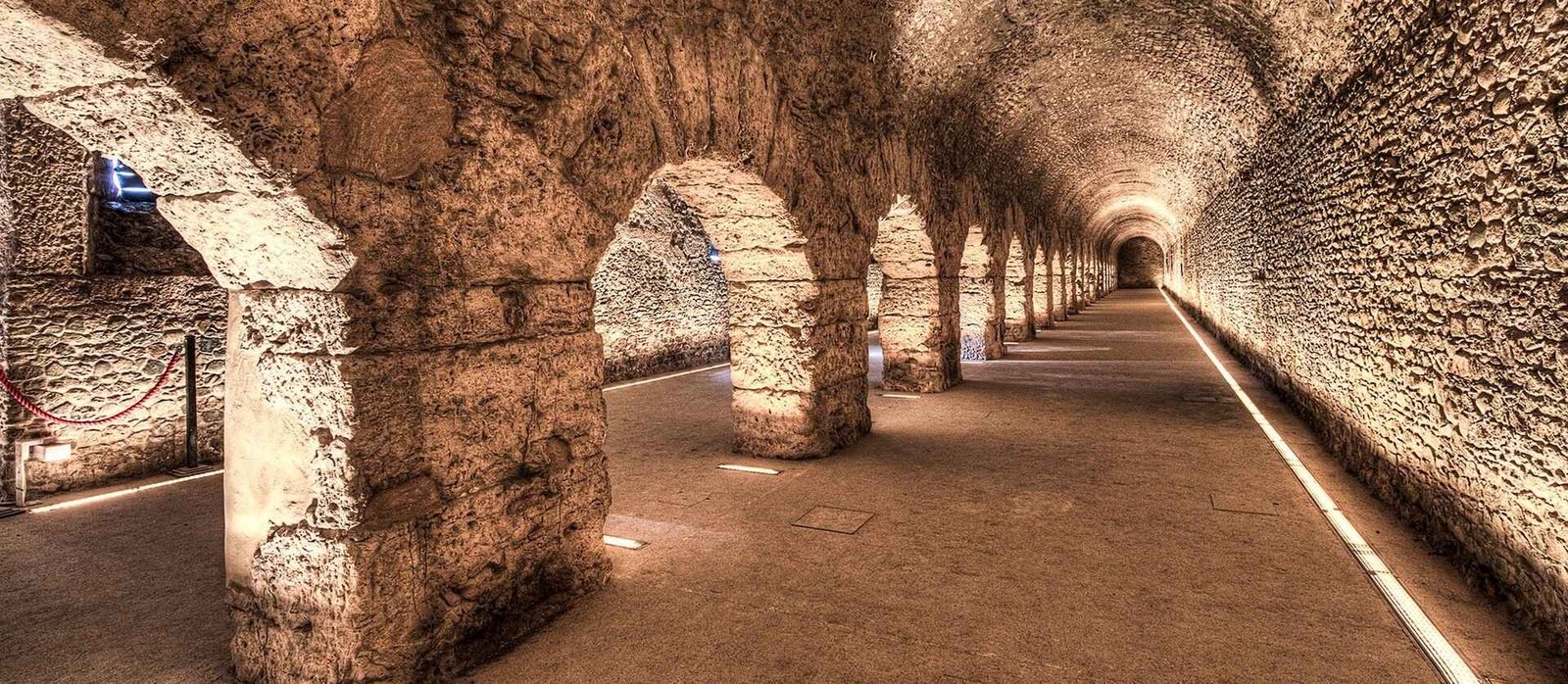
📱🔄️ The image above depicting the Cryptoporticus of the Roman Forum of Aosta tells the millenary history of the city; the itinerary we have developed will guide you through the symbolic landmarks of the “Rome of the Alps”
📌 For a more complete overview of certain items, click on the links to detailed pages +🔗
Overview (show more ⬇️)
- Google Maps 📍
- Step Details
Overview
📌 Most of the references covered in this section are summarized in the Itinerary Table & Overview 📊 with further details on Wikipedia 🌐 and Google Maps ➡️ where available.
Aosta is a charming city located in the heart of the Italian Alps and the capital of the Aosta Valley region. Known as the “Rome of the Alps“, Aosta offers a unique combination of history, culture, nature, and gastronomy, making it an ideal destination for travelers seeking an authentic experience in a breathtaking alpine setting.
GEOGRAPHY
Aosta is located in the center of the Aosta Valley, nestled among the high peaks of the Western Alps. The city develops along the plain of the Dora Baltea river, at about 583 meters above sea level, and maintains a harmonious balance between the urban fabric and the surrounding natural spaces. The territory is characterized by imposing mountains and side valleys, with direct connections to nearby villages and towns.
🛰️ Aosta seen from satellite:
- North / North-West: the peaks rising toward Mont Blanc and the highest mountains of the Aosta Valley, with spectacular alpine landscapes and permanent glaciers.
- North-East: mountain ranges extending toward Gran Paradiso, the heart of the national park of the same name, with forests and glacial valleys.
- South: the valley widens toward the hills of Saint-Christophe and Quart, with softer landscapes and vineyards typical of the region.
- East / South-East: views toward the Monte Emilius and Rutor mountain ranges, with opportunities for hiking and alpine sports.
- West / South-West: the city faces the Dora Baltea plain and the routes connecting Aosta to the main alpine passes and French territory, such as the Little St Bernard Pass.
The location of Aosta, wedged between mountains but with access to the river plain, makes it a strategic point for visiting the Aosta Valley and an excellent starting point for excursions, winter sports, and cultural tours among castles, Roman sites, and alpine villages.
The city is also easily connected to other important centers in the region, such as Courmayeur, Saint-Vincent, Chatillon, and Brusson, and allows excursions toward nearby Piedmontese and Valdostan cities, such as Ivrea and Chambéry in France.
HISTORY
Aosta, founded in Roman times, has been an important strategic and cultural center in the Alps since its origins, distinguished by its unique archaeological heritage that tells centuries of history marked by dominations and urban transformations.
- Roman Foundation (25 BC): Aosta was established as Augusta Praetoria Salassorum, a fortified Roman colony intended to control the Salassi and the Alpine passes; its urban layout follows the original cardo and decumanus structure, still recognizable in today’s historic center.
- Early Middle Ages and dominations: In the following centuries, the city came under the influence of the Burgundians, the Franks, and local bishops, consolidating its role as a strategic religious and commercial center in the Aosta Valley.
- Modern Age: Between the 16th and 18th centuries, Aosta maintained its role as an administrative and military center under Savoy rule, with significant fortification works and the construction of civil and religious buildings, despite periods of decline linked to wars and plagues.
- Contemporary Age: In the 19th and 20th centuries, the city developed as the capital of the Aosta Valley, strengthening its urban and cultural infrastructure; today, Aosta is a popular tourist destination known for its Roman monuments, medieval castles, and a fascinating alpine natural setting.
MAIN ATTRACTIONS
Aosta is rich in historical monuments and museums that tell its long history:
- Roman Theatre: an impressive structure that could accommodate up to 3,000 spectators, now used for cultural events and performances.
- Arch of Augustus: built by the Romans in 25 BC to celebrate the victory over the Salassi, it is one of the city’s symbols.
- Porta Praetoria: the ancient Roman gate marking the eastern entrance to the city, it is one of the best-preserved examples of Roman military architecture.
- Cryptoporticus: a fascinating underground Roman gallery located beneath the city’s forum.
- Cathedral of Santa Maria Assunta: located in the heart of the city, the cathedral dates back to the 4th century and houses important frescoes and mosaics.
- Regional Archaeological Museum: offers a wide collection of artifacts that tell the history of the Aosta Valley from prehistoric times to the medieval period.
PARKS AND NATURE
Parks and Nature in Aosta represent a fundamental component of the territory, offering green spaces, protected areas, and routes immersed in the mountains and alpine flora.
- Gran Paradiso National Park: Located north of Aosta, it is the oldest national park in Italy, famous for its mountain landscapes, alpine wildlife such as ibex and golden eagles, and for hiking trails that cross valleys and glaciers.
✨ Here, nature takes center stage: walking among towering peaks and encountering ibex in the wild is a breathtaking experience.
- Tzatelet Nature Reserve: Located southeast of the city, this reserve protects forests and alpine meadows, providing habitats for rare species and offering nature trails immersed in the tranquility of the mountains.
- Entrebin Arboretum: Situated west of Aosta, it is a wooded area preserving local and international tree species; the trail allows visitors to observe centuries-old trees up close and discover alpine biodiversity.
- Saumont Park: In the urban heart of the city, this park is a green lung of Aosta, ideal for walks, relaxation, and outdoor activities, while also offering scenic views of the surrounding mountains.
EVENTS & CELEBRATIONS
Numerous events mark the cultural and social rhythm of the city, offering opportunities to immerse yourself in Valdostan traditions and local life. Among the most interesting are:
- Fiera di Sant’Orso: A traditional fair held every January 30th and 31st, famous for local wood and stone craftsmanship, attracting visitors from across the Aosta Valley and beyond, celebrating the region’s culture and traditions.
- Aosta Christmas Market: Active during the holiday season, it offers handcrafted products, typical sweets, and Christmas decorations, creating a charming atmosphere in the historic center and providing a unique opportunity to experience the festive spirit in the Aosta Valley.
✨ Walking among the wooden huts, surrounded by lights and mountain scents, lets you experience an authentic Christmas in the heart of the Alps.
FOOD & WINE
Local gastronomy reflects the cultural identity of the Aosta Valley, with hearty dishes and unique specialties that tell the story of alpine traditions and high-quality ingredients. PDO cheeses such as Fontina and Valle d’Aosta Fromadzo accompany polenta concia or are simply enjoyed with bread and jam.
- Among the cured meats, Boudeun and Motsetta stand out for their strong flavor, ideal as appetizers or ingredients in traditional dishes.
- Valdostan cuisine offers typical dishes such as Seupa à la vapelenentze, Gnocchi with Fontina sauce, Carbonada, and Valdostan-style veal cutlet, combining taste and conviviality.
- Among the sweet specialties are Tegole valdostane and Torcetti, perfect to enjoy with a hot drink or to take home as a gastronomic souvenir.
- Valle d’Aosta DOC wines enhance every typical dish of the region, while Genepì, a traditional Alpine liqueur, is a symbol of local conviviality.
RESTAURANT SELECTION
Aosta offers venues that combine tradition and quality, allowing visitors to enjoy Valdostan specialties in welcoming and characteristic settings. Among the most appreciated options, it is possible to find restaurants suited to different tastes and atmospheres:
- La Bottega Antichi Sapori / Bar à Vin: known for its focus on local ingredients and selected wines.
- Bistrot Centrale: typical dishes in a modern and refined setting.
- Osteria da Nando: rustic and family-friendly atmosphere, with a menu celebrating the flavors of the Aosta Valley.
The selection in the table allows you to explore the best of local cuisine, whether you are looking for a gourmet experience or prefer a more traditional and convivial setting.
PARKING & MOBILITY
- On Foot or by Bike: Aosta’s historic center is perfect to explore on foot or by bicycle, with picturesque corners and monumental squares easily accessible.
- Public Transport: Urban buses connect the center with surrounding hamlets and strategic areas of the city.
- Parking: The main parking areas are Georges Carrel Parking, Consolata Parking, and Piazza della Repubblica Parking, all close to the historic center and with easy access to main attractions (see table for details).
Route Description
Summary – This itinerary will guide you through Aosta in a single day, exploring its most fascinating historical landmarks. The circular route of about 5 km takes you through ancient Roman ruins, medieval churches, and archaeological sites, immersing you in the city’s rich history.
⚠️ The first 9 stops follow a circular route, while from stop 9 to 10 the path continues on a straight stretch of about 1.6 km, walkable in approximately 21 minutes, as the final stop is slightly off-center.
AOSTA IN ONE DAY
- Open Route Map📍
- Distance: 5,2* km on foot
- Time: 1,12* min. on foot
- Visit duration: 7 hours
- Stops: 10 main (X →I)* + 4 secondary
- Cattedrale di Aosta (X) → Croce di Calvino (A) → Porta Pretoria (B) → Teatro romano di Aosta (C) → Chiesa Palocristiana di San Lorenzo (D) → Collegiata dei Santi Pietro e Orso (E) → Arco di Augusto (F) → Villa urbano-rustica della Consolata (G) → Museo Archeologico Regionale di Aosta (H) → Area megalitica Saint-Martin-de-Corléans (I)
- For days, times, prices and other info see Itinerary Table & Overview 📊
* These values may differ from those shown on Google Maps, as they are continuously recalculated in real time. See also Itinerary Info and Navigator + See here for Shared Stop 🧩
Morning
⬇️ starting point
X. Cattedrale di Aosta
Start your day with a visit to the majestic Cattedrale di Aosta, the city’s main place of worship, featuring frescoes, mosaics, and a millennial history. Inside you will find the Museo del Tesoro della Cattedrale di Aosta, where you can admire precious sacred works, including reliquaries, illuminated manuscripts, and ancient liturgical vestments.
The Criptoportico Forense is a fascinating underground Roman structure, once part of the city forum, which still preserves a suggestive atmosphere today.
✨ Descending into the Criptoportico means entering an underground world suspended in time, where silence and ancient Roman vaults create a unique and almost mysterious atmosphere.
⬇️
A. Croce di Calvino
An important historical symbol linked to the spread of Protestantism in Valle d’Aosta, witness to a period of profound religious changes.
⬇️
B. Porta Pretoria
Built in 25 B.C., this imposing Roman gate, with its three entrances, represents one of the best-preserved accesses of the ancient city.
⬇️
C. Teatro romano di Aosta
A masterpiece of Roman architecture, which, with its breathtaking scenery and high walls still visible, tells the social and cultural life of the era.
✨ Walking among the ancient steps and imagining gladiators and shows takes you back centuries, in a unique atmosphere of living history.
⬇️
D. Chiesa Palocristiana di San Lorenzo
Located next to the cathedral, this church preserves the remains of an ancient paleochristian basilica and an interesting archaeological site.
Afternoon
⬇️
E. Chiesa Collegiata dei Santi Pietro e Orso
One of the most important churches in Aosta, famous for its decorations and the wonderful Chiostro romanico di Sant’Orso, a peaceful corner with capitals carved with biblical scenes. – Museo del Tesoro della Collegiata, here you will find a collection of sacred works, medieval frescoes, and relics related to the history of the church.
✨ The Romanesque elegance and subtle frescoes create a sense of calm and wonder that envelops every visitor.
⬇️
F. Arco di Augusto
Erected in 25 B.C., this commemorative monument marks the entrance to the Roman city and is still one of the most iconic symbols of Aosta today.
⬇️
G. Villa urbano-rustica della Consolata
A testimony to private life in Roman times, with mosaic floor remains and residential structures that tell the daily life of an ancient villa.
📌 The Villa urbano-rustica della Consolata is generally visitable by reservation. All references can be found in the Google Maps table.
⬇️
H. Museo Archeologico Regionale di Aosta
A journey through the city’s history via artifacts ranging from prehistoric times to the Middle Ages, including statues, coins, and ancient artifacts.
⬇️
I. Area megalitica di Saint-Martin-de-Corléans
One of the most fascinating archaeological sites in the Valle d’Aosta, with monumental megalithic structures and evidence of sacred rituals dating back over 5,000 years.
✨ Walking among these ancient stones puts you in direct contact with millennia of prehistoric history, an experience that thrills with its authenticity and mystery.
Dinner
After an intense day discovering the wonders of Aosta, the best way to conclude is with a typical dinner at one of the selected restaurants. Here you can savor the authentic flavors of Valle d’Aosta tradition, including the famous fonduta, polenta concia, and exquisite local cheeses.
📊 Itinerary Table & Overview
In the table below, you will find all the information needed to make the most of your one-day visit to Aosta:
- Scroll the table down and to the right 📱🔄 Rotate your phone horizontally to get an overview of opening days, hours, prices of attractions, and for further details on Wikipedia 🌐 and Google Maps ➡️.
- ⚠️ Always check the opening days and hours of attractions through the Google Maps entries linked in the table. See also Itinerary Info.
- To see the explanation of each data column, click its title (e.g. Attractions Index, Ratings, Org, etc.) at the top of the table.
⏳ Caricamento tabella in corso…
📌 This table is updated every 6–12 months.
🛡️ The tables on Tourplan360.com are original content protected by copyright © and monitored through anti-plagiarism tracking systems.
Practical Info
WHEN TO GO
The best time to visit Aosta depends on your interests:
- Winter is ideal for snow lovers, thanks to nearby ski resorts such as Courmayeur, Pila, and La Thuile.
- Spring and summer are perfect for hiking, trekking, and cultural visits, with mild temperatures and spectacular alpine landscapes.
- Autumn offers enchanting colors and typical flavors, with harvests, local products, and a calmer, more authentic atmosphere.
GETTING THERE
Aosta is easily reachable thanks to its strategic location between Italy, France, and Switzerland, with efficient road and public transport connections.
- By plane: The nearest airports are Turin-Caselle Airport 🔗 (about 115 km) and Milan Malpensa Airport 🔗 (about 180 km), with onward connections by train or bus.
- By car: Aosta is connected via the A5 motorway, linking it to Turin and the rest of Northern Italy, as well as the Mont Blanc and Great St Bernard tunnels for international connections.
- By train: Aosta railway station is mainly connected with Turin, from where you can reach the main Italian cities.
- By bus: Connections are available with Turin, Milan, and other towns in the Aosta Valley, especially useful for reaching the main tourist destinations.
✅ To search for or book a flight you can check Booking.com Flights.
✅ You can check routes, schedules, prices and buy train or bus tickets with Trainline.
✅ For car rentals you can refer to Booking.com Cars.
USEFUL TIPS
To make the most of your visit to Aosta, here are some practical tips useful during your trip:
- Book in advance if you plan to visit the city during highly attended events such as the Fiera di Sant’Orso or the Christmas markets.
- Clothing: Always bring a jacket or sweater, even in summer, as temperatures can change quickly, especially in the evening.
- Public transport: To reach alpine locations and valleys, it is advisable to have a car, as public connections can be limited.
- Altitude and climate: Aosta is over 500 meters above sea level, so it is important to stay hydrated and adjust gradually, especially if continuing to higher altitudes.
WHAT TO EAT
Among the most representative flavors of Aosta, some dishes and products best tell the story of Valle d’Aosta’s culinary tradition:
Fontina: PDO cheese that is a symbol of the region, with an intense and creamy flavor.
Polenta concia: Polenta enriched with butter and melted fontina, one of the most typical dishes of alpine cuisine.
Carbonada: Beef stew cooked in red wine, with a rich and enveloping flavor.
Motsetta: Dried meat flavored with mountain herbs, ideal as an appetizer.
WHERE TO SLEEP
To comfortably visit all the attractions of Aosta, the most practical solution is to stay in the historic center. Here you will find hotels, B&Bs, and apartments just steps from Porta Pretoria, Piazza Chanoux, and the main Roman sites and museums of the city. This choice allows you to explore Aosta on foot, without losing time traveling, and is ideal for following the itinerary between monuments, churches, and archaeological areas.
If you prefer a quieter stay, the areas just outside the center or the surrounding hamlets offer accommodations immersed in greenery, with mountain views. These areas are perfect for those seeking relaxation and wishing to combine the city visit with excursions into nature and the surroundings of the Aosta Valley.
FAQ
You can open the Route Map📍 from here as well. Or you can check the dedicated paragraph with all details, divided into morning, afternoon, and evening.
📌 Check the Route Description
How long does it take to visit Aosta in one day?
The itinerary allows you to visit the main attractions of the historic center in about 7 hours, excluding breaks and transfers between stops.
Can this itinerary be done on foot?
Yes. The route is about 5,2 km long and crosses the historic center, which is largely pedestrian and perfect for a relaxed walking tour.
Is it possible to do this itinerary in half a day?
Yes. In half a day, you can see only some of the main attractions of the historic center. You can adjust the stops according to your interests.
Where can I find opening days, hours, and ticket prices?
All updated information is available in the table dedicated to the itinerary, where direct links to Google Maps ➡️ and Wikipedia 🌐 are also provided for each attraction.
📌 Check the Itinerary Table & Overview 📊