
Guide to Ancona: what to see, do, eat
Travel Guide to the Best of the City


Ancona port city on the Adriatic Sea where the harbor, historic center, and Marche tradition come together among culture, panoramic views, and seafood cuisine.
📌 For a more complete overview of certain items, click on the links to detailed pages +🔗
- Ancona in Day +🔗
- When to Go
- Getting There
- Getting Around
- Useful Tips
- What +🔗 and Where +🔗 to eat
- Where to Sleep
Overview
📌 A large part of the references covered in this Overview section and in the Practical Info section, are summarized in the Orientation Table 📊 with further details on Wikipedia 🌐 and Google Maps ➡️ where available.
Ancona, capital of the Marche region, is a city overlooking the Adriatic Sea, rich in history, culture, and natural beauty.
Also known as the “Gateway to the East” for its strategic port, Ancona offers visitors a fascinating mix of cultural and historical influences, important monuments, and breathtaking landscapes.
GEOGRAPHY
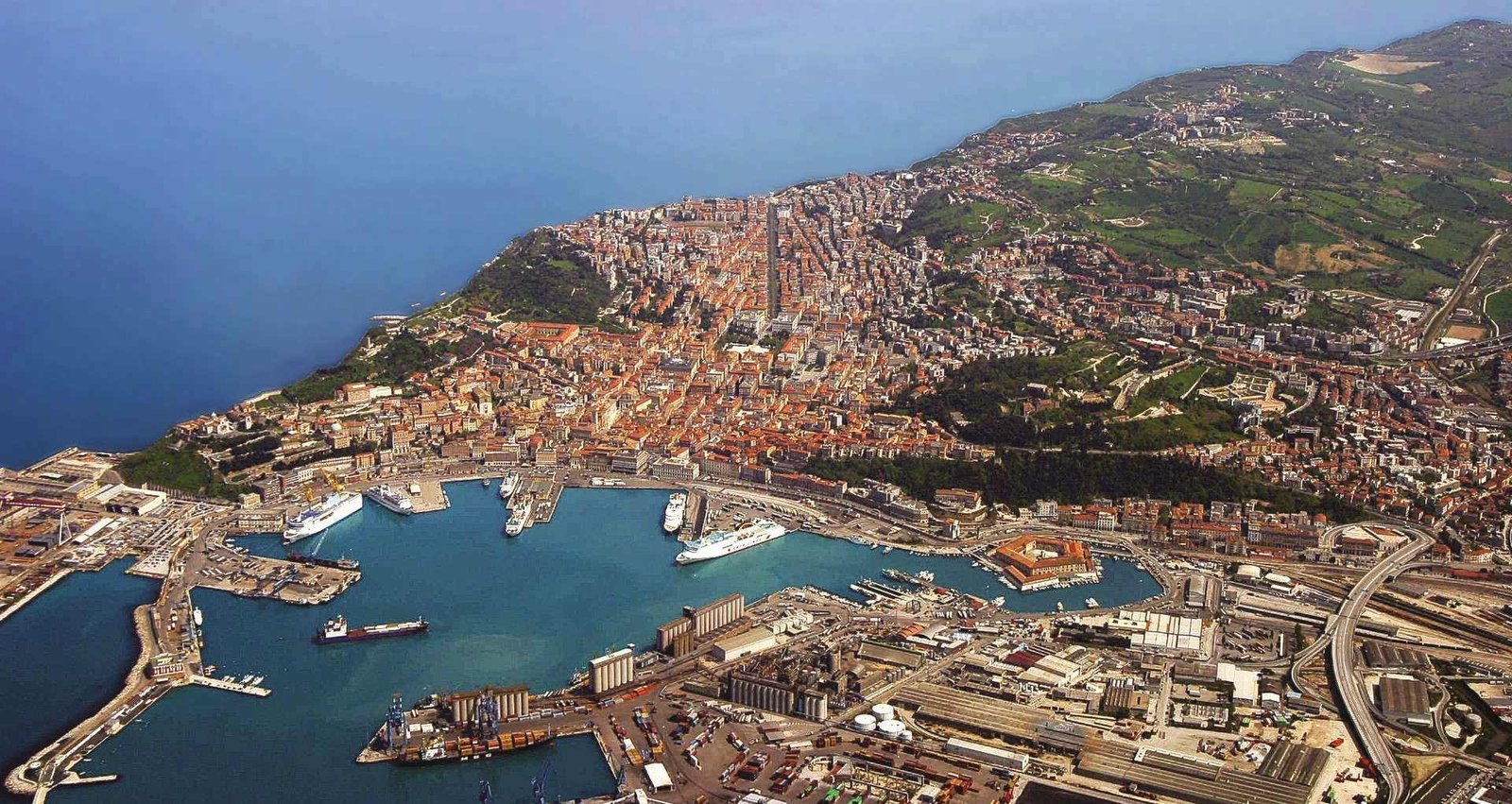
Ancona stretches along the central Adriatic coast on a natural elbow-shaped promontory, a unique geographical formation that creates a direct and continuous relationship between the sea, the hills, and the urban fabric.
The city is layered and compact, with the historic center located in an elevated position above the port and developed according to the morphology of the coastal landscape, creating steep elevation changes and a complex urban structure.
From the satellite analysis of the territory, the main geographical elements clearly emerge:
- To the north lies the port area of Ancona, one of the main harbors of the Adriatic, nestled between urban infrastructure and hilly landscapes
- To the north-east is the historic center, with the Duomo di San Ciriaco and the main panoramic viewpoints overlooking the sea
- To the east the coastline alternates between rocky stretches and natural coves, with the Passetto area and sea access points
- To the south-east extends the coastal route toward Monte Conero, a protected natural area and the dominant landscape landmark of the territory
- To the south the Conero promontory closes the gulf and represents one of the main natural landmarks of the Marche region
- To the west develop the surrounding hilly areas connecting the city to the Marche inland territory
Ancona is strategically connected to the main cities of central and northern Italy, including Bologna, Florence, Rome, and Pescara, as well as maritime routes toward Croatia and Greece.
Its position along the Adriatic coast makes it an important hub for tourist, commercial, and port traffic between Italy and the eastern Mediterranean.
HISTORY
Ancona is a city with ancient origins, which developed over time thanks to its strategic position on the Adriatic Sea, making it an important port, commercial, and military center since ancient times.
- Ancient origins: the city was founded by the ancient Greeks from Syracuse in the 4th century BC, who chose the site for the natural shape of its harbor and its favorable position along Adriatic trade routes.
- Roman era: Ancona entered the Roman sphere while maintaining a strategic role as a commercial and military port thanks to its position connecting central Italy with the Balkan coast.
- Middle Ages: after the fall of the Roman Empire, the city became a free commune and developed into an important Adriatic maritime center, contested for control of trade routes.
- Modern era: between the 16th and 18th centuries Ancona came under the Papal States, maintaining a strategic role as a commercial port and link with the eastern Mediterranean.
- Contemporary era: with the Unification of Italy and the development of modern trade, Ancona became one of the main Adriatic ports and a key logistical hub of central Italy.
MAIN ATTRACTIONS
Ancona boasts a series of monuments of great historical and architectural interest. Among the most significant are:
- Duomo di San Ciriaco: a masterpiece of Romanesque and Gothic architecture, located on a hill that offers panoramic views of the port.
- Arco di Traiano: a Roman triumphal arch erected in 115 AD in honor of Emperor Trajan.
- Mole Vanvitelliana Lazzaretto di Ancona: a pentagonal building designed by Luigi Vanvitelli in the 18th century, formerly used as a quarantine station for travelers and now a venue for cultural events.
- Piazza del Plebiscito: one of the main squares of the city, surrounded by historic buildings such as the Palazzo del Governo and the Church of San Domenico.
- Museo Archeologico Nazionale delle Marche houses a vast collection of artifacts that tell the history of the region.
- Pinacoteca Civica Francesco Podesti features artworks from the Middle Ages to the 20th century.
PARKS AND NATURE
The territory of Ancona is characterized by a strong landscape variety, where sea, hills, and protected natural areas intertwine into a single environmental system.
- Parco del Conero: a protected natural area of great landscape value, characterized by cliffs, hiking trails, and wild beaches that dominate the stretch of coastline south of Ancona.
- Parco del Cardeto: an urban green area located on a panoramic promontory, offering views of the port, the historic center, and the coastline, representing the city’s main natural lung.
SEA AND BEACHES
The coastline of Ancona alternates between urban stretches, sandy beaches, and wilder natural landscapes, offering a variety of seaside environments that represent one of the main attractions of the city and its coastal territory.
- Golfo di Ancona: a wide natural inlet of the Adriatic Sea that embraces the city, defining the direct relationship between the urban center, the port, and the coastline.
- Spiaggia del Passetto: an urban beach characterized by the famous caves carved into the rock and a unique panoramic setting close to the city center.
- Spiaggia di Mezzavalle: a large wild beach immersed in the nature of the Conero area, reachable on foot and appreciated for its crystal-clear waters and unspoiled environment.
- Spiaggia di Portonovo: one of the most famous seaside locations in the Marche region, located at the foot of Monte Conero, combining nature, services, and clear waters.
- Spiaggia del Palombina: a sandy and easily accessible beach, ideal for swimming and frequented by both locals and tourists.
- Scoglio del Trave: a natural rock formation extending into the sea, highly characteristic for its landscape and popular for snorkeling and photography.
EVENTS & CELEBRATIONS
Ancona hosts throughout the year cultural, traditional, and gastronomic events linked to the city’s maritime history and the traditions of the Marche region, with events involving both the urban center and the Conero coastal area.
- Carnevale di Ancona: a traditional event that animates the city center with parades, events, and initiatives dedicated to the Carnival period.
- Festival del Mosciolo: a food and wine event dedicated to the wild mussel of Portonovo, one of the symbolic products of the local maritime tradition.
- Ancona Jazz Summer Festival: a summer music festival hosting concerts and national and international artists in various locations across the city.
- Festa del mare: an event linked to Ancona’s port and maritime identity, with initiatives, events, and activities celebrating the relationship between the city and the Adriatic Sea.
- Festa della Venuta della Santa Casa: a highly felt religious celebration in the Marche region, linked to the tradition of the transfer of the Holy House of Loreto and also celebrated in the Ancona area.
📊 Orientation Table
In the table below you will find a summary of the main references, to best orient and organize your visit through our itineraries (see Itinerary Overview).
- Scroll the table down and to the right 📱🔄 Rotate your phone horizontally to get an overview of opening days, hours, prices of attractions, and for further details on Wikipedia 🌐 and Google Maps ➡️.
- ⚠️ Always check the opening days and hours of attractions through the Google Maps entries linked in the table. See also Itinerary Info.
- To see the explanation of each data column, click its title (e.g. Attractions Index, Ratings, Org, etc.) at the top of the table.
⏳ Caricamento tabella in corso…
📌 This table is updated every 6–12 months.
🛡️ The tables on Tourplan360.com are original content protected by copyright © and monitored through anti-plagiarism tracking systems.
Itinerary Overview
ANCONA IN 1 DAY
To visit Ancona in a complete way, we have created a single structured itinerary, designed to combine the historic center, the port area, and natural beauty into a single travel experience.
The route is divided into three main sections, designed to guide the visit progressively through the historic center, the port area, and the Adriatic coast.
- Monumental Heart: an initial urban route through squares, museums, and historic architecture such as the Mole Vanvitelliana and the city center.
- Cathedral and Old Port: a panoramic itinerary connecting the Duomo di San Ciriaco with the port area and Roman monuments such as the Arco di Traiano.
- Nature and Sea: optional extension towards the coast and surroundings, including the Parco del Conero, the Passetto, and the most iconic beaches of the area.
Go to Ancona in 1 day: Travel itinerary
Practical Info
WHEN TO GO
Ancona can be visited throughout the year, but the Adriatic climate and the presence of the sea greatly influence the travel experience between beach seasons, quieter periods, and local events.
- Spring (April–June): one of the best periods to visit Ancona, with mild temperatures and ideal days to explore the historic center, the Passetto, and the natural areas of the Conero.
- Summer (July–August): perfect season to enjoy beaches, sea, and coastal locations such as Portonovo and Mezzavalle, with higher tourist flow and numerous local events.
- Autumn (September–October): a very pleasant period thanks to still-mild weather and fewer tourists, ideal for combining cultural visits, gastronomy, and coastal scenery.
- Winter (November–March): the quietest season, suitable for discovering the city’s historic and port identity, with a more authentic atmosphere and fewer crowds compared to summer months.
GETTING THERE
Ancona is one of the main transport hubs of the Adriatic coast and is easily reachable by plane, train, bus, ferry, and car thanks to its strategic position between central Italy and the eastern Adriatic.
- By air: the city is served by Ancona-Falconara Airport, located north of the city center and connected by trains, buses, and road services to the main towns of the Marche region.
- By sea: the Port of Ancona is one of the most important in the Adriatic for passenger traffic and ferry connections to Croatia, Greece, and the Balkans.
- By train: Ancona railway station is one of the main hubs on the Adriatic railway line, with connections to Bologna, Milan, Rome, Bari, and other Italian cities.
- By bus: several regional and national companies connect Ancona with major Italian cities, with stops near the railway station and the city center.
- By car: Ancona is connected via the A14 Adriatic motorway and the main road networks of central Italy, with quick access to the port, city center, and the Conero Riviera.
✅ To search for or book a flight you can check Booking.com Flights.
✅ You can check routes, schedules, prices and buy train or bus tickets with Trainline.
✅ For car rentals you can refer to Booking.com Cars.
GETTING AROUND
Ancona is a city developed between the sea and hills, with a transport network connecting the historic center, port, railway station, and coastal areas. Getting around can vary depending on urban elevation changes and the location of the main attractions.
- On foot: the historic center and main monuments can be visited on foot, although the presence of hills and slopes can make some routes more demanding.
- Public transport: buses and the trolleybus network efficiently connect the city center, port, station, and various districts, making urban travel easier.
- Car and traffic: traffic can be heavier in areas near the port and during the summer season, especially along the routes toward the Conero and the beaches.
- Parking: parking areas are available in the city center and near the main access points. In Table > Parking and Mobility, the most practical solutions for visiting Ancona are indicated.
USEFUL TIPS
To visit Ancona in the most practical and well-organized way, it is useful to plan movements between the historic center, the port, and coastal areas, especially during periods of higher tourist traffic.
- Getting around between center and sea: the city has several elevation changes between the port, historic center, and the Passetto area, so it is advisable to organize itineraries by optimizing transfers.
- Summer period: during summer, the beaches of the Conero and Portonovo can be very crowded, especially on weekends, so it is preferable to arrive early in the day.
- Comfortable shoes: recommended for visiting the historic center and panoramic areas of the city, which feature uphill paths, stairways, and hilly routes.
- Water and sun protection: particularly useful in the warmer months, especially when visiting beaches, panoramic viewpoints, and the Conero trails.
- Summer reservations: during peak season it is advisable to book restaurants and accommodations in advance in the most popular coastal areas such as Portonovo.
- Appropriate clothing: in religious sites such as the Duomo di San Ciriaco, respectful behavior and suitable clothing are required.
WHAT TO EAT
The cuisine of Ancona reflects the gastronomic tradition of the Marche region and the city’s strong connection with the Adriatic Sea, combining seafood dishes, inland products, and traditional recipes handed down over time. Among the most representative specialties of the area are:
- Brodetto all’anconetana: one of the symbolic dishes of the local maritime tradition, prepared with different types of fish and characterized by the use of tomato.
- Stoccafisso all’anconetana: a historic recipe of the city’s cuisine based on stockfish cooked with potatoes, tomato, and typical Adriatic ingredients.
- Mosciolo selvatico di Portonovo: a gastronomic specialty of the Conero area, collected along the rocky coast and considered one of the excellence products of the Ancona territory.
- Vincisgrassi: a traditional Marche dish similar to lasagna, made with pasta sheets, meat ragù, and béchamel according to local recipes.
- Crescia: a typical flatbread of the Marche region, eaten on its own or paired with local cured meats and cheeses.
- Paccasassi: a wild plant from the Conero area used in local cuisine to flavor dishes, sandwiches, and traditional seafood preparations.
See also What to eat in Ancona
WHERE TO EAT
Ancona offers restaurants ranging from historic trattorias to venues overlooking the Conero sea.
- Ristorante Marcello, a historic reference point for Ancona cuisine, known for its seafood recipes and traditional local maritime dishes.
- Ristorante Giacchetti, located in the Conero area, offers seafood cuisine and local specialties in a panoramic setting near the coast.
- Il Molo, a restaurant linked to the port tradition and fresh fish, with a gastronomic proposal inspired by Adriatic cuisine.
- Ginevra Restaurant, a modern venue combining contemporary cuisine and local products in an elegant and refined atmosphere.
- Osteria La Bottega di Pinocchio, an osteria known for traditional Marche cuisine and its informal atmosphere tied to local gastronomy.
See also Where to eat in Ancona
WHERE TO SLEEP
Ancona offers a wide range of accommodation options suitable for every type of traveler, from hotels in the historic center to panoramic properties overlooking the sea and the Conero area. Choosing the right area helps optimize travel between the city, port, and beaches.

Here are some of the main areas to stay in Ancona, selected for their location, convenience, and surroundings:
- Historic center: the most convenient option for visiting main attractions such as the Duomo di San Ciriaco, Mole Vanvitelliana, and Arco di Traiano, with easy access to services and transport.
- Port area: a strategic location for those arriving by sea or wishing to stay close to ferry terminals and the city waterfront.
- Passetto: a panoramic district highly appreciated for its sea views and proximity to the urban beach and the coastal caves.
- Portonovo and Conero: the ideal choice for those seeking sea, nature, and relaxation, with accommodations immersed in greenery and direct access to some of the area’s most beautiful beaches.
- Station area: a practical and budget-friendly option, well connected to the rest of the city and major railway routes.
FAQ
Must-see highlights include the Duomo di San Ciriaco, Mole Vanvitelliana, and Arco di Traiano, all key symbols of the city’s history and identity.
Which museums and cultural sites should I visit in Ancona?The main highlights include the Museo Archeologico Nazionale delle Marche and the Museo Tattile Statale Omero, two major cultural institutions in the city.
📌 Read more in the section Main Attractions.
Are there parks or natural areas in Ancona?
Yes, the main ones include Parco del Conero, Parco del Cardeto, and the Gulf of Ancona, shaping the landscape between sea and hills.
📌 Read more in the section Parks and Nature.
What are the most beautiful beaches in Ancona?
The most famous are Portonovo Beach, Mezzavalle, and the Passetto, along with Scoglio del Trave for wild landscapes and nature lovers.
📌 Read more in the section Sea and Beaches.
Can Ancona be visited in one day?
Yes, the city is ideal for a 1-day itinerary combining the historic center, sea views, and nearby Conero coastal spots.
📌 Read more in the section Itinerary Overview.
What is the best time to visit Ancona?
Spring and summer are ideal for sea and nature, while autumn is perfect for a quieter cultural visit.
Is Ancona easy to visit?Yes, although it has elevation changes between the center and the sea, it is well connected with public transport and scenic routes.
📌 Read more in the section When to Go.
Which typical dishes should I try in Ancona?
Local specialties include brodetto all’anconetana, stoccafisso all’anconetana, and mosciolo selvatico di Portonovo.
📌 Read more in the section What to Eat.
Where can I eat well in Ancona?The best areas are the historic center, the port area, and the Conero zone, offering seafood restaurants and traditional trattorias.
📌 Read more in the section Where to Eat.
See also
- Guide to Ancona
- Ancona in 1 day
- Eating: What and Where