
Potenza in 1 Day: travel itinerary
What to see, opening hours, prices, map


Discover Potenza in 1 day by following a route designed to explore its main attractions, with beautiful panoramic views of the Lucanian Apennines.
See also:
Route Description
SUMMARY – This itinerary for visiting Potenza has been designed to allow you to discover the main attractions of the historic center along a linear walking route of 2.8 km, with 10 main stops and 3 sub-stops, for a total duration of about 4 hours of sightseeing.
You will be guided through a journey among ancient churches, historic squares, museums, and panoramic views, immersing yourself in the authentic soul of the city.
POTENZA IN 1 DAY
- Open Route Map📍
- Distance: 2,8* km walking
- Time: 0,42* min walking
- Visit duration: 4 hours
- Stops: 10 main (X →I)* + 3 secondary
- Chiesa di San Michele Arcangelo (X) → Piazza Mario Pagano (A) → Chiesa della Santissima Trinità (B) → Tempietto di San Gerardo (C) → Piazza Giacomo Matteotti (D) → Museo Archeologico Naz. della Basilicata (E) → Torre Guevara (F) → Duomo di S. Gerardo e S. Maria Assunta (G) → Villa di Santa Maria (H) → Museo Archeologico Provinciale (I)
- For days, times, prices and other info see Itinerary Table 📊
* These values may differ from those shown on Google Maps, as they are continuously recalculated in real time. See also Itinerary Info and Navigator + See here for Shared Stop 🧩
Step Details
⬇️ starting point
X. Chiesa di San Michele Arcangelo
Start your day at the Chiesa di San Michele Arcangelo, one of the oldest religious buildings in the city. Dating back to the 12th century, this Romanesque church preserves medieval frescoes and a quiet atmosphere, perfect for beginning your visit with a touch of spirituality and sacred art.
⬇️
A. Piazza Mario Pagano
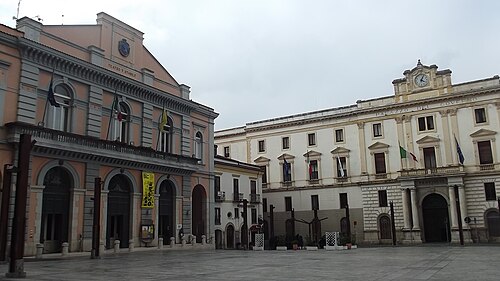
Continuing on, you will reach Piazza Mario Pagano, the heart of the city. Here you can admire the majestic Palazzo della Prefettura, with its elegant 19th-century architecture, and the Teatro Francesco Stabile, the only opera house in Basilicata, symbol of Potenza’s cultural life.
⬇️
B. Chiesa della Santissima Trinità
Just a few steps away is the Chiesa della Santissima Trinità, an important place of worship featuring a Baroque interior and an intimate atmosphere. Do not miss the frescoed ceiling and the valuable artworks inside.
⬇️
C. Tempietto di San Gerardo
Walking through the city streets, you will reach the Tempietto di San Gerardo, a small but meaningful chapel dedicated to the city’s patron saint. Located in Piazza Matteotti, this octagonal temple is an icon of local devotion.
⬇️
D. Piazza Giacomo Matteotti
Strolling through the historic center, you will arrive at Piazza Giacomo Matteotti, a meeting point for locals and a venue for cultural events. Here you can admire the historic architecture that defines the heart of Potenza.
⬇️
E. Museo Archeologico Nazionale della Basilicata
A short distance away is the Museo Archeologico Nazionale della Basilicata, located inside the prestigious Palazzo Loffredo, a 17th-century historic residence. The museum offers a collection of archaeological finds that tell the ancient history of the region, from the Iron Age to Roman times.
⬇️
F. Torre Guevara
Continuing the route, you can admire the Torre Guevara, an ancient defensive bastion that was part of the city’s medieval castle. Today it is one of the few remaining traces of Potenza’s original fortifications.
⬇️
G. Duomo di San Gerardo e Santa Maria Assunta
The next stop is the Duomo di San Gerardo, the main place of worship in the city. This sacred building has medieval origins but has undergone several transformations over time, blending Romanesque and Baroque elements. Inside, it houses the statue of the city’s patron saint, San Gerardo La Porta.
✨ The spiritual heart of the city: imposing, solemn, and able to dominate the historic center with a presence felt from afar.
⬇️
H. Villa di Santa Maria
After visiting the cathedral, take a break at Villa di Santa Maria, a green area where you can relax and enjoy a panoramic view of the city.
⬇️
I. Museo Archeologico Provinciale
End your cultural tour with a visit to the Museo Archeologico Provinciale, which hosts a vast collection of artifacts from ancient Lucanian populations. A fascinating journey through ceramics, weapons, and objects that tell the history of Basilicata.
Dinner
At the end of the itinerary, you can also end the day by discovering the gastronomic tradition of Potenza, with recipes from Lucanian cuisine and typical local products, in some selected restaurants in the city.
- Antica Osteria Marconi – traditional cuisine restaurant where you can taste Lucanian dishes prepared according to local recipes, in a characteristic setting.
- Due Torri / Antiche Torri – a restaurant suitable for discovering regional cuisine through traditional Lucanian specialties and typical local products.
- Trattoria Zi Mingo – informal trattoria where you can enjoy simple and genuine cuisine linked to the flavors of Potenza’s culinary tradition.
In the selected restaurants, you can taste some of the most representative specialties of Potenza’s and Lucania’s cuisine, including:
- Cialledda – a traditional peasant dish made with stale bread, enriched with simple local ingredients and ideal for discovering the most authentic flavors of Lucanian cuisine.
- Cavatelli con cime di rapa – fresh pasta typical of the Lucanian tradition, combined with turnip greens for a simple and flavorful first course.
- Agnello alla contadina – a traditional preparation made with lamb, cooked with aromatic herbs and ingredients from rural Lucanian cuisine.
- Bocconotti – small traditional Lucanian pastries, perfect for ending the gastronomic journey with a typical local specialty.
Sleeping
To make the most of this Potenza itinerary, the most convenient choice is to stay in the historic center, so that the main stops along the route can be easily reached on foot. This is the ideal solution for those who want to start and end the day without relying on a car.

Alternatively, you can choose accommodation in the areas immediately outside the city center, especially if you prefer greater peace and quiet or easier parking. In this case, the escalators and urban transport connections still make it easy to reach the heart of the city.
📊 Itinerary Table
In the table below you will find all the attractions included in the itinerary, to enhance and better guide your visit.
- Scroll the table down and to the right 📱🔄 Rotate your phone horizontally to get an overview of opening days, hours, prices of attractions, and for further details on Wikipedia 🌐 and Google Maps ➡️.
- ⚠️ Always check the opening days and hours of attractions through the Google Maps entries linked in the table. See also Itinerary Info.
- To see the explanation of each data column, click its title (e.g. Attractions Index, Ratings, Org, etc.) at the top of the table.
⏳ Caricamento tabella in corso…
📌 This table is updated every 6–12 months.
🛡️ The tables on Tourplan360.com are original content protected by copyright © and monitored through anti-plagiarism tracking systems.
FAQ
You can open the Route Map📍 directly, or consult the section with all the itinerary stops.
📌 See the Route Description
How long does it take to visit Potenza in one day?
The itinerary is designed for a full day and allows you to visit the main attractions in the historic centre.
Can this Potenza itinerary be done on foot?
Yes. The route is mainly on foot through the historic centre, along streets, squares and stairways.
Can this itinerary also be done in half a day?
Yes. You can shorten the route by focusing on the main stops.
Where can I find opening days, times and admission prices for the attractions?
The available information is provided in the itinerary table, with links to Google Maps ➡️ and Wikipedia 🌐.
📌 See the Itinerary Table 📊
Other Destinations
🔐 Some images on this page are used under a Creative Commons license:
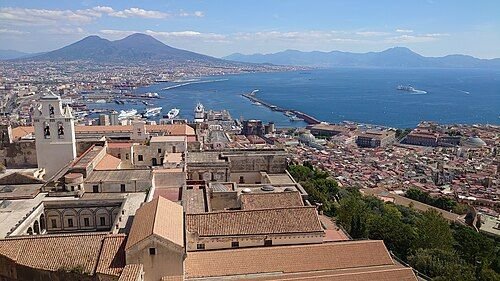
By Richard Nevell – Naples, panoramic view of the city and Mount Vesuvius – Own work – CC BY-SA 4.0 – Wikimedia Commons
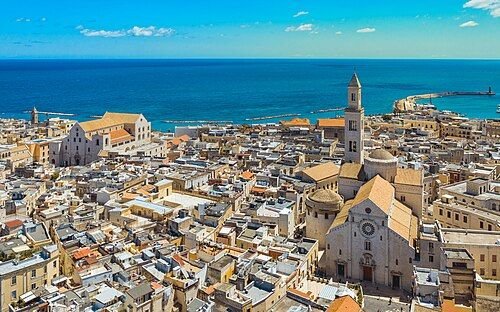
By Francesco Di Stefano 08 – Bari, panoramic view of the Old Town – Own work – CC BY-SA 4.0 – Wikimedia Commons
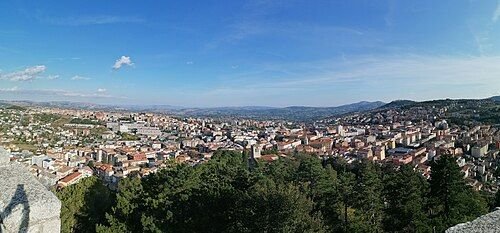
By Horcrux – Campobasso, view from Castello Monforte – Own work – CC BY-SA 4.0 – Wikimedia Commons
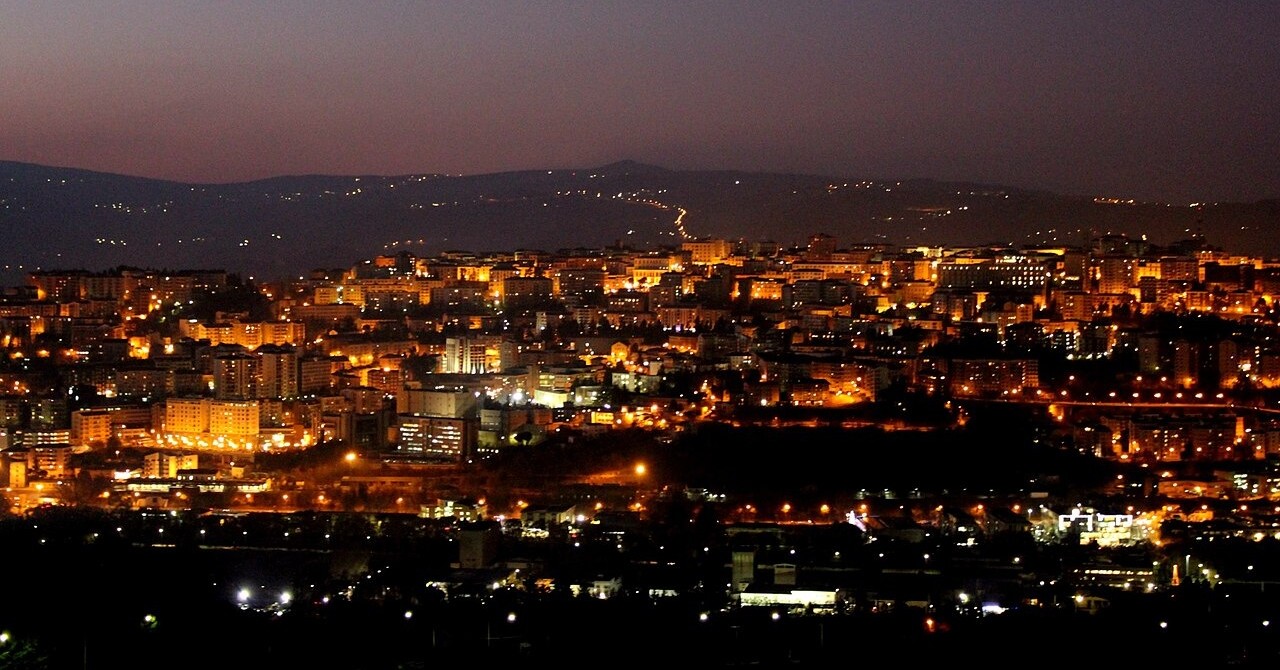
By Antonio Petrullo – Potenza, panoramic view of the city at dusk – Own work – CC BY-SA 3.0 – Wikimedia Commons
_(2).jpg)
By Nicola Cerroni – Potenza, panoramic view of the city in winter – Own work – CC BY-SA 4.0 – Wikimedia Commons
By GAETANA PECCHIA2 – Potenza, Teatro Stabile and Palazzo della Prefettura in Piazza Pagano – Own work – CC BY-SA 4.0 – Wikimedia Commons
By Giorgio L. Rutigliano – Potenza, Palazzo della Prefettura in Piazza Pagano – Own work – CC BY-SA 4.0 – Wikimedia Commons
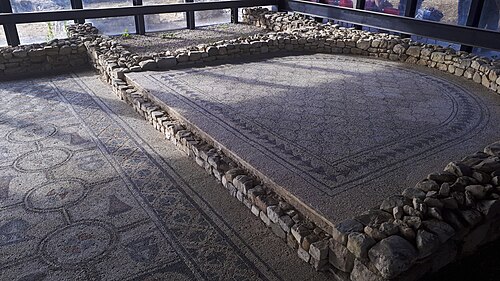
By Gabriella Bulfaro – Potenza, interior of Villa Romana di Malvaccaro – Own work – CC BY-SA 4.0 – Wikimedia Commons
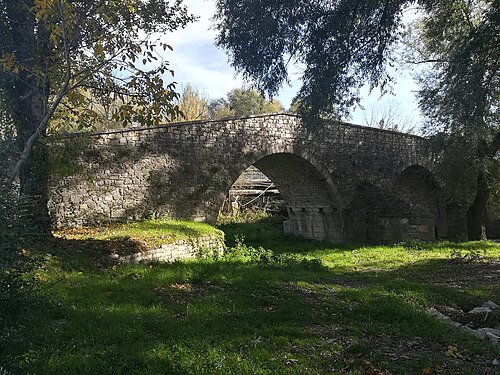
By Redshift87 – Potenza, Roman Bridge – Own work – CC BY-SA 4.0 – Wikimedia Commons
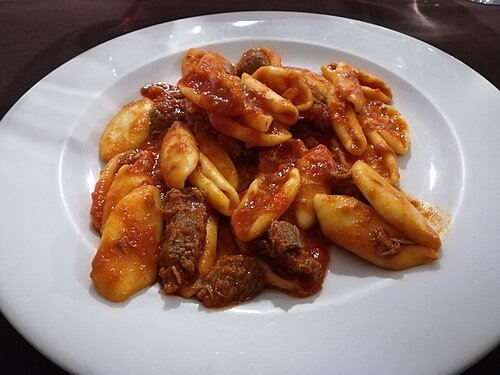
By Redshift87 – Potenza, strascinati with Potenza-style ragù – Own work – Public domain – Wikimedia Commons