
Getting around Milan: Info and Tips
Quick Guide to Getting Around the City


Milano is a dynamic and modern city, the economic and cultural heart of Northern Italy, where getting around is generally easy thanks to one of the most efficient public transport networks in the country.
See also:
- Guide to Milan
- Itineraries: 1d, 3d, CT1, CT2
- See: Attractions
- Do: Experiences
- Eat: Where and What
- Getting Around, Pass, Stay
Overview
Getting around Milan requires minimal planning, thanks to a more compact urban layout compared to other major Italian cities and a well-organized transport system. The Lombard capital combines a walkable historic center, modern districts, and efficiently connected peripheral areas.
In the city center, where attractions such as the Duomo, the Fashion Quadrilateral, and Brera are concentrated, walking is often the ideal solution. Distances are short, allowing visitors to explore Milan at a relaxed pace, avoiding traffic and connections.
For longer distances or to reach districts outside the center, Milan has an extensive network of public transport managed by ATM, including metro, trams, and buses. The metro, in particular, allows rapid travel between major tourist areas, train stations, and strategic city hubs.
The use of a private car is generally discouraged, especially in central areas, due to traffic and the presence of Area C and other restricted zones. Access is controlled by electronic gates, so it is important to check schedules, costs, and restrictions in advance.
To better orient yourself and understand the layout of the districts, it can be useful to join a walking tour or a panoramic tour, ideal for gaining practical references and moving with greater confidence in the following days (see more info 🔗).
In recent years, numerous alternative mobility solutions have also become popular, such as bicycles, electric scooters, and sharing services. These modes are particularly suitable for Milan, a flat city with bike lanes, but should be used with caution in busy areas.
Getting There
Milan is one of Italy’s and Europe’s main transport hubs, easily reachable thanks to an efficient network of air, rail, road, and long-distance transport connections. Its strategic position in Northern Italy makes it an ideal destination for tourism, work, and study.
By Plane
Milan Malpensa Airport (see info & tips 🔗) and Milan Linate Airport (see info & tips 🔗) offer numerous domestic and international connections, including low-cost flights. From the airports, the city center can be reached via dedicated trains, buses, taxis, private transfers, or rental cars, with travel times typically between 20 and 60 minutes.
✅ To search or book a flight to/from Milan, you can use Booking.com Flights.
By Train
Milan Centrale is the main railway station, connected to major Italian and European cities via high-speed trains, Intercity, and regional services. Other important stations include Milano Porta Garibaldi, Milano Rogoredo, and Milano Cadorna. All are well integrated with the metro, tram, and bus network.
✅ Check routes, schedules, prices, and book tickets with Trainline.
By Car
Milan is connected to the main highways in Northern Italy, including the A1, A4, A7, and A8. Drivers should consider Area C and other restricted traffic zones, as well as often heavy traffic. It is advisable to use park-and-ride facilities or garages outside the city center.
✅ For car rental, you can use Booking.com Cars.
By Bus
Milan is well connected to numerous Italian and European cities via long-distance buses. Major stops are located near train stations and city hubs, with direct connections to the center and peripheral areas via the ATM urban network.
✅ Check routes, schedules, and book tickets with Trainline.
By Taxi or Private Transfer
Taxis and private transfer services allow direct and comfortable travel to Milan from airports, railway stations, or nearby cities. Travel times vary depending on traffic and distance, making this a practical option for travelers with luggage or those preferring direct transfers.
Getting Around on Foot
Walking is one of the best ways to explore Milan, especially in the central areas where many of the main attractions are located within short distances of each other.
City center and historic districts
The center of Milan is particularly suited for walking: areas such as the Duomo, Galleria Vittorio Emanuele II, Brera, Castello Sforzesco, and Navigli can be connected with pleasant walks. Neighborhoods like Porta Nuova and Isola also offer interesting and well-organized urban routes.
Distances and walking times
Distances in the city center are generally short: from the Duomo to Brera it takes about 10–12 minutes on foot, while from the Duomo to the Castello Sforzesco it takes around 15–18 minutes. Longer routes, such as from the Castello to the Navigli, take about 35–40 minutes, but are pleasant and flat.
Road surface and comfort
Milan mostly features asphalt streets and regular sidewalks, with some cobbled or stone areas in historic districts. The flat terrain makes the city ideal for long walks, but it is still recommended to wear comfortable shoes, especially for longer distances.
Traffic and crossings
When walking, it is important to pay attention to urban traffic, especially in central areas and along main streets. Trams, bicycles, scooters, and cars often share the same space. It is recommended to always use crosswalks and follow traffic signals.
Safety and walkability
Milan is generally a safe and well-lit city for walking, especially in central and tourist areas. As in any major city, it is advisable to remain vigilant in crowded areas, on public transport, and in the evening near train stations.
Urban experience
Walking through Milan allows you to experience the city’s daily rhythm: historic shop windows, hidden courtyards, contemporary venues, and green spaces make every walk an authentic urban experience, where the journey becomes part of the visit itself.
Public Transport
Milan’s public transport allows you to move quickly between the city center, residential districts, and suburban areas, thanks to an efficient and well-organized network. The public transport system, managed by ATM, includes subways, buses, trams, and suburban rail lines, suitable for short, medium, and long-distance trips alike.
Subway
The Milan metro consists of five lines (M1, M2, M3, M4, and M5) that connect the main areas of the city quickly and efficiently. Interchange hubs such as Duomo, Cadorna, Centrale FS, and Garibaldi allow fast line changes, making the metro ideal for avoiding surface traffic.
City buses
The bus network covers the entire urban area extensively, connecting suburban neighborhoods, residential areas, and zones less served by the metro. Buses are especially useful for local trips, although during peak hours they can be affected by city traffic.
Trams
Trams are among the most characteristic and efficient means of transport in Milan. Many lines cross the city center and follow dedicated routes, ensuring good regularity. They are often appreciated for connecting central and semi-central areas directly.
Urban and suburban railways
Milan has an extensive system of suburban rail lines (Passante Ferroviario and S lines), useful for connecting the city center with the hinterland and main metropolitan locations. These connections are integrated into the urban fare system and allow quick travel over longer distances.
Taxis
Taxis are easily found at train stations, airports, main squares, and central areas. They offer a convenient solution for direct trips, evening travel, or when carrying luggage. It is recommended to use official taxis or app-bookable services.
Tickets and passes
The ATM fare system includes single tickets, daily tickets, and passes valid on the metro, buses, trams, and suburban lines. Convenient solutions are available for those staying multiple days or frequently using public transport. For updated information on fares, schedules, and lines, it is recommended to consult the official ATM website.
When to use public transport
Public transport is ideal for medium to long distances, reaching neighborhoods outside the center, train stations, airports, and business districts. In the city center, walking is often the most practical solution, with the metro supporting longer trips.
Getting Around by Car
Getting around Milan by car can be convenient for arrivals, departures, or trips to neighborhoods outside the city center, but it requires attention, especially due to the presence of Area C, Limited Traffic Zones (ZTL), numerous pedestrian areas, and heavy traffic during peak hours.
Area C and ZTL
The center of Milan is regulated by Area C, a paid zone active during specific time slots, with access controlled by electronic gates. Exemptions and restrictions apply to certain categories of vehicles, while fines for unauthorized entry are frequent. Before entering the city center, it is essential to check hours, costs, and access rules.
Pedestrian areas and city center
Many central areas, such as the Duomo, Corso Vittorio Emanuele II, Brera, and some streets of the Fashion Quadrilateral, are pedestrian or have heavily restricted access. In these cases, it is recommended to park outside Area C and continue on foot or by public transport.
Traffic and peak hours
Traffic in Milan is heavier on weekdays, especially during office opening and closing hours. Major roads and ring roads can experience significant slowdowns. Planning trips outside peak hours helps reduce travel time and stress.
Parking
Milan offers on-street parking, paid parking, and numerous multi-story parking lots, often located near the city center or metro stations. Blue lines indicate paid parking, while yellow lines are reserved. Park-and-ride facilities near metro stations are a practical solution to leave your car and continue by public transport.
When to use a car
A car is recommended mainly for reaching peripheral areas, zones not directly served by the metro, trips with luggage, or excursions outside the city. To get around the center, public transport and walking are often the most efficient options.
🅿️ The box below shows our selection of strategic parking spots, chosen for their proximity to the starting points of our itinerary guides. This way, you can leave your car in areas well connected by public transport, ideal for optimizing your visit to Milan.
✅ For more options and online bookings, you can check the ParkingMyCar service, which allows you to find parking throughout the city.
FAQ
What is the best way to get around Milan?
The most efficient way is to combine metro, tram, and walking. Milan is compact and well-connected, making it easy to get around even without a car.
Is Milan easy to navigate for first-time visitors?Yes, the transport network is clear and well-signposted. With a few initial directions, it is easy to orient yourself between the city center and the main neighborhoods.
📌 See more in the Overview section.
How do you get to the center of Milan from the airports?
From Malpensa, Linate, and Orio al Serio airports, you can reach the city center by train, direct bus, taxi, or private transfer services.
Are Milan’s train stations well connected?Yes, stations like Milano Centrale, Garibaldi, and Cadorna are strategic hubs directly connected to the metro.
📌 See more in the Getting There section.
Which public transport is the fastest in Milan?
The metro is the quickest way to cross the city, while trams and buses are ideal for surface travel.
Do public transport services run in the evening?Yes, main lines operate until late, and night lines cover much of the city.
Are there integrated tickets?Yes, ATM tickets allow you to use the metro, tram, and buses with time-based, daily, or multi-day options.
📌 See more in the Public Transport section.
Is it worth using a car in Milan?
Generally no for the city center due to traffic and Area C. Cars are more useful for trips to peripheral areas or outside the city.
What is Area C?It is a controlled traffic zone in central Milan with regulated, paid access during specific time slots.
How to avoid fines?Always check opening hours, access rules, and permitted parking before entering central zones.
Where is it convenient to park in Milan?In multi-storey or interchange parking lots near metro stations, ideal to continue your journey comfortably by public transport.
📌 See more in the Getting Around by Car section.
See also
- Guide to Milan
- Itineraries: 1d, 3d, CT1, CT2
- See: Attractions
- Do: Experiences
- Eat: Where and What
- Getting Around, Pass, Stay
Other Destinations
🔐 Some images on this page are used under Creative Commons licenses:
By Maurizio Beatrici – Genoa, port and Lanterna from Castello d’Albertis – Own work – CC BY-SA 4.0 – Wikimedia Commons
By Hpnx9420 – Turin, view from Monte dei Cappuccini – Own work – CC BY 3.0 – Wikimedia Commons
By Alexis Courthoud – Aosta, panoramic view of the Ancient Roman Theatre – Own work – CC BY-SA 4.0 – Wikimedia Commons
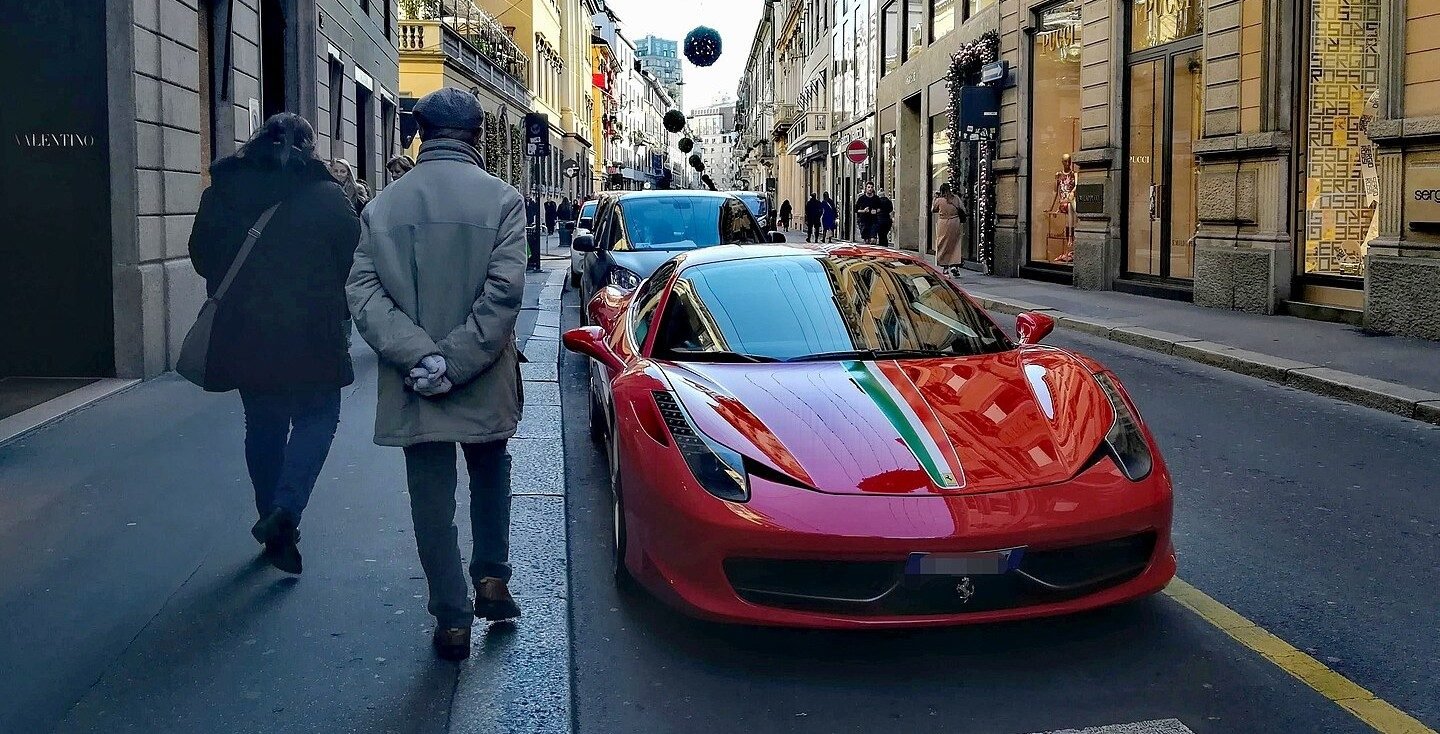
By FlavMi – Milan, Via Monte Napoleone – Own work – CC BY 3.0 – WikiCommons