
What to eat in Bologna
Quick Guide to Taste in the City


On this page you will find an excerpt of some of the most representative dishes, products, and wines of Bologna, which you can enjoy in one of the restaurants from our selection.
See also:
- Guide to Bologna
- Itineraries: 1d, 3d, CT1, CT2
- See: Attractions
- Do: Experiences
- Eat: Where and What
- Getting Around, Pass, Stay
Overview
Gastronomic Identity of the City
Bologna’s cuisine is rich, enveloping, and deeply rooted in tradition: hand-rolled fresh pasta, flavorful meats, hearty broths, and historic cured meats tell centuries of gastronomic culture. Here, food is not just sustenance, but a source of pride and shared heritage.
Historical Influences
Bologna has historically been nicknamed “La Grassa”, an appellation that reflects the abundance and richness of its table. Since the Middle Ages, the city was renowned for prosperous markets, quality livestock, and artisanal productions. Alongside the tradition of hand-rolled fresh pasta, a gastronomic culture developed based on fine meats, sausages, aged cured meats, and hearty recipes, symbolizing well-being and conviviality.
Territory and Ingredients
The fertile plains of Emilia provide wheat, quality livestock, and excellent products. Flour, fresh eggs, pork and beef, Parmigiano Reggiano, and balsamic vinegar are pillars of a generous and hearty cuisine, perfectly accompanied by local wines.
An Experience Beyond the Plate
Eating in Bologna means sitting in an osteria under the porticoes, enjoying steaming tortellini in broth, tagliatelle with ragù prepared according to tradition, and sharing a charcuterie board with a glass of Emiliano red wine.
It is a convivial, warm, and authentic experience. A cuisine that does not follow trends, but anticipates them. And that remains in the heart.
Food-Wine Table
In the table below, you will find a list of typical local products and wines, classified according to the main national quality marks such as DOP, IGP, etc. (see the legend). Traditional dishes are included for their historical and cultural value.
The table structure provides a clear criterion to understand the value and gastronomic identity of the territory.
- Scroll the table down and to the right to view all data in the columns and access Wikipedia links 🌐 for further information (when available).
- To see the explanation of each data column, click on the column title itself (e.g., Index, Ratings, Org, etc.) at the top of the table.
⏳ Caricamento tabella in corso…
📌 The dishes, products, and wines listed above, while representing the local gastronomic identity, are not always exclusive, but often shared with the provincial or regional territory.
📌 For the main certifications (DOP, IGP, DOC, and DOCG), the selection is based on the official production specifications, checking – where possible – whether the municipality is included in the authorized area.
Signature Dishes
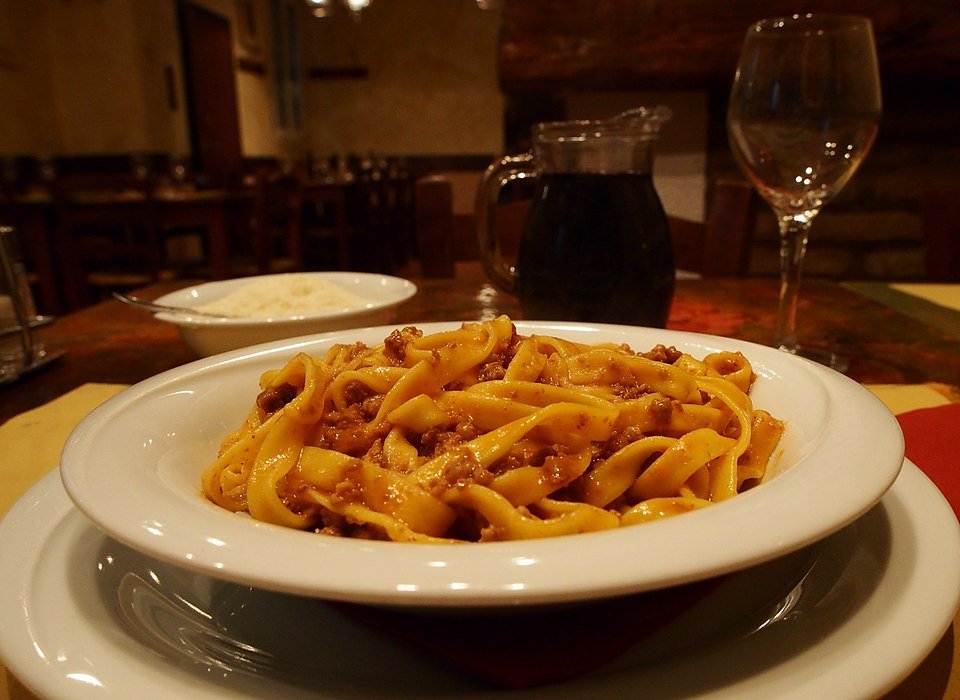
Tagliatelle with Bolognese Ragù
The undisputed queen of the Bolognese table, tagliatelle with ragù represent the essence of Bologna, “La Grassa.” Hand-rolled egg pasta, dressed with authentic Bolognese ragù — made from meat, soffritto, and slow cooking — creates a perfect balance of structure and flavor. It is the city’s signature dish, often imitated worldwide but authentic only here.
Tortellini in Broth
Small filled pasta parcels, tortellini in broth are pure tradition, especially during festive meals. Filled with meat and served in a fragrant hot broth, they showcase the skill of the sfogline and the family culture of Emilia. A dish that unites elegance and memory.
Bolognese Lasagna
With characteristic spinach green pasta, Bolognese lasagna alternates layers of ragù, béchamel, and Parmigiano Reggiano. Rich, enveloping, and structured, it represents the quintessential Sunday lunch and one of the most recognized symbols of Emiliano cuisine.
Gramigna with Sausage
Gramigna is a short pasta shape typical of Emilia, often paired with ragù or rich sauces. The version with sausage — sometimes enriched with a touch of cream — is among the most beloved interpretations in Bologna and its surroundings. The result is a creamy, flavorful, and hearty dish, perfect for a convivial meal.
Bolognese Cotoletta
A traditional Bolognese second course, the cotoletta alla Bolognese is a lightly floured veal slice sautéed in butter, topped with prosciutto crudo and a sprinkle of Parmigiano. Rich and flavorful, it represents the elegance of Emiliano cuisine and the attention to enhancing local meat, making it an iconic Bolognese main course.
Bollito Misto alla Bolognese
A historic winter dish, bollito misto combines several cuts of meat served with traditional sauces like green sauce and mustard. It celebrates peasant culture and the art of using every part of the animal with simplicity and taste.
Scaloppine alla Petroniana
Scaloppine alla Petroniana are a rich and flavorful second course, traditionally prepared with floured veal slices sautéed in butter and then seasoned with prosciutto crudo and mushrooms. The Petroniana is named after the devotion to San Petronio, patron saint of Bologna, and represents a perfect balance between the delicacy of the meat and the intensity of the ingredients.
Crescentine or Tigelle
Small round breads, served hot and filled with cured meats, cheeses, and sometimes flavored lard, crescentine (or tigelle) embody Emiliano conviviality. They can be an appetizer, a main dish, or street food: versatile and irresistible.
Friggione Bolognese
A traditional side dish made with white onions and tomatoes, slowly cooked until soft and flavorful. Originally a popular dish, friggione accompanies meats and crescentine, representing authentic Bolognese home cooking.
Pinza Bolognese
A traditional dessert made with a soft dough and filled with sweet fruit mustard, pinza bolognese has its roots in peasant tradition. Simple yet aromatic, it is one of the city’s most representative sweets.
Rice Cake
Also known as “torta degli addobbi,” this dessert is made from rice, milk, almonds, and almond liqueur. Although found throughout Emilia, it belongs to Bolognese tradition and is one of the city’s most iconic sweets.
Traditional Products
Mortadella di Bologna PGI
The city’s iconic cured meat, recognizable for its pink color and white fat cubes, is produced according to PGI regulations. Enjoyed on its own, in a sandwich, or alongside warm crescentine, mortadella tells the story of Bologna’s artisanal tradition to the world.
Parmigiano Reggiano
Known as the “king of cheeses,” Parmigiano Reggiano is a star of the local cuisine. Used in first courses or enjoyed in flakes, it represents the excellence of the Emilia region and completes many of the city’s signature recipes.
Prosciutto di Parma PDO
A symbol of Emilia-Romagna, Prosciutto di Parma PDO is appreciated for its sweetness and delicacy. Thinly sliced and served with warm crescentine or on traditional boards, it represents a regional excellence that enriches the Bolognese gastronomic experience.
Traditional Balsamic Vinegar of Modena PDO
Esteemed Emiliano condiment made from cooked grape must and aged for a long time, Traditional Balsamic Vinegar of Modena PDO is not exclusively from Bologna but is an integral part of regional gastronomic culture. Used sparingly to enhance cured meats, cheeses, or meats, it adds depth and complexity to flavors.
Grana Padano PDO
A long-tradition hard cheese, Grana Padano PDO is often considered a historic alternative to Parmigiano Reggiano in some local dishes. Used grated in first courses or served in flakes, it contributes to the richness and variety of Emiliano culinary tradition.
📌 Parmigiano Reggiano, Prosciutto di Parma PDO, Traditional Balsamic Vinegar of Modena PDO, and Grana Padano PDO are not exclusively from Bologna. However, the production of these products spans a wide area that includes the city and its province. For this reason, while they are regional or provincial specialties, they remain pillars of Bolognese cuisine, used daily in the city’s signature dishes.
Wines and Beverages
Colli Bolognesi Pignoletto
Pignoletto is the white wine symbol of the Bolognese hills. It includes Colli Bolognesi Classico Pignoletto DOCG, Colli Bolognesi Pignoletto Frizzante, and Colli Bolognesi DOC. Fresh, aromatic, and versatile, it pairs perfectly with appetizers, light first courses, and fish- or vegetable-based dishes. Drinking a glass of Pignoletto means savoring the local wine tradition and the conviviality typical of Bolognese tables.
Lambrusco
Lambrusco is Emilia’s quintessential red wine and also plays an important role in the Bolognese area. Sparkling and slightly tannic, it pairs with cured meats, pasta with ragù, and meat-based main courses, adding liveliness and freshness to traditional dishes. Its presence reflects Bologna’s link to Emilia’s long-standing wine culture.
Wines of Romagna
Although Sangiovese and Albana are typical Romagna wines, their cultivation area also includes Bologna and its province. Sangiovese produces structured red wines, perfect with meat main courses and ragù, while Albana, a white or sweet wine, pairs with traditional desserts and cheeses. These wines demonstrate the continuity of regional wine culture and their role in Bolognese signature dishes.
Bolognese Craft Beer
In recent years, Bologna has seen a flourishing craft beer scene. Locally produced with selected ingredients, Bolognese beers pair with street food, cured meats, and rustic dishes, offering a modern and creative alternative that complements traditional wines in the city’s gastronomy.
FAQ
What is this page?
An overview of the most representative dishes, products, and drinks of Bologna, selected to help you discover the city’s authentic flavors.
How does it work?Scroll through the entries in the Table and the various sections; each section provides concise information and links for further reading 🔗.
Signature DishesIn this section you will find some of the city’s most iconic dishes, presented with brief descriptions.
Traditional ProductsHere are some traditional products, widespread also at a regional level, yet pillars of local cuisine.
Wines and BeveragesA selection of the city’s distinctive wines and drinks, with notes on the territory and traditional pairings.
See also
- Guide to Bologna
- Itineraries: 1d, 3d, CT1, CT2
- See: Attractions
- Do: Experiences
- Eat: Where and What
- Getting Around, Pass, Stay
Other Destinations
🔐 Some images on this page are used under Creative Commons licenses:
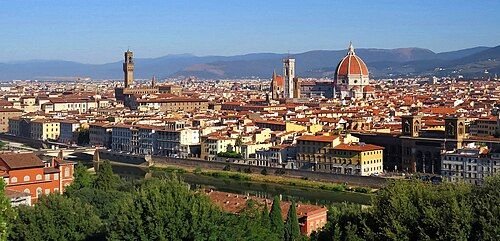
By PROPOLI87 – Florence, panoramic view from Piazzale Michelangelo – Own work – CC BY-SA 4.0 – Wikimedia Commons
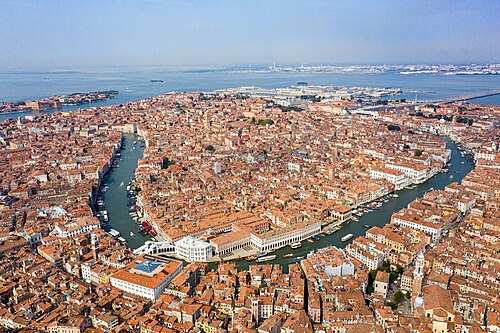
By Kasa Fue – Venice, aerial view of the Grand Canal – Own work – CC BY-SA 4.0 – Wikimedia Commons
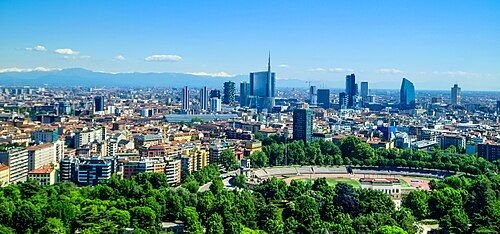
By https://www.pexels.com/u/ghostpresenter/ – Milan, Porta Nuova skyline – CC0 – Public Domain – Wikimedia Commons
By Rolf Dietrich Brecher from Germany – Palermo, panoramic view of Piazza and Pretoria Fountain.– CC BY-SA 2.0 – Wikimedia Commons
.jpg)