
Bologna Complete Tour – Part 2: travel itinerary
What to see, opening hours, prices, map


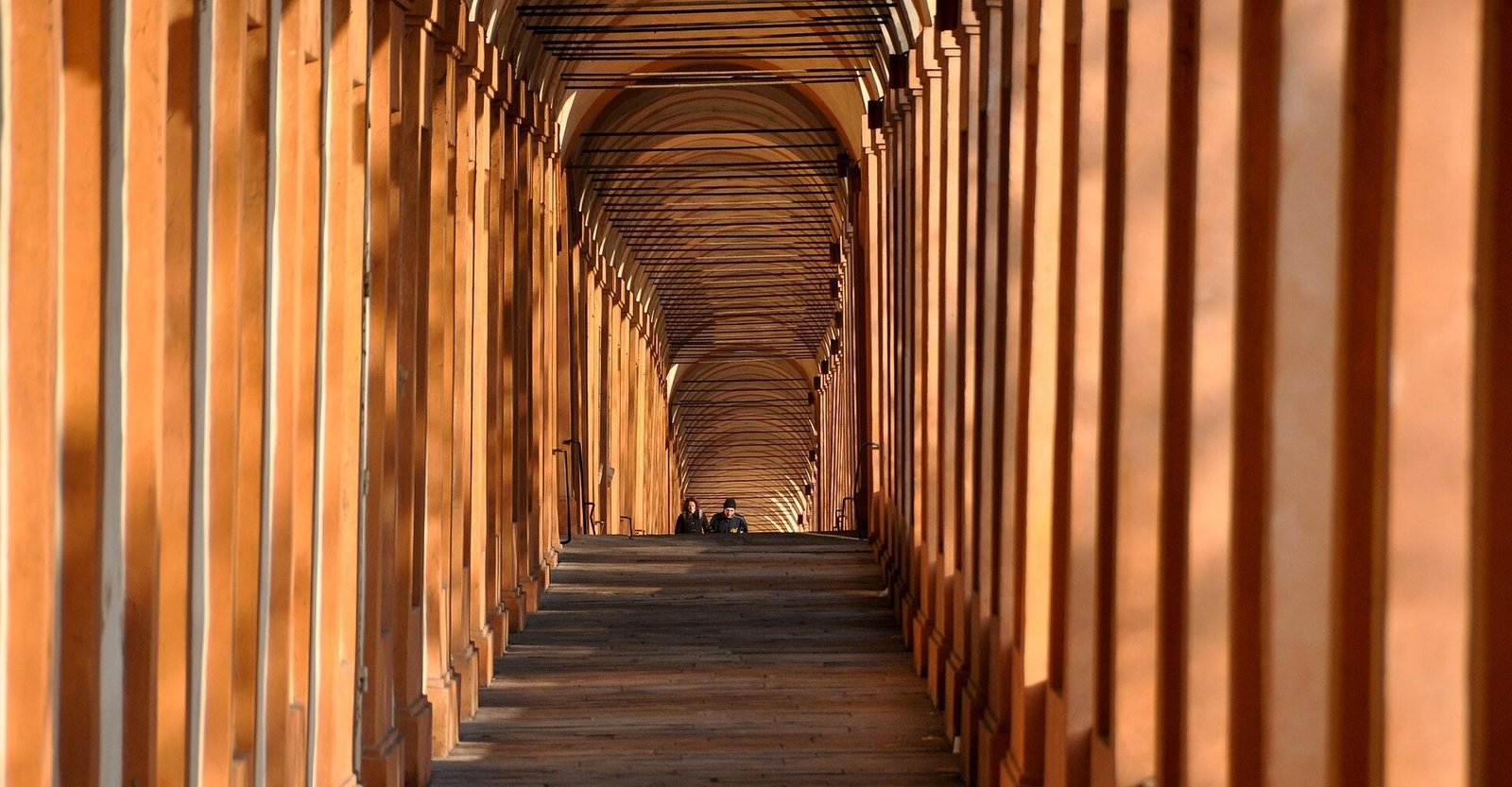
The view of the Portico of San Luca (UNESCO World Heritage Site) in the photo above is just one of the many attractions that are part of this second section of the Complete Tour of Bologna.
- 📍 St. Francesco and Pratello
- 📍 Towers and University
- 📍 St. Donato and North University
- 📍 First Suburbs
See also:
- Complete Tour 1
- Guide to Bologna
- Itineraries: 1d, 3d, CT2
- See: Attractions
- Do: Experiences
- Eat: Where and What
- Getting Around, Pass, Stay
Overview
📌 Click on the route names to access the short description and the details of each stop ⬇️.
Bologna Tour Completo – Part 2 continues and completes the large city itinerary started in Part 1, connecting seamlessly with the final routes of the historic center.
St. Francesco and Pratello – The first route runs through the historic and popular heart of the city, between the Basilica di San Francesco and the lively Via del Pratello, continuing to the cultural hubs of MAMbo and Palazzo Pallavicini, in a balance of art, history, and urban life.
Towers and University – The second itinerary crosses Bologna’s medieval and university center, from the iconic Due Torri to the Quadrilatero, passing through the Via Zamboni area with its basilicas and scientific collections.
St. Donato and North University – This route develops in the most academic area of the city, among unique museums such as the Museo Geologico “G. Capellini” and university collections, reaching botanical gardens, ancient churches, and panoramic medieval towers.
First Suburbs – The final route extends between the suburbs and the hills and is mainly accessible by car. Here Bologna expands through industrial museums, memorial sites, villas, and religious complexes, up to the scenic Portico di San Luca and its Sanctuary.
📌 All walking routes are connected (shared stop 🧩), so you always have continuity if you want to skip one or more stops. See also Itinerary Info.
Routes: Maps, Descriptions, Details
ST. FRANCESCO AND PRATELLO
- Open Route Map📍
- Distance: 4.8* km on foot
- Time: 1h 05* min. on foot
- Visit duration: 5 hours
- Stops: 10 main (I-X → I-X)* + 5 secondary
- Reale Collegio di Spagna (I-X)🧩 → Basilica di San Francesco (A) → Via del Pratello (B) → Palazzo Pallavicini (C) → MAMbo – Museo d’Arte Moderna (D) → La Quadreria – Palazzo Rossi Poggi Marsili (E) → Palazzo Fava (F) → Chiesa di San Colombano (G) → Mercato delle Erbe (H) → Fontana Vecchia (I-X)🧩
- For days, times, prices and other info see Itinerary Table 📊
* These values may differ from those shown on Google Maps, as they are continuously recalculated in real time. See also Itinerary Info and Navigator + See here for Shared Stop 🧩
Route Description
SUMMARY
This linear itinerary of 4.8 km on foot includes 10 main stops and 5 secondary stops, for a total visit duration of about 5 hours. Among the most interesting highlights are the Basilica di San Francesco, the lively Via del Pratello, the prestigious Palazzo Pallavicini, the MAMbo with its contemporary portico, and the evocative Mercato delle Erbe and historic Fontana Vecchia.
Expand STEP DETAIL ⬇️
I/X. Reale Collegio di Spagna is a shared stop 🧩 – See final stop of the previous route.
⬇️
A. Basilica di San Francesco
The itinerary begins with a visit to the Basilica di San Francesco, a magnificent example of Gothic architecture. This church, built in the 13th century, houses important works of art and is characterized by imposing apses and an elegant cloister.
In the nearby Piazza Malpighi, we find the Tombe dei Glossatori, medieval funerary monuments that preserve the remains of 13th-century Bolognese jurists, testifying to the central role of the University of Bologna in the European legal landscape.
✨ A surprising medieval fragment, where Bologna’s legal history emerges almost theatrically in the heart of the city.
Also in the square, the majestic Platano secolare deserves attention, a centuries-old tree that adds a touch of nature to the urban landscape.
⬇️
B. Via del Pratello
Continuing on, we immerse ourselves in the vibrant atmosphere of Via del Pratello, one of Bologna’s most characteristic and alternative streets. Once a working-class and popular area, today it is famous for its lively nightlife, historic venues, and bohemian atmosphere.
✨ Walking along this street means discovering the most authentic and youthful Bologna.
⬇️
C. Palazzo Pallavicini
We now head to Palazzo Pallavicini, an elegant 18th-century building that hosts temporary exhibitions and cultural events. This palace has an important history: it was here that Mozart, still a child, performed a memorable concert during his stay in Bologna in 1770.
📌 Palazzo Pallavicini can be visited by appointment. You can find the phone number in the Google Maps listing accessible via the link in the table.
⬇️
D. MAMbo – Museo d’Arte Moderna di Bologna
The next stop is the MAMbo – Museo d’Arte Moderna di Bologna, the beating heart of the city’s contemporary art scene. It hosts works ranging from the post-war period to the present day, with a strong focus on 20th-century Italian art.
Outside the museum extends the evocative Portico del MAMbo (UNESCO World Heritage), a regenerated urban area that combines culture and modern architecture.
⬇️
E. La Quadreria – Palazzo Rossi Poggi Marsili
We continue to La Quadreria, located inside Palazzo Rossi Poggi Marsili. This exhibition space houses an extraordinary collection of paintings from the 16th to the 18th century, featuring artists such as Guido Reni and Guercino. La Quadreria is a hidden gem in the heart of Bologna, perfect for lovers of classical painting.
⬇️
F. Palazzo Fava
A short walk takes us to Palazzo Fava, an architectural jewel hosting high-level temporary exhibitions. Inside, visitors can admire the frescoes by the Carracci family, one of the most important examples of Bolognese Mannerism.
Next door, the Museo Civico Medievale is an unmissable stop for anyone interested in Bologna’s medieval history. It houses armor, manuscripts, sculptures, and precious artifacts that illustrate the city’s political and daily life in the Middle Ages.
📌 Palazzo Fava can be visited by appointment. You can find the phone number in the Google Maps listing accessible via the link in the table.
⬇️
G. Chiesa di San Colombano
We continue with a visit to the Chiesa di San Colombano, an ancient religious complex that now hosts the Collezione Tagliavini, an incredible collection of historical musical instruments. The interior of the church, decorated with beautiful frescoes, makes the experience even more atmospheric.
⬇️
H. Mercato delle Erbe
For a gastronomic break, we head to the Mercato delle Erbe, one of the city’s most lively and authentic markets. Here you can find fresh produce, local specialties, and small eateries perfect for tasting the best of Bolognese cuisine.
✨ A concentration of Bolognese life, among aromas, colors, and the city’s daily rhythm.
⬇️
I/X. Fontana Vecchia
We conclude our route with a visit to the Fontana Vecchia, a historic fountain located in a small hidden square, offering a peaceful corner away from the city center’s bustle.
TOWERS AND UNIVERSITY
- Open Route Map📍
- Distance: 2.2* km on foot
- Time: 0h 29* min. on foot
- Visit duration: 8 hours
- Stops: 10 main (I-X → I-X)* + 7 secondary
- Fontana Vecchia (I-X)🧩 → Il Quadrilatero (A) → Torre degli Asinelli (B) → MEB Museo Ebraico di Bologna (C) → Basilica di San Giacomo Maggiore (D) → Teatro Comunale di Bologna (E) → Collezione di Antropologia (F) → Museo di Palazzo Poggi (G) → Pinacoteca Nazionale di Bologna (H) → Museo Geologico “G. Capellini” (I-X)🧩
- For days, times, prices and other info see Itinerary Table 📊
* These values may differ from those shown on Google Maps, as they are continuously recalculated in real time. See also Itinerary Info and Navigator + See here for Shared Stop 🧩
Route Description
SUMMARY
This linear itinerary of 2.2 km on foot includes 10 main stops and 7 secondary stops, for a total visit duration of about 8 hours. Among the most interesting highlights are the Quadrilatero with its historic shops, the iconic Due Torri, the university area of Via Zamboni with the Basilica di San Giacomo Maggiore and the Oratorio di Santa Cecilia, up to the Pinacoteca Nazionale and the large museum complexes of Palazzo Poggi.
Expand STEP DETAIL ⬇️
I/X. Fontana Vecchia is a shared stop 🧩 – See final stop of the previous route.
⬇️
A. Il Quadrilatero
We begin our itinerary in the Quadrilatero, the oldest and most fascinating district of the city, famous for its medieval alleyways and historic shops. Here you can feel the commercial soul of Bologna, with markets, delicatessens, and traditional shops offering local products such as mortadella, parmesan, and fresh pasta.
✨ Walking through Via Clavature, Via Pescherie Vecchie and Via Drapperie means immersing yourself in the aromas and flavors of Bolognese tradition.
⬇️
B. Torre degli Asinelli, Torre della Garisenda
Continuing on, we reach the Due Torri, the undisputed symbol of the city.
- The Torre degli Asinelli, 97 meters high, is the tallest leaning tower in Italy. Climbing its 498 steps offers a spectacular view over Bologna and its hills.
- The Torre della Garisenda, shorter and visibly leaning, was even mentioned by Dante in the Divine Comedy.
These medieval towers are a testament to ancient Bologna, when the city was dotted with many noble towers.
📌 This stop corresponds to the famous 2 towers of Bologna, but the visit to Torre degli Asinelli is currently not available due to stability issues of Garisenda. To enjoy Bologna’s skyline, we included Torre Prendiparte instead (stop E of the following itinerary).
⬇️
C. MEB Museo Ebraico di Bologna
A short walk from the towers brings us to the MEB – Museo Ebraico di Bologna, located in the heart of the former Jewish ghetto. The museum tells the story of the Jewish community in Bologna from the Middle Ages to today, with documents, artifacts, and interactive exhibits exploring Jewish culture and traditions.
⬇️
D. Basilica di San Giacomo Maggiore
We now head towards Via Zamboni, the heart of the university district.
- The Basilica di San Giacomo Maggiore, one of Bologna’s most important religious buildings, houses the stunning Cappella Bentivoglio, decorated with frescoes by Lorenzo Costa.
- The Oratorio di Santa Cecilia, next to the basilica, is a small gem featuring a Renaissance fresco cycle from the Bolognese school.
- Walking along the Portici accademici di Via Zamboni (UNESCO World Heritage), you feel the lively atmosphere of university life, with students filling the area between libraries, cafés, and historic bookshops.
📌 The visit to Cappella Bentivoglio requires advance booking. You will find the phone number in the Google Maps listing via the link in the table.
⬇️
E. Teatro Comunale di Bologna
Not far away stands the Teatro Comunale di Bologna, one of the most prestigious opera houses in Italy. Built in 1763 to a design by Antonio Galli Bibiena, it hosted world premieres of operas by Rossini and Verdi. Today, the theatre still offers a rich program of opera and concerts.
📌 The visit to the Teatro Comunale di Bologna requires advance booking. You will find the phone number in the Google Maps listing via the link in the table.
⬇️
F. Collezione di Antropologia
Our route continues with a visit to the Collezione di Antropologia and the Collezione di Zoologia di Bologna, part of the University Museum System.
- The Collezione di Antropologia displays artifacts illustrating human evolution and the cultural diversity of populations around the world.
- The Collezione di Zoologia preserves thousands of terrestrial and marine specimens, including skeletons, models, and taxidermy animals.
An interesting stop for lovers of science and nature.
⬇️
G. Museo di Palazzo Poggi
We are now in one of the city’s most important cultural hubs: Palazzo Poggi.
- The Museo di Palazzo Poggi hosts collections dedicated to science, cartography, and anatomy, featuring ancient instruments and anatomical wax models.
- The Biblioteca Universitaria di Bologna (BUB), founded in the 18th century, preserves over one million books and manuscripts of immense historical value.
- The Museo della Specola, located in the historic astronomical observatory tower, allows visitors to discover ancient astronomical instruments and enjoy a panoramic view over the city.
📌 The Biblioteca Universitaria di Bologna (BUB) can be visited by appointment. You will find the phone number in the Google Maps listing via the link in the table.
⬇️
H. Pinacoteca Nazionale di Bologna
Art lovers should not miss the Pinacoteca Nazionale, which houses one of the most important art collections in Italy. Here you can admire masterpieces by Raphael, Guido Reni, Carracci, and Guercino, spanning from medieval paintings to Renaissance works.
⬇️
I/X. Museo Geologico “G. Capellini” is a shared stop 🧩 – See starting stop of the following itinerary.
ST. DONATO AND NORTH UNIVERSITY
- Open Route Map📍
- Distance: 1.6* km on foot
- Time: 0h 23* min. on foot
- Visit duration: 5 hours
- Stops: 7 main (I-X → F)* + 2 secondary
- Museo Geologico “G. Capellini” (I-X)🧩 → Porta San Donato (A) → Museo delle Cere Anatomiche Cattaneo (B) → Orto Botanico ed Erbario di Bologna (C) → Basilica di San Martino (D) → Torre Prendiparte (Sky Experience) (E) → Torre degli Azzoguidi (F)
- For days, times, prices and other info see Itinerary Table 📊
* These values may differ from those shown on Google Maps, as they are continuously recalculated in real time. See also Itinerary Info and Navigator + See here for Shared Stop 🧩
Route Description
SUMMARY
This linear itinerary of 1.6 km on foot includes 7 main stops and 2 secondary stops, for a total visit duration of about 5 hours. Among the most interesting highlights are the Museo Geologico “G. Capellini” with its impressive Diplodocus skeleton, Porta San Donato and the nearby university district, the Orto Botanico with its thousands of plant species, the Basilica di San Martino with the Chiostro dei Morti, and finally the iconic Torre Prendiparte and Torre degli Azzoguidi with panoramic views over the city.
Expand STEP DETAIL ⬇️
⬇️
I/X. Museo Geologico “G. Capellini”
Our tour begins at the Museo Geologico “Giovanni Capellini”, one of the most important geology and paleontology museums in Italy. Here you can admire collections of fossils, minerals, and geological finds that tell the story of the Earth’s evolution. Among the most spectacular pieces is the gigantic skeleton of a Diplodocus, over 20 meters long, which fascinates both adults and children.
⬇️
A. Porta San Donato
Continuing on, we reach Porta San Donato, one of the ancient gates of the city. Built in the 13th century, it was part of Bologna’s third defensive wall and marked the entrance to the city for those arriving from Via Emilia. Today, the gate is an important landmark in the university district.
⬇️
B. Museo delle Cere Anatomiche Cattaneo
A short walk away is the Museo delle Cere Anatomiche Cattaneo, a fascinating and unusual museum displaying a collection of 19th-century anatomical wax models. These models were used for educational purposes and show the human body with extraordinary realism, making it a unique museum in Italy.
✨ The anatomical wax models are striking for their almost unsettling realism: the human body reconstructed in extraordinary detail looks alive.
⬇️
C. Orto Botanico ed Erbario di Bologna
We continue to the Orto Botanico ed Erbario di Bologna, founded in 1568 and one of the oldest botanical gardens in Europe. It hosts over 5,000 plant species, including centuries-old trees, medicinal plants, and rare carnivorous plants. It is the perfect place for a relaxing break surrounded by nature in the heart of the city.
⬇️
D. Basilica di San Martino
We move on to the Basilica di San Martino, a Gothic church rich in history and art.
- Inside, the famous work Lezione di San Pier Tommaso stands out, a fresco of great artistic value.
- The Chiostro dei Morti, attached to the basilica, is a evocative space where silence and history transport visitors back in time.
⬇️
E. Torre Prendiparte (Sky Experience)
We continue to the Torre Prendiparte, one of the best-preserved medieval towers in Bologna. Standing at 60 meters, it offers a unique Sky Experience, allowing visitors to climb to the top and enjoy a spectacular view over the city. During the ascent, you pass through historic rooms that once served as prisons and clerical lodgings.
✨ A breathtaking view of Bologna: red rooftops, towers, and hills unfold in a 360° panorama.
📌 The visit to Torre Prendiparte (Sky Experience) requires advance booking. You will find the phone number in the Google Maps listing accessible via the link in the table.
⬇️
F. Torre degli Azzoguidi
We conclude our tour at the Torre degli Azzoguidi, another medieval tower of Bologna, standing about 61 meters tall. It is part of the group known as the “sister towers,” together with Torre Prendiparte and Torre Galluzzi. Its slender profile and central location make it an icon of Bologna’s medieval architecture.
📌 The Torre degli Azzoguidi can be visited by request. You will find the phone number in the Google Maps listing accessible via the link in the table.
FIRST SUBURBS
- Open Route Map📍
- Distance: 40.2* km by car
- Time: 1h 37* min. by car
- Visit duration: 10 hours
- Stops: 10 main (X → I)* + 8 secondary
- Museo del Patrimonio Industriale (X) → Museo per la Memoria di Ustica (A) → Villa Aldrovandi Mazzacorati (B) → Chiusa di S. Ruffillo e del Canale di Savena (C) → Cenobio di San Vittore (D) → Chiesa di San Michele in Bosco (E) → Cisterna di Valverde (F) → Chiesa di San Girolamo della Certosa (G) → Portico devozionale di San Luca (H) → Museo Ducati (I)
- For days, times, prices and other info see Itinerary Table 📊
* These values may differ from those shown on Google Maps, as they are continuously recalculated in real time. See also Itinerary Info and Navigator + See here for Shared Stop 🧩
Route Description
SUMMARY
This circular itinerary of 40.2 km by car includes 10 main stops and 8 secondary stops, for a total visit duration of about 10 hours. Among the most interesting highlights are the Museo del Patrimonio Industriale with the productive history of Bologna, the moving Museo per la Memoria di Ustica, the beautiful Villa Aldrovandi Mazzacorati with the Teatro Mazzacorati, the hydraulic system of the Chiusa di San Ruffillo, and the panoramic route of the Portico di San Luca.
Expand STEP DETAIL ⬇️
⬇️ starting point
X. Museo del Patrimonio Industriale
The itinerary begins at the Museo del Patrimonio Industriale, located in the former Galotti brickworks. This museum offers a fascinating journey through the history of Bologna’s industry, from ancient textile manufacturing to modern technological innovation. A wide collection of machinery, tools, and documents highlights the city’s economic importance over the centuries.
⬇️
A. Museo per la Memoria di Ustica
We move on to the Museo per la Memoria di Ustica, a deeply emotional site preserving the remains of the Itavia DC-9 aircraft shot down in 1980. Christian Boltanski’s artistic installation, with mirrors and intermittent lights, pays tribute to the 81 victims and creates a powerful space for reflection and collective memory.
✨ An intense and silent experience that leaves a profound emotional impact.
⬇️
B. Villa Aldrovandi Mazzacorati
We arrive at Villa Aldrovandi Mazzacorati, a stunning 18th-century residence known for its elegant Teatro Mazzacorati 1763, a jewel of Rococo theatre architecture. Inside the villa is also the National Museum of Toy Soldiers, featuring a rich collection of historical figurines and military miniatures.
📌 The Teatro Mazzacorati 1763 can be visited by reservation. You will find the phone number in the Google Maps listing accessible via the link in the table.
⬇️
C. Chiusa di San Ruffillo
Continuing on, we reach the Chiusa di San Ruffillo, one of Bologna’s most important hydraulic structures. Here the Canale di Savena plays a crucial role in the city’s water system, showcasing medieval hydraulic engineering ingenuity.
⬇️
D. Cenobio di San Vittore
Next is the evocative Cenobio di San Vittore, an ancient monastery immersed in nature. Its charm lies in its architectural simplicity and peaceful atmosphere, making it an ideal place for a contemplative break.
📌 The Cenobio di San Vittore can be visited by request. You will find the phone number in the Google Maps listing accessible via the link in the table.
⬇️
E. Chiesa di San Michele in Bosco
We climb up to the Chiesa di San Michele in Bosco, one of the most panoramic churches in the city. In addition to the beauty of the religious building and its cloister, it offers a breathtaking view over Bologna’s historic center.
⬇️
F. Cisterna di Valverde
Descending, we reach the Cisterna di Valverde, an ancient water cistern used for water collection. This hidden and little-known site is another testimony to Bologna’s sophisticated water management system.
📌 The Cisterna di Valverde can be visited by request. You will find the phone number in the Google Maps listing accessible via the link in the table.
⬇️
G. Chiesa di San Girolamo della Certosa
We enter the Chiesa di San Girolamo della Certosa, part of the monastery overlooking the Cimitero Monumentale della Certosa. This cemetery is an open-air museum filled with sculptures and monuments of great artistic and historical value. It also contains the Monument to the martyrs of the fascist revolution, a powerful historical work. The stunning Portico della Certosa (UNESCO World Heritage) connects the cemetery to the city center.
⬇️
H. Portico devozionale di San Luca
We walk along the famous Portico devozionale di San Luca (UNESCO World Heritage), the longest portico in the world with its 666 arches. Along the way, we pass the Arco del Meloncello, an elegant Baroque structure marking the start of the climb. At the top, we reach the Santuario della Madonna di San Luca, Bologna’s iconic sanctuary, offering a spectacular panoramic view over the city and surrounding hills.
✨ Walking under the 666 arches to the sanctuary is a meditative experience, blending effort, silence, and gradually unfolding views over the city.
⬇️
I. Museo Ducati
We conclude the itinerary with a visit to the Museo Ducati, a true paradise for motorbike enthusiasts. Here you can retrace the history of the legendary Bologna-based motorcycle brand through iconic models, trophies, and technological innovations that have made Ducati a global symbol of two-wheel excellence.
📌 The Museo Ducati can be visited by reservation. You will find the phone number in the Google Maps listing accessible via the link in the table.
Eating
During this tour in Bologna, we recommend alternating visits with pleasant food breaks, to discover one of the richest culinary traditions in Italy.
Between one stop and another, you can enjoy great classics such as tagliatelle al ragù, tortellini in brodo and cotoletta alla bolognese, along with other iconic local specialties like lasagna verde al forno, gramigna con salsiccia and the typical friggione. Street food options are also widely available in the historic center, including crescentine, tigelle and local cured meats, perfect for a quick yet authentic break (see also What to eat in Bologna).
The itinerary is perfectly suited for several food stops distributed across the different routes:
- On the first route, between S. Francesco and Pratello, you can stop at Trattoria Serghei, ideal for authentic traditional Bolognese cuisine.
- On the second route, between Towers and University, a break at Tamburini is perfect, located in the heart of the lively Quadrilatero food district.
- On the third route, between S. Donato and North University, you’ll find a quieter atmosphere at Trattoria Aretusi, a genuine option away from the tourist crowds.
- On the fourth route, towards the First Suburbs and San Luca, we recommend Trattoria Meloncello, a strategic stop after climbing to the Sanctuary and along the UNESCO portico.
For more ideas and insights, also check Where to eat in Bologna.
Sleeping
To fully experience this second part of Bologna Tour Completo, the ideal choice is to stay in the historic center, especially between Piazza Maggiore, the Quadrilatero and Via Zamboni. This area allows you to easily move between the main routes of the tour, exploring the city on foot among monuments, historic universities, markets and local spots, with a lively atmosphere both during the day and in the evening.

Alternatively, you can choose a strategic location close to the different routes of the tour:
- For the first route, the Pratello and Porta Sant’Isaia area is ideal for those looking for an authentic, alternative atmosphere full of local life.
- For the second route, the area between Quadrilatero and Piazza Maggiore is perfect to stay in the heart of the historic center, among restaurants, markets and main attractions.
- For the third route, the Via Zamboni and University district is the best choice for those who want to immerse themselves in the city’s young and cultural atmosphere.
- For the fourth route, the area between Porta San Donato and San Luca is ideal for those looking for a quieter solution, well connected and close to panoramic and hillside attractions.
For more information and practical tips, you can also check Where to sleep in Bologna: Info and Tips.
📊 Itinerary Table
The table below shows all the stops of the four routes of Bologna Tour Completo – Part 2, to help you optimize your visit in the best way.
- Scroll the table down and to the right 📱🔄 Rotate your phone horizontally to get an overview of opening days, hours, prices of attractions, and for further details on Wikipedia 🌐 and Google Maps ➡️.
- ⚠️ Always check the opening days and hours of attractions through the Google Maps entries linked in the table. See also Itinerary Info.
- To see the explanation of each data column, click its title (e.g. Attractions Index, Ratings, Org, etc.) at the top of the table.
⏳ Caricamento tabella in corso…
📌 This table is updated every 6–12 months.
🛡️ The tables on Tourplan360.com are original content protected by copyright © and monitored through anti-plagiarism tracking systems.
FAQ
Yes. In all itineraries of Bologna Tour Completo – Part 2 you can remove stops or change their order. This allows you to adapt the route based on your interests and available time.
📌 See also Itinerary Info
Can these itineraries be done on foot?
Yes, three out of the four itineraries in Part 2 are designed to be done on foot, as they are all focused on the historic center of Bologna, while the last one is to be done by car or public transport.
📌 See also Getting around Bologna
Is it worth booking the main attractions in advance?
During peak tourist seasons, it is advisable to book in advance or join guided tours to avoid queues and secure entry.
How much time is needed to complete Part 2 of the tour?
Part 2 of Bologna Tour Completo requires approximately 28 hours of visit.
Where can I find days, opening hours and prices of attractions?
All updated information is available in the Itinerary Table 📊, with direct links to Google Maps and Wikipedia for further details.
See also
- Complete Tour 1
- Bologna in 1 Day
- Bologna in 3 Days
- Guide to Bologna
- See: Attractions
- Do: Experiences
- Eat: Where and What
- Getting Around, Pass, Stay
Other Destinations
🔐 Some images on this page are used under Creative Commons licenses:
By PROPOLI87 – Florence, panoramic view from Piazzale Michelangelo – Own work – CC BY-SA 4.0 – Wikimedia Commons
By Kasa Fue – Venice, aerial view of the Grand Canal – Own work – CC BY-SA 4.0 – Wikimedia Commons
By https://www.pexels.com/u/ghostpresenter/ – Milan, Porta Nuova skyline – CC0 – Public Domain – Wikimedia Commons
By Giorgio Minguzzi – Bologna, a glimpse of the San Luca portico – CC BY-SA 2.0 – Wikimedia Commons