
Guide to Bologna: what to see, do, eat
Travel Guide to the Best of the City


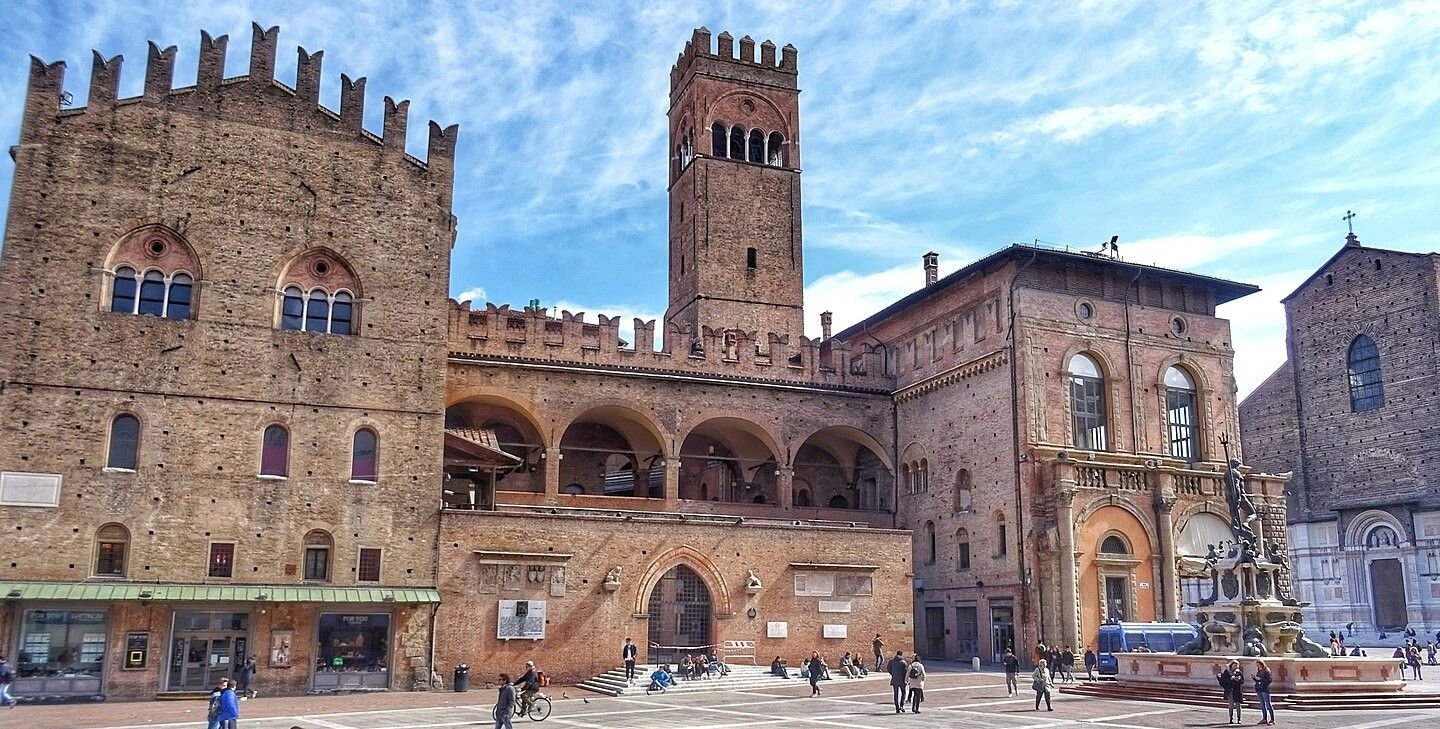
The medieval charm of Piazza Maggiore, the historic heart of Bologna, shown in the photos above📱🔄️, introduces this complete guide to the city.
📌 For a more complete overview of certain items, click on the links to detailed pages +🔗
- When to Go
- Getting There
- Getting Around +🔗
- Useful Tips +🔗
- What +🔗 & Where +🔗 to Eat
- Where to Sleep +🔗
Must-see
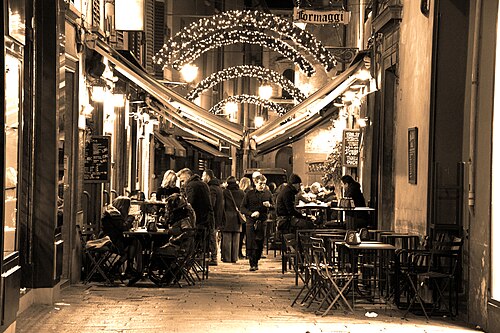
Overview
📌 A large part of the references covered in this Overview section and in the Practical Info section, are summarized in the Orientation Table 📊 with further details on Wikipedia 🌐 and Google Maps ➡️ where available.
Bologna is a fascinating city, known for its rich history, medieval architecture and excellent culinary tradition. Capital of Emilia-Romagna, Bologna is an important cultural and economic center that offers a unique combination of modernity and tradition, with a vibrant student life thanks to the oldest university in the Western world, founded in 1088.
GEOGRAPHY
Bologna is located in the heart of the Pianura Padana, at the foothills of the first ridges of the Apennines of Emilia, in a strategic position between northern and central Italy. The surrounding territory is characterized by a harmonious balance between agricultural plains, green hills and urban routes, with an orderly and accessible landscape that reflects the history and identity of one of the most important cities in the region.
From a satellite reading of the territory, the main directions of the Bologna area clearly emerge:
- North: the Bologna plain extends, with agricultural areas and urban centers connecting the city towards Ferrara and the Veneto region.
- North-West: routes develop towards Modena and Reggio Emilia, in a strongly industrial and productive context typical of Emilia.
- West: the territory quickly connects to the area of Casalecchio di Reno and the first hilly zones, an access point to the Apennines.
- South: the Bologna hills and the Apennine reliefs of Emilia develop here, with natural landscapes, villages and scenic routes immersed in greenery.
- South-East: the territory continues towards the Apennine valleys and the areas connecting Bologna to Tuscany, along important historical and natural routes.
- East: urban and productive areas extend towards Imola, Romagna and the Adriatic coast.
The city is strategically connected to other major centers in northern Italy, including Modena, Ferrara, Ravenna and Firenze, as well as the main routes towards Milano, Venezia and Roma. This central position makes Bologna one of Italy’s key logistical and cultural hubs, an ideal starting point to explore Emilia-Romagna and neighboring regions.
Expand OVERVIEW ⬇️
HISTORY
Bologna, one of the oldest university cities in Europe still active today, boasts a millenary history that develops through Etruscan and Roman settlements and a long medieval and communal period, evolving over time into one of the main cultural, academic and political centers of northern Italy.
- Ancient origins: the area of Bologna was already inhabited in Etruscan times under the name Felsina and later integrated into the Roman world under the name Bononia, becoming an important center of the Empire’s road and trade network.
- Roman era: under Roman rule, Bononia developed as a strategic colony along the Via Aemilia, consolidating its role as a commercial and urban hub in the Pianura Padana.
- Middle Ages: during the Middle Ages Bologna became one of the most important Italian communes, marked by the construction of towers, guilds and especially the University of Bologna, the oldest in the Western world.
- Early modern period: between the 15th and 18th centuries the city came under the influence of the Papal States, maintaining a strong cultural and administrative role and developing important urban and architectural works.
- Contemporary age: with the Unification of Italy and industrial development, Bologna became an important economic, railway and university hub, strengthening its identity as a cultured, dynamic and strategic city in north-central Italy.
MAIN ATTRACTIONS
Bologna is a true open-air museum where history, art and university life intertwine within a compact and remarkably well-preserved urban fabric. The historic center, among the best preserved in Europe, is a continuous sequence of porticoes, medieval towers, churches and historic palaces that tell centuries of cultural and political evolution. Among the main landmarks we find:
- Piazza Maggiore – The heart of the city, surrounded by historic buildings such as Palazzo d’Accursio and the Basilica di San Petronio.
- Le Due Torri (Asinelli e Garisenda) – The symbol of medieval Bologna and one of the most iconic views in Italy.
- Basilica di San Petronio – One of the largest Gothic churches in Europe, located in the center of city life.
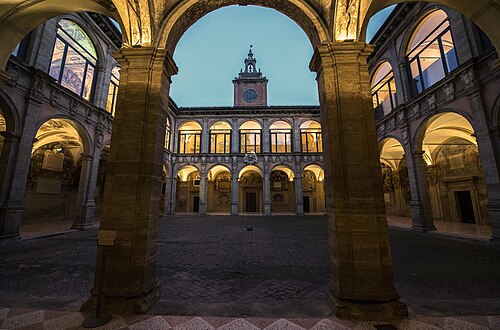
- Archiginnasio di Bologna – The historic seat of the University, featuring the famous wooden Anatomical Theatre.
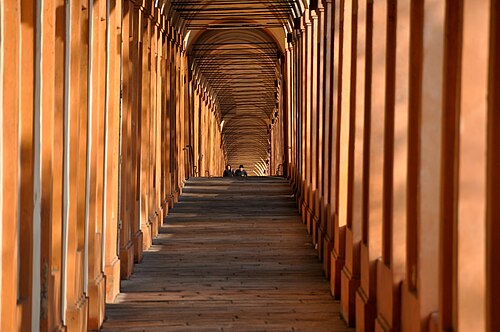
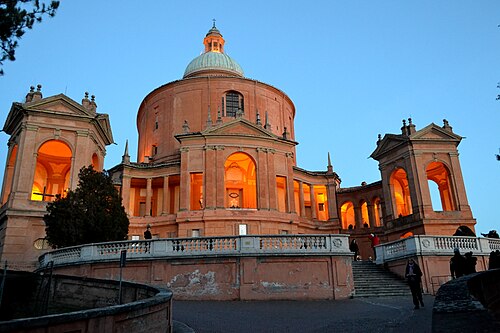
- Santuario della Madonna di San Luca 🔗 – Accessible via the world’s longest portico, it dominates the city from the surrounding hills.
Cultural Offer: Bologna offers a rich cultural heritage, ranging from museums, art collections and internationally renowned academic institutions. Among the must-see places:
- MAMbo – Museo d’Arte Moderna di Bologna – A reference point for contemporary Italian and international art.
- Pinacoteca Nazionale di Bologna – It houses masterpieces of Emilian and Italian art from the Middle Ages to the Renaissance.
- Museo della Storia di Bologna – An immersive journey to understand the city’s evolution over time.
- Complesso delle Sette Chiese (Santo Stefano) – One of the most atmospheric places in the city, featuring unique architectural layers.
- Portici di Bologna (Patrimonio UNESCO) – A unique architectural system in the world that connects and protects the entire city, a symbolic identity of Bologna.
A perfect balance between history, university culture and urban life makes Bologna one of the most authentic and livable cities in Italy.
See also Experiences in Bologna: Tours, Tickets and Useful Info
PARKS AND NATURE
Despite its strong urban density, Bologna is surrounded by a surprisingly varied natural heritage, ranging from hills to the first Apennine reliefs, offering numerous green areas, scenic routes and natural landscapes of great value.
- Parco dei Gessi Bolognesi e Calanchi dell’Abbadessa, recognized as a UNESCO World Heritage Site on September 19, 2023, is a natural area of great geological and landscape interest located southeast of Bologna. The park is characterized by karst formations, caves, sinkholes and badlands, and represents one of the most unique ecosystems in Emilia-Romagna, ideal for hiking and trekking immersed in nature.
- Appennino tosco-emiliano, which extends south of the city, is the main mountainous area around Bologna. Here forests, historic villages and natural trails alternate, connecting Emilia to Tuscany and offering numerous opportunities for outdoor activities and slow tourism.
- Colle della Guardia, which dominates the city and hosts the Santuario della Madonna di San Luca, is one of Bologna’s most iconic panoramic viewpoints.
- Parco di Villa Ghigi, Parco di Villa Spada and Giardini Margherita are among the main urban green areas, widely used by residents and visitors for relaxation, sports and walking.
EVENTS & CELEBRATIONS
Bologna is a lively city throughout the year, with a rich calendar of events and festivals that reflect its cultural, university and trade fair identity. Among the most important events we find:
- Festa di San Petronio – The main religious celebration of the city, dedicated to Bologna’s patron saint, which animates the historic center with events and popular traditions.
- Discesa della Madonna di San Luca – A traditional and deeply felt event in which the sacred icon descends from the Santuario della Madonna di San Luca to the city center through the famous portico.
- Carnevale di Bologna – A historic festival with popular roots, involving the city center with events, parades and cultural activities.
- Bologna Jazz Festival – One of the most important Italian jazz festivals, featuring international artists and concerts spread throughout the city.
Alongside cultural and traditional events, Bologna is also one of Europe’s main trade fair hubs, hosting internationally relevant exhibitions such as Arte Fiera, Cosmoprof Worldwide Bologna, Bologna Children’s Book Fair, EIMA International and SANA, attracting visitors and professionals from all over the world.
📊 Orientation Table
In the table below you will find a summary of the main references, to best orient and organize your visit through our itineraries (see Itinerary Overview).
- Scroll the table down and to the right 📱🔄 Rotate your phone horizontally to get an overview of opening days, hours, prices of attractions, and for further details on Wikipedia 🌐 and Google Maps ➡️.
- ⚠️ Always check the opening days and hours of attractions through the Google Maps entries linked in the table. See also Itinerary Info.
- To see the explanation of each data column, click its title (e.g. Attractions Index, Ratings, Org, etc.) at the top of the table.
⏳ Caricamento tabella in corso…
📌 This table is updated every 6–12 months.
🛡️ The tables on Tourplan360.com are original content protected by copyright © and monitored through anti-plagiarism tracking systems.
Itinerary Overview
All the must-see attractions in Bologna listed in the table have been carefully divided into three itineraries designed to ensure a complete, well-organized visiting experience suitable for any amount of available time.
To make your choice easier, below we have summarized the content of each itinerary with short descriptions, so you can quickly identify the one that best suits your needs.
1 DAY
The itinerary to show you Bologna in 1 Day is a 3.7 km route designed to explore the historic heart of the city on foot in a complete and engaging way. Over the course of 11 hours you will visit some of the most important stops, such as the Cattedrale Metropolitana di San Pietro, Palazzo d’Accursio and the Basilica di San Petronio. A very intense day full of charm and discoveries.
3 DAYS
This three-day itinerary in Bologna is designed to immerse you in the city in a deeper way, following 2 walking routes through stops rich in history, art and tradition. All the most important attractions of the Emilia capital listed in the table are included in the itinerary, which, with a total of 20 hours of sightseeing, allows you to experience Bologna in all its aspects.
COMPLETE TOUR PART 1 AND 2
Structured into 8 routes, Bologna Complete Tour Part 1 and Part 2 has an estimated total duration of about 50 hours of visiting time and allows you to explore the entire city offer, with 124 attractions in total, including the devotional Portico of San Luca, a UNESCO World Heritage Site.
The itinerary includes 34 museums, 22 places of worship, 22 monuments, 21 main streets and squares, 16 historic villas and palaces, and 4 historic parks and gardens.
A complete journey that allows you to experience Bologna in all its authenticity, between art, history, gastronomy and tradition.
Practical Info
WHEN TO GO
Bologna can be visited all year round, but each season offers a different experience in terms of weather, university activity and tourist flows. Choosing the right period can make your visit even more enjoyable:
- Spring (April–June): Mild temperatures and bright days, ideal for walking under the porticoes and exploring the historic center. The city is lively thanks to the student presence, yet still easy to enjoy.
- Summer (July–August): Hot weather and a quieter city due to the university break. It is a good time to visit museums and attractions with fewer crowds, even though temperatures can be high.
- Autumn (September–October): One of the best periods to visit Bologna, with pleasant weather, the return of university activity and major cultural and trade fair events.
- Winter (November–March): Cool temperatures and a more authentic atmosphere. The city is less crowded and allows a calmer visit among museums, historic venues and gastronomic traditions.
GETTING THERE
Bologna is easily reachable by any means of transport. Whether you arrive by plane, train, bus or car, here are some practical tips to plan your trip.
- By plane: Bologna Guglielmo Marconi Airport is located just a few kilometers from the city center and is connected by bus, taxi and private transfer services, ensuring quick and direct access to the city.
- By train: Bologna Centrale station is one of the main railway hubs in Italy, with high-speed connections to Milan, Florence, Rome and major Italian cities, as well as numerous regional lines.
- By bus: Bologna is well connected to many Italian and European cities through national and international routes, with the main arrivals near the central station area.
- By car: The city is served by major motorways such as A1, A13 and A14. Urban traffic can be heavy during peak hours, so it is recommended to use park-and-ride areas and public transport to move around the center.
✅ To search for or book a flight you can check Booking.com Flights.
✅ You can check routes, schedules, prices and buy train or bus tickets with Trainline.
✅ For car rentals you can refer to Booking.com Cars.
GETTING AROUND
Bologna is a compact and well-organized city, easy to visit thanks to its flat layout and its concentrated historic center. The main attractions are connected by short distances and an efficient urban transport network.
- On foot or by bike: The historic center of Bologna is ideal to explore on foot under its porticoes, which connect most of the main attractions. It is also possible to use bicycles and e-bikes to move quickly between different areas.
- Public transport: Urban buses efficiently connect the city center, the train station and peripheral areas. The city does not have a metro system, but the public transport service is extensive and efficient.
- ZTL: The historic center is a Limited Traffic Zone (ZTL), with regulated and controlled access. It is recommended to check regulations before entering and consider external parking areas connected to public transport.
- Parking: Main parking areas are located outside the city center and near transport hubs. In Table > Parking and Mobility you can find the most practical solutions for visiting the city.
- Important note: in Bologna, white lines do not indicate free parking, but are generally reserved for residents. It is therefore not recommended to park in these areas without checking local signage.
See also Getting around Bologna: Info and Tips
USEFUL TIPS
To visit Bologna in the most comfortable and well-organized way, here are some practical tips that can help you save time and money while improving your travel experience.
- Bologna Welcome Card: A useful solution to access museums, attractions and tourist services with benefits on entries and transport.
See also Bologna Welcome Card: how it works and where to buy. - Hop-on Hop-off tourist bus: A practical way to explore the city with the hop-on/hop-off formula, ideal for reaching the main points of interest without stress.
🏆 Panoramic tours with stops at major landmarks and tasting of local specialties. - Combined tickets: Some attractions and museums offer combined entries that allow you to visit multiple cultural sites while saving on total costs.
- Comfortable shoes: Highly recommended, especially for walking in the historic center under the porticoes, where distances are short but visits can be long.
- Water and sunscreen: In the warmer months, it is useful to carry water and sunscreen, especially during city walks and open-air visits.
- Dress code: In places of worship, appropriate clothing is required, with shoulders and knees covered and respectful behavior.
WHAT TO EAT
Bolognese cuisine is one of the most famous in Italy, based on rich flavors, genuine ingredients and a long gastronomic tradition linked to Emilian culture. Each dish represents a key element of the city’s identity.
- Tortellini in brodo: The symbol of Bolognese cuisine, fresh meat-filled pasta traditionally served in hot broth.
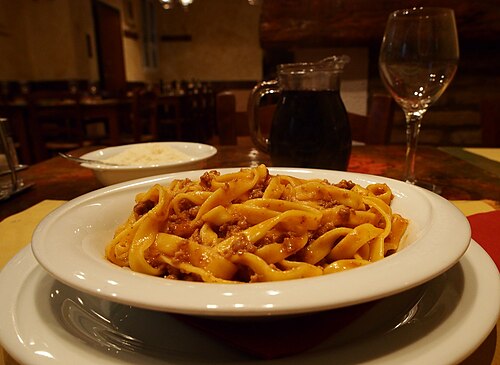
- Tagliatelle al ragù: The most iconic dish of the tradition, with handmade egg pasta and the famous slow-cooked Bolognese ragù.
- Lasagne alla bolognese: Layers of egg pasta, ragù, béchamel and Parmigiano Reggiano, one of the most representative dishes of Italian cuisine worldwide.
- Mortadella di Bologna: A historic cured meat from the city, recognized as PGI, with a delicate and unmistakable flavor, often served in sandwiches and appetizers.
Bolognese street food: Bologna is also a perfect city for street food, with specialties to enjoy while walking under the porticoes. Among the most typical are tigelle, crescentine and mortadella served in sandwiches, ideal for a quick but authentic taste of local tradition.
See also What to eat in Bologna
WHERE TO EAT
Bologna offers one of the richest gastronomic landscapes in Italy, where the tradition of historic osterias is combined with an authentic cuisine deeply rooted in the local territory. From typical eateries to historic restaurants, the city is a true capital of Emilian taste.
- Osteria dell’Orsa, one of the most iconic places in Bologna, beloved for its simple and authentic traditional Emilian cuisine, very popular among both students and visitors.
- Trattoria di Via Serra, a reference point for both contemporary and traditional Bolognese cuisine, offering carefully prepared dishes and high-quality ingredients.
- Al Cambio, a historic restaurant that blends tradition and refinement, offering one of the most complete gastronomic experiences in the city.
See also Where to eat in Bologna
WHERE TO SLEEP
Bologna offers accommodation options for every need, from boutique hotels in the historic center to apartments in university areas or in the quieter parts of the city. Choosing the right area to stay in is essential to move around comfortably and make the most of the Bolognese experience.

Here are some of the main areas where to stay in Bologna, selected for location, convenience and atmosphere:
- Historic Center: The best choice for those who want to experience Bologna on foot, among porticoes, squares, monuments and the main cultural attractions.
- University / Via Zamboni area: A lively and youthful district, ideal for those looking for a dynamic atmosphere full of bars, culture and nightlife.
- San Donato / Fiera: A modern and strategic neighborhood, perfect for those traveling for trade fairs or seeking a well-connected and quieter area.
- Central Station area: A practical solution for those arriving by train or wanting easy connections to other cities in Emilia-Romagna and northern Italy.
See also Where to sleep in Bologna: Info and Tips
FAQ
Among the must-see highlights are Piazza Maggiore, the Two Towers, the Basilica of San Petronio and the Sanctuary of the Madonna di San Luca.
Which museums and monuments should you visit in Bologna?The city hosts important museums and historical sites, including the Pinacoteca Nazionale, MAMbo, the Archiginnasio with the Anatomical Theatre and the Santo Stefano Complex.
📌 Learn more in the Main Attractions section.
Are there parks or green areas in Bologna?
Yes, among the main green areas are the Gessi Bolognesi and Calanchi dell’Abbadessa Park and the Tuscan-Emilian Apennines, as well as urban parks like Giardini Margherita and Villa Ghigi Park.
📌 Learn more in the Parks and Nature section.
Is Bologna suitable for a short visit?
Yes, the historic center is compact and allows you to visit many attractions even in 1- or 3-day itineraries, thanks to short distances and the porticoes connecting the whole city.
📌 Learn more in the Itinerary Overview section.
What is the best time to visit Bologna?
Spring and autumn offer ideal temperatures and a rich calendar of cultural and trade fair events, while summer is quieter due to the reduced student presence.
📌 Learn more in the When to Go section.
Which typical dishes should you try in Bologna?
Local specialties include tortellini in broth, tagliatelle al ragù, lasagne alla bolognese and mortadella.
📌 Learn more in the What to Eat section.
Where to eat well in Bologna?The most popular areas for traditional cuisine are the historic center, the university district and historic neighborhoods full of osterias and typical trattorias.
📌 Learn more in the Where to Eat section.
What is the best area to stay in Bologna?
The historic center is ideal for visiting the city on foot, but the university area and the station district also offer excellent options.
Are there budget hotels in Bologna?Yes, areas like San Donato, Bolognina and well-connected outskirts offer more affordable accommodation compared to the city center.
📌 Learn more in the Where to Sleep section.
Where can I find opening days, times and prices of attractions?
All information is available in the table in the dedicated columns.
Where can I find online links and information about attractions?The table also includes direct links to Google Maps ➡️ and Wikipedia 🌐 for each attraction.
📌 Check the Orientation Table 📊
See also
- Bologna in 1 Day
- Bologna in 3 Days
- Complete Tour 1 and 2
- See: Attractions
- Do: Experiences
- Eat: Where and What
- Getting Around, Pass, Stay
Other Destinations
🔐 Some images on this page are used under Creative Commons licenses:
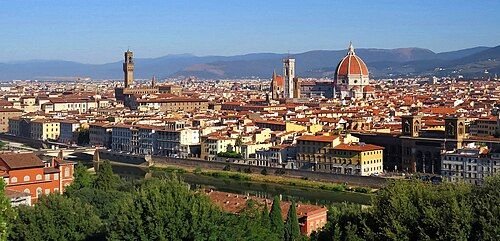
By PROPOLI87 – Florence, panoramic view from Piazzale Michelangelo – Own work – CC BY-SA 4.0 – Wikimedia Commons
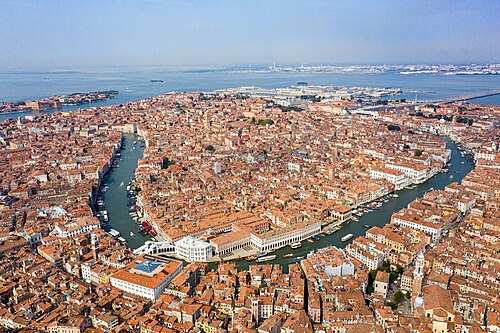
By Kasa Fue – Venice, aerial view of the Grand Canal – Own work – CC BY-SA 4.0 – Wikimedia Commons
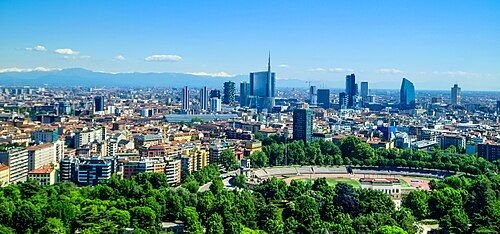
By https://www.pexels.com/u/ghostpresenter/ – Milan, Porta Nuova skyline – CC0 – Public Domain – Wikimedia Commons
By Maretta Angelini – Bologna, panoramic view of Piazza Maggiore – Own work – CC BY-SA 4.0 – Wikimedia Commons
Expand image credits
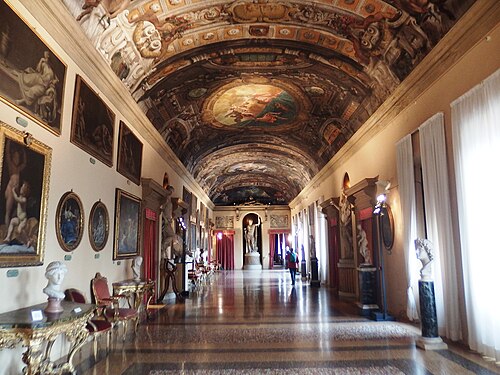
By Palickap – Bologna, Palazzo d’Accursio, Galleria Vidoniana and Municipal Art Collections – Own work – CC BY-SA 4.0 – Wikimedia Commons
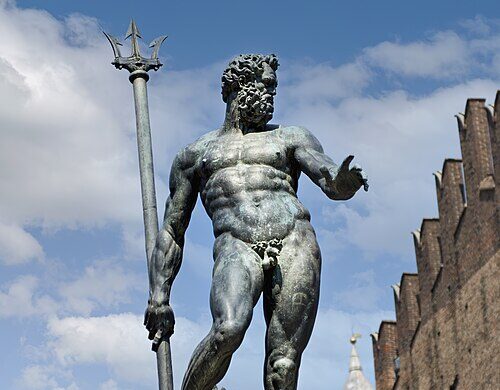
By Didier Descouens – Bologna, Fountain of Neptune in Piazza Maggiore – Own work – CC BY-SA 4.0 – Wikimedia Commons
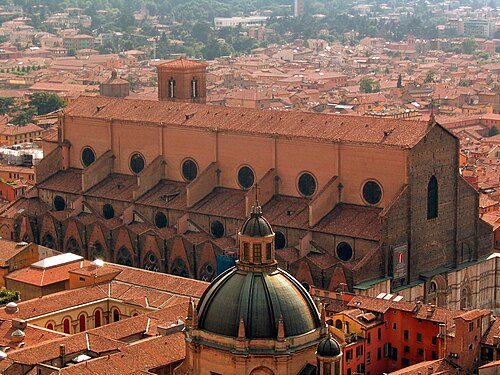
By ZeWrestler (attribution presumed according to the copyright information) – Bologna, Basilica of San Petronio seen from the Asinelli Tower – Author and source not automatically verifiable – Pubblico dominio – Wikimedia Commons
By Giorgio Minguzzi – Bologna, view of the San Luca portico – Originally published on Flickr under the title “Salire a San Luca” – CC BY-SA 2.0 – Wikimedia Commons
By Anita.malina – Bologna, Sanctuary of the Madonna di San Luca – Own work – CC BY-SA 4.0 – Wikimedia Commons
By Wwikiwalter – Bologna, Archiginnasio, inner atrium and clock tower – Own work – CC BY-SA 4.0 – Wikimedia Commons
By Petar Milošević – Bologna, tagliatelle with Bolognese ragù – Own work – CC BY-SA 4.0 – Wikimedia Commons
By Zolli – Bologna, establishments near the portico on Via Pescherie Vecchie – Own work – CC BY-SA 4.0 – Wikimedia Commons