
Trieste Complete Tour: travel itinerary
What to see, opening hours, prices, map


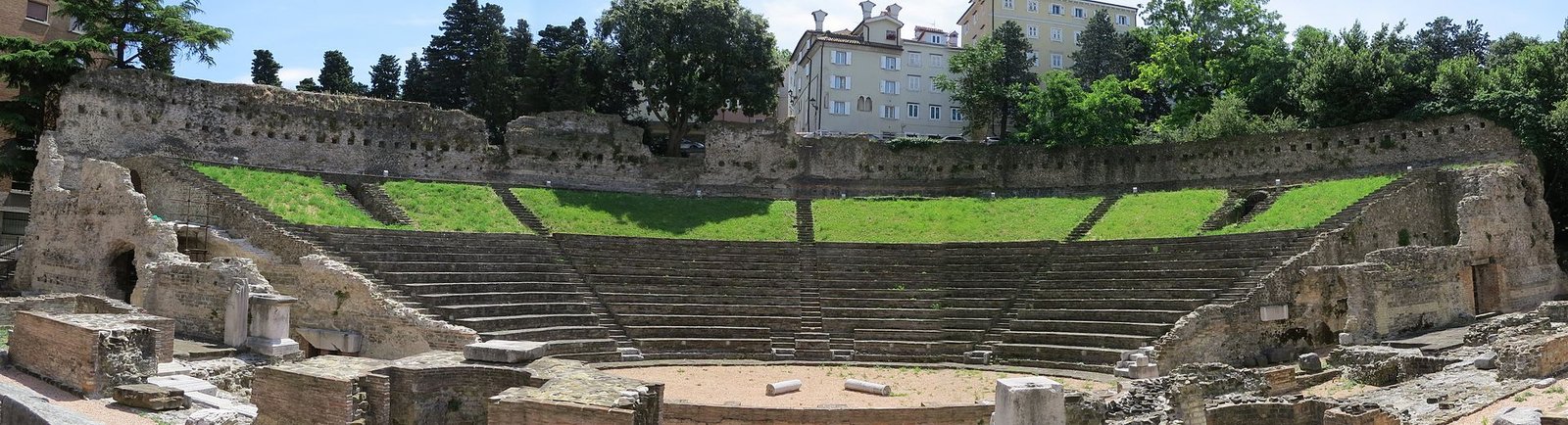
The Roman Theatre shown in the photo above is just one of over 50 attractions included in the Complete Tour, which will guide you through an in-depth visit of Trieste, among iconic landmarks, hidden gems, and breathtaking views.
See also:
- Trieste Travel Guide
- Itineraries: 1d, 3d, CT
- Experiences, Getting Around
- Eating: Where & What
- Where to Sleep
Routes: Maps, Descriptions, Details
To discover Trieste and its wonders at their best, we have designed a detailed itinerary that will guide you through the most charming places in the city. The itinerary has a total duration of 31 hours of visits and is divided into four parts, designed to offer you a complete and immersive experience.
The first three parts take place entirely on foot, allowing you to explore the historic center and its most fascinating spots at a relaxed pace. Each route lasts approximately 6 hours and will lead you through historic monuments, majestic squares, museums, and hidden corners that tell the story of Trieste.
The fourth part is designed to be explored by car and focuses on the must-see attractions outside the city center. This route, the longest of the itinerary, has an estimated duration of 14 hours and should be divided over 2 days, so you can fully enjoy each stop without rushing.
📌The 3 walking routes in the historic center (red, green, and yellow) are connected 🧩, meaning the end point of one is the starting point of the next, ensuring continuous movement if you choose to skip one or more stops.
TRIESTE COMPLETE TOUR > PART 1
- Open Route Map📍
- Distance: 2,6* km on foot
- Time: 0,37* min. on foot
- Visit duration: 5 hours
- Stops: 10 main (X →I-X)* + 0 secondary
- Cattedrale di San Giusto (X) → Museo d’Antichità “J.J. Winckelmann” (A) → Basilica di San Silvestro (B) → Arco di Riccardo (C) → Museo Joyce (D) → Basilica paleocristiana Madonna del Mare (E) → Museo Civico Sartorio (F) → Museo Revoltella (G) → Acquario Marino di Trieste (H) → Civico Museo d’Arte Orientale (I-X)🧩
- For days, times, prices and other info see Itinerary Table 📊
* These values may differ from those shown on Google Maps, as they are continuously recalculated in real time. See also Itinerary Info and Navigator + See here for Shared Stop 🧩
Route Description
SUMMARY
This walking itinerary, consisting of 10 main stops, offers a complete immersion into the history, art, and archaeology of Trieste, along an easy route of approximately 2.6 km. Among the highlights are the Cattedrale di San Giusto with its stunning mosaics, the Arco di Riccardo, a testament to ancient Roman Tergeste, and the Museo Revoltella, home to important collections of modern and contemporary art.
Expand STEP DETAIL ⬇️
⬇️ starting point
X. Cattedrale di San Giusto
The itinerary begins at the majestic Cattedrale di San Giusto (National Monument), located on the homonymous hill. This Romanesque church combines two ancient basilicas and boasts splendid Byzantine mosaics. From the terrace in front, you can enjoy a spectacular view of the city and the sea.
✨ Admire the city and the sea from above: a breathtaking view that turns the visit into a visual poem. The terrace is perfect for capturing sunset shots, when the light illuminates both the mosaics and the sea.
⬇️
A. Museo d’Antichità “J.J. Winckelmann”
Adjacent to the cathedral is the Museo d’Antichità “J.J. Winckelmann”, which houses Roman archaeological finds and tells the story of the city through its ancient testimonies.
⬇️
B. Basilica di San Silvestro
Descending from the Colle di San Giusto, you encounter the Basilica di San Silvestro (National Monument), one of Trieste’s oldest churches, characterized by simple and austere architecture.
⬇️
C. Arco di Riccardo
Just a short walk away is the Arco di Riccardo, an ancient Roman gate dating back to the 1st century BC, which was part of the city walls during the imperial era.
✨ Walking beneath this millenary arch feels like stepping back in time, hearing the echoes of ancient Rome.
⬇️
D. Museo Joyce
Trieste is linked to the figure of James Joyce, who lived here for over ten years. The Museo Joyce narrates his life and his connection to the city, featuring letters, manuscripts, and personal items of the writer.
📌 The Museo Joyce is temporarily closed to the public.
⬇️
E. Basilica paleocristiana di via Madonna del Mare
One of Trieste’s lesser-known gems is the Basilica paleocristiana di via Madonna del Mare, which preserves remains of mosaics and structures dating back to the early centuries of Christianity.
⬇️
F. Museo Civico Sartorio
The tour continues with a visit to the Museo Civico Sartorio, an elegant noble residence turned museum, featuring a collection of paintings, ceramics, and period furnishings.
⬇️
G. Museo Revoltella
One of the city’s most prestigious museums is the Museo Revoltella, which houses a rich collection of modern and contemporary art. The museum spans multiple floors and includes works by Italian and European artists from the 19th century onwards.
⬇️
H. Acquario Marino di Trieste
The day concludes with a visit to the Acquario Marino di Trieste, which hosts a wide range of Adriatic marine species and provides an interesting overview of the local marine ecosystem.
📌 The Acquario Marino di Trieste is currently closed to the public.
⬇️
I/X 🧩 – Civico Museo d’Arte Orientale is a shared stop – See initial stop of the next route
TRIESTE COMPLETE TOUR > PART 2
- Open Route Map📍
- Distance: 1,7* km on foot
- Time: 0,24* min. on foot
- Visit duration: 6 hours
- Stops: 10 main (I-X →I-X)* + 9 secondary
- Civico Museo d’Arte Orientale (I-X)🧩 → Piazza Unità d’Italia (A) → Teatro Verdi Trieste (B) → Chiesa greco-ortodossa di San Nicolò (C) → Piazza della Borsa Trieste (D) → Teatro Romano di Trieste (E) → Chiesa Serbo-Ortodossa di San Spiridione (F) → Canal Grande di Trieste (G) → Museo Teatrale C. Schmidl (H) → Borgo Teresiano (I-X)🧩
- For days, times, prices and other info see Itinerary Table 📊
* These values may differ from those shown on Google Maps, as they are continuously recalculated in real time. See also Itinerary Info and Navigator + See here for Shared Stop 🧩
Route Description
SUMMARY
This walking itinerary, consisting of 10 main stops, allows you to explore Trieste through its history, art, and Central European heritage, along an easy route of approximately 1.7 km. Highlights not to be missed include Piazza Unità d’Italia, a symbol of Habsburg administration, the Teatro Romano of ancient Tergeste, and the Canal Grande, from which you can admire one of the most picturesque views of the city.
Expand STEP DETAIL ⬇️
⬇️
I-X 🧩. Civico Museo d’Arte Orientale
Our itinerary begins with a visit to the Civico Museo d’Arte Orientale, one of the most fascinating museums in Trieste. Housed in Palazzo Leo, the museum preserves precious collections of Japanese and Chinese art, including prints, ceramics, and oriental weapons, reflecting Trieste’s historical trade links with Asia.
⬇️
A. Piazza Unità d’Italia and its historic buildings
This magnificent square overlooking the sea is the true symbol of Trieste, a place of rare beauty surrounded by elegant buildings reflecting the city’s Austro-Hungarian past. Here we can admire:
- Palazzo della Luogotenenza austriaca, with its imposing neoclassical façade.
- Palazzo del Municipio, featuring its clock tower and the statue of Micheze and Jacheze.
- Palazzo del Lloyd Triestino, refined headquarters of the shipping company founded in 1833.
- Fontana dei Quattro Continenti, decorated with allegorical figures representing Asia, Africa, Europe, and America.
- Statua di Carlo VI, celebrating the Austrian emperor who made Trieste a free port.
- Caffè degli Specchi, a historic intellectual meeting place once frequented by Joyce and Svevo.
✨ Strolling through Piazza Unità d’Italia feels like stepping into a living painting, with the buildings reflecting the light on the sea and telling the story of Trieste.
⬇️
B. Teatro Verdi Trieste and Molo Audace
Just a short walk from the square is the Teatro Verdi, one of Italy’s main opera houses, inaugurated in 1801 and famous for hosting some of Verdi’s early performances. A little further, the Molo Audace stretches into the sea, offering stunning panoramic views of Trieste and the Gulf.
📌 The Teatro Verdi Trieste can be visited by reservation. You can find the phone number in the Google Maps card accessible from the table link.
⬇️
C. Chiesa Greco-Ortodossa di San Nicolò
Trieste has always been a multicultural city, and this church is a splendid testimony. Dedicated to Saint Nicholas, protector of sailors, the church is a baroque gem with richly decorated interiors. Attached to the church, the Museo della Comunità Greco-Orientale preserves documents and artworks about the Greek presence in the city.
⬇️
D. Piazza della Borsa Trieste
Once the hub of Trieste’s economic activity, this square is dominated by the Palazzo della Borsa Vecchia, built in 1806 in neoclassical style, along with other elegant Austro-Hungarian residences.
⬇️
E. Teatro Romano di Trieste
An unmissable stop to discover ancient Tergeste romana. This theater, dating back to the 1st century AD, could host up to 6,000 spectators and still serves today as an important venue for cultural events and open-air performances.
✨ From the ancient Roman Theatre, you can still sense the echoes of cheers and applause from 6,000 spectators two thousand years ago, an emotion suspended in time.
⬇️
F. Chiesa Serbo-Ortodossa di San Spiridione
Another testimony to Trieste’s multiculturalism is this beautiful Serbian Orthodox church, easily recognizable by its blue domes. Inside, there are precious icons and golden mosaics of extraordinary beauty.
⬇️
G. Canal Grande di Trieste and Ponte Rosso
Walking along the Canal Grande, one can admire one of the city’s most picturesque views. Built in the 18th century to promote trade, the canal is lined with historic buildings and cafés. The Ponte Rosso, one of the most characteristic, hosts a statue of James Joyce, the Irish writer who lived in Trieste for over a decade.
⬇️
H. Palazzo Gopcevich – Museo Teatrale Carlo Schmidl
This sumptuous palace houses the Museo Teatrale Carlo Schmidl, dedicated to the history of opera and theater in Trieste. Here you can admire costumes, sets, and musical instruments belonging to the most famous artists who performed on Trieste’s stages.
⬇️
I-X.🧩 Borgo Teresiano is a shared stop – See starting point of the next route
TRIESTE COMPLETE TOUR > PART 3
- Open Route Map📍
- Distance: 2,7* km on foot
- Time: 0,39* min. on foot
- Visit duration: 6 hours
- Stops: 10 main (I-X →I)* + 6 secondary
- Borgo Teresiano (I-X)🧩 → Piazza Vittorio Veneto (A) → Museo Risorgimento e Sacrario di Oberdan (B) → Kleine Berlin (C) → Sinagoga di Trieste (D) → Antico Caffè San Marco (E) → Chiesa di Sant’Antonio Taumaturgo (F) → Scala dei Giganti (G) → Parco della Rimembranza (H) → Castello di San Giusto (I)
- For days, times, prices and other info see Itinerary Table 📊
* These values may differ from those shown on Google Maps, as they are continuously recalculated in real time. See also Itinerary Info and Navigator + See here for Shared Stop 🧩
Route Description
SUMMARY
This walking itinerary, also consisting of 10 main stops, further explores Trieste through its history, art, and Central European culture, along a route of approximately 2.7 km. Among the must-see stops are the Borgo Teresiano with its elegant neoclassical buildings, Piazza Vittorio Veneto, the administrative heart of the Habsburg era, and the Castello di San Giusto with its museum and the Lapidario Tergestino, which preserves the city’s Roman history.
Expand STEP DETAIL ⬇️
⬇️
I/X.🧩 Borgo Teresiano
Our day begins in Borgo Teresiano, an elegant district built in the 18th century at the behest of Empress Maria Theresa of Austria. This area, characterized by neoclassical buildings and navigable canals, represents the perfect example of Habsburg urban planning and preserves the mercantile soul of Trieste.
⬇️
A. Piazza Vittorio Veneto
We continue towards Piazza Vittorio Veneto, the bustling heart of Habsburg administration, surrounded by imposing historic buildings:
- Museum of Post and Telegraph of Central Europe: housed in the Palazzo delle Poste, it preserves ancient telecommunications instruments and tells the story of the Austro-Hungarian Empire’s postal system.
- Palazzo delle Poste di Trieste: an imposing 19th-century neoclassical building, still hosting the postal offices today.
- EX Palazzo delle Ferrovie dello Stato: historic building that once managed the city’s railway traffic, symbolizing Trieste’s logistical vocation.
⬇️
B. Museo del Risorgimento
Our journey continues with a stop of strong symbolic value: the Museo del Risorgimento e Sacrario di Oberdan. This museum recounts Trieste’s role in the Italian Wars of Independence and commemorates Guglielmo Oberdan, a Triestine patriot executed by the Austrians in 1882.
⬇️
C. Kleine Berlin
A few steps away lies one of the city’s most evocative and lesser-known sites: Kleine Berlin, a complex of underground galleries built by the Nazis during World War II as air-raid shelters. Today, it can be visited with specialized guides and stands as a poignant testimony to the city’s wartime history.
📌 Kleine Berlin is visitable by reservation. The phone number can be found on the clickable Google Maps link in the table.
⬇️
D. Sinagoga di Trieste
Trieste boasts one of Italy’s oldest and most influential Jewish communities, and the Sinagoga di Trieste is its greatest architectural expression. Built in 1912, it is one of the largest synagogues in Europe, notable for its grandeur. Next to the synagogue is the Museo Ebraico Carlo e Vera Wagner, illustrating the history of the Triestine Jewish community through documents, liturgical objects, and testimonies of the Holocaust.
⬇️
E. Antico Caffè San Marco
It’s time to take a break at the historic Caffè San Marco, opened in 1914 and a meeting point for writers and intellectuals, including James Joyce and Umberto Saba. Here you can breathe the atmosphere of literary Trieste, among period furnishings and excellent coffee.
⬇️
F. Chiesa di Sant’Antonio Taumaturgo
We cross Borgo Teresiano again to reach the Chiesa di Sant’Antonio Taumaturgo, recognizable by its imposing neoclassical façade and large blue dome. Facing the Canal Grande, it is the city’s main Catholic place of worship.
⬇️
G. Scala dei Giganti
We now ascend the monumental Scala dei Giganti, a panoramic staircase connecting Borgo Teresiano to the upper part of the city. From here, you can admire a splendid view of Trieste, the sea, and the port.
⬇️
H. Parco della Rimembranza
At the top of the staircase, we find ourselves immersed in the Parco della Rimembranza, a green area dedicated to the fallen of World War I. Beyond its commemorative value, the park is an ideal place for a short break surrounded by nature.
⬇️
I. Castello di San Giusto
The final stop of the day leads us to the Castello di San Giusto, a medieval fortress built in the 15th century by the Habsburgs. From its terrace, you can enjoy spectacular views of the city and the Gulf of Trieste. Inside the castle is the Museo del Castello di San Giusto, preserving ancient weapons, period furnishings, and historical testimonies about the city. Also not to be missed is the Lapidario Tergestino, an exhibition area with inscriptions and Roman artifacts found in Trieste.
TRIESTE COMPLETE TOUR > PART 4
- Open Route Map📍
- Distance: 59,7* km by car
- Time: 1,46* min. oby car
- Visit duration: 14 hours in 2 days, 7 hours per day
- Stops: 10 main (X →I)* + 6 secondary
- Civico Museo del Mare (X) → Museo della Bora (A) → Museo Civico di Storia Naturale (B) → Chiesa di San Pasquale Baylon (C) → Risiera di San Sabba (D) → Monumento Foiba di Basovizza (E) → Grotta Gigante (F) → Strada Napoleonica (G) → Faro della Vittoria (H) → Castello di Miramare (I)
- For days, times, prices and other info see Itinerary Table 📊
* These values may differ from those shown on Google Maps, as they are continuously recalculated in real time. See also Itinerary Info and Navigator + See here for Shared Stop 🧩
Route Description
SUMMARY
This itinerary, to be done by car, is based on 10 main stops and allows you to explore Trieste through the sea, history, and nature, along a linear route of approximately 59.7 km, divided into 2 days of visits of about 7 hours each. Must-see stops include the Risiera di San Sabba, the Monumento Foiba di Basovizza, the spectacular Grotta Gigante, and the fairy-tale residence of the Castello di Miramare with its park and the Marine Biodiversity Center.
Expand STEP DETAIL ⬇️
Day 1
⬇️ starting point
I/X. Civico Museo del Mare
Our adventure begins with a stop celebrating Trieste’s deep connection with the sea.
- Civico Museo del Mare: a journey into Trieste’s maritime tradition through ship models, navigation instruments, and artifacts related to sailors’ life.
- LLOYD Deposito a vista: permanent exhibition dedicated to the historic shipping company Lloyd Austriaco, featuring documents, photographs, and period objects.
- Immaginario Scientifico Trieste: an interactive museum making science accessible to everyone, perfect for travelers with children or science enthusiasts.
⬇️
A. Museo della Bora – We continue with an unusual and fascinating stop: the Museo della Bora, dedicated to the wind that characterizes Trieste. Here, visitors can learn about its history, meteorological curiosities, and sensory experiences related to the wind’s power.
📌 the Museo della Bora is visitable by appointment. The phone number can be found on the Google Maps card linked in the table.
⬇️
B. Museo Civico di Storia Naturale
A stop that combines science and historical memory:
- Museo Civico di Storia Naturale: exhibits paleontology, zoology, and botany collections, including the famous dinosaur Antonio, the largest fossil discovered in Italy.
- Museo di Guerra per la Pace Diego de Henriquez: a museum dedicated to 20th-century conflicts, with a collection of weapons, uniforms, military vehicles, and testimonies about World War II.
⬇️
C. Chiesa di San Pasquale Baylon
Before tackling the day’s more intense stops, we pause at the Chiesa di San Pasquale Baylon, a lesser-known and evocative place of worship, distinguished by its simple yet charming architecture.
⬇️
D. Risiera di San Sabba
One of the most touching places on the itinerary: the Risiera di San Sabba (Monumento Nazionale), a former Nazi concentration camp and the only camp in Italy equipped with a crematorium. Today it is a National Museum, a memorial of deportation and a symbol of historical memory.
✨ At the Risiera di San Sabba, history comes alive: each room tells stories of memory and courage, leaving a profound impression.
⬇️
E. Monumento Foiba di Basovizza
We conclude the first day with a visit to the Foiba di Basovizza (Monumento Nazionale), a symbolic site of the tragic events of Italy’s eastern border. This commemorative site remembers the victims of the foibe and the drama of the Istrian-Dalmatian exodus.
✨ From the Foiba di Basovizza Monument, the tragic atmosphere and silence evoke a deep sense of respect and reflection.
Day 2
⬇️
F. Grotta Gigante
The second day begins with a visit to the spectacular Grotta Gigante, one of the largest tourist caves in the world. With a height exceeding 100 meters, this underground cavity is a true masterpiece of nature.
Next to it is the Museo Scientifico Speleologico, which explores the geological and speleological aspects of the Trieste Karst region.
⬇️
G. Strada Napoleonica
After the cave visit, we head to the panoramic Strada Napoleonica, a path connecting Opicina to Prosecco offering breathtaking views of the Gulf of Trieste. Perfect for a relaxing walk immersed in nature.
⬇️
H. Faro della Vittoria
Next stop: the Faro della Vittoria, an imposing monument overlooking the city. Built in 1927, it not only guides sailors but also serves as a memorial dedicated to sailors fallen in World War I. The panoramic terrace offers spectacular sea views.
⬇️
I. Castello di Miramare
We conclude our journey with Trieste’s most iconic gem: the Castello di Miramare, a fairytale residence overlooking the sea.
- Castello di Miramare: built in the 19th century for Maximilian of Habsburg, it preserves original furnishings and tells the story of Habsburg nobility life.
- Parco del Castello di Miramare: a 22-hectare natural oasis with gardens, exotic trees, and stunning coastal views.
- BioMA – Biodiversitario Marino: a center dedicated to Adriatic biodiversity, perfect for exploring local marine fauna and flora.
✨ One of the best times to admire it is at sunset, when the sun colors the sea and gardens in warm, enchanting tones.
📌 visiting the Castello di Miramare requires a reservation. The phone number is available on the Google Maps card linked in the table.
Eating
During the Complete Tour of Trieste, you cannot miss gastronomic pauses to taste the authentic flavors of Triestine tradition. Among the specialties to try are:
- Jota – a rich soup with sauerkraut, beans, and local herbs, symbol of Triestine cuisine.
- Gnochi de pan – gnocchi made with stale bread, a simple yet tasty dish.
- Agnello istriano – tender and flavorful lamb, cooked according to traditional regional recipes.
- Gulash – spiced meat dish with Central European influence, perfect for lovers of intense flavors.
- Patate in tecia – potatoes cooked in a pan with oil and local herbs, an unmissable typical side dish.
To taste these specialties, you can choose among some of the city’s most appreciated restaurants:
- Trattoria Suban – one of the most renowned and beloved trattorias in the city, where the simple and genuine cuisine of Triestine tradition is highlighted with quality ingredients and warm service.
- Trattoria Menarosti – historic fish and Mediterranean cuisine restaurant, with over a century of experience, where fresh seafood specialties are prepared according to classic recipes and served elegantly.
- Siora Rosa – historic buffet and trattoria in Triestine style, perfect to taste typical local dishes in generous portions in an informal and welcoming atmosphere.
For a complete overview of where and what to eat in Trieste, visit our dedicated guides: Where to eat in Trieste and What to eat in Trieste.
Sleeping
To make the most of Trieste during this Complete Tour, the most practical choice is to stay in the city center, near Piazza Unità d’Italia, Via Roma, or the Canal Grande. From here, you can easily reach the main attractions on foot, stroll through historic squares and museums, and immerse yourself in the city’s unique atmosphere.

For those seeking a quieter stay, the lungomare and Borgo Teresiano areas offer central yet more secluded accommodations, ideal for enjoying the sea view and strolling along scenic avenues without the hustle of the city center.
Alternatively, the Barcola and Opicina area allows you to combine comfort with proximity to scenic routes, trails, and bike paths, perfect for exploring the lesser-known parts of Trieste and its surrounding nature.
For more tips on where to stay and choosing the solution that best suits your needs, also check Where to sleep in Trieste: Info and Tips.
📊 Itinerary Table
To help you optimize your visit, the following table shows in detail all the attractions included in the 4 routes of the Trieste Complete Tour:
- Scroll the table down and to the right 📱🔄 Rotate your phone horizontally to get an overview of opening days, hours, prices of attractions, and for further details on Wikipedia 🌐 and Google Maps ➡️.
- ⚠️ Always check the opening days and hours of attractions through the Google Maps entries linked in the table. See also Itinerary Info.
- To see the explanation of each data column, click its title (e.g. Attractions Index, Ratings, Org, etc.) at the top of the table.
⏳ Caricamento tabella in corso…
📌 This table is updated every 6–12 months.
🛡️ The tables on Tourplan360.com are original content protected by copyright © and monitored through anti-plagiarism tracking systems.
FAQ
The itinerary is divided into four parts: three on foot dedicated to the historic center, while the fourth part, by car, explores the peripheral attractions over two days.
What does the first part of the itinerary consist of?
The first part takes you through the historic heart of Trieste, among squares, museums, and main monuments. Check the 📍 map of the first part and the route description.
What does the second part of the itinerary consist of?
The second part continues through the historic center, passing iconic neighborhoods and characteristic squares. Check the 📍 map of the second part and the route description.
What does the third part of the itinerary consist of?
The third part, still in the historic center, focuses on art, architecture, and hidden gems. Check the 📍 map of the third part and the route description.
What does the fourth part of the itinerary consist of?
The fourth part, by car, explores the city’s peripheral attractions over two days, featuring points of extreme historical interest and breathtaking panoramic views. Check the 📍 map of the fourth part and the route description.
Is it worth booking the main attractions?
Yes, especially during peak periods, to avoid queues and optimize time. You can check all available activities and attractions in the dedicated section: See Experiences in Trieste.
Where can I find opening days, times, and prices of the attractions?
All details are in the single table, valid for all attractions included in the complete tour.
📌 Check the Itinerary Table 📊
See also
- Trieste Travel Guide
- Itineraries: 1d, 3d, CT
- Experiences, Getting Around
- Eating: Where & What
- Where to Sleep