
Guide to Trieste: what to see, do, eat
Travel Guide to the Best of the City


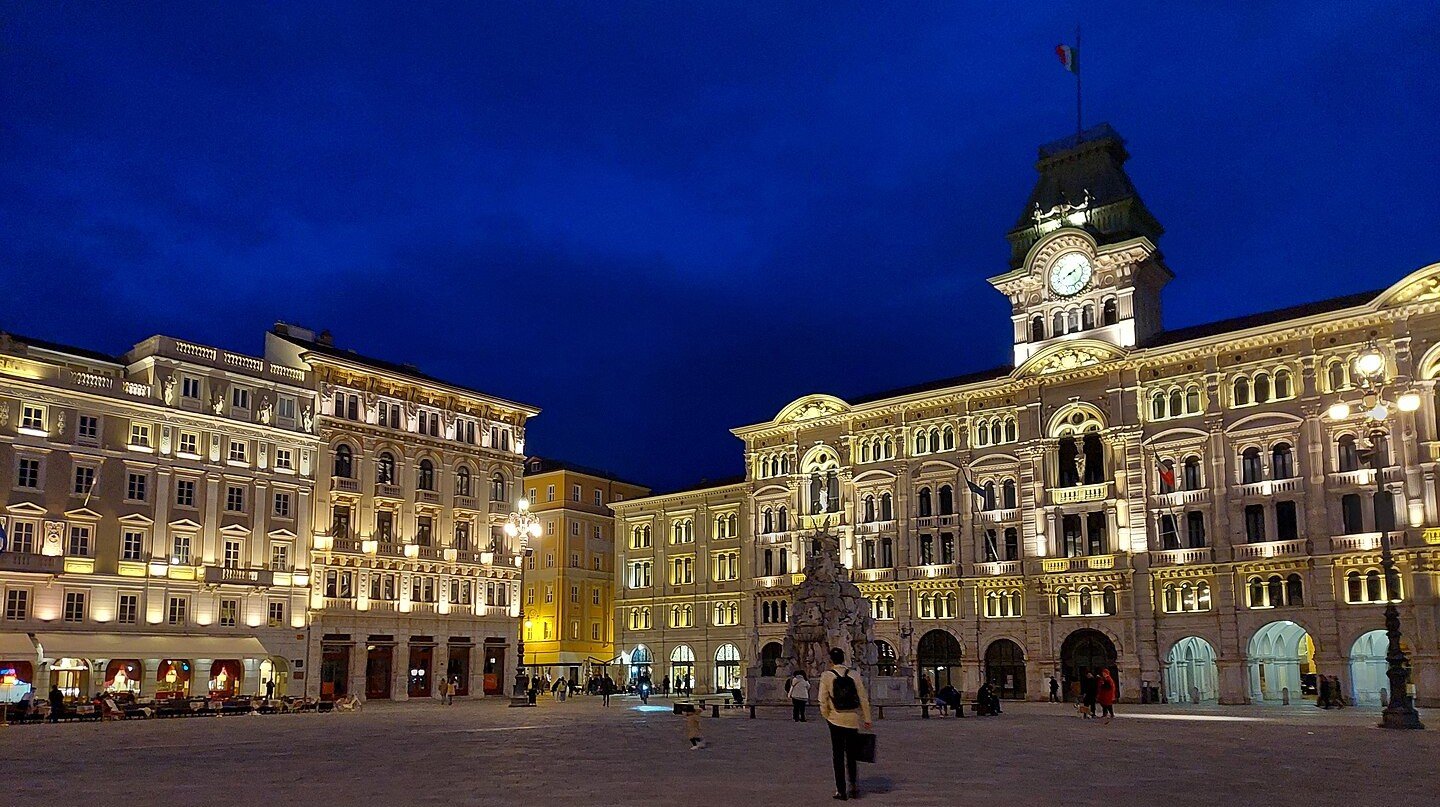
The magnificent view above, capturing Piazza Unità d’Italia in the evening, is just a taste of the Central European charm of Trieste, a city full of history, elegance, and unique atmospheres. 📱🔄
📌 For a more complete overview of certain items, click on the links to detailed pages +🔗
- When to Go
- Getting There
- Getting Around +🔗
- Useful Tips
- What +🔗 and Where +🔗 to Eat
- Where to Sleep +🔗
Overview
📌 A large part of the references covered in this Overview section and in the Practical Info section, are summarized in the Orientation Table 📊 with further details on Wikipedia 🌐 and Google Maps ➡️ where available.
Trieste, a city overlooking the Adriatic Sea and nestled between Italy, Slovenia, and Croatia, is a meeting point of diverse cultures, histories, and traditions. Known as “the little Vienna by the sea” for its Austro-Hungarian past, Trieste is a city full of charm, where Italian, Slovenian, Austrian, and Balkan influences blend.
Its cosmopolitan atmosphere, historic center rich in neoclassical and Art Nouveau buildings, and stunning location between the sea and the Karst make it a unique and captivating destination for every traveler.
GEOGRAPHY
Trieste is located in the far northeast of Italy, overlooking the Adriatic Sea and just a few kilometers from the border with Slovenia. The city stretches between the sea and the Karst plateau, creating a unique landscape where natural elements and urban development blend harmoniously.
🛰️ Trieste seen from satellite:
Observing the territory of the Municipality of Trieste as a whole (white and red perimeter line), it is possible to recognize the coastline, the port, and the densest urban areas, as well as the green and rocky inland areas that define the city’s unique landscape.
- North / North-East: the Karst plateau stretches here, characterized by rocky landscapes, caves, and typical vegetation, continuing up to the Slovenian border, with small towns and protected natural areas.
- South: the Adriatic coast develops along the Gulf of Trieste, with the commercial and tourist port and coastal towns such as Muggia, the last Italian municipality before the Slovenian border.
- East: the territory connects directly to Slovenia, featuring a landscape alternating urban areas with natural and hilly zones, reflecting strong geographical and cultural continuity.
- West: the coast continues toward towns such as Monfalcone and Grado, characterized by lagoon environments and beach areas.
Trieste’s strategic location makes it easily accessible from major cities in Friuli Venezia Giulia and surrounding areas, such as Udine, Gorizia, and Pordenone, as well as nearby destinations like Venice and Ljubljana, offering an excellent starting point to explore a territory rich in landscapes, cultures, and influences, also appreciable from an aerial view.
HISTORY
Trieste, of ancient origin and probably already inhabited in the pre-Roman era, enters history as a Roman colony:
- Roman Era: Trieste was founded as a Roman colony named Tergeste, equipped with walls, a theater, and port infrastructures, thanks to its strategic position along Adriatic trade routes.
- Middle Ages: After the fall of the Roman Empire, the city went through a period of instability until it came under Habsburg protection in 1382, beginning a long connection with Central Europe.
- Habsburg Era (18th-19th centuries): Trieste became one of the main ports of the Austro-Hungarian Empire, experiencing a period of great economic, cultural, and urban development, establishing itself as a cosmopolitan and commercial city.
- 20th Century and Contemporary Age: After World War I, Trieste passed to Italy, going through complex phases between the two wars and in the post-World War II period, when it became a Free Territory before being definitively annexed to Italy in 1954.
MAIN ATTRACTIONS
Trieste is an open-air museum, where you can admire historic buildings, monuments, and churches of great artistic and architectural value. Among the most significant sites:
- Piazza Unità d’Italia: The main square of Trieste, it is the largest square open to the sea in Europe. It is lined with historic buildings such as the Town Hall, the Lloyd Triestino Palace, and the Regional Palace.
- Miramare Castle: Located on a promontory overlooking the Gulf of Trieste, this neo-Gothic castle was built in the 19th century for Archduke Ferdinand Maximilian of Austria. Today it houses a museum and a splendid park.
- Grotta Gigante: One of the largest tourist caves in the world. With a height of over 100 meters, this underground cavity is a true masterpiece of nature.
- Roman Theatre: Dating back to the 1st–2nd century AD, it is one of the most important Roman remains in the city.
- Cathedral of San Giusto: Located on the homonymous hill, the cathedral is the main place of worship in the city and features rare Byzantine mosaics.
- Canal Grande: A navigable canal that crosses the city center, surrounded by elegant buildings and churches such as Sant’Antonio Nuovo Church and the Serbian Orthodox Church of San Spiridione.
Trieste has long been a European cultural center, a meeting place for artists, writers, and intellectuals. The city hosts important institutions such as the Revoltella Museum, one of the main modern art galleries in Italy, and numerous theaters, including the Teatro Verdi, renowned for its prestigious opera season.
Alongside these institutions, Trieste maintains a strong literary tradition linked to figures such as James Joyce, Italo Svevo, and Umberto Saba, who lived and worked here. The famous historic cafés, such as Caffè San Marco and Caffè degli Specchi, were places of cultural gathering and debate, still symbolizing the intellectual soul of the city today, alongside bookstores and institutions such as the Attilio Hortis Civic Library.
🔗 See also Experiences in Trieste: Tours, Tickets, and Useful Info
PARKS AND NATURE
Trieste offers numerous opportunities for nature lovers and outdoor activities. Among the most important natural parks:
- Miramare Marine Protected Area: A protected coastal zone where you can observe local marine life, go snorkeling, and enjoy walks along the shoreline.
- Miramare Castle Park: A vast park of over 22 hectares surrounding the castle, featuring English gardens, greenhouses, and paths among ancient trees.
- Val Rosandra Nature Reserve: A charming valley crossed by a stream, with trails offering spectacular views and opportunities for hiking and climbing.
- Barcola and Grignano Pine Forest: A long pine forest along the coast ideal for walks, jogging, and picnics, providing a green connection between the city and the sea, perfect for those seeking relaxation and nature close to the center.
SEA AND BEACHES
The beaches of Trieste are mostly rocky or pebbly, but they offer scenic views and clear waters, perfect for a day of relaxation, swimming, and seaside walks. Among the most popular and easily reachable from the city:
- Lungomare Barcola: A long stretch of rocky coastline much loved by locals, ideal for sunbathing, swimming, or strolling along the seafront with views of the Gulf of Trieste.
- Bivio di Miramare: Access point to the coasts surrounding Miramare Castle, where you can find small, quiet coves and enjoy the sea and castle park views.
- Portopiccolo Beach: A private bay partially accessible to the public, with transparent waters and picturesque scenery, perfect for those seeking a more secluded spot compared to central beaches.
- Baia di Sistiana: Fine gravel beaches and clear seabeds, located a few kilometers from the city center, highly appreciated for sports activities like snorkeling and swimming, as well as for the tranquility of its coves.
EVENTS & CELEBRATIONS
Trieste is a lively city, with a rich calendar of cultural events and traditional festivals. Among the most important:
- Barcolana: The world’s largest sailing regatta, held every October, attracting thousands of boats and spectators.
- Trieste Film Festival: A film festival held in January, with a special focus on Central and Eastern European cinema.
- Trieste Carnival: A colorful and lively tradition with parades, costumes, and city-wide celebrations, engaging both adults and children in a joyful and participatory atmosphere.
📊 Orientation Table
In the table below you will find a summary of the main references, to best orient and organize your visit through our itineraries (see Itinerary Overview).
- Scroll the table down and to the right 📱🔄 Rotate your phone horizontally to get an overview of opening days, hours, prices of attractions, and for further details on Wikipedia 🌐 and Google Maps ➡️.
- ⚠️ Always check the opening days and hours of attractions through the Google Maps entries linked in the table. See also Itinerary Info.
- To see the explanation of each data column, click its title (e.g. Attractions Index, Ratings, Org, etc.) at the top of the table.
⏳ Caricamento tabella in corso…
📌 This table is updated every 6–12 months.
🛡️ The tables on Tourplan360.com are original content protected by copyright © and monitored through anti-plagiarism tracking systems.
Itinerary Overview
All the most important attractions of Trieste listed in the table have been carefully divided into three itineraries that we designed to ensure you a complete, well-structured visit, adaptable to any amount of time available.
To make your choice easier, below you will find a summary with brief descriptions of each route, allowing you to easily identify the one that best suits your preferences.
Thanks to effective and detailed planning, you will have the opportunity to explore Trieste making the most of your time and discovering everything the city has most fascinating to offer.
TRIESTE IN 1 DAY
The Trieste in 1 Day itinerary, structured in two routes, allows you to explore the city with a perfect balance of culture, heritage, and natural beauty. The imposing Miramare Castle, the Risiera di San Sabba, Piazza Unità d’Italia, and the Roman Theatre are just some of the stops you will visit in 9 hours of sightseeing, offering an intense and complete experience that captures the authentic soul of Trieste, between past and present.
🔗 Go to Trieste in 1 day – travel itinerary
TRIESTE IN 3 DAYS
Trieste in 3 Days is designed to offer a complete experience, divided into three routes that guide you through its most significant wonders. The 18 hours of sightseeing allow you to admire all the main attractions listed in the table, from culture and nature to unforgettable views. This tour is perfect for those who want to experience Trieste at a relaxed pace, capturing every nuance in a journey that blends past and present in a rich and engaging experience.
🔗 Go to Trieste in 3 days – travel itinerary
TRIESTE COMPLETE TOUR
Trieste Complete Tour is an immersive experience that allows you to discover the city in all its aspects through a well-structured itinerary spread over four distinct routes. With a total duration of approximately 30 hours of sightseeing, this tour covers the entire cultural and architectural heritage of the city with 59 attractions in total, including:
- 22 museums
- 7 places of worship
- 7 monuments
- 8 main streets and squares
- 8 historic villas and palaces
- 2 historic parks and gardens
This itinerary is more than just a visit; it is a true journey into the soul of Trieste, combining art, history, and traditions to experience the city in an authentic and comprehensive way.
🔗 Go to Trieste complete tour – travel itinerary
Practical Info
WHEN TO GO
Trieste offers different experiences in every season. The climate, events, and tourist crowd vary throughout the year, so it is important to choose the right period:
- Spring (April-June): Mild temperatures and sunny days, perfect for walks along the Lungomare di Barcola and excursions on the Karst Plateau. The city is lively, with cultural festivals and outdoor cafés, but still not too crowded.
- Summer (July-August): Warmer weather and a higher influx of tourists, especially in seaside areas like Sistiana and Barcola. Ideal if you love the sea, regattas like the Barcolana, and lively evenings, but it’s advisable to book hotels and restaurants in advance.
- Autumn (September-October): Pleasant weather and warm colors on the Karst Plateau and along the coast. Less crowded than summer, ideal for cultural visits, museum tours such as the Museo Revoltella, and photographic itineraries in the historic center and along the canals.
- Winter (November-March): Cooler temperatures, with possible fog over the sea and the Karst Plateau. The atmosphere is charming, with historic cafés like Caffè San Marco, quieter museums, and shorter lines at main attractions.
GETTING THERE
Trieste is easily reachable by any means of transport. Whether you arrive by plane, train, bus, or car, here is some practical information to plan your trip and reach the city center easily:
- By plane: Trieste-Ronchi dei Legionari Airport is about 30 minutes from the city center. Shuttle services, taxis, and city buses are available.
🔗 See also Trieste-Ronchi dei Legionari Airport Info & Tips. - By ship: The Port of Trieste is one of the main commercial and tourist ports of the Adriatic, with connections for cruises and ferries.
🔗 See also Port of Trieste: Info & Tips. - By train: Trieste Centrale station is the main railway hub, with direct connections to Italian cities such as Venice, Udine, and Rome, as well as regional services to Friuli Venezia Giulia and Istria.
- By bus: Numerous lines connect Trieste with nearby cities, other regions, and surrounding airports. There are also services for local tourism and special events such as the Barcolana.
- By car: Trieste is easily reachable via the A4 (Venice-Trieste) and A23 (Udine) highways. The historic center has a limited traffic zone (ZTL), so it is recommended to park in authorized areas and continue on foot or by public transport.
✅ To search for or book a flight you can check Booking.com Flights.
✅ You can check routes, schedules, prices and buy train or bus tickets with Trainline.
✅ For car rentals you can refer to Booking.com Cars.
GETTING AROUND
Trieste is easy to explore thanks to the compactness of its historic center and the variety of connections to surrounding areas, offering several options for parking and getting around comfortably.
- On Foot or by Bike: Walking or renting a bicycle is the best way to discover Trieste, exploring the historic center, the waterfronts, and the most characteristic neighborhoods.
- Public Transport: The city has a network of urban and suburban buses connecting the center with peripheral areas and nearby locations, such as the Karst region and the coastal beaches.
- ZTL: The historic center is partially a restricted traffic zone (ZTL). It is recommended to check the rules and book available parking in advance to avoid fines.
- Parking: The main paid parking areas are located in strategic points such as Piazza Libertà, Piazza della Borsa, Central Station, and along the waterfront. In Table > Parking and Mobility we highlight the most convenient options based on our experience.
🔗 See also Getting around Trieste: Info and Tips.
USEFUL TIPS
To visit Trieste in the most comfortable and organized way possible, here are some practical tips to help you save time, money, and make your experience even more enjoyable.
- Hop-on Hop-off Bus: Tourist buses allow you to get on and off freely, providing an overview of the historic center and main attractions, with strategic stops near squares, museums, and points of interest.
🏆 Hop-on Hop-off Bus Tour. - Comfortable Shoes: We recommend wearing comfortable shoes, as much of the historic center and waterfront involves walking on historic pavements or rocks.
- Water and Sunscreen: Especially in summer, bring water and sunscreen to protect yourself from the heat, particularly during walks along the Barcola or in city parks.
- Dress Code: When visiting places of worship such as the Cathedral of San Giusto, respect the required attire by covering your shoulders and, if possible, knees, and always maintain respectful behavior.
WHAT TO EAT
Triestine cuisine is a true melting pot, reflecting the influences of the various cultures that have crossed the city. Among the most representative local dishes and beverages are:
- Jota: A soup made with sauerkraut, beans, and potatoes, often enriched with smoked pork.
- Goulash: A dish of Hungarian origin made with beef, onions, and paprika.
- Brodetto: A flavorful fish stew prepared with various types of fresh fish.
- Pinza Triestina: A traditional sweet bread from Trieste, made with simple ingredients like eggs, flour, butter, and sugar.
- Coffee: Trieste is famous for its coffee culture, and the “nero” Triestino, a strong espresso, is a must-try experience.
- Local wines: Among the most renowned are Carso DOC, with fresh, mineral white wines, and Prosecco DOC, ideal as an aperitif or paired with light dishes.
🔗 See also What to eat in Trieste
WHERE TO EAT
Trieste offers a gastronomic panorama ranging from traditional local cuisine to more refined experiences, with seafood dishes and Central European influences. Among the most renowned restaurants are:
- Antico Caffè San Marco, a historic café and restaurant in the heart of the city, famous not only for its coffee and pastries but also for traditional Triestine dishes in a cultural and literary setting.
- Buffet da Pepi, a must-visit for those who love typical Triestine cuisine based on meat and fish, with simple dishes prepared using fresh, local ingredients.
- Trattoria Suban, a historic trattoria known for its welcoming atmosphere and typical Triestine dishes, including fish and regional specialties.
- Da Siora Rosa, for those seeking a family-friendly and authentic atmosphere, with carefully prepared traditional Triestine dishes.
🔗 See also Where to eat in Trieste.
WHERE TO SLEEP
Trieste offers accommodations for all tastes and budgets, from boutique hotels in the historic center to quieter apartments near the sea. Choosing the right area to stay is essential to optimize your movements, visit the main attractions, and fully experience the city’s unique atmosphere.

Here are some of the main areas to stay in Trieste, selected for location, convenience, and atmosphere:
- Historic Center – Piazza Unità / Borgo Teresiano: Ideal for those who want monuments, museums, shops, and restaurants within easy reach. Perfect for short stays and intensive cultural visits.
- Rive and Barcola: Waterfront areas, perfect for those who enjoy seaside walks and scenic views. They also offer accommodations near parks and beaches.
- Station / Roiano Area: Convenient for those arriving by train or needing frequent travel. Offers functional accommodations with quick connections to the city center and the port.
- Opicina and Trieste Karst: Ideal for those seeking tranquility, contact with nature, and views of the Gulf of Trieste, while still maintaining easy access to the city.
🔗 See also Where to sleep in Trieste: Info and Tips
FAQ
Must-see highlights include Miramare Castle, Grotta Gigante, and Piazza Unità d’Italia.
Which museums and monuments should I visit in Trieste?The city hosts important museums and monuments, including the Roman Theatre of Trieste, San Giusto Castle, San Giusto Cathedral, Risiera di San Sabba, and Revoltella Museum.
📌 Read more in the section Main Attractions.
Are there parks or green areas in Trieste?
Yes, the most famous include Miramare Castle Park, Val Rosandra Nature Reserve, and Barcola Pinewood.
📌 Read more in the section Parks and Nature.
Is Trieste suitable for a short visit?
Yes, the historic center is compact and allows visiting many attractions even with 1- or 3-day itineraries.
📌 Read more in the section Itinerary Overview.
What is the best time to visit Trieste?
Spring and autumn offer mild temperatures and less crowding compared to summer.
Is Trieste easy to visit?Yes, the historic center is compact and the main attractions are easily reachable on foot.
📌 Read more in the section When to Go.
Which typical dishes should I try in Trieste?
Local specialties include Jota, Goulash, and Fish Brodetto.
📌 Read more in the section What to eat.
Where to eat well in Trieste?The most popular areas for enjoying Triestine cuisine are the historic center, the Rive, Barcola, and Piazza Unità d’Italia area.
📌 Read more in the section Where to eat.
What is the best area to stay in Trieste?
The historic center is ideal for exploring on foot, but Barcola, the Rive, and the Station area also offer excellent options.
Are there budget hotels in Trieste?Yes, neighborhoods such as Opicina or the Trieste Karst offer more affordable accommodations well connected to the center.
📌 Read more in the section Where to Sleep.
Where can I find days, hours, and prices of attractions?
All information is available in the table in dedicated columns.
Where can I find links and online information about attractions?The table also contains direct links to Google Maps ➡️ and Wikipedia 🌐 for each attraction.
📌 Check the Orientation Table 📊
See also
- Guide to Trieste
- Itineraries: 1d, 3d, CT
- Experiences, Getting around
- Eating: What and Where
- Where to Sleep