
Bologna in 3 Days: travel itinerary
What to see, opening hours, prices, map


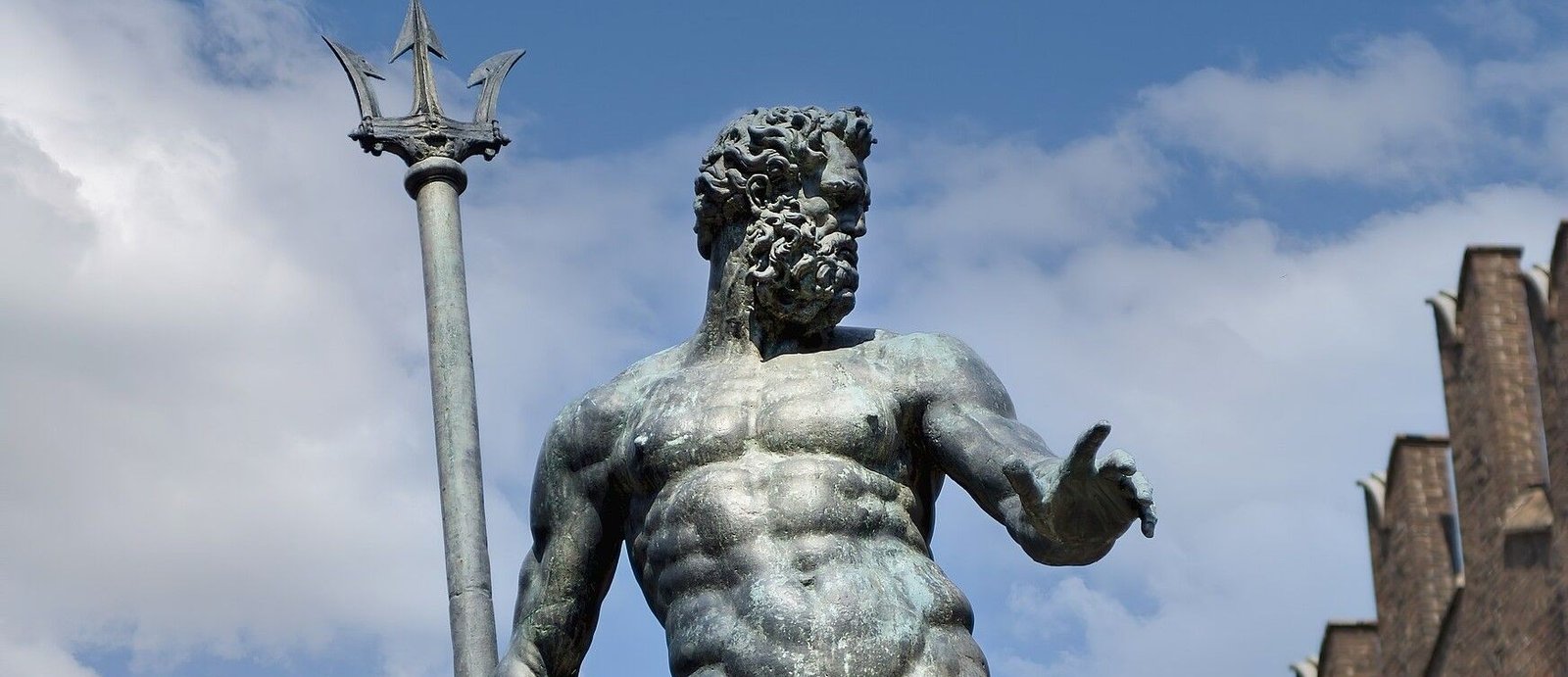
The beautiful close-up of the Neptune, an iconic symbol of Bologna, is just one of the wonders that await you in this 3-day itinerary.
- 📍 Day 1 and 2
- 📍 Day 3
See also:
- Bologna in 1 Day
- Guide to Bologna
- Itineraries: 3d, CT1, CT2
- See: Attractions
- Do: Experiences
- Eat: Where and What
- Getting Around, Pass, Stay
Routes: Maps, Descriptions, Details
Bologna, a city with a thousand-year history, offers a perfect mix of art, culture, and gastronomy. For those who want to explore it at its best in three days, we propose an itinerary divided into two walking routes through the historic center.
The first two days have been combined into a single route of about 12 hours of total visit, while the third day includes a more in-depth tour lasting 8 hours.
📌 The 2 routes are connected (shared stop 🧩), so you always have continuity if you want to skip one or more stops. See also Itinerary Info.
BOLOGNA IN 3 DAYS > DAYS 1 AND 2
- Open Route Map📍
- Distance: 3,7* km on foot
- Time: 0,50* min. on foot
- Visit duration: 12 hours total divided over 2 days
- Stops: 10 main (X →I-X)* + 25 secondary
- Cattedrale Metropolitana di San Pietro (X) → Palazzo d’Accursio (A) → Basilica di San Petronio (B) → Museo Civico Archeologico di Bologna (C) → Teatro Anatomico (D) → Basilica di Santo Stefano (E) → Torre degli Asinelli (F) → Collezione di Zoologia di Bologna (G) → Museo Geologico “G. Capellini” (H) → Torre Prendiparte (Sky Experience) (I-X)🧩
- For days, times, prices and other info see Itinerary Table 📊
* These values may differ from those shown on Google Maps, as they are continuously recalculated in real time. See also Itinerary Info and Navigator + See here for Shared Stop 🧩
Route Description
SUMMARY
This 10-stop walking itinerary allows you to discover Bologna through art and history, with a circular route of 3,7 km and a total visit duration of 12 hours spread over two days: 7 hours on the first day and 5 hours on the second day. Among the must-see stops are Piazza Maggiore, Palazzo d’Accursio, the Basilica di San Petronio and the Due Torri.
Expand STEP DETAIL ⬇️
📌 All the stops summarized here are structured in the Itinerary Table 📊 with days, opening hours, prices, and Wikipedia 🌐 and Google Maps insights.
Day 1
⬇️ starting point
X. Cattedrale Metropolitana di San Pietro
Our adventure begins at the Cattedrale Metropolitana di San Pietro, a masterpiece of sacred art that preserves frescoes and works of great value. Don’t miss the opportunity to climb the Campanile della Cattedrale di San Pietro, from which you can enjoy a breathtaking view of the city. Complete the visit with the Museo di San Pietro, which houses important ecclesiastical treasures.
✨ Walking under the immense nave of the Cathedral gives the feeling of being inside one of the most monumental churches in Europe. Look for the meridian line on the floor: it is one of the longest in the world.
📌 the Museo di San Pietro can be visited by reservation. You will find the phone number in the Google Maps card accessible from the link in the table.
⬇️
A. Palazzo d’Accursio
We head towards Palazzo d’Accursio, the historic seat of the Municipality, which hosts the Collezioni Comunali d’Arte. A short walk away, we admire the majestic Fontana del Nettuno, the Renaissance Palazzo Re Enzo, and the medieval Palazzo del Podestà. Continuing on, we reach Piazza Maggiore, the beating heart of the city, surrounded by splendid historic buildings including the Torre dell’Orologio and the charming Palazzo dei Notai.
⬇️
B. Basilica di San Petronio
Continuing along the itinerary, we enter the magnificent Basilica di San Petronio, one of the largest churches in Europe. Inside, the Museo diocesano di San Petronio tells the history of the basilica and its artworks. Don’t miss the Cappella dei Magi, frescoed by the famous Giovanni da Modena.
⬇️
C. Museo Civico Archeologico di Bologna
A few steps away we find the Museo Civico Archeologico di Bologna, which preserves valuable Etruscan, Roman and Egyptian artifacts. Before ending the morning, a short stop at the evocative Portico della Morte, a historic corner of Bologna.
❌ If you want to explore the museum at a relaxed pace, choose the sections that interest you most in advance: spending too long here may leave you with less time for the rest of the itinerary.
Day 2
⬇️
D. Archiginnasio
In the afternoon we immerse ourselves in the history of the ancient University of Bologna by visiting the Teatro Anatomico, where the first public dissections were once performed. Next, we enter the magnificent Sala dello Stabat Mater and the Biblioteca comunale dell’Archiginnasio, rich in volumes and extraordinary frescoes.
Leaving the building, we find ourselves in Piazza Galvani, dominated by the Statua di Luigi Galvani. We walk under the evocative Portico del Pavaglione (UNESCO Heritage) until we reach the Portici di Piazza Cavour (UNESCO Heritage) and Via Farini. Here we stop at the Panchina Lucio Dalla, dedicated to the famous Bolognese singer-songwriter, before admiring the luxury shop windows of the Galleria Cavour.
📌 the visit to the Biblioteca comunale dell’Archiginnasio requires reservation. You will find the phone number in the Google Maps card accessible from the link in the table.
⬇️
E. Complesso di Santo Stefano
The next stop is the Basilica di Santo Stefano, a fascinating complex of churches known as “The Seven Churches.” We continue with the Museo di Santo Stefano and end the visit in Piazza Santo Stefano (UNESCO Heritage), one of the most charming corners of the city.
✨ A timeless place: silent courtyards and intertwined churches create an almost mystical atmosphere in the heart of Bologna.
⬇️
F. Due Torri
It is impossible to visit Bologna without admiring its famous medieval towers: the Torre degli Asinelli, with the possibility of climbing to the top for an incredible view, and the leaning Torre della Garisenda.
📌 Stop F corresponds to the famous 2 towers of Bologna, but the Torre degli Asinelli is currently not visitable due to structural issues with the Garisenda. To see the Bologna skyline, we have included the Torre Prendiparte (stop I).
⬇️
G. Collezione di Zoologia di Bologna
A fascinating stop for those who love the animal world: this museum preserves a vast collection of specimens, including rare species and historical models, offering a journey through biodiversity and evolution.
⬇️
H. Museo Geologico “G. Capellini”
One of the most important scientific museums in Italy, it displays fossils, minerals and an extraordinary dinosaur skeleton, telling millions of years of Earth’s history in an engaging way.
❌ If you’re running behind schedule, consider these two science museums optional stops and visit just one, depending on your interests.
⬇️
I. Torre Prendiparte
We conclude the afternoon with an extraordinary experience: the Torre Prendiparte (Sky Experience), one of the best-preserved medieval towers, from whose top you can enjoy a breathtaking panorama over all of Bologna.
📌 the visit to the Torre Prendiparte (Sky Experience) requires reservation. You will find the phone number in the Google Maps card accessible from the link in the table.
BOLOGNA IN 3 DAYS > DAY 3
- Open Route Map📍
- Distance: 4,2* km on foot
- Time: 0,58* min. on foot
- Visit duration: 8 hours
- Stops: 10 main (X →I)* + 11 secondary
- Torre Prendiparte (Sky Experience) (I-X) → Complesso Santa Maria della Vita (A) → Palazzo Pepoli Campogrande (B) → Il Quadrilatero (C) → Basilica di San Giacomo Maggiore (D) → Museo di Palazzo Poggi (E) → Pinacoteca Nazionale di Bologna (F) → La Piccola Venezia (G) → MAMbo – Museo d’Arte Moderna (H) → Mercato delle Erbe (I)
- For days, times, prices and other info see Itinerary Table 📊
* These values may differ from those shown on Google Maps, as they are continuously recalculated in real time. See also Itinerary Info and Navigator + See here for Shared Stop 🧩
Route Description
SUMMARY
This 10-stop walking itinerary follows a circular route of approximately 4,2 km, with a total visit duration of about 8 hours, ideal for a full day discovering the city. Among the most important stops are the Complesso di Santa Maria della Vita, the lively Quadrilatero, the Pinacoteca Nazionale di Bologna and the MAMbo – Museo d’Arte Moderna.
Expand STEP DETAIL ⬇️
📌 All the stops summarized here are structured in the Itinerary Table 📊 with days, opening hours, prices, and Wikipedia 🌐 and Google Maps insights.
Morning
⬇️
I/X. Torre Prendiparte (Sky Experience) is a shared stop 🧩 – See final stop of previous route
⬇️
A. Complesso Santa Maria della Vita
The Complesso di Santa Maria della Vita is one of the most fascinating gems of Bologna. Here we visit the Oratorio di Santa Maria della Vita, famous for the celebrated Compianto di Nicolò dell’Arca, a sculptural masterpiece of extraordinary emotional intensity. We continue with the Museo della Sanità e dell’Assistenza, which tells the story of medicine and care for the sick in medieval times.
✨ The Compianto di Nicolò dell’Arca strikes like few works in the world: expressions so intense they seem alive, pure emotion carved in stone.
⬇️
B. Palazzo Pepoli Campogrande
We head towards Palazzo Pepoli Campogrande, home to a rich art collection. A short walk away we find the Museo della Storia di Bologna, an immersive experience that retraces the history of the city from its origins to the present day.
⬇️
C. Quadrilatero
A walk through the alleys of the Quadrilatero, the gastronomic heart of the city, where you can admire ancient shops, markets, and taste traditional Bolognese products.
Afternoon
⬇️
D. Basilica di San Giacomo Maggiore
We resume our walk with a visit to the Basilica di San Giacomo Maggiore, which houses the sumptuous Cappella Bentivoglio, frescoed by Lorenzo Costa. A few steps away, the Oratorio di Santa Cecilia enchants us with its Renaissance fresco cycle. Continuing on, we admire the Portici accademici di Via Zamboni (UNESCO World Heritage), a symbol of Bologna’s university life.
📌 the visit to the Cappella Bentivoglio requires mandatory reservation. You will find the phone number in the Google Maps card accessible from the link in the table.
⬇️
E. Museo di Palazzo Poggi
We enter the Museo di Palazzo Poggi, which preserves valuable scientific and natural history collections. The visit continues at the Biblioteca Universitaria di Bologna – BUB, one of the most prestigious study centres in Italy, and the evocative Museo della Specola, dedicated to astronomy.
📌 the Biblioteca Universitaria di Bologna – BUB can be visited upon request. You will find the phone number in the Google Maps card accessible from the link in the table.
⬇️
F. Pinacoteca Nazionale di Bologna
For art lovers, the next stop is the Pinacoteca Nazionale di Bologna, which houses masterpieces by artists such as Raphael, the Carracci, and Guido Reni.
⬇️
G. La Piccola Venezia
We reach the famous Finestra sul Canale, a hidden corner that offers an unexpected view of one of the city’s underground canals, known as “La Piccola Venezia”.
⬇️
H. MAMbo – Museo d’Arte Moderna di Bologna
We continue with a visit to MAMbo, the main contemporary art museum of the city, and the evocative Porticato del MAMbo (UNESCO World Heritage).
⬇️
I. Mercato delle Erbe
The final stop of our itinerary is the Mercato delle Erbe, a perfect place to immerse yourself in Bolognese flavours among food stalls and small restaurants.
Eating
During your days in Bologna, treat yourself to gastronomic breaks between visits to enjoy the local cuisine, from tagliatelle al ragù to tortellini in brodo, as well as cotoletta alla bolognese and street food in the historic center such as crescentine and local specialties (see also What to eat in Bologna).
For lunch, on the third day you can take advantage of the stop at Quadrilatero (stop C), while for dinner you can choose between the characteristic Mercato delle Erbe (stop I) or selected addresses such as Osteria dell’Orsa, Trattoria di Via Serra, Tamburini and Trattoria Meloncello, ideal for alternating traditional cuisine with more informal options in the heart of the city (see also Where to eat in Bologna).
Sleeping
For a 3-day stay in Bologna, the best option is to choose accommodation in the historic center between Piazza Maggiore, the Due Torri and Via dell’Indipendenza: a perfect location to experience the city on foot not only during the day but also in the evening among bars, restaurants and lively atmospheres without the need to travel.

Alternatively, you can consider areas such as Via Farini or the university district of Via Zamboni, ideal for a more dynamic and youthful stay, with excellent connections and a lively atmosphere even in the evening, perfect for those who want to experience Bologna in a more local and less touristy way (see also Where to sleep in Bologna: Info and Tips).
📊 Itinerary Table
In the table below you will find all the attractions included in the itinerary, to make the most of your 3-day visit to Bologna:
- Scroll the table down and to the right 📱🔄 Rotate your phone horizontally to get an overview of opening days, hours, prices of attractions, and for further details on Wikipedia 🌐 and Google Maps ➡️.
- ⚠️ Always check the opening days and hours of attractions through the Google Maps entries linked in the table. See also Itinerary Info.
- To see the explanation of each data column, click its title (e.g. Attractions Index, Ratings, Org, etc.) at the top of the table.
⏳ Caricamento tabella in corso…
📌 This table is updated every 6–12 months.
🛡️ The tables on Tourplan360.com are original content protected by copyright © and monitored through anti-plagiarism tracking systems.
FAQ
You can open the route maps directly here:
📌 See also Route Descriptions
How much time is needed to visit Bologna in 3 days?
The itineraries allow you to visit the main attractions of the historic center in about 20 hours.
Can this itinerary in Bologna be done on foot?
Yes, because both routes are located in the historic center of the city.
📌 See also Getting around Bologna: Info and Tips
Is it worth booking the main attractions?
During peak tourist seasons, it is recommended to book in advance or join guided tours to avoid queues and secure entry.
📌 See also Experiences in Bologna: Tours, Tickets and Useful Info
Is it possible to do this itinerary in less than three days?
Yes. You can visit only the main attractions. You can adjust the stops based on your interests.
Where can I find opening days, hours and prices of attractions?
All updated information is available in the dedicated itinerary table, which also includes direct links to Google Maps ➡️ and Wikipedia 🌐 for each attraction.
📌 See the Itinerary Table 📊
See also
- Bologna in 1 Day
- Complete Tour 1 and 2
- Guide to Bologna
- See: Attractions
- Do: Experiences
- Eat: Where and What
- Getting Around, Pass, Stay
Other Destinations
🔐 Some images on this page are used under Creative Commons licenses:
By PROPOLI87 – Florence, panoramic view from Piazzale Michelangelo – Own work – CC BY-SA 4.0 – Wikimedia Commons
By Kasa Fue – Venice, aerial view of the Grand Canal – Own work – CC BY-SA 4.0 – Wikimedia Commons
By https://www.pexels.com/u/ghostpresenter/ – Milan, Porta Nuova skyline – CC0 – Public Domain – Wikimedia Commons
By Didier Descouens – Bologna, Fountain of Neptune in Piazza Maggiore – Own work – CC BY-SA 4.0 – Wikimedia Commons