
Milan in 3 days: Travel itinerary
What to see, opening hours, prices, map


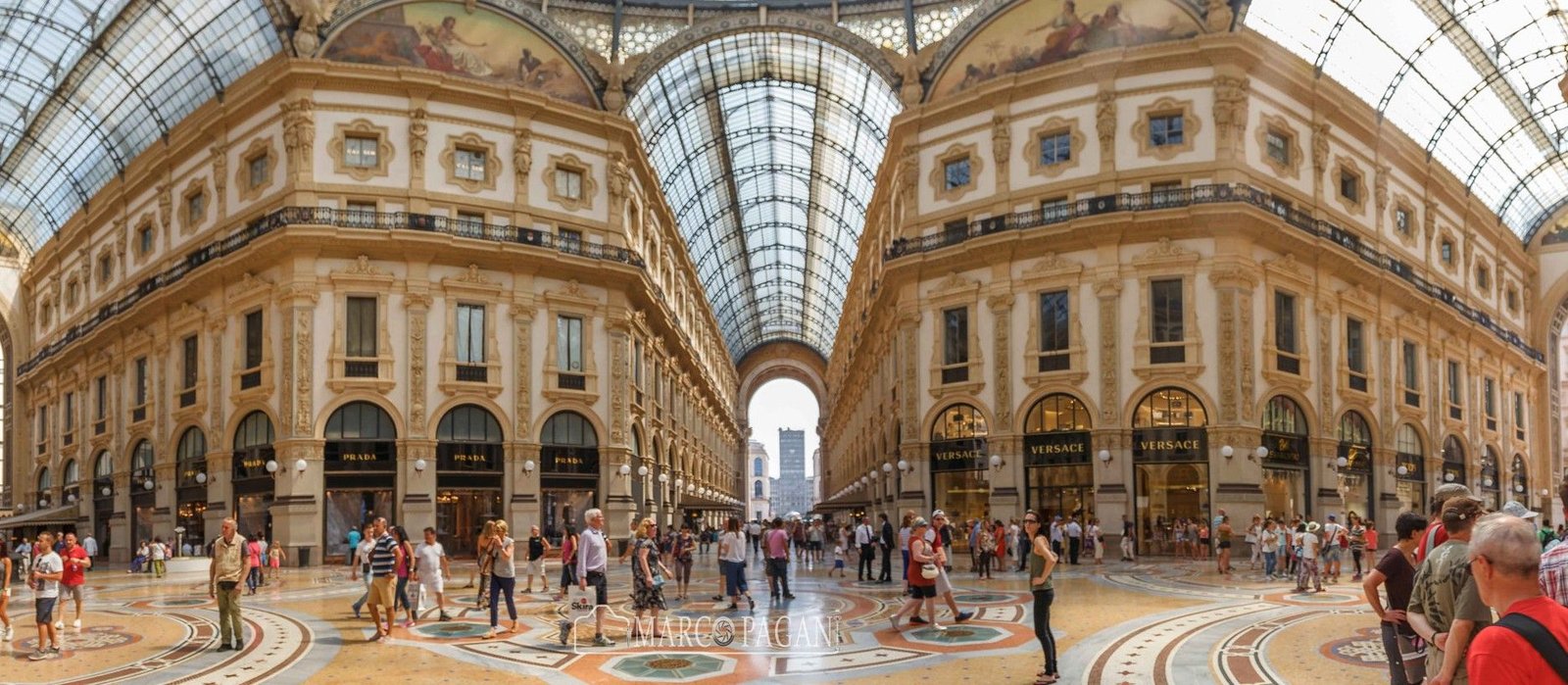
With the image above, which captures all the elegance of the Galleria Vittorio Emanuele II 📱🔄️, we introduce this itinerary dedicated to 3 days in Milan.
See also:
- Milan in 1 day
- Guide to Milan
- Itineraries: 3d, CT1, CT2
- See: Attractions
- Do: Experiences
- Eat: Where and What
- Getting Around, Pass, Stay
Route Description
To discover Milan in 3 days, we have designed a single itinerary with 10 stops that allows you to explore the city in a complete way.
The total estimated time for the visit is 21 hours, equally divided into 7 hours per day, to maintain a good pace without becoming excessively tiring.
The itinerary is intense, but absolutely manageable, allowing you to capture the essence of Milan through its most iconic places, its art, and its history, without giving up moments of relaxation and discovery.
MILAN IN 3 DAYS
- Open Route Map📍
- Distance: 6* km on foot
- Time: 1,22* hrs walking
- Visit duration: 21 hours spread over 3 days of 7 hours each
- Stops: 10 main (X →I)* + 25 secondary
- Duomo di Milano (X) → Palazzo Reale – Museo della Reggia (A) → Museo del Novecento (B) → Pinacoteca Ambrosiana (C) → Galleria Vittorio Emanuele II (D) → Pinacoteca di Brera (E) → Castello Sforzesco (F) → Chiesa di Santa Maria delle Grazie (G) → Museo Nazionale Scienza e Tecnologia (H) → Navigli Milano (I)
- For days, times, prices and other info see Itinerary Table 📊
* These values may differ from those shown on Google Maps, as they are continuously recalculated in real time. See also Itinerary Info and Navigator + See here for Shared Stop 🧩
Step Detail
📌 All the stops summarized here are structured in the Itinerary Table 📊 with days, opening hours, prices, and Wikipedia 🌐 and Google Maps insights.
Day 1
⬇️ starting point
X. Duomo di Milano
The itinerary begins at the majestic Duomo di Milano (National Monument), one of the largest Gothic cathedrals in Europe and the undisputed symbol of the city. The visit starts inside the cathedral, where the impressive naves, stained-glass windows, and high altar leave visitors speechless. The Duomo Crypt, located beneath the presbytery, preserves the relics of Saint Charles Borromeo, archbishop and key figure of the Counter-Reformation.
To enjoy a spectacular view over Milan, the itinerary then continues to the Duomo Terraces, a unique experience that allows visitors to admire up close more than 3,000 statues and the famous spires, including the celebrated golden Madonnina, while offering an incredible panoramic view of the city.
✨ Climbing the Duomo Terraces is one of the most spectacular moments of the entire trip to Milan.
❌ Visiting the Duomo and especially the Terraces may involve very long queues, so it is better to book in advance.
Book one of the recommended experiences here:
✅ Duomo and Terraces Entry Ticket
✅ Fast-Track Guided Tour of the Duomo and Terraces
✅ Duomo Rooftops and Guided Cathedral Tour with Tickets
Next to the cathedral, the Museo del Duomo di Milano offers an in-depth look into the history and art connected to this architectural masterpiece. Its halls display original statues, paintings, and liturgical objects linked to the construction and history of the cathedral.
The visit continues in Piazza del Duomo, the heart of the city and a meeting point for tourists and locals alike. At the center of the square stands the Statua di Vittorio Emanuele II, an imposing equestrian monument dedicated to the first King of Italy, symbolizing the city’s connection to the process of national unification.
⬇️
A. Palazzo Reale
Leaving the Duomo behind, the itinerary reaches the nearby Palazzo Reale, the historic residence of Milanese rulers and today home to important art exhibitions. The Museo della Reggia allows visitors to explore the lavish royal apartments, witnesses of Habsburg and Napoleonic grandeur, featuring period furnishings, sumptuous decorations, and frescoes that recount Milan’s aristocratic past.
The building also hosts major temporary exhibitions, often dedicated to masters of Italian and international art. It is an essential place for anyone wishing to understand the historical and artistic past of the city.
⬇️
B. Museo del Novecento
The afternoon continues with a leap into modernity at the Museo del Novecento, located inside the Palazzo dell’Arengario, just a few steps from the Duomo. This museum is a true landmark for 20th-century art and houses works by artists such as Boccioni, De Chirico, Fontana, and many others.
The exhibition route guides visitors through the main artistic movements of the 20th century, from Futurism to Conceptual Art, offering a complete overview of the evolution of modern Italian and international art. The visit culminates with a spectacular view over Piazza del Duomo, making the experience even more evocative.
Day 2
⬇️
C. Pinacoteca Ambrosiana
The second day begins at one of the most fascinating places in Milan: the Pinacoteca Ambrosiana, located inside the evocative Palazzo dell’Ambrosiana. Founded in 1618 by Cardinal Federico Borromeo, it is one of the oldest art galleries in the city and houses works by masters such as Leonardo da Vinci, Caravaggio, and Raphael.
Inside the Pinacoteca is preserved one of the most extraordinary treasures in the history of art and science: Leonardo’s Codice Atlantico, a collection of drawings and writings by the Tuscan genius. Among the most famous paintings in the collection are Leonardo’s Portrait of a Musician and Caravaggio’s Basket of Fruit.
✨ Leonardo da Vinci’s Codice Atlantico is one of those rare moments when you truly feel the mind of a genius before your eyes.
✅ Pinacoteca Ambrosiana and Codice Atlantico Exhibition
After visiting the Pinacoteca, the itinerary continues towards the nearby Chiesa di San Sepolcro, a medieval gem housing the evocative Cripta di San Sepolcro, dating back to the 11th century. This crypt, built directly above the Roman Forum of Milan, is one of the oldest places in the city and offers a journey through the thousand-year history of the Lombard capital.
Next to the Pinacoteca stands the prestigious Biblioteca Ambrosiana, one of the most important libraries in Europe, preserving more than one million volumes, including rare manuscripts and ancient texts of priceless value.
⬇️
D. Galleria Vittorio Emanuele II
After visiting the Pinacoteca Ambrosiana, the itinerary continues towards one of Milan’s most iconic places: the Galleria Vittorio Emanuele II, a masterpiece of 19th-century architecture and a symbol of Milanese luxury. With its iron-and-glass vault and refined floor mosaics, this shopping gallery connects Piazza del Duomo to Piazza della Scala, hosting some of the world’s most prestigious boutiques.
Walking beneath its elegant dome allows visitors to breathe in Milan’s sophisticated atmosphere, among historic cafés and renowned restaurants. A curious tradition says that visitors should spin their heel on the mosaic depicting the bull as a good luck charm for the future.
⬇️
E. Pinacoteca di Brera
The afternoon is dedicated to one of the most fascinating places in Milan: the Palazzo di Brera, home to the Pinacoteca di Brera, one of the most prestigious art museums in Italy.
The Pinacoteca houses absolute masterpieces such as Mantegna’s Dead Christ, Raphael’s Marriage of the Virgin, Caravaggio’s Supper at Emmaus, and Piero della Francesca’s Montefeltro Altarpiece. The exhibition route also allows visitors to admire paintings by Titian, Tintoretto, Rubens, and many other artists who shaped the history of European art.
✨ The silence of the halls and the masterpieces on display create one of the most intense artistic experiences in Italy.
The building housing the museum, the Palazzo di Brera, is a place of extraordinary beauty. At the center of the Cortile d’onore del Palazzo di Brera stands the statue of Napoleone Bonaparte, who in the 19th century transformed the complex into a major cultural center.
The palace is also home to the prestigious Biblioteca Nazionale Braidense, one of the oldest libraries in Italy, preserving manuscripts and rare books of immense historical and literary value.
❌ In the main halls of the Brera Art Gallery, crowding and delays easily occur during the middle hours of the day, especially in front of the most famous masterpieces.
✅ Guided tour of the Brera Art Gallery and Brera district
Day 3
⬇️
F. Castello Sforzesco
Our journey begins with one of Milan’s most imposing symbols: the Castello Sforzesco. This extraordinary fortified complex, built in the 15th century by Francesco Sforza, has crossed centuries of history, transforming itself from a defensive fortress into a sumptuous Renaissance residence.
Passing through the main entrance, visitors are welcomed by the majestic Torre del Filarete, whose profile dominates the square in front of the castle. Within its walls, the Castello hosts a series of museums that allow visitors to explore the artistic and cultural history of the city.
✨ The monumental courtyard and the castle towers create a scenic entrance that catapults you directly into Renaissance Milan.
The Biblioteca Trivulziana preserves ancient manuscripts and texts of invaluable value, while the Pinacoteca del Castello Sforzesco offers a journey through Italian art, featuring works by Mantegna, Antonello da Messina, and Canaletto.
A must-see is the Sala delle Asse, frescoed by Leonardo da Vinci with an intricate intertwining of branches and leaves, one of the most evocative testimonies of Leonardo’s genius in Milan.
Among the museums hosted inside the Castello, special mention goes to the Museo d’Arte Antica, the Museo Egizio di Milano, the Museo Pietà Rondanini – home to Michelangelo’s final unfinished masterpiece – and the Museo degli Strumenti Musicali, an extraordinary collection of historical musical instruments.
Completing the visit are the Museum of Furniture and Wooden Sculptures, the Museum of Decorative Arts, and the Museum of Prehistory and Protohistory, enriching the experience with artifacts that recount the city’s most ancient past.
❌ The complex is very large: without a targeted selection of rooms, you risk wasting time and diluting the experience.
Book one of the recommended experiences here:
✅ Castello Sforzesco: Entry Ticket with Digital Audio Guide
✅ Castello Sforzesco and Pietà Rondanini: Guided Tour
⬇️
G. Chiesa di Santa Maria delle Grazie
After leaving Castello Sforzesco behind, the next stop is one of the most emotional moments of the journey: the visit to the Chiesa di Santa Maria delle Grazie, one of the masterpieces of the Italian Renaissance. Declared a UNESCO World Heritage site, the church is famous for housing one of the most celebrated paintings in history: The Last Supper by Leonardo da Vinci.
The Museo del Cenacolo Vinciano allows visitors to admire this extraordinary mural up close, created by Leonardo between 1495 and 1498 for the refectory of the Dominican convent. The delicacy of the characters’ expressions and the masterful use of perspective make this work one of the most admired in the world.
❌ Tickets for the Cenacolo Vinciano often sell out days or even weeks in advance: avoid adding it to your itinerary without a reservation.
Book one of the recommended experiences here:
✅ Historical Walking Tour and The Last Supper Ticket
✅ Guided Tour of the Cenacolo Vinciano
✅ Leonardo’s Last Supper: Tour and Entry Ticket
⬇️
H. Museo Nazionale Scienza e Tecnologia
After Leonardo’s art and spirituality, the afternoon is dedicated to discovering science and innovation at the Museo Nazionale della Scienza e della Tecnologia “Leonardo da Vinci”. Located inside an ancient monastery, this museum is the largest of its kind in Italy and offers a journey through the history of technology, from the Industrial Revolution to space exploration.
Its halls feature faithful reconstructions of Leonardo’s inventions, historic locomotives, ship and aircraft models, as well as the majestic Toti submarine, which can be visited through a guided tour. It is an unmissable experience for science enthusiasts and for anyone wishing to discover the most innovative side of Milan.
⬇️
I. Navigli Milano
After an intense day filled with art and science, sunset is the perfect moment to relax along the Navigli, one of the most evocative areas of the city. This canal system, partly designed by Leonardo da Vinci, shaped Milan’s economic history for centuries and today represents one of the city’s liveliest and most fascinating districts.
Walking along the Naviglio Grande and the Naviglio Pavese, visitors are immersed in a bohemian atmosphere among historic venues, art galleries, and independent bookstores. The illuminated bridges and the reflections of lights on the water create a unique scenery, perfect for ending the Milan experience with dinner in one of the area’s traditional restaurants.
Book one of the recommended experiences here:
✅ Navigli Cruise with Audio Guide
✅ Navigli Boat Tour with Aperitif
Eating
During this 3-day itinerary in Milan, you will also experience Milanese cuisine between the historic center, Brera, and the Duomo and Galleria Vittorio Emanuele II area, where some of the city’s most iconic dishes and restaurants are located (see also What to eat in Milan).
- Risotto alla milanese, the city’s signature dish.
- Minestrone alla milanese, a rich and traditional recipe.
- Cotoletta alla milanese, crispy and iconic.
- Ossobuco alla milanese, one of the most representative local dishes.
- Cassoeula, one of the most traditional winter dishes of Lombard cuisine.
- Fritto alla milanese, a delicious local variation.
Recommended restaurants to try during your 3 days in Milan include Cracco in Galleria, Ristorante Savini Milano 1867, Luini, Nabucco and Marchesi 1824, perfect for discovering Milanese gastronomy throughout your trip (see also Where to eat in Milan).
Sleeping
To make the most of your 3-day itinerary in Milan, the historic center and the Duomo area are the ideal choice for your first stay. Here you will be just steps away from major attractions such as the Duomo di Milano, Galleria Vittorio Emanuele II, and Teatro alla Scala, with plenty of hotels, boutique hotels, and apartments—perfect for getting around on foot and optimizing visits during the first two days.

For the rest of your 3-day stay in Milan, you can also consider the Brera and Porta Nuova area, ideal for experiencing a more modern and elegant atmosphere. Here you will find refined hotels, restaurants, and nightlife spots, as well as excellent connections to the rest of the city, making it perfect to complete your itinerary and easily reach other attractions (see also Where to sleep in Milan: Info and Tips).
📊 Itinerary Table
In the table below you will find all the attractions included in the itinerary, to enhance and better guide your three-day visit to Milan:
- Scroll the table down and to the right 📱🔄 Rotate your phone horizontally to get an overview of opening days, hours, prices of attractions, and for further details on Wikipedia 🌐 and Google Maps ➡️.
- ⚠️ Always check the opening days and hours of attractions through the Google Maps entries linked in the table. See also Itinerary Info.
- To see the explanation of each data column, click its title (e.g. Attractions Index, Ratings, Org, etc.) at the top of the table.
⏳ Caricamento tabella in corso…
📌 This table is updated every 6–12 months.
🛡️ The tables on Tourplan360.com are original content protected by copyright © and monitored through anti-plagiarism tracking systems.
FAQ
You can open the Route Map📍 directly from here as well. Alternatively, you can consult the dedicated section with all the details.
📌 Check the Route Description
How much time do I need to visit Milan in three days?
The itinerary allows you to visit the main attractions in about 21 hours spread over 3 days, approximately 7 hours per day.
Can this itinerary in Milan be done on foot?
Yes. The route is about 6 km long through the historic center.
📌 See also Getting around Milan: Info and Tips
Is it worth booking the main attractions in advance?
During peak tourist seasons, it is recommended to book in advance or join guided tours to avoid queues and secure entry.
- Duomo di Milano
- Pinacoteca Ambrosiana
- Pinacoteca di Brera
- Castello Sforzesco
- Ultima Cena di Leonardo
📌 See also Experiences in Milan
Is it possible to do this itinerary in less time?
Yes. If you have less than 3 days, you can visit only some of the main attractions and adjust the itinerary based on your interests.
Where can I find days, opening hours, and prices of attractions?
All updated information is available in the dedicated itinerary table, which also includes direct links to Google Maps ➡️ and Wikipedia 🌐 for each attraction.
📌 Check the Itinerary Table 📊
See also
- Milan in 1 day
- Complete Tour P1 + P2
- Guide to Milan
- See: Attractions
- Do: Experiences
- Eat: Where and What
- Getting Around, Pass, Stay
Other Destinations
🔐 Some images on this page are used under Creative Commons licenses:
By Maurizio Beatrici – Genoa, port and Lanterna from Castello d’Albertis – Own work – CC BY-SA 4.0 – Wikimedia Commons
By Hpnx9420 – Turin, view from Monte dei Cappuccini – Own work – CC BY 3.0 – Wikimedia Commons
By Alexis Courthoud – Aosta, panoramic view of the Ancient Roman Theatre – Own work – CC BY-SA 4.0 – Wikimedia Commons
By Marco Pagani – Milan, Galleria Vittorio Emanuele – Own work – CC BY-SA 4.0 – Wikimedia Commons
-edit.jpg)