
Genoa Complete Tour – Part 2: Travel itinerary
What to see, opening hours, prices, map


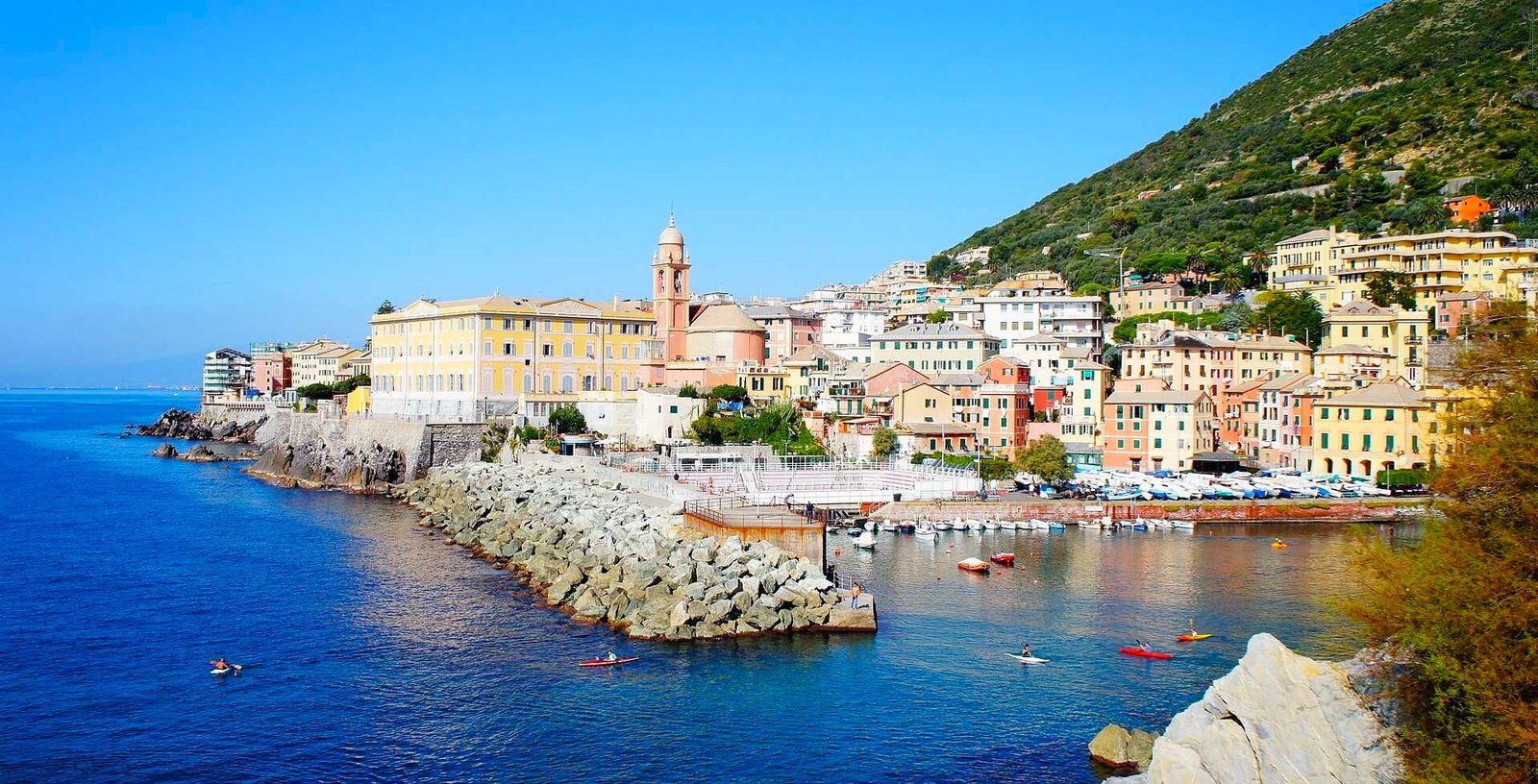
We introduce this second part of the Complete Tour of Genoa with a stunning panoramic view of the Porticciolo di Nervi📱🔄️, one of the attractions included in the itinerary.
- 📍 Medieval Genoa and Districts
- 📍 Origins of the Superba
- 📍 Genoa Ponente
- 📍 Genoa Levante
- 📍 Genoa Levante – Bis
See also:
- Complete Tour 1
- Guide to Genoa
- Itineraries: 1d, 3d, CT2
- See: Attractions
- Do: Experiences
- Eat: Where and What
- Getting Around, Pass, Stay
Overview
Complete Genoa Tour – Part 2 continues the great itinerary exploring the city through all its historical and territorial layers, connecting seamlessly with Part 1.
The route is organized into five thematic areas that allow visitors to understand Genoa through different eras, districts, and identities:
Medieval Genoa and Districts – The first itinerary develops in the historic heart of the city, among medieval towers, ancient churches, and noble palaces, telling the story of the original structure of the oldest Genoa.
Origins of La Superba – This final walking route is dedicated to the roots of the city and its historical evolution, among symbolic places linked to the birth of Genoa’s maritime power and the key figures of its development.
Genoa West – The first of the three Complete Genoa Tour routes to be done by car shifts the focus toward the western side of the city, gathering testimonies of its maritime and industrial tradition, with some of the most scenic monumental complexes.
Genoa East – The route crosses the most elegant and panoramic side of the city, among seaside villages, historic parks, and villas overlooking the sea, reaching the areas of Nervi.
Genoa East – Bis – A thematic and panoramic itinerary dedicated to the system of forts and lesser-known villas, where many stops can be observed from the outside along a predominantly scenic route.
📌 The 2 walking routes are connected (shared stop 🧩), so you always have continuity if you want to skip one or more stops. See also Itinerary Info.
Routes: Maps, Descriptions, Details
MEDIEVAL GENOA AND DISTRICTS
- Open Route Map📍
- Distance: 4,4* km on foot
- Time: 1,04* hrs walking
- Visit duration: 6 hours
- Stops: 10 main (X →I-X)* + 5 secondary
- Antica Barberia Giacalone (X) → Chiesa di Santa Maria di Castello (A) → Chiesa di Sant’Agostino (B) → Basilica di S.M. Assunta di Carignano (C) → Museo di Arte Contemporanea Villa Croce (D) → Museo di Storia Naturale “G. Doria” (E) → MOG Mercato Orientale (F) → Casa di Carlo Pisacane (G) → Chiesa Abbazia di Santo Stefano (H) → Casa di Cristoforo Colombo (I-X)🧩
- For days, times, prices and other info see Itinerary Table 📊
* These values may differ from those shown on Google Maps, as they are continuously recalculated in real time. See also Itinerary Info and Navigator + See here for Shared Stop 🧩
Route Description
SUMMARY
This loop itinerary of 4.4 km to be walked on foot develops between the Historic Center and the Carignano area, crossing historic churches, museums, and some of the most authentic areas of Genoa. The route includes 10 main stops and 5 secondary ones, for a total visiting time of around 6 hours.
Among the must-see stops are the Basilica di Carignano, the Museum of Sant’Agostino, and the Mercato Orientale.
Expand STEP DETAIL ⬇️
📌 All the stops summarized here are structured in the Itinerary Table 📊 with days, opening hours, prices, and Wikipedia 🌐 and Google Maps insights.
⬇️ starting point
X. Antica barberia Giacalone
The starting point of the itinerary is the Antica barberia Giacalone, a historic barbershop dating back to the 19th century, known for its traditional atmosphere and its role in the daily life of Genoa. Here you can breathe in the atmosphere of the city of the past.
Just a few steps from this point is the Torre Embriaci, an imposing medieval tower that tells the story of ancient Genoa, bearing witness to the power of the Genoese nobility during the medieval period.
❌ Very short visit and not essential in a tight itinerary.
⬇️
A. Chiesa di Santa Maria di Castello
Continuing on, the Chiesa di Santa Maria di Castello is one of the most significant stops in Genoa, not only for its architectural beauty but also for its historical and spiritual value.
Founded in the 11th century, the church offers fascinating architecture and a view over the city. Next to the church is the Museo di Santa Maria di Castello, which tells the story of the religious complex and the city of Genoa. Entry to the museum allows you to deepen your understanding of local culture and traditions.
❌ Visit only if you also include the museum complex; otherwise limited value.
⬇️
B. Chiesa di Sant’Agostino
The next stop is the Chiesa di Sant’Agostino, another important example of Genoese religious architecture. Founded in the 13th century, the church houses several artworks and sculptures dating from different periods.
The Museo di Sant’Agostino is located nearby and preserves a rich collection of medieval art, including sculptures and paintings that tell the religious history of Genoa and its churches. This museum is an excellent opportunity to immerse yourself in the spirituality and culture of the city.
⬇️
C. Basilica di Santa Maria Assunta di Carignano
The Basilica di Santa Maria Assunta di Carignano, located on one of the highest hills in the city, is one of the most important churches in Genoa. Dating back to the 17th century, the basilica is known for its imposing façade and richly decorated interiors.
From here, you can also enjoy a spectacular view over Genoa and its harbor. The visit also offers an opportunity to appreciate the basilica’s panoramic position and its religious significance in the city’s history.
✨ A terrace suspended over Genoa: the city unfolds beneath you between sea, rooftops, and sky in a single breathtaking view. The panoramic position of the basilica makes it one of the most scenic spots to truly understand Genoa’s vertical structure.
❌ Possible variable crowd levels during peak tourist hours.
⬇️
D. Museo Arte Contemporanea di Villa Croce
The Museo di Villa Croce is the next point of interest. Located inside an 18th-century villa, this museum is dedicated to contemporary art and hosts numerous works by Genoese and Italian artists. In addition to the permanent exhibitions, the villa offers a beautiful garden where visitors can stroll and relax, making the visit enjoyable also from a landscape perspective.
✨ Art and silence in a villa suspended between garden and sea: here contemporary art meets a view that slows down time.
❌ Recommended only if you have extra time beyond the main itinerary.
⬇️
E. Museo di Storia Naturale “G. Doria”
The Museo di Storia Naturale “G. Doria” is a must for natural science enthusiasts. Located in a 19th-century building, the museum hosts a vast collection of natural specimens, including fossils, minerals, plants, and animals. The visit offers a unique overview of the planet’s biodiversity.
Continuing on, you reach Piazza della Vittoria, one of the most emblematic squares in Genoa, celebrating the unification of Italy, and in front of the Arco della Vittoria, a monument commemorating victory in World War I.
❌ The 120-minute visit estimated in the itinerary for the Museo di Storia Naturale is suitable only for a standard visit; if you explore the exhibition rooms in depth, the time may exceed expectations.
⬇️
F. MOG Mercato Orientale
The Mercato Orientale (MOG) is an unmissable stop for those who want to immerse themselves in local culture and Genoese culinary traditions. This indoor market, dating back to the 19th century, is a burst of colors, smells, and sounds, where you can find fresh products, fish, fruit, vegetables, as well as spices and local specialties. It is a lively and authentic place, perfect for a stop, perhaps to taste some Ligurian specialties.
❌ Very crowded during lunchtime and weekends; it is better to visit earlier or later.
⬇️
G. Casa di Carlo Pisacane
Finally, the itinerary concludes with the Casa di Carlo Pisacane (National Monument), an Italian national hero who played a key role in the Risorgimento movements. The house, located in the Carignano district, is now a historical landmark preserving the memory of one of the main protagonists of the Italian unification. The visit allows you to learn more about Pisacane’s figure and the importance of his actions for the history of Genoa and Italy.
❌ Secondary stop compared to the main historical highlights of the route.
I/X. Casa di Cristoforo Colombo is a shared stop🧩 – See initial stop of the next itinerary
ORIGINS OF THE SUPERBA
- Open Route Map📍
- Distance: 1,8* km on foot
- Time: 0,23* hrs walking
- Visit duration: 6 hours
- Stops: 10 main (I-X →I)* + 6 secondary
- Casa di Cristoforo Colombo (I-X)🧩 → Chiostro di Sant’Andrea (A) → Chiesa di San Donato (B) → Chiesa del Gesù e S. Ambrogio e Andrea (C) → Accademia Ligustica di Belle Arti (D) → Palazzo Ducale di Genova (E) → Cattedrale di San Lorenzo (F) → Museo Diocesano di Genova (G) → Palazzo Gio Vincenzo Imperiale (H) → Porto Antico (I)
- For days, times, prices and other info see Itinerary Table 📊
* These values may differ from those shown on Google Maps, as they are continuously recalculated in real time. See also Itinerary Info and Navigator + See here for Shared Stop 🧩
Route Description
SUMMARY
This linear itinerary of 1.8 km to be walked on foot develops in the Historic Center of Genoa, among monumental churches, historic palaces, and symbolic places of the city. The route includes 9 main stops and 6 secondary ones, for a total visiting time of around 6 hours.
Among the key stops stand out the Cattedrale di San Lorenzo, Palazzo Ducale, and Piazza De Ferrari.
Expand STEP DETAIL ⬇️
📌 All the stops summarized here are structured in the Itinerary Table 📊 with days, opening hours, prices, and Wikipedia 🌐 and Google Maps insights.
I/X. Casa di Cristoforo Colombo
The starting point of this route is the Casa di Cristoforo Colombo, one of the most famous places in Genoa, believed to be the birthplace of the famous explorer. Although its authenticity is debated, the house is an excellent introduction to Genoa’s maritime and colonial history.
Porta Soprana, located nearby, is one of the ancient medieval gates of the city and a symbol of Genoa’s fortified past. This gate was one of the main entrances to the city during the medieval period and is an excellent starting point to immerse yourself in Genoa’s historic atmosphere.
❌ For the Casa di Cristoforo Colombo, possible congestion during tourist periods with not always quick access. Click here for the Skip-the-line ticket.
⬇️
A. Chiostro di Sant’Andrea
Continuing, the next stop is the Chiostro di Sant’Andrea, a place of great serenity and beauty belonging to the church of the same name. The cloister is an excellent example of medieval architecture, with its Romanesque-Gothic style offering insight into the spiritual and religious art of Genoa. Walking among its columns, you can almost feel the echo of past centuries.
❌ Optional visit only for completing the historical route.
⬇️
B. Chiesa di San Donato
The Chiesa di San Donato is the next stop, a building of significant historical importance for the city. Built in the 13th century, this church is a perfect example of Genoese medieval architecture, with a simple yet elegant façade and an interior that preserves valuable frescoes and artworks. The church is a place of worship representing Genoa’s religious and cultural tradition.
⬇️
C. Chiesa del Gesù e S. Ambrogio e Andrea
The Chiesa del Gesù e S. Ambrogio e Andrea is one of the most artistically and architecturally significant stops. This Baroque-style church is famous for its imposing façade and interiors decorated with splendid frescoes and stuccoes. This place of worship has witnessed numerous historical and religious events in Genoa and is one of the city’s most important churches for its beauty and cultural value.
❌ Possible variable access times during religious services or activities.
⬇️
D. Accademia Ligustica di Belle Arti
The next stop takes you to the heart of Genoa’s cultural life. The Accademia Ligustica di Belle Arti is one of the city’s most prestigious artistic institutions, where you can discover academic and contemporary art.
Nearby, you will find Piazza Raffaele de Ferrari, famous for its large palace and central fountain. Teatro Carlo Felice, located in the square, is one of Genoa’s most important theaters and hosts concerts, operas, and theatrical performances.
The Galleria Mazzini, one of the city’s main shopping streets, offers an elegant walk among shops and historic cafés, a great way to experience Genoa’s lively atmosphere.
✨ Piazza De Ferrari is Genoa’s scenic heart: the central fountain and urban openness create one of the city’s most iconic views.
❌ A full visit of the area requires more time if you explore both the gallery and the theater in depth.
⬇️
E. Palazzo Ducale di Genova
The visit continues with the majestic Palazzo Ducale di Genova, one of the most important historical buildings in the city. This palace was the seat of the government of the Republic of Genoa and is now a major cultural and museum center.
The Casa Luzzati, located nearby, hosts a collection dedicated to artist Emanuele Luzzati, famous for his theater set designs and his contribution to visual arts. Luzzati was one of the greatest Genoese artists of the 20th century, and his house-museum is a tribute to his extraordinary career.
✨ Palazzo Ducale di Genova changes atmosphere depending on exhibitions: its courtyards and monumental spaces offer a living perception of Genoa’s history.
❌ Possible delays or queues during temporary exhibitions and events.
⬇️
F. Cattedrale di San Lorenzo
The Cattedrale di San Lorenzo (National Monument), with its majestic Romanesque-Ligurian façade and imposing Gothic interior, is one of the most important churches in Genoa. The cathedral is dedicated to the city’s patron saint and is a place rich in religious and cultural history.
Adjacent to the cathedral is the Museo del Tesoro di San Lorenzo, which preserves a vast collection of sacred art, relics, and precious objects that tell the story of the cathedral and the city.
✨ Façade and interiors create an immediate scenic impact in the medieval heart of the city, among stone, light, and Gothic details.
❌ Area subject to heavy tourist flow during midday hours.
⬇️
G. Museo Diocesano di Genova
The Museo Diocesano di Genova is another unmissable stop for lovers of religious art. The museum houses a vast collection of sacred artworks ranging from the Middle Ages to contemporary times.
Among the exhibited works are paintings, sculptures, and artifacts that tell the story of the Church of Genoa and its influence on local culture and art. It is a fascinating place where you can discover the relationship between art and spirituality in the city’s history.
❌ Recommended only for those with a specific interest in sacred art.
⬇️
H. Palazzo Gio Vincenzo Imperiale
The final stop of the route is Palazzo Gio Vincenzo Imperiale (UNESCO World Heritage), an elegant noble palace representing one of Genoa’s most prestigious residences. With a Baroque-style façade and refined interiors, the palace reflects the grandeur of the Imperiale family and Genoese nobility. Visiting it gives you an idea of the opulence and luxury that characterized aristocratic residences of the time.
GENOA PONENTE
- Open Route Map📍
- Distance: 28* km by car
- Time: 1,13* hrs by car
- Visit duration: 6 hours
- Stops: 8 main (X →G)* + 1 secondary
- Lanterna di Genova (X) → Villa Spinola di San Pietro (A) → Chiesa di Santa Maria della Cella (B) → Abbazia di San Nicolò del Boschetto (C) → Villa Durazzo Pallavicini (D) → Museo di Archeologia Ligure (E) → Villa Doria Centurione – Museo Navale di Pegli (F) → Villa Duchessa di Galliera – Parco Storico (G)
- For days, times, prices and other info see Itinerary Table 📊
* These values may differ from those shown on Google Maps, as they are continuously recalculated in real time. See also Itinerary Info and Navigator + See here for Shared Stop 🧩
Route Description
SUMMARY
This linear itinerary of 28 km to be traveled by car develops in the Genoa West area, among historic villas, religious complexes, and fascinating evidence of the local maritime tradition. The route includes 8 main stops and 1 secondary one, for a total visiting time of around 6 hours.
Among the most interesting stops stand out the striking Lanterna di Genova, the park of Villa Durazzo Pallavicini, and the scenic Villa Duchessa di Galliera.
Expand STEP DETAIL ⬇️
📌 All the stops summarized here are structured in the Itinerary Table 📊 with days, opening hours, prices, and Wikipedia 🌐 and Google Maps insights.
⬇️ starting point
X. Lanterna di Genova
The itinerary begins with one of Genoa’s most iconic landmarks: the Lanterna di Genova. This lighthouse, whose history dates back to the 12th century, is still in operation today and is the ultimate symbol of Genoa’s port. The Lanterna stands on San Benigno hill and offers an incredible panoramic view over the city and the sea.
Next to it, you can visit the Museo della Lanterna, which tells the story of the lighthouse and its essential role in guiding ships into Genoa’s harbor, an important testimony to the city’s maritime history.
✨ The Lanterna di Genova is the most iconic point of the port: the lighthouse opens onto a wide, clear view between city and sea, offering a complete perception of Genoa’s structure from above.
📌 The Museo della Lanterna can be visited upon request. You can find the phone number in the Google Maps listing accessible via the table link.
⬇️
A. Villa Spinola di San Pietro
Continuing, the next stop is Villa Spinola di San Pietro, an elegant residential complex located in Sampierdarena. This 17th-century villa is surrounded by a large park and garden, where you can walk among centuries-old trees and admire the architectural structure of the villa itself.
The villa is an example of Baroque architecture and was inhabited by several noble Genoese families, reflecting the luxury and importance of the Genoese aristocracy of the period.
⬇️
B. Chiesa di Santa Maria della Cella
The Chiesa di Santa Maria della Cella is a place of great spirituality and historical importance. Located in the Sestri Ponente area, the church dates back to the 15th century and is known for its Gothic style and the frescoes decorating its interior.
The church is also known for the peaceful atmosphere it offers visitors, a spiritual refuge away from the city’s bustle. The site is also important for its religious significance in the history of the local community.
⬇️
C. Abbazia di San Nicolò del Boschetto
Another significant stop on this route is the Abbazia di San Nicolò del Boschetto, an ancient Benedictine monastery located in Borgo San Nicola.
Founded in the 12th century, this religious complex holds great historical and spiritual importance for the region. The abbey is immersed in a peaceful natural setting, surrounded by woods and hills. Inside, the church features medieval frescoes and an atmosphere that reflects centuries of monastic life.
📌 The Abbazia di San Nicolò del Boschetto is currently closed to the public.
⬇️
D. Villa Durazzo Pallavicini
Villa Durazzo Pallavicini, located in the Pegli district, is one of the most beautiful and majestic historic villas in the area. This complex is known for its enchanting park, featuring a variety of exotic plants and themed landscapes ranging from formal Italian gardens to romantic and mysterious pathways.
The villa, built in the 18th century, is a refined example of aristocratic architecture, and the park was designed to offer a unique sensory experience among statues, caves, and small lakes.
⬇️
E. Museo di Archeologia Ligure
Continuing, the Museo di Archeologia Ligure is a key place for anyone who wants to discover the history of Liguria, from prehistoric times to the Roman era. The museum hosts a wide collection of archaeological finds, including ceramics, coins, and everyday tools, illustrating the life of the ancient peoples who inhabited the region.
⬇️
F. Mu.MA – Museo Navale di Pegli
The Mu.MA – Museo Navale di Pegli is a must-see for those interested in Genoa’s maritime tradition. The museum is located in a historic villa in Pegli and is dedicated to the history of navigation and ships.
Its collections range from models of ancient ships to nautical instruments and historical reconstructions of vessels that shaped Genoese maritime history. Here, visitors can learn about Genoa’s role as a naval power in the Mediterranean.
❌ A full visit requires more time than the itinerary estimate suggests.
⬇️
G. Villa Duchessa di Galliera
The itinerary concludes with a visit to Villa Duchessa di Galliera, also located in Pegli. This villa was built in the 19th century for the Duchess of Galliera and represents another example of aristocratic grandeur in the area.
The villa is surrounded by a magnificent park overlooking the sea, offering spectacular views. Its English-style garden is one of the highlights, with pathways, fountains, and a wide variety of plants making it perfect for a relaxing walk.
❌ Possible variable crowd levels during weekends and spring periods.
GENOA LEVANTE
- Open Route Map📍
- Distance: 25,7* km by car
- Time: 1,08* hrs by car
- Visit duration: 8 hours
- Stops: 10 main (X →I)* + 4 secondary
- Cimitero Monumentale di Staglieno (X) → Santuario della Madonna del Monte (A) → Villa Giustiniani-Cambiaso (B) → Boccadasse (C) → Scoglio di Quarto – Monumento ai Mille (D) → Museo Wolfsoniana (E) → Parchi di Nervi (F) → Galleria d’Arte Moderna di Genova (G) → Raccolte Frugone (H) → Porticciolo di Nervi e passeggiata Garibaldi (I)
- For days, times, prices and other info see Itinerary Table 📊
* These values may differ from those shown on Google Maps, as they are continuously recalculated in real time. See also Itinerary Info and Navigator + See here for Shared Stop 🧩
Route Description
SUMMARY
This linear itinerary of 25.7 km to be traveled by car develops in the Genoa East area, among fishing villages, seaside parks, and important historical and cultural landmarks. The route includes 10 main stops and 4 secondary ones, for a total visiting time of around 8 hours.
Among the must-see stops stand out the charming village of Boccadasse, the Parchi di Nervi, and the panoramic Porticciolo di Nervi.
Expand STEP DETAIL ⬇️
📌 All the stops summarized here are structured in the Itinerary Table 📊 with days, opening hours, prices, and Wikipedia 🌐 and Google Maps insights.
⬇️ starting point
X. Cimitero Monumentale di Staglieno
The journey begins at the Cimitero Monumentale di Staglieno, one of the most famous and scenographic cemeteries in Europe. This cemetery, inaugurated in 1851, is known for its incredible architecture and the artistic sculptures that decorate the tombs.
The artworks here, many of which were created by renowned sculptors of the time, make it a true open-air museum. It is a place of great atmosphere and a perfect starting point to immerse yourself in the artistic and cultural history of Genoa.
✨ The monumental arcades and 19th-century statues make the visit unique even for those who do not usually enjoy historic cemeteries.
❌ The internal route is much more extensive than it appears at the entrance.
⬇️
A. Santuario della Madonna del Monte
Continuing east, the next stop is the Santuario della Madonna del Monte, a place of worship offering a spectacular panoramic view over the city and the Ligurian Riviera. This sanctuary, located on Monte hill, was built in the 17th century and is dedicated to the Virgin Mary.
Inside, you will also find the Museo Ex Voto, which houses a large collection of votive offerings linked to local religious traditions, testimonies of popular devotion and miracles attributed to the Madonna del Monte.
✨ From the Santuario della Madonna del Monte, the view suddenly opens onto the city and the sea: a panoramic spot that combines spirituality and Ligurian landscape.
❌ The uphill walk and panoramic visit require more time than a simple religious stop.
⬇️
B. Villa Giustiniani-Cambiaso
The next stop takes you to two elegant historic villas: Villa Giustiniani-Cambiaso and Villa Saluzzo Bombrini. The Villa Giustiniani-Cambiaso, located in the Struppa area, is an example of noble architecture with a centuries-old park offering panoramic views over the valley.
The Villa Saluzzo Bombrini, nearby, features an Italian-style garden and a historic park linked to the noble Saluzzo family of Genoa. Both villas represent an elegant aspect of Genoese aristocratic history.
❌ Recommended mainly for those interested in historic villas and noble architecture.
⬇️
C. Boccadasse
The next stop is Boccadasse, a picturesque fishing village overlooking the sea. This corner of Genoa is known for its colorful houses, small harbor, and traditional fishing boats.
Walking through its narrow cobbled streets, you can feel an atmosphere that seems unchanged over time, a perfect example of Ligurian tradition. Boccadasse is also famous for its stunning views of the sea and surrounding hills, making it one of the most charming areas of Genoa.
✨ Perfect at sunset, when the village becomes even more scenic.
❌ Very busy area during weekends and sunset hours.
⬇️
D. Scoglio di Quarto – Monumento ai Mille
Continuing along the coast, you arrive at Scoglio di Quarto, a symbolic site linked to Italian unification history. Here stands the Monumento ai Mille (National Monument), dedicated to the 1,000 Garibaldi volunteers who, in 1860, departed from this point for the famous expedition that led to the unification of Italy.
The monument, erected in the mid-19th century, is an important historical landmark and a site of great patriotic value. The panoramic sea view makes this place even more meaningful.
⬇️
E. Museo Wolfsoniana
The next stop is the Museo Wolfsoniana, located in Nervi, which hosts a collection of 20th-century art, design, and architecture. Founded thanks to the donation of Lloyd Wolfson’s collection, the museum displays works that tell the story of design and visual culture, with a focus on everyday objects and their aesthetic evolution.
This museum offers a fascinating overview of modern design and decorative arts evolution.
❌ Recommended mainly for those interested in 20th-century design and decorative arts.
⬇️
F. Parchi di Nervi
The Parchi di Nervi are a complex of public gardens and parks located in Nervi, one of the greenest and most peaceful areas of Genoa. These parks offer a perfect place for a relaxing walk surrounded by nature, with wide tree-lined paths, flowers, and exotic plants.
The park extends along the coastline, offering breathtaking sea views. The beauty of the gardens and the tranquility of the area make it one of the most relaxing and scenic destinations in Genoa.
✨ The coastal promenade is among the most scenic in the city.
❌ Very crowded on holidays and spring days.
⬇️
G. Galleria d’Arte Moderna di Genova
The Galleria d’Arte Moderna di Genova, housed in the beautiful Villa Saluzzo Serra, is another cultural highlight in Genoa. The gallery exhibits works ranging from the 19th century to contemporary art, including paintings, sculptures, and works on paper by Italian and international artists.
The villa itself is an example of 19th-century architecture, and the gallery is the ideal place to appreciate modern and contemporary art in a historic and elegant setting.
❌ Recommended mainly for those interested in deepening their visit of the Nervi museum circuit.
⬇️
H. Raccolte Frugone
The Raccolte Frugone are an important art collection also located within the Parchi di Nervi. This collection features works ranging from medieval to modern art, with a strong focus on Ligurian artistic production.
Visitors can admire paintings, sculptures, and art objects that tell the cultural history of the region. The Raccolte Frugone are a key stop for those who want to discover Liguria through its artists and artistic traditions.
❌ Complementary stop to the Nervi parks, not essential for a quick visit.
⬇️
I. Porticciolo di Nervi
The itinerary ends at the Porticciolo di Nervi, a small and charming harbor that embodies the maritime spirit of Liguria. The Passeggiata Garibaldi, running along the sea, is one of the most beautiful walks in Genoa, ideal for a relaxing stroll with views of the sea and surrounding mountains.
Nervi is also known for its peaceful atmosphere and maritime traditions, and the harbor is the perfect final stop to enjoy the beauty of this part of Genoa.
✨ The Passeggiata Garibaldi along the sea offers one of the most scenic endings in Genoa, between cliffs, waves, and Mediterranean light.
❌ Very crowded in the evening and on weekends.
GENOA LEVANTE – BIS
- Open Route Map📍
- Distance: 93,6* km by car
- Time: 3,36* hrs by car
- Visit duration: 3 hours
- Stops: 10 main (X →I)* + 1 secondary
- Forte Crocetta (X) → Chiesa di Santa Caterina in Begato (A) → Forte Begato (B) → Acquedotto Storico di Genova (C) → Torre Quezzi (D) → Forte Monteratti (E) → Forte Richelieu (F) → Villa Imperiale (G) → Villa Spinola di Quarto (H) → Villa Luxoro (I)
- For days, times, prices and other info see Itinerary Table 📊
* These values may differ from those shown on Google Maps, as they are continuously recalculated in real time. See also Itinerary Info and Navigator + See here for Shared Stop 🧩
Route Description
SUMMARY
The Genoa East – Bis itinerary is a panoramic and thematic route dedicated to the system of forts and some lesser-known historic villas. It is a different experience compared to the other itineraries, as many stops — such as forts and towers — cannot be visited inside but are viewed from the outside along the route.
The route covers 93.6 km by car through the hills of Genoa East and includes 10 main stops and 1 secondary one. The total driving time is around 3 and a half hours, while the estimated visiting time for the attractions open to the public is about 3 hours.
This itinerary allows you to discover a less touristy side of Genoa, linked to its defensive history, with panoramic views and highly striking observation points.
Expand STEP DETAIL ⬇️
📌 All the stops summarized here are structured in the Itinerary Table 📊 with days, opening hours, prices, and Wikipedia 🌐 and Google Maps insights.
⬇️ starting point
X. Forte Crocetta
The itinerary begins with a visit to Forte Crocetta, located in the Staglieno area. This fort is one of the many fortifications built in Genoa during the 19th century to defend the city. Although less well-known than others, Forte Crocetta offers a panoramic view over Genoa and its surrounding area. It is the perfect starting point to explore Genoa’s military history.
⬇️
A. Chiesa di Santa Caterina in Begato
Continuing on, you will head to the Chiesa di Santa Caterina in Begato, located in the Begato district. This medieval church, dating back to the 13th century, is one of the examples of religious architecture that tells the story of Genoa. The church is known for its simplicity and its peaceful atmosphere, far from the city’s bustle. A stop here allows you to enjoy the tranquility of this area.
⬇️
B. Forte Begato
The next stop is Forte Begato, an imposing fortress located on Mount Begato, one of the hills overlooking Genoa. Built in the 19th century as part of the city’s defensive line, the fort holds a strategic position offering spectacular views over the city and the sea. Here you can discover Genoa’s military history while enjoying a unique panoramic landscape.
✨ One of the most surprising panoramic viewpoints in the Genoese hinterland: the city stretches between mountains and the Mediterranean. The elevated position offers a complete understanding of Genoa’s defensive system.
❌ Reaching the fort takes longer than a standard urban stop.
⬇️
C. Acquedotto Storico di Genova
The Acquedotto Storico di Genova is an impressive structure that runs through several parts of the city and dates back to the 18th century. Along the route, you can observe one of the oldest aqueduct systems in the city, an important piece of hydraulic engineering history.
✨ Walking along the ancient aqueduct offers an unusual perspective combining nature, historical architecture, and hidden corners of the city.
❌ The route is longer than it appears and requires real walking time.
⬇️
D. Torre Quezzi
The Torre Quezzi is a medieval tower located in the Quezzi district, once part of Genoa’s defensive system. Although partially damaged, it remains a symbol of the city’s medieval period and its military history. From the surrounding area, you can explore the site and appreciate the historical context of this structure.
⬇️
E. Forte Monteratti
Forte Monteratti, located above the Marassi district, is another example of the fortifications built to protect the city. Dating back to the 19th century, it was designed as part of Genoa’s defensive system. Although it is not regularly open to the public, its imposing structure can be admired from the outside, along with views over the city.
⬇️
F. Forte Richelieu
Forte Richelieu is another important historical site within Genoa’s defensive network. Located in the Molassana area, the fort offers a beautiful view over the city and the sea. Its massive structure reflects the era of military fortifications in Genoa. Although it is not always accessible, it remains a noteworthy stop for those interested in military history.
⬇️
G. Villa Imperiale
Villa Imperiale is one of Genoa’s most prestigious residences, built in the 16th century. Located on the hills overlooking the city, the villa is an example of Renaissance architecture, with a large park offering panoramic views of Genoa and the sea. It is also known for its beautiful gardens, which feature exotic and rare plants.
⬇️
H. Villa Spinola di Quarto
The next stop is Villa Spinola di Quarto (National Monument), one of Genoa’s historic villas. Located in the Quarto dei Mille district, this 18th-century aristocratic residence is surrounded by a large park. The villa is ideal for a peaceful walk, combining elegant architecture with a park that extends toward the coastline.
⬇️
I. Villa Luxoro, Museo Giannettino Luxoro
The itinerary ends with a visit to Villa Luxoro, which hosts the Museo Giannettino Luxoro. Located in Nervi, this villa is one of the most charming examples of aristocratic residences in Liguria. The museum contains a rich collection of artworks, including paintings, antique furniture, and decorative objects, illustrating the history of the Luxoro family and their aristocratic lifestyle in Genoa.
📌 The Museo Giannettino Luxoro is currently closed to the public.
Eating
During the Complete Genoa Tour – Part 2, Ligurian cuisine can accompany the different itineraries, offering gastronomic experiences that vary between the historic center, noble districts, and panoramic areas, with a strong identity connected to the territory.
Where to eat in Genoa during the Complete Genoa Tour – Part 2:
- Medieval Genoa and Districts: Trattoria da Maria – authentic Genoese cuisine in the caruggi, among traditional dishes and a popular atmosphere.
- Origins of La Superba: Le Rune – restaurant in the historic center among the Rolli palaces, with Ligurian cuisine revisited in a modern style.
- Genoa West: Creuza de ma – seafood cuisine and Ligurian tradition in a panoramic and relaxing setting on the western coast.
- Genoa East: Il Genovese – a reference point for pesto made with mortar and traditional Ligurian cuisine in a contemporary style.
- Genoa East – Bis: Trattoria del Bruxaboschi – traditional cuisine from the Genoese hinterland, with historic recipes and a rustic atmosphere.
See also: Where to eat in Genoa
What to eat in Genoa during the Complete Genoa Tour – Part 2:
- Appetizers: Genoese focaccia, chickpea farinata, torta pasqualina, salted or marinated anchovies.
- First courses: trofie with pesto, pansoti with walnut sauce, trenette with pesto, green beans and potatoes, Genoese-style minestrone.
- Main courses: cima alla genovese, cappon magro, stewed stockfish, Ligurian-style codfish.
- Desserts: Genoese pandolce, canestrelli biscuits, fried sweet milk.
To learn more about the Genoese gastronomic tradition, see also What to eat in Genoa.
Sleeping
To fully enjoy the second part of the Complete Tour, choosing the right accommodation is strategic in order to reduce travel between the different thematic areas of the itinerary, which develops through the historic center, western districts, eastern districts, and panoramic hillside areas.
The most convenient solution for the first group of routes, Medieval Genoa and Districts and Origins of La Superba, is the Historic Center and Carignano: staying in the caruggi or nearby allows visitors to fully experience the city’s medieval atmosphere and easily reach the main palaces, churches, and museums on foot.

For the Genoa West itineraries, the ideal base moves toward western areas such as Sampierdarena, Pegli, and nearby districts, which provide more direct access to historic villas, parks, and monumental complexes in the western part of the city without crossing the entire historic center.
For the Genoa East section, the best choice is to stay between Foce, Albaro, and Nervi, elegant seaside areas that allow visitors to comfortably explore fishing villages, historic parks, and panoramic villas along the coast.
The Genoa East – Bis itinerary, on the other hand, being mainly panoramic and designed for travel by car, is better supported by accommodations in intermediate or hillside locations, such as Castelletto or areas connected to major roads, useful for optimizing connections toward the hills and the system of forts.
For further information, see also Where to sleep in Genoa: Info and Tips.
📊 Itinerary Table
The table below shows all the stops of the five routes in Genoa Complete Tour Part 2, helping you to optimise your visit as effectively as possible.
- Scroll the table down and to the right 📱🔄 Rotate your phone horizontally to get an overview of opening days, hours, prices of attractions, and for further details on Wikipedia 🌐 and Google Maps ➡️.
- ⚠️ Always check the opening days and hours of attractions through the Google Maps entries linked in the table. See also Itinerary Info.
- To see the explanation of each data column, click its title (e.g. Attractions Index, Ratings, Org, etc.) at the top of the table.
⏳ Caricamento tabella in corso…
📌 This table is updated every 6–12 months.
🛡️ The tables on Tourplan360.com are original content protected by copyright © and monitored through anti-plagiarism tracking systems.
FAQ
Yes, you can remove stops or change their order while always maintaining continuity of movement. This allows you to adapt the routes based on your interests and available time.
📌 See also Itinerary Info
Can these itineraries be done on foot?
Only the first 2 routes can be done on foot because they develop in the historic center of Genoa, while the other 3 are intended to be done by car.
📌 See also Getting around Genoa
Is it worth booking the main attractions?
During peak tourist seasons, it is recommended to book in advance or join guided tours to avoid queues and secure entry.
📌 See also Experiences in Genoa
How long does it take to complete Part 2 of the tour?
Part 2 of the Complete Genoa Tour requires approximately 27 hours of visiting time.
Where can I find opening days, hours, and prices of attractions?
All updated information is available in the Itinerary Table 📊, with direct links to Google Maps and Wikipedia for further details.
See also
- Complete Tour 1
- Genoa in 1 day
- Genoa in 3 days
- Guide to Genoa
- See: Attractions
- Do: Experiences
- Eat: Where and What
- Getting Around, Pass, Stay
Other Destinations
🔐 Some images on this page are used under Creative Commons licenses:
By https://www.pexels.com/u/ghostpresenter/ – Milan, Porta Nuova skyline – CC0 – Public Domain – Wikimedia Commons
By Hpnx9420 – Turin, view from Monte dei Cappuccini – Own work – CC BY 3.0 – Wikimedia Commons
By PROPOLI87 – Florence, panorama from Piazzale Michelangelo – Own work – CC BY-SA 4.0 – Wikimedia Commons
By Superchilum – Genoa, panoramic view of the small harbor of Nervi – – CC BY 4.0, Wiki Commons
