
Guide to Trento: what to see, do, eat
Travel Guide to the Best of the City


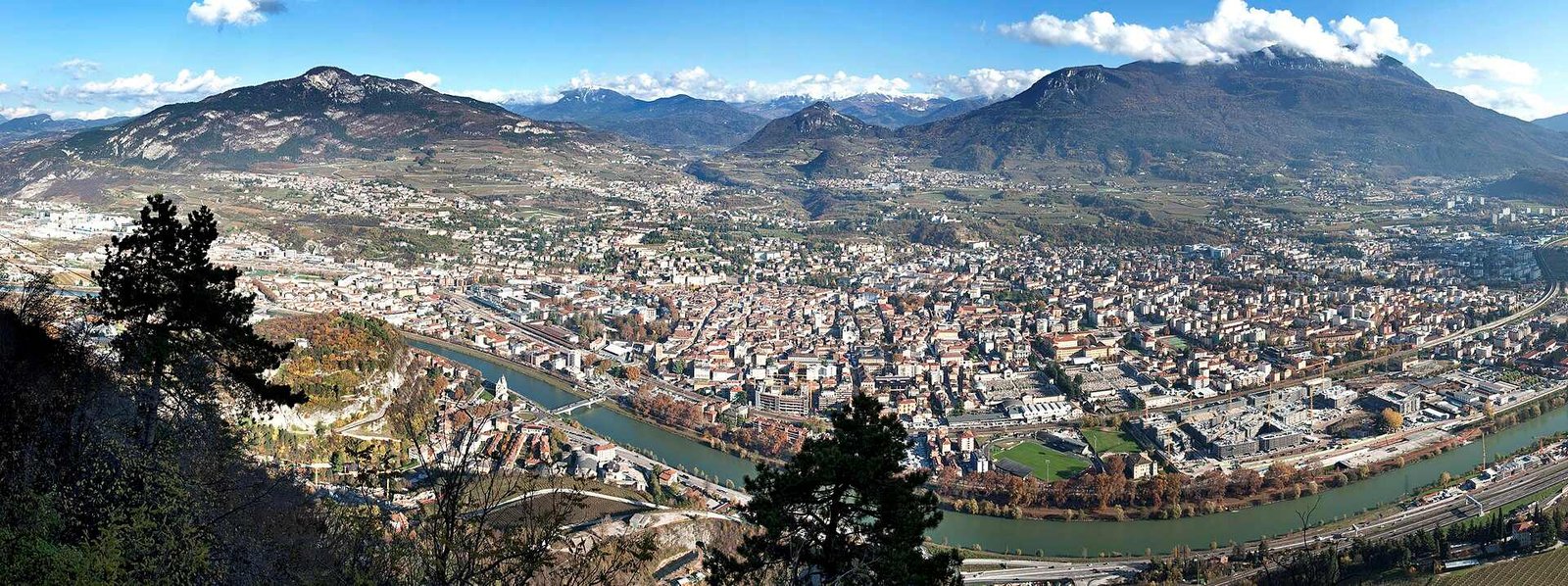
The panoramic photo above, which embraces the elegant city of Trento, is an excellent introduction to this guide that will accompany you in discovering the wonders of the city.
📌 For a more complete overview of certain items, click on the links to detailed pages +🔗
- Geografía y Historia
- Atracciones Principales
- Parques y Naturaleza
- Lagos y Ríos
- Eventos y Celebraciones
Overview
📌 A large part of the references covered in this Overview section and in the Practical Info section, are summarized in the Orientation Table 📊 with further details on Wikipedia 🌐 and Google Maps ➡️ where available.
Trento, the capital of the autonomous province of the same name, is a fascinating mix of Italian tradition and Central European influences, the result of its long and complex history.
Surrounded by the Dolomites, Trento offers a unique combination of breathtaking natural landscapes, historical monuments, and a lively atmosphere, ideal for both culture and nature lovers.
GEOGRAPHY
Trento is located in northern Italy, in the heart of Trentino-Alto Adige, in a strategic position along the Adige Valley, between the Alps and one of the main corridors connecting Italy to the Central European area.
By observing the territory of the Municipality of Trento as a whole (area with a red and white dashed outline in the image below), it is possible to clearly recognize the structure of the valley in which the city develops, surrounded by mountain ranges and crossed by the Adige River, which has influenced its history, urban planning, and development.
The most densely populated urban areas, residential neighborhoods, and agricultural zones can be identified, with vineyards and crops extending along the slopes and valley floor, as well as the main infrastructures connecting Trento to the rest of the region and northern Italy.
From reading the satellite map, the main territorial directions of the city clearly emerge:
- North: the Adige Valley continues towards Bolzano, crossing an alpine landscape characterized by vineyards, apple orchards, and small towns.
- South: the valley opens towards Rovereto and Verona, with a territory that gradually approaches the Po Valley.
- East: the reliefs develop towards Valsugana, one of the main connection routes to Veneto, characterized by lakes, forests, and natural landscapes.
- West: the mountains extend towards Monte Bondone, one of the main natural and panoramic areas around Trento.
The strategic position of Trento makes it an important connection point between northern and southern Italy, easily accessible from cities such as Bolzano, Verona, Innsbruck (Austria), Rovereto, Bressanone, and towns in Veneto such as Vicenza and Padova.
HISTORY
Trento, of very ancient origins and developed as an important political and religious center, has a history deeply connected to its strategic position along the Adige Valley, a crossroads between the Italian world and Central Europe:
- Roman Era: Trento, known as Tridentum, was an important Roman center located along the Via Claudia Augusta, a key route connecting the Po Valley to the Alpine territories and the Germanic world. The city played a strategic role in controlling trade and military movements.
- Middle Ages: during the Middle Ages, Trento established itself as a significant religious and political center thanks to the Prince-Bishopric, governed by prince-bishops. The city developed around ecclesiastical power, consolidating its importance in the Alpine context.
- Modern Age (16th century): Trento was the setting of one of the most important events in European history, the Council of Trento (1545–1563), which profoundly shaped the city and strengthened its religious, cultural, and political role at an international level.
- Habsburg and Contemporary Era: under Habsburg rule, Trento maintained its strategic role within the Austro-Hungarian Empire. After the First World War, it became part of Italy, developing over time into an important administrative, cultural, and tourist center of Trentino-Alto Adige.
MAIN ATTRACTIONS
Trento is a city rich in historical and cultural monuments, bearing witness to its glorious past. Among the most important:
- Castello del Buonconsiglio: The symbol of the city, a magnificent fortress that was the residence of the prince-bishops. Inside, you can visit the Torre dell’Aquila, famous for its medieval fresco cycle depicting the months of the year.
- Duomo di San Vigilio: The cathedral of Trento, a masterpiece of Romanesque architecture, located in the central Piazza Duomo. The sessions of the Council of Trento took place here.
- Museo Diocesano Tridentino: Housed in Palazzo Pretorio, this museum offers an important collection of sacred art and historical documents related to the Council of Trento.
- MUSE – Museo delle Scienze: Designed by Renzo Piano, it is one of the most innovative museums in Italy, dedicated to science and nature, with a particular focus on the geology of the Dolomites.
- Gallerie di Piedicastello: Former road tunnels converted into exhibition spaces, often used for photographic exhibitions and contemporary art installations.
PARKS AND NATURE
Trento is surrounded by natural parks and protected areas that offer excursions, trekking, and outdoor sports.
- Parco Naturale Adamello-Brenta: A vast protected area located west of Trento, easily reachable from the city. It includes the Brenta Group and the Adamello range and is home to species such as the brown bear, with alpine lakes, waterfalls, and unspoiled forests.
✨ An alpine expanse where valleys, forests, and mountains follow one another endlessly, among bears, glacial lakes, and silences that seem to suspend time.
- Riserva naturale integrale delle Tre Cime del Monte Bondone: One of the main hiking and skiing areas near the city, offering routes for all levels of difficulty and spectacular views over the Adige Valley.
LAKES AND RIVERS
The area around Trento is rich in bodies of water and rivers that enhance the alpine landscape, offering numerous opportunities for relaxation and outdoor activities.
- Fiume Adige: It is the main watercourse that flows directly through Trento and represents the natural axis along which the city developed. Today it is flanked by cycling paths and pedestrian routes that allow you to experience its landscape actively.
- Lago di Levico: More intimate and surrounded by greenery compared to other lakes in the area, it is ideal for those seeking tranquility, with clear waters and a particularly charming natural setting.
✨ Calm waters surrounded by forests that reflect perfectly on the surface, creating an almost unreal atmosphere of peace.
- Lago di Lagolo: A small alpine lake located on the slopes of Monte Bondone, perfect for those seeking relaxation and direct contact with nature, especially during the summer months.
- Lago di Garda: It is part of the province of Trento but not of the municipality; the lake is located 52 km southwest of the city. Easily reachable, it represents one of the main attractions of the area, ideal for water sports, excursions, and spectacular views.
EVENTS & CELEBRATIONS
Trento hosts numerous events throughout the year, enlivening the historic center and attracting visitors from all over Italy and abroad. Among the most important:
- Carnevale di Trento: One of the city’s most cherished traditions, with parades, masks, and activities that involve families and visitors in a festive atmosphere in the heart of the historic center.
- Trento Film Festival: A historic international festival dedicated to mountains, exploration, and adventure. It is one of the oldest of its kind in the world and represents a major cultural reference point.
✨ Between cinema, mountains, and a spirit of adventure, Trento transforms into a unique cultural stage where nature and storytelling meet.
- Festa di San Vigilio: The city’s patronal festival celebrated in June in honor of Saint Vigilio, with historical parades, religious events, shows, and fireworks.
- Mercatino di Natale di Trento: During the Christmas period, the city transforms into a charming alpine village with wooden stalls, handcrafted products, and typical specialties.
✨ The historic center lights up with alpine scents and lights, transforming into a Christmas village that feels like it came out of a mountain fairy tale.
📊 Orientation Table
In the table below you will find a summary of the main references, to best orient and organize your visit through our itineraries (see Itinerary Overview).
- Scroll the table down and to the right 📱🔄 Rotate your phone horizontally to get an overview of opening days, hours, prices of attractions, and for further details on Wikipedia 🌐 and Google Maps ➡️.
- ⚠️ Always check the opening days and hours of attractions through the Google Maps entries linked in the table. See also Itinerary Info.
- To see the explanation of each data column, click its title (e.g. Attractions Index, Ratings, Org, etc.) at the top of the table.
⏳ Caricamento tabella in corso…
📌 This table is updated every 6–12 months.
🛡️ The tables on Tourplan360.com are original content protected by copyright © and monitored through anti-plagiarism tracking systems.
Itinerary Overview
All the most important attractions in Trento listed in the table have been carefully divided into the two main itineraries we have designed to offer a complete, well-organized travel experience suited to any amount of available time.
To help you choose, below you will find a summary with brief descriptions of each route, so you can easily identify the one that best matches your preferences and available time.
TRENTO IN 1 DAY
Trento in one day is a 4.1 km walking itinerary that crosses the historic center of the city, offering an overview of its cultural and artistic wonders.
- Morning – The day begins among elegant palaces and ancient churches, with stops in the heart of Piazza Duomo and the Duomo di San Vigilio.
- Afternoon – The route continues through the Castello del Buonconsiglio and the MUSE – Museo delle Scienze, offering moments of cultural insight and scientific discovery.
- Evening – The tour ends with the Funivia Trento–Sardagna, which leads to a spectacular panoramic view over the city and the Adige Valley.
🔗 Go to Trento in 1 day: travel itinerary
TRENTO IN 4 DAYS
The four-day itinerary in Trento allows you to discover both the heart of the city and its surroundings, combining history, culture, and stunning landscapes.
Days 1, 2, 3 – The first three days are dedicated to the historic center, with walks through its most characteristic streets, exploring its most charming and lively corners while immersing yourself in authentic atmosphere and local traditions.
Day 4 – The last day takes you outside the city center, with excursions in the surroundings, between nature and history, featuring attractions reachable by car or public transport.
The itinerary is designed to offer a balanced experience, alternating relaxing moments with engaging visits. A perfect mix of art, history, and landscapes for an unforgettable journey.
🔗 Go to Trento in 4 days: travel itinerary
Practical Info
WHEN TO GO
Trento is a destination that offers different experiences in every season. The Alpine climate, events, and tourist flow vary throughout the year, making it important to choose the most suitable time for a visit:
- Spring (April–June): Mild temperatures and nature in full bloom make this period ideal for visiting Trento’s historic center and surroundings, with walks along the Adige, hills, and early hiking routes in the nearby mountains.
- Summer (July–August): Generally warm weather, but softened by the Alpine location, perfect for hikes on Monte Bondone, lake visits, and outdoor activities. It is also the peak tourist season.
- Autumn (September–October): One of the best times to visit Trento, with pleasant temperatures and spectacular landscapes among vineyards and mountains turning into autumn colors. Ideal for food and wine experiences and cultural visits.
- Winter (November–March): A charming winter atmosphere with traditional Christmas markets in the historic center, seasonal events, and skiing opportunities in nearby resorts such as Monte Bondone.
GETTING THERE
Trento is easily accessible by various means of transport, thanks to its strategic position along the Adige Valley. Whether you arrive by plane, train, bus, or car, here are the main useful details to help you plan your trip to the city.
- By plane: The nearest airport to Trento is Verona Airport, while other reference airports include Bergamo and Innsbruck. The small “Gianni Caproni” Airport is mainly used for local activities and private flights.
- By train: Trento railway station is an important hub along the Brenner line, with direct connections to Verona, Bolzano, Innsbruck, and major cities in Northern Italy.
- By bus: Numerous lines connect Trento with major Italian cities and towns across the province. The bus terminal is well connected to the historic center and the local urban network managed by Trentino Trasporti.
- By car: Trento is crossed by the A22 Brenner motorway, the main axis between Italy and Austria. The historic center is partly a restricted traffic zone (ZTL), so it is recommended to use external parking areas connected by shuttles or short walking routes.
✅ To search for or book a flight you can check Booking.com Flights.
✅ You can check routes, schedules, prices and buy train or bus tickets with Trainline.
✅ For car rentals you can refer to Booking.com Cars.
GETTING AROUND
Trento is an easily visitable city thanks to the compactness of its historic center and the efficiency of its urban and extra-urban connections, which allow you to move easily both on foot and by public transport.
- On foot or by bike: Trento’s historic center is ideal to explore on foot or by bicycle, among squares, historic buildings, and picturesque views. The city is well equipped with cycling paths that run along the Adige River and also connect the peripheral areas.
- Public transport: Trento has an efficient network of urban and extra-urban buses managed by Trentino Trasporti, connecting the city center with peripheral districts and major locations in the province such as Rovereto, Bolzano, and the surrounding valleys.
- Limited Traffic Zone (ZTL): The historic center is partly a restricted traffic area. It is advisable to pay attention to access rules and use external parking areas connected to the center via short walking routes.
- Parking: The main parking areas are located in strategic zones such as Autosilo Buonconsiglio, Parcheggio Duomo, and Piazzale San Severino. In Table > Parking and Mobility you will find the most convenient solutions for visiting the city.
USEFUL TIPS
To visit Trento in the most comfortable and organized way possible, here are some practical tips that can help you save time, optimize your movements, and make the most of your experience in the city and its surroundings.
- Comfortable shoes: Trento’s historic center is perfect to explore on foot, but it features cobblestone streets and paths that require comfortable footwear, especially when visiting Piazza Duomo, museums, and historic buildings.
- Cable car and panoramic viewpoints: The Trento–Sardagna cable car is a great way to quickly reach a panoramic viewpoint over the city and the Adige Valley, ideal for admiring the landscape from above.
- Water and suitable clothing: In summer, it is recommended to bring water and sunscreen for walks and excursions in the surroundings, while in winter it is important to dress in layers to handle temperature changes between the city and nearby mountains.
- Respect for cultural and natural heritage: Trento preserves an important cultural and environmental heritage, so it is essential to behave respectfully in historic areas, museums, and natural trails.
WHAT TO EAT
Trento offers a rich and authentic gastronomic landscape, where Alpine tradition blends with Italian influences and mountain flavors. Among the dishes and products not to be missed:
- Canederli trentini: One of the signature dishes of local cuisine, made with stale bread, speck or cheese, served in broth or with melted butter.
- Strangolapreti: Traditional Trentino gnocchi made of bread and spinach, seasoned with melted butter and sage.
- Carne salada del Trentino: A typical specialty made from seasoned and cured beef, often served raw or lightly seared.
- Polenta trentina: A traditional mountain dish, often served with alpine cheese or meat.
- Formaggi e prodotti di malga: Including Casolet, Puzzone di Moena, and Lagorai cheeses, authentic expressions of Alpine dairy tradition.
- Pesce di lago e di torrente: Such as trout and Trentino char, featured in many local recipes.
- Dolci tradizionali: Including torta di fregoloti and other rustic desserts from the Trentino rural tradition.
Wines and Beverages – Trentino is a land of great wines, with high-quality production appreciated internationally:
- Teroldego Rotaliano DOC: The emblematic red wine of the Rotaliana Plain, structured and intense.
- Trento DOC: An outstanding traditional method sparkling wine, among the most prestigious in Italy.
- Lago di Caldaro DOC: A wine shared with the South Tyrol area, also widely produced in the Trentino border region.
WHERE TO EAT
Trento offers restaurants, taverns, and typical eateries that highlight Trentino’s gastronomic tradition, combining authentic cuisine with more modern proposals in the heart of the city.
- Osteria a le Due Spade, one of the most historic venues in Trento, located in the historic center, offers traditional Trentino cuisine in an atmosphere full of charm and authenticity.
- Scrigno del Duomo, an elegant restaurant overlooking Piazza Duomo, known for refined cuisine that blends local tradition with modern interpretations in an exclusive setting.
- Locanda Margon, a gourmet restaurant set among the vineyards above Trento, a benchmark for high-end Trentino cuisine with an excellent gastronomic offering.
- Forsterbräu Trento, a typical venue in the city center, highly appreciated for its traditional cuisine and informal atmosphere, also ideal for craft beers and Alpine dishes.
See also Restaurant Selection in Table 📊
WHERE TO SLEEP
Trento offers accommodation options for all tastes and budgets, from hotels in the historic center to agritourisms and properties nestled among the vineyards and hills of the Adige Valley. Choosing the right area to stay is essential to optimize travel and fully enjoy the atmosphere between city, nature, and mountains.

Here are some of the main areas to stay in Trento, selected for location, convenience, and atmosphere:
- Historic center – Piazza Duomo and surroundings: Ideal for those who want to stay in the heart of the city, among historic buildings, museums, restaurants, and attractions within walking distance. Perfect for experiencing Trento without needing transportation.
- Castello del Buonconsiglio area: A strategic and quiet area just next to the historic center, ideal for those seeking comfort and a more relaxed atmosphere while still being close to the main attractions.
- Trento Sud / Sanseverino area: A modern and well-connected district, convenient for those arriving by car or train, with easy access to the motorway and main services.
- Monte Bondone and surroundings: Perfect for those seeking nature, panoramic views, and relaxation, with hotels and accommodations surrounded by greenery, ideal for hiking and outdoor activities.
FAQ
Must-see highlights include Piazza Duomo, Duomo di San Vigilio, Castello del Buonconsiglio and MUSE – Museo delle Scienze.
📌 Read more in Main Attractions.
Are there natural parks near Trento?
Yes, nearby you can find Monte Bondone, Orrido di Ponte Alto, Lago di Levico and Lago di Garda.
📌 Read more in Parks and Nature.
Is Trento suitable for a short visit?
Yes, the center is compact and can be visited in 1 day.
📌 Read more in Itinerary Overview.
What is the best time to visit Trento?
Spring and autumn are ideal, while winter is perfect for Mercatino di Natale di Trento and activities on Monte Bondone.
📌 Read more in When to Go.
Which typical dishes should you try in Trento?
Local specialties include canederli, carne salada, polenta, strangolapreti and traditional mountain cheeses.
📌 Read more in Waht to eat.
Where to eat in Trento?
The historic center offers typical restaurants and osterie where you can enjoy local cuisine.
📌 Read more in Where to eat.
What is the best area to stay in Trento?
The historic center is ideal, while the Castello del Buonconsiglio area and Trento Sud offer convenience and access.
📌 Read more in Where to Stay.
Where can I find information about opening hours, routes and attractions in Trento?
All information is organized in reference tables with details on attractions, itineraries and main points of interest.
📌 Check the Orientation Table 📊