
Rome in 3 days: travel itinerary
What to see, opening hours, prices, map


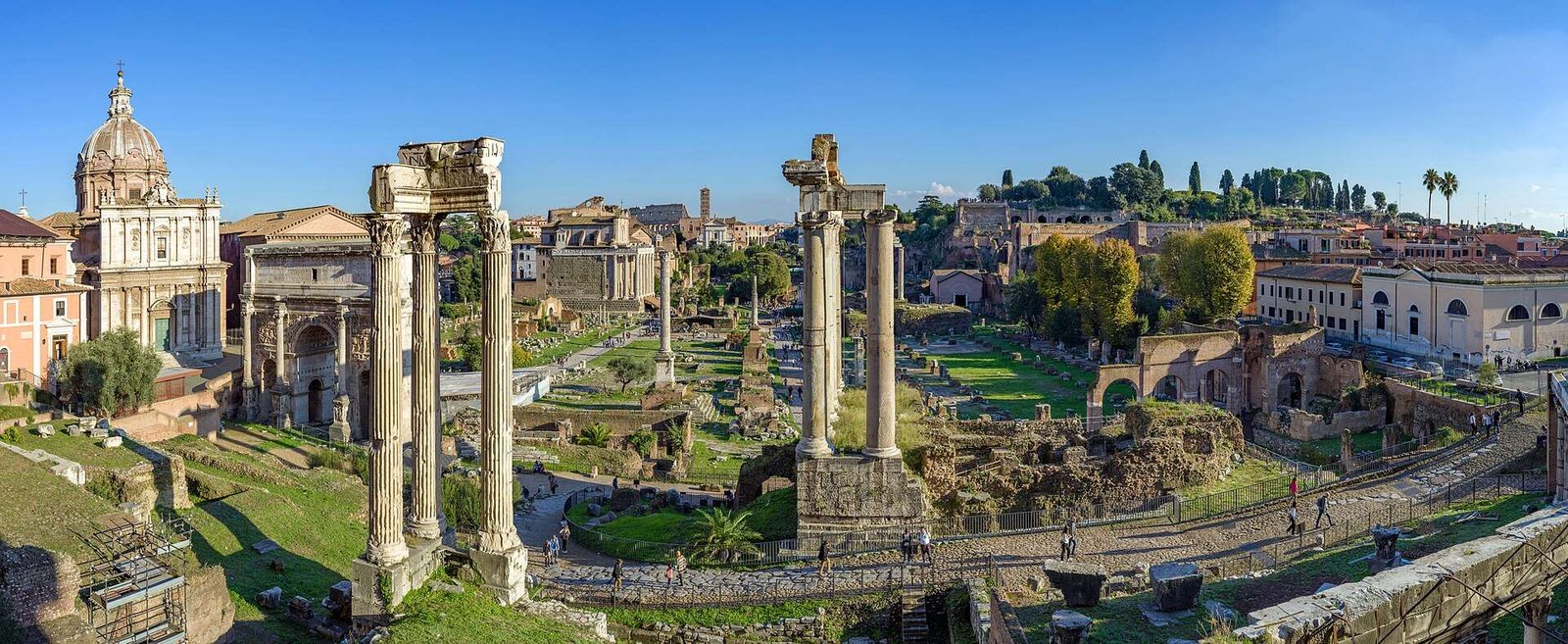
The panoramic view of the Foro Romano 📱🔄️, seen from the Musei Capitolini, provides the perfect backdrop for this 3-day Rome itinerary, which will take you to discover the most important wonders of the Eternal City and the Vatican.
📌 For a more complete overview of certain items, click on the links to detailed pages +🔗
- Day 1 – Colosseum +🔗
- Day 2 – Vatican +🔗
- Day 3 – Historic Centre
- Detailed Stages
- Itinerary Table 📊
- FAQ
See also:
- Rome in 1 day
- Guide to Rome
- Itineraries: 3d, CT1, CT2
- See: Attractions
- Do: Experiences
- Eat: Where and What
- Getting Around, Pass, Stay
Itinerary Overview
Rome in 3 days is a tour made up of three independent itineraries: Colosseum, Vatican City and Historic Center. The proposed order is only a suggestion; you can freely choose which route to start with according to your needs.
For Colosseum and Vatican City, below you will find a brief presentation of the related itineraries, while for the Historic Center, this page includes the map, description, detailed stages and itinerary table.
DAY 1 – COLOSSEUM
The first route is dedicated to the Parco Archeologico del Colosseo, one of the most important monumental complexes in the world.
The itinerary includes the Colosseo, the Foro Romano, the Palatino, the Domus Aurea and ends at the Circo Massimo, allowing you to retrace the history of Imperial Rome. Below you will find the link to the complete guide.

DAY 2 – VATICAN
The second route takes you to discover Città del Vaticano, the spiritual heart of Christianity and a treasure chest of unique artistic masterpieces.
The itinerary includes Piazza San Pietro, Basilica di San Pietro, Musei Vaticani and Cappella Sistina. Below you will find the link to the complete guide.
DAY 3 – HISTORIC CENTER
The third route is dedicated to the Historic Center of Rome, a walking itinerary of approximately 5 km that crosses some of the city’s most famous squares, monuments and viewpoints.
The route starts from Castel Sant’Angelo and continues through iconic places such as Piazza Navona, the Pantheon, the Fontana di Trevi and Piazza di Spagna. Below you will find the interactive map, the detailed stages and the complete itinerary table.
ROME IN 3 DAYS > HISTORICAL CENTER
- Open Route Map📍
- Distance: 5* km walking
- Time: 1 h 12* min. walking
- Visit duration: 11 hours
- Stages: 10 main ones (X → I)* + 28 secondary ones
- Castel Sant’Angelo (X) → Piazza Navona (A) → Pantheon (B) → Monumento a V. Emanuele II – Vittoriano (C) → Piazza del Campidoglio (D) → Galleria Doria Pamphilj (E) → Fontana di Trevi (F) → Piazza di Spagna (G) → Terrazza del Pincio (H) → Piazza del Popolo (I)
- For days, times, prices and other info see Itinerary Table 📊
* These values may differ from those shown on Google Maps, as they are continuously recalculated in real time. See also Itinerary Info and Navigator + See here for Shared Stop 🧩
Steps Details
📌 All the stops summarized here are structured in the Itinerary Table 📊 with days, opening hours, prices, and Wikipedia 🌐 and Google Maps insights.
Morning
⬇️ starting point
X. Castel Sant’Angelo
The tour starts from Castel Sant’Angelo, a monument with a thousand lives: originally built as a mausoleum, it was later transformed into a fortress, prison and papal residence. From Ponte Sant’Angelo, decorated with the statues of angels sculpted by Bernini, a spectacular view opens over the Tevere and the city.
✨ Climbing to the terrace of Castel Sant’Angelo offers one of the most spectacular views of the Vatican, the cupola di San Pietro and the Tevere.
❌ During the central hours of the day, entry may require long waiting times: if you find a long queue, consider limiting yourself to the external visit in order to respect the itinerary.
📌 The visit to Castel Sant’Angelo requires a reservation. You can find the phone number in the Google Maps information card accessible from the link in the table.
⬇️
A. Piazza Navona
We head towards Piazza Navona, one of the most fascinating squares in Rome, built on the remains of the Stadio di Domiziano. This unique Baroque square is decorated with three magnificent fountains. In the centre stands the Fontana dei Quattro Fiumi by Bernini, topped by the Obelisco Agonale. On the sides, the elegant Fontana del Moro and Fontana del Nettuno complete the scenery. The square is a true architectural jewel, ideal for discovering the traces of Baroque Rome.
✨ When street artists and outdoor cafés bring the square to life, Piazza Navona offers one of the most authentic and lively atmospheres in all of Rome.
⬇️
B. Pantheon
A few steps from Piazza Navona you will find the Pantheon (UNESCO World Heritage), one of the best-preserved Roman buildings in the world. Its dome and the majestic central oculus are extraordinary examples of ancient architecture. Outside, admire the Fontana di Piazza della Rotonda and the Obelisco del Pantheon, in a setting that conveys all the grandeur of ancient Rome.
✨ Entering beneath the gigantic dome of the Pantheon and observing the oculus open towards the sky is an experience that continues to amaze after almost two thousand years.
⬇️
C. Monumento a Vittorio Emanuele II – Vittoriano
End your morning at the Vittoriano (National Monument), a majestic monument overlooking Piazza Venezia. From here, the view over the city is spectacular, and the Altare della Patria with the Statua equestre di Vittorio Emanuele II tells the story of the unification of Italy.
✨ From the panoramic terraces of the Vittoriano you can enjoy a 360° view over the historic centre of Rome, with views extending as far as the Colosseo and the cupola di San Pietro.
Afternoon
⬇️
D. Piazza del Campidoglio
The first afternoon stop is Piazza del Campidoglio, designed by Michelangelo. Here you can admire the Statua equestre di Marco Aurelio and walk along the Cordonata Capitolina. The Musei Capitolini host extraordinary collections of ancient art and sculptures, in a complex that represents the cultural heart of the city.
⬇️
E. Galleria Doria Pamphilj
Continue to the Galleria Doria Pamphilj, one of the most famous private art galleries in Rome, renowned for the Galleria degli Specchi, a richly decorated room that evokes the splendour and magnificence of the ancient Roman noble families.
📌 The visit to the Galleria Doria Pamphilj requires a reservation. You can find the phone number in the Google Maps information card accessible from the link in the table.
⬇️
F. Fontana di Trevi
After leaving Galleria Doria Pamphilj, we head towards one of the most famous symbols of Rome: the Fontana di Trevi. This Baroque masterpiece, designed by Nicola Salvi, is one of the most spectacular fountains in the world. Do not forget to throw a coin into the fountain: according to tradition, this gesture ensures your return to the Eternal City.
✨ Seeing the Fontana di Trevi illuminated, with the sound of the water and the marble changing colour at sunset, is one of the most exciting moments of a visit to Rome.
Evening
⬇️
G. Piazza di Spagna
The evening begins in one of the most famous and romantic squares in Rome: Piazza di Spagna. Here you will find the splendid Fontana della Barcaccia, created by Bernini, characterized by its original shape of a half-sunken boat. The square is also home to the Colonna dell’Immacolata Concezione and the Obelisco Sallustiano, which contribute to the unique charm of this place.
✨ Sitting at the foot of the Scalinata di Trinità dei Monti and admiring Piazza di Spagna is one of the best ways to experience the atmosphere of the Città Eterna.
⬇️
H. Terrazza del Pincio
The penultimate stop of our itinerary takes us to the charming Terrazza del Pincio, one of the most beautiful panoramic viewpoints in Rome. Walking along the Passeggiata del Pincio, you can also admire the distinctive Orologio ad acqua del Pincio. From here, you can enjoy a splendid view over the rooftops of the capital and the nearby Piazza del Popolo, one of the most photographed views in the city.
✨ The Terrazza del Pincio is one of the best places to admire the sunset over Rome: the view embracing the historic center and the dome of San Pietro is simply unforgettable.
⬇️
I. Piazza del Popolo
The final stop of our itinerary is dedicated to the monumental Piazza del Popolo, dominated by the imposing Obelisco Flaminio, the oldest obelisk in Rome. Before concluding the visit, walk through the historic Porta del Popolo, for centuries the main entrance to the city for those arriving from the north. It is the ideal place to end this intense day discovering the most iconic places of the Capital.
Eating
Three days in Rome allow you to discover the most iconic places of the Capital, alternating archaeological sites, monumental squares, museums and unique viewpoints. To complete the experience, a dinner in a typical Roman trattoria is a must, where you can taste the great classics of Roman cuisine. Among the specialties not to be missed are:
- Supplì, the famous Roman appetizer with a stringy mozzarella heart;
- Spaghetti alla carbonara, one of the signature dishes of Roman gastronomic tradition;
- Carciofi alla romana, among the most representative side dishes of Roman cuisine;
- Coda alla vaccinara, an authentic masterpiece of traditional Roman cuisine;
- Maritozzo, the quintessential Roman dessert, perfect to end your stay.
To taste these specialties, you can choose some of the city’s most appreciated restaurants, such as Da Armando al Pantheon, in the heart of the historic center, Felice a Testaccio, a landmark for traditional Roman cuisine, L’Arcangelo, renowned for its reinterpretations of Roman gastronomy, or Checchino dal 1887, a historic restaurant in the Testaccio district.
For a complete overview of where and what to eat in Rome, visit our dedicated guides: Where to eat in Rome and What to eat in Rome.
Sleeping
To comfortably visit Rome in 3 days, the best solution is to stay in the Centro Storico or in a well-connected area between Piazza Venezia, Pantheon, Piazza Navona and the Colosseo. This location allows you to easily reach most of the main attractions on foot or with short metro journeys.

An excellent alternative is the Prati district, ideal for dedicating an entire day to discovering Città del Vaticano, or the rione Monti, perfect for visiting the Colosseo, the Foro Romano and the Fori Imperiali, while experiencing one of the most characteristic neighborhoods of the Capital.
Whatever area you choose, thanks to the efficient transport network and the short distances between the main attractions, it will be easy to follow the itinerary and fully enjoy three days discovering the Città Eterna.
For more information on where to stay in the city, you can consult our dedicated guide: Where to sleep in Rome: Info and Tips.
📊 Itinerary Table
In the table below you will find all the attractions included in the itinerary, to enhance and better guide your three-day visit to Rome:
- Scroll the table down and to the right 📱🔄 Rotate your phone horizontally to get an overview of opening days, hours, prices of attractions, and for further details on Wikipedia 🌐 and Google Maps ➡️.
- ⚠️ Always check the opening days and hours of attractions through the Google Maps entries linked in the table. See also Itinerary Info.
- To see the explanation of each data column, click its title (e.g. Attractions Index, Ratings, Org, etc.) at the top of the table.
⏳ Caricamento tabella in corso…
📌 This table is updated every 6–12 months.
🛡️ The tables on Tourplan360.com are original content protected by copyright © and monitored through anti-plagiarism tracking systems.
FAQ
You can access the maps of the three itineraries directly here:
📌 See also the Itinerary Overview
How much time do you need to visit Rome in 3 days?
The itinerary is divided into three days and requires approximately 30 hours of sightseeing: 10 hours for the Colosseum, 9 hours for Vatican City and 11 hours for the Historic Centre.
Can this Rome itinerary be done on foot?
Yes. All three itineraries are designed to be explored on foot. The Historic Centre itinerary covers approximately 5 km.
📌 See also Getting Around Rome
Should I book the main attractions in advance?
During the busiest tourist periods, it is advisable to book admission tickets and guided tours in advance to avoid long queues and secure entry to the most popular attractions.
You can consult our dedicated guides here:
- Roman Forum
- Domus Aurea
- Vatican Museums and Sistine Chapel
- St. Peter’s Basilica
- Castel Sant’Angelo
- Pantheon
- Capitoline Museums
- Galleria Doria Pamphilj
- Altare della Patria and Vittoriano
📌 See also Experiences in Rome: Tours, Tickets and Useful Info
Can I visit Rome in less than three days?
Yes. You can choose two of the proposed itineraries or simply visit the attractions that interest you most, adapting the itinerary to the time you have available.
Where can I find opening days, opening hours and ticket prices for the attractions?
All the updated information is available in the dedicated itinerary tables:
Each table also includes direct links to Google Maps ➡️ and Wikipedia 🌐 for every attraction.
📌 For the Historic Centre, see the Itinerary Table 📊
See also
- Rome in 1 day
- Colosseum in 1 day
- Vatican in 1 day
- Complete Tour: P1 + P2
- Guide to Rome
- See: Attractions
- Do: Experiences
- Eat: Where and What
- Getting Around, Pass, Stay
Other Destinations
🔐 Some images on this page are used under Creative Commons licenses:
By Richard Nevell – Naples, panoramic view of the city and Mount Vesuvius – Own work – CC BY-SA 4.0 – Wikimedia Commons
By PROPOLI87 – Florence, panorama from Piazzale Michelangelo – Own work – CC BY-SA 4.0 – Wikimedia Commons
By Luca Aless – Venice, panoramic view of Doge’s Palace and St. Mark’s Campanile – Own work – CC BY-SA 4.0 – Wikimedia Commons
Di Wolfgang Moroder – Roma, panoramica del Foro Romano dai Musei Capitolini – Opera propria – Public Domain + CC BY-SA 3.0– Wikimedia Commons

