
Guide to Rome: what to see, do, eat
Travel Guide to the Best of the City


Welcome to Rome, the capital of Italy, known for centuries as the “Eternal City“, offers visitors an unforgettable journey through a historical and artistic heritage unique in the world.
📌 For a more complete overview of certain items, click on the links to detailed pages +🔗
- Rome in 1 Day +🔗
- Colosseum in 1 Day +🔗
- Vatican in 1 Day +🔗
- Rome in 3 Days +🔗
- Complete Tour Part 1 +🔗
- Complete Tour Part 2 +🔗
- Appia Antica in 1 Day +🔗
- Ostia Antica in 1 Day +🔗
- When to Go
- Getting There
- Getting Around +🔗
- Useful Tips +🔗
- What +🔗 and Where +🔗 to Eat
- Where to Sleep +🔗
Must-see
Overview
📌 A large part of the references covered in this Overview section and in the Practical Info section, are summarized in the Orientation Table 📊 with further details on Wikipedia 🌐 and Google Maps ➡️ where available.
With more than 2,000 years of history visible in every corner, Rome offers visitors a timeless journey through ruins, churches, squares and palaces.
But the city is not only the history of the Roman Empire and Christianity; it is also a crossroads of culture, extraordinary cuisine and vibrant urban life. A place where every street and monument tells a story.
GEOGRAPHY
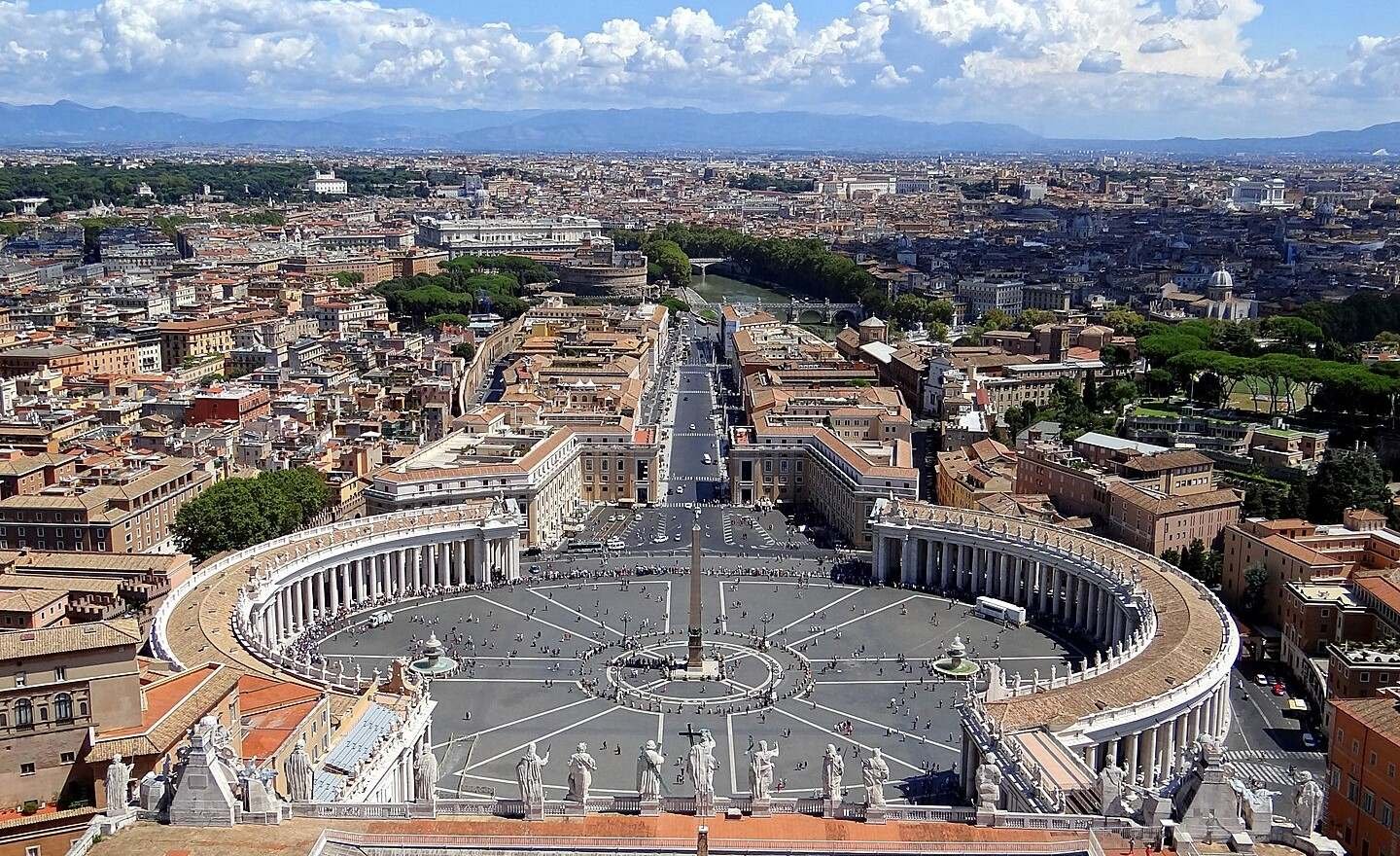
Rome is located in the central part of Italy, in the Lazio region, lying along the course of the Tiber River and just a few kilometres from the Tyrrhenian Sea. The urban area extends across coastal plains, hilly areas and the elevations of the Monti Sabatini and Colli Albani, in a strategic position at the centre of the Italian peninsula.
The city covers a very large territory that includes the historic centre, modern neighbourhoods, numerous green areas and archaeological sites integrated into the urban landscape.
From the satellite view of the territory, the main directions of the Rome area clearly emerge:
- North: the Roman territory extends towards the area of Via Cassia and Via Flaminia, connecting with the towns of Formello, Campagnano di Roma and the Tuscia area, reaching as far as the province of Viterbo.
- North-East: the routes cross the Aniene Valley and lead towards Tivoli, Guidonia Montecelio and the Monti Lucretili area, with connections towards the province of Rieti and the inland areas of Lazio.
- East: the urban territory opens towards the eastern outskirts and the areas of the Castelli Romani, with connections towards Frascati, Grottaferrata, Marino and the towns of the province of Rome located along Via Casilina and Via Tuscolana.
- South-East: the routes lead towards the area of the Castelli Romani and the Pontine Plain, connecting Rome with Albano Laziale, Velletri and subsequently with the territory of the province of Latina.
- South: the Roman territory extends towards the coast and the Tyrrhenian Sea through the areas of Ostia, Fiumicino and the seaside locations along the Roman coast, with connections towards southern Lazio.
- West: the city maintains a direct relationship with the Tyrrhenian Sea through the coastline and the territory of Fiumicino, where Leonardo da Vinci International Airport is located, the capital’s main air gateway.
Rome represents the main geographical, political and cultural hub of central Italy and maintains strategic connections with the other major centres of the peninsula, including Firenze, Napoli, Perugia and L’Aquila, as well as railway, motorway and airport connections that make it one of the country’s main access points.
Expand OVERVIEW ⬇️
HISTORY
Rome is one of the most important cities in world history, with a historical journey spanning more than 2,700 years of events, transformations and different cultures:
- Ancient origins: according to tradition, Rome was founded in 753 BC on the Palatine Hill, in a strategic position along the Tiber River. The small Latin settlement gradually developed until it became one of the major powers of the ancient Mediterranean.
- Roman era and Republic: after the monarchic period, Rome became a Republic and began an extraordinary territorial expansion. Through military conquests and a complex political organisation, the city extended its dominion over much of the Mediterranean, becoming the centre of a vast economic and cultural system.
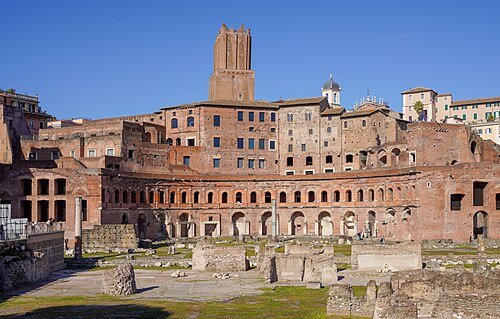
- Roman Empire: with Augustus, the Empire was established and Rome reached its greatest splendour, becoming the capital of one of the largest empires in history. During this period, monuments that are still symbols of the city today were built, including the Colosseo, the Fori Imperiali, the Pantheon and numerous urban infrastructures.
- Christian era and Middle Ages: after the spread of Christianity and the fall of the Western Roman Empire, Rome assumed a new role as the centre of Christianity and the seat of the Papacy. The city was transformed through basilicas, churches and religious sites that still represent a fundamental part of its heritage today.
- Renaissance and Baroque era: between the 15th and 18th centuries, Rome experienced a new period of splendour thanks to the patronage of the popes and the work of great artists such as Michelangelo, Raffaello, Bernini and Borromini. The city was enriched with squares, fountains, palaces and masterpieces that define its modern appearance.
- Rome as Capital and contemporary era: after the unification of Italy, in 1870 Rome became the capital of the Kingdom of Italy and later of the Italian Republic. Today it is the country’s main political, cultural and tourist centre, an international metropolis where archaeological heritage, art, institutions and contemporary urban life coexist.
MAIN ATTRACTIONS
Architecture and Monuments – Thanks to the historical stratification described above, Rome possesses one of the most important architectural heritages in the world. Here is an overview of the most significant monuments:
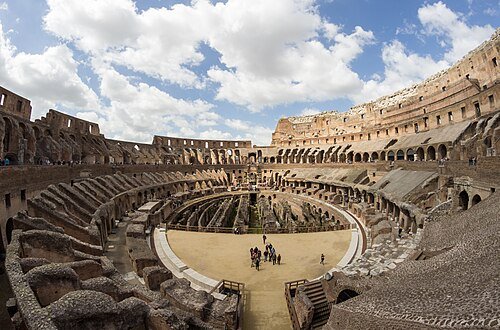
- Colosseo: The universal symbol of Rome and ancient Roman civilisation, it is the largest amphitheatre ever built in the Roman Empire and represents one of the most visited monuments in the world.
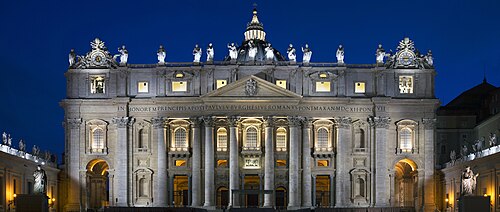
- Basilica di San Pietro: The monumental heart of Vatican City and one of the most important churches in Christianity, with works by Michelangelo, Bernini and other great artists.
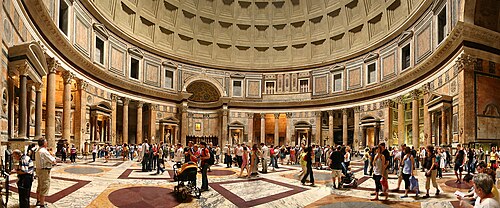
- Pantheon: A masterpiece of ancient Roman architecture, it is one of the best-preserved buildings of the Roman Empire and impresses with its monumental dome and engineering that remains astonishing even today.
- Fori Imperiali and Foro Romano: An extraordinary archaeological complex that tells the story of the political, religious and commercial centre of ancient Rome through monumental squares, temples and imperial structures.
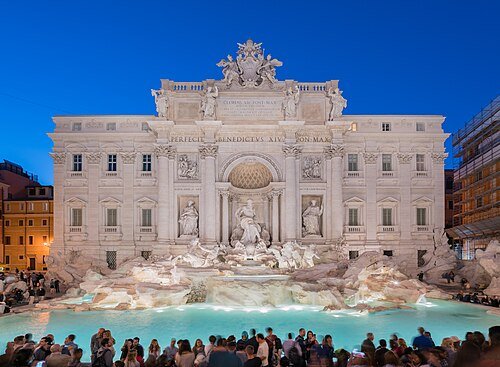
- Fontana di Trevi: One of the most famous symbols of Baroque Rome, it represents a spectacular masterpiece of art and architecture in the heart of the historic centre.
Visiting these monuments means travelling through the different eras of Roman history, from the Empire to Christian Rome and the extraordinary artistic period of the Renaissance and Baroque.
Art and Culture – Rome offers an immense cultural heritage, with museums, galleries and collections preserving archaeological finds, artistic masterpieces and testimonies of Italian and European history.
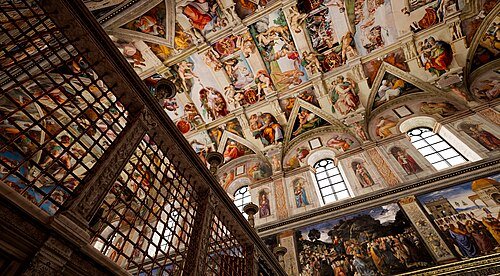
- Musei Vaticani and Cappella Sistina: One of the most important museum complexes in the world, it houses absolute masterpieces of Western art, including Michelangelo’s frescoes in the Cappella Sistina.
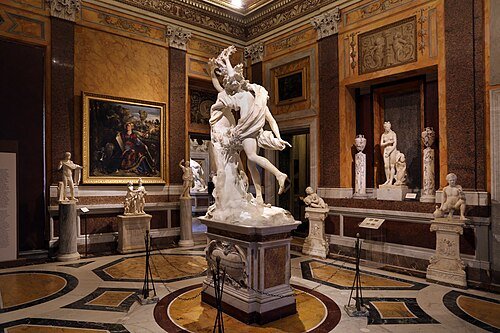
- Galleria Borghese: An extraordinary museum surrounded by the gardens of Villa Borghese, it houses works by Bernini, Caravaggio, Raffaello and great masters of Italian art.
- Musei Capitolini: The oldest public museum in the world, it houses important archaeological and artistic collections linked to the history of Rome and Roman civilisation.
Exploring these places allows visitors to understand the cultural stratification of Rome, where archaeology, art, religion and traditions coexist in a heritage unique in the world.
See also Experiences in Rome: Tours, Tickets and Useful Info
PARKS AND NATURE
Although it is one of the largest urban areas in Europe, Rome is surrounded by numerous parks, nature reserves and protected landscapes that offer a surprising balance between environment, history and biodiversity:
- Villa Borghese, Villa Doria Pamphilj and Gianicolo: These are the main green spaces within the city of Rome, ideal for a break while visiting monuments and museums.
- Parco Naturale Regionale di Veio: One of the most important natural areas around Rome, characterised by woods, valleys, waterways and archaeological evidence of the ancient Etruscan civilisation. The park represents an important green lung between the capital and the territory north of the city.
- Riserva Naturale della Marcigliana: A large protected area located in the northern Roman countryside, preserving a historic agricultural landscape made up of hills, woods and ancient farmhouses. It is one of the most representative natural environments of the Agro Romano.
- Riserva Naturale Statale del Litorale Romano: A vast protected area that includes coastal environments, dunes, pine forests and wetlands along the territory of Rome and Fiumicino. Inside it is the fascinating Pineta di Castel Fusano, one of the capital’s main green spaces near the sea.
- Parco Naturale Regionale di Bracciano-Martignano: A protected area characterised by the two volcanic lakes of Bracciano and Martignano, surrounded by woods and hilly landscapes. It is one of the most appreciated natural destinations around Rome for hiking, relaxation and outdoor activities.
SEA AND BEACHES
Although it is mainly known for its historical and cultural heritage, Rome also has a direct relationship with the Tyrrhenian Sea through the Roman coastline.
The capital’s main seaside destination is Lido di Ostia, easily reachable from the city centre and characterised by beach resorts, free beaches, a seafront promenade and areas dedicated to relaxation. Nearby, there are also important historical sites such as the archaeological area of Ostia Antica.
EVENTS & CELEBRATIONS
Rome is a city deeply connected to its historical, religious and cultural traditions, with a calendar of events that reflects its role as the capital of Italy and its millennia-old identity. Among the most important occasions are:
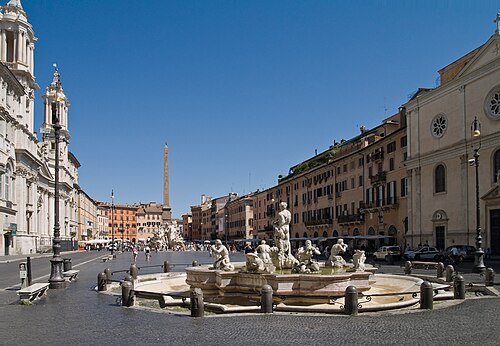
- Epiphany Celebration in Piazza Navona (6 January) – One of Rome’s most beloved traditions, featuring market stalls, family activities and a celebration historically linked to the iconic square in the historic centre.
- Via Crucis at the Colosseo (Good Friday, March–April) – One of the world’s most important religious events, celebrated in front of the Colosseo and attended by pilgrims and visitors from all over the world.
- Natale di Roma (21 April) – A celebration of the city’s foundation according to the traditional date of 753 BC, featuring historical reenactments, cultural events and initiatives dedicated to Roman history.
- Italian Republic Day (2 June) – Italy’s main national celebration, with official ceremonies held in the capital, including the traditional military parade along the Fori Imperiali.
- Feast of Saints Peter and Paul (29 June) – The feast day of Rome’s patron saints, marked by religious celebrations and events involving the city’s basilicas and symbolic landmarks.
📊 Orientation Table
If you want an immediate and practical overview of the city, the table below summarizes all the key points of the overview, to quickly get oriented and better organize your visit through our itineraries (see Itinerary Overview).
- Scroll the table down and to the right 📱🔄 Rotate your phone horizontally to get an overview of opening days, hours, prices of attractions, and for further details on Wikipedia 🌐 and Google Maps ➡️.
- ⚠️ Always check the opening days and hours of attractions through the Google Maps entries linked in the table. See also Itinerary Info.
- To see the explanation of each data column, click its title (e.g. Attractions Index, Ratings, Org, etc.) at the top of the table.
⏳ Caricamento tabella in corso…
📌 This table is updated every 6–12 months.
🛡️ The tables on Tourplan360.com are original content protected by copyright © and monitored through anti-plagiarism tracking systems.
Itinerary Overview
The attractions selected in the table have been organised into the itineraries summarised below, making it easy to identify the one that best suits your needs before exploring the dedicated itinerary and map pages.
ROME IN 1 DAY
Discovering Rome in just one day is an exciting challenge that can be accomplished with a well-planned itinerary. This route will take you through the capital’s most iconic squares, fountains and monuments, from the majesty of San Pietro to the breathtaking views from the Pincio. The tour is divided into three stages – morning, afternoon and evening – to make the most of your time and provide a complete and well-balanced experience in one intense and unforgettable day!

COLOSSEUM IN 1 DAY
This itinerary will take you to the heart of ancient Rome, exploring the wonders of the UNESCO-listed Archaeological Park of the Colosseo. From the grandeur of the Colosseo to the evocative ruins of the Foro Romano and the Palatino, continuing to the magnificent frescoes of the Domus Aurea, the route will bring the greatness of the Roman Empire back to life. The experience is completed with a visit to the Circo Massimo, witness to the epic chariot races and a symbol of Imperial Rome.
VATICAN IN 1 DAY
This tour will guide you through the discovery of the Vatican, the spiritual heart of Rome. The visit begins at the magnificent Basilica di San Pietro, with its magnificent Dome, the Vatican Grottoes and the Necropolis. In the afternoon, the Musei Vaticani offer a journey through centuries of art and history, culminating in the extraordinary Cappella Sistina. An immersive experience combining faith, culture and timeless beauty.
ROME IN 3 DAYS
This three-day itinerary allows you to discover most of Rome’s main attractions through a complete and well-organised route.
The first and second days correspond to the itineraries dedicated to the Colosseo and the Vatican, described in the previous paragraphs.
The third day is dedicated to exploring the historic centre, wandering through monumental squares, fountains, churches and the characteristic views of the Eternal City.
COMPLETE TOUR – PART 1
This first part of the Complete Rome Tour includes 8 itineraries through some of the city’s most fascinating rioni.
From Campo Marzio through Colonna and Ponte, Parione and Regola, Sant’Eustachio and Pigna, Sant’Angelo and Trastevere, Testaccio and Ripa, Celio and Esquilino, the route leads to iconic places such as Piazza di Spagna, Piazza Navona, the Pantheon, the Basilica di San Giovanni in Laterano and the Terme di Caracalla, offering an overview of some of the Capital’s greatest landmarks.
COMPLETE TOUR – PART 2
The second part of the Complete Rome Tour is also divided into 8 itineraries, six of which are dedicated to other fascinating rioni and districts of Rome.
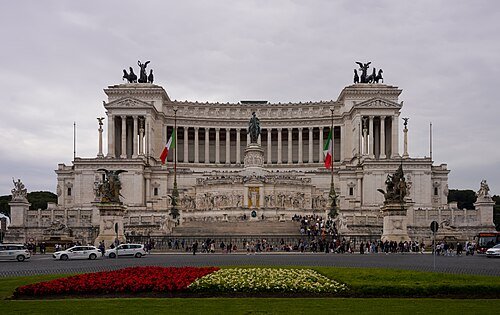
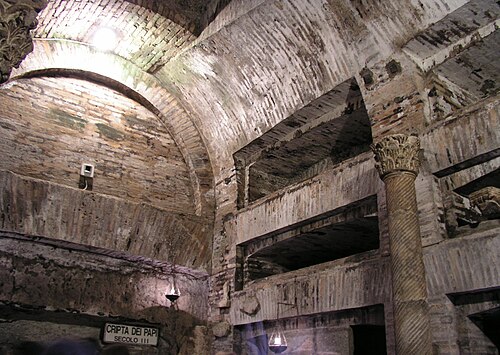
From Campitelli through Monti and Castro Pretorio, Trevi, Pinciano, Borgo and Gianicolo, EUR, Ostiense and Prenestino, the route leads to iconic landmarks such as the Altare della Patria – Vittoriano, the Musei Capitolini, the Fontana di Trevi, the Galleria Borghese, Castel Sant’Angelo and the Catacombs of Rome.
This second part of the Complete Rome Tour is completed by two itineraries focusing on the sites of Appia Antica and Ostia Antica.
APPIA ANTICA IN 1 DAY
This itinerary is dedicated to exploring the Archaeological Park of the Appia Antica and the Parco degli Acquedotti—two areas of extraordinary historical and scenic value, where the ancient Regina Viarum and the impressive arches of the Roman aqueducts offer a unique journey through nature and archaeology.
OSTIA ANTICA IN 1 DAY
The Archaeological Park of Ostia Antica showcases one of the best-preserved ancient port cities and allows visitors to relive the daily life of a commercial and administrative centre of the Roman Empire, with its paved streets, temples and remarkably preserved insulae.
Practical Info
WHEN TO GO
Rome can be visited all year round, but each season offers a different experience, allowing visitors to discover the Capital through monuments, museums, parks and historic districts.
- Spring (April-June): one of the best periods, thanks to pleasant temperatures, longer days and the blooming of gardens and historic parks. It is the ideal season for exploring the city on foot.
- Summer (July-August): a very hot and sunny season, perfect for visiting the main monuments in the early morning or evening. High temperatures make it advisable to plan breaks during the hottest hours of the day.
- Autumn (September-October): a particularly favourable period, with mild temperatures, fewer tourists compared to summer and ideal conditions for visiting the historic centre and the main attractions.
- Winter (November-March): generally mild season, with temperatures that are rarely harsh. It is the ideal period to visit museums, archaeological sites and monuments with generally lower visitor numbers compared to the high season months.
GETTING THERE
Thanks to its central position on the Italian peninsula and its numerous national and international connections, Rome can be easily reached throughout the year by various means of transport.
- By plane: Rome is served by the two main airports of the capital, Rome-Fiumicino Airport, the largest airport in Italy by passenger traffic, and Rome-Ciampino Airport, mainly used by low-cost airlines. Both airports are connected to the city centre by trains, buses, taxis and car rental services.
- By ship: travellers reaching Rome by sea can refer to the Port of Civitavecchia, one of the main ports in the Mediterranean and an important hub for ferries and cruise ships. The port is connected to the capital by trains, buses and transfer services.
- By train: Rome is the main railway hub in Italy and is served by important stations, including Roma Termini, Roma Tiburtina and Roma Ostiense. High-speed and regional train connections make it easy to reach the city from all major Italian destinations.
- By bus: numerous companies connect Rome with the main Italian and European cities. Buses are a practical and economical solution for reaching the city centre and surrounding areas.
- By car: Rome is easily accessible thanks to an extensive motorway network, including the A1 Milano-Napoli, the A24 towards L’Aquila and Teramo, and the A12 towards Civitavecchia. Before reaching the city centre, it is advisable to check information about Limited Traffic Zones (ZTL) and parking options.
✅ To search for or book a flight you can check Booking.com Flights.
✅ You can check routes, schedules, prices and buy train or bus tickets with Trainline.
✅ For car rentals you can refer to Booking.com Cars.
GETTING AROUND
Rome is a very large city, but many of its main attractions are concentrated in the historic centre and surrounding areas. The combination of walking and public transport is the best solution for visiting the Capital in a practical and efficient way.
- On foot: many of the main attractions in the Historic Center, such as the Colosseo, Vaticano, Pantheon, Piazza Navona, Fontana di Trevi and Piazza di Spagna, can be easily reached with pleasant walks, allowing visitors to discover views and monuments along the way.
- Public transport: the public transport network includes metro, buses, trams and urban railway lines, making it easy to reach both the historic centre and more peripheral districts.
- ZTL and historic centre: several central areas are subject to Limited Traffic Zones (ZTL), with regulated access during specific time periods. Before entering the historic centre by car, it is advisable to check the current restrictions.
- Parking: public and private car parks are available in different areas of the city, as well as park-and-ride facilities connected with the metro and public transport. In the Table > Parking and Mobility section, the most practical solutions for visiting Rome are listed.
See also Getting around Rome: Info and Tips
USEFUL TIPS
To visit Rome in the most practical and organized way possible, here are some useful tips to save time, optimize your movements and make the most of your experience in the Eternal City.
- City Cards and Tourist Passes: if you plan to visit numerous attractions, consider purchasing one of the main tourist cards such as the Rome Pass, the Omnia Card, the Go City Explorer Pass or the Rome Turbopass, which may include entrances, public transport and other benefits.
- Hop-on Hop-off Buses: a practical solution for visiting the main attractions without worrying about transportation, with the possibility of getting on and off freely at stops along the tourist route.
✅ Flexible ticket for panoramic Hop-on Hop-off buses 3 routes x 1
✅ Hop-on Hop-off bus tour with audio guide
✅ Big Bus Tour Hop-on Hop-off Open-Top Sightseeing Tour
✅ Panoramic Hop-on Hop-off bus tour with audio guide
- Book the most popular attractions: Colosseo, Musei Vaticani, Galleria Borghese and other highly visited attractions often sell out. Booking in advance helps avoid long waits and provides greater availability of time slots. See also Experiences in Rome: Tours, Tickets and Useful Info
- Comfortable shoes: highly recommended, as much of the visit takes place on foot between monuments, squares, archaeological areas and historic streets often characterized by sampietrini cobblestones.
- Water and sun protection: particularly useful during spring and summer. Rome also has many nasoni, the historic public drinking fountains where you can refill your water bottle for free.
- Dress code: when visiting basilicas, churches and other places of worship, such as Basilica di San Pietro, appropriate clothing is recommended, with shoulders and knees covered and respectful behaviour.
WHAT TO EAT
Roman cuisine is one of Italy’s most recognizable gastronomic traditions, characterized by simple and flavorful dishes born from the city’s popular culture.
Recipes from peasant cuisine, specialties of the Jewish-Roman tradition and local ingredients have been passed down through the centuries, creating an authentic gastronomy deeply connected to the identity of the Capital. Among the dishes and products not to be missed are:
- Supplì: an appetizer but also a popular street food specialty, consisting of a breaded and fried rice ball, traditionally prepared with ragù and a stringy mozzarella filling.
- Carbonara: one of the symbols of Roman cuisine, prepared with pasta, eggs, pecorino romano, guanciale and black pepper. A simple and intense dish that has become famous all over the world.
- Cacio e pepe: one of the most representative dishes of Roman cuisine, made with just a few ingredients such as pecorino romano and black pepper, following a preparation that requires great balance.
- Saltimbocca alla romana: a traditional main course made with veal slices topped with prosciutto crudo and sage, cooked in a pan and often served with typical side dishes.
- Coda alla vaccinara: a historic Roman traditional dish that originated in the popular cuisine of the Testaccio district, prepared with oxtail slowly cooked with tomato, celery, carrots and herbs.
- Carciofi alla romana e alla giudia: two typical preparations of Roman cuisine, especially linked to the Roman and Jewish-Roman gastronomic tradition. The first are cooked with aromatic herbs, while the second are fried whole according to tradition.
- Maritozzo: a typical Roman dessert consisting of a soft sweet bun filled with whipped cream, very popular for breakfast and in the city’s pastry shops.
See also What to eat in Rome
WHERE TO EAT
Among historic trattorias, traditional Roman osterie and quality restaurants, here are some particularly appreciated addresses to discover the authentic flavors of the Capital:
- Da Armando al Pantheon, a historic trattoria in the heart of Rome, known for traditional Roman cuisine and classic dishes prepared according to tradition.
- Felice a Testaccio, one of the most famous Roman restaurants, especially renowned for its interpretation of cacio e pepe and its strong connection with the Testaccio district.
- Flavio al Velavevodetto, a highly appreciated restaurant located in the heart of Testaccio, known for great classics of Roman cuisine such as carbonara, amatriciana and cacio e pepe.
- Checchino dal 1887, a historic Roman trattoria active for over a century, famous for traditional cuisine and its connection with the gastronomic culture of the Testaccio district.
- Sora Lella, a historic restaurant on Isola Tiberina, appreciated for authentic Roman cuisine and traditional recipes.
See also Where to eat in Rome
WHERE TO SLEEP
Rome offers accommodation solutions for every need, from historic hotels in the city center to tourist apartments and modern facilities located in the different districts of the city.
Choosing the right area to stay is essential to optimize travel times and make the most of your experience in the Capital, especially considering the size of the city and the distance between some of the main attractions.

Here are some of the main areas where to stay in Rome, selected for their location, convenience and atmosphere:
- Centro Storico (Pantheon, Piazza Navona and Campo de’ Fiori): the ideal solution for those visiting Rome for the first time and wanting to reach many of the city’s main attractions on foot, among monumental squares, fountains and historic buildings.
- Monti and Colosseo: a characteristic district located near the Parco Archeologico del Colosseo, appreciated for its historic streets, local venues and authentic Roman atmosphere.
- Prati and Vaticano: an elegant and well-organized area, ideal for those who want to stay close to Basilica di San Pietro and Musei Vaticani, with excellent connections by metro and bus.
- Trastevere: one of the most charming districts of Rome, famous for its stone-paved streets, characteristic squares, traditional trattorias and lively evening atmosphere.
- Termini and surrounding areas: a practical solution for those arriving by train or wanting quick connections with airports, stations and other areas of the city thanks to the presence of the main public transport network.
See also Where to sleep in Rome: Info and Tips
FAQ
Must-see highlights include the Colosseo, Città del Vaticano with Basilica di San Pietro, Pantheon di Roma, Piazza Navona, Fontana di Trevi and Piazza di Spagna.
Which museums and monuments should I visit in Rome?The city hosts some of the most important museums and monuments in the world, including Musei Vaticani with Cappella Sistina, Galleria Borghese, Musei Capitolini, Castel Sant’Angelo, Foro Romano, Fori Imperiali and Terme di Caracalla.
📌 Read more in the section Main Attractions.
Are there parks or green areas in Rome?
Yes, Rome offers numerous green spaces including Villa Borghese, Villa Doria Pamphilj, one of the largest urban parks in the city, and Gianicolo with its wonderful panoramic views.
📌 Read more in the section Parks and Nature.
Is Rome suitable for a short visit?
Yes, but considering the large number of monuments, museums and historic neighborhoods, at least 3 days are recommended to visit the main attractions without rushing. Longer itineraries are available for a more complete discovery of the city.
📌 Read more in the section Itinerary Overview.
What is the best time to visit Rome?
Spring and autumn are the best periods thanks to mild temperatures and ideal conditions for exploring the city on foot. Winter is also a favorable season for visiting museums and monuments with fewer crowds.
📌 Read more in the section When to Go.
Is Rome easy to visit?Rome is a very large city: the historic center can be explored on foot, while metro, buses and trams are essential for reaching more distant attractions.
📌 Read more in the section Getting Around.
Which typical dishes should I try in Rome?
Among the specialties of Roman cuisine are pasta alla carbonara, cacio e pepe, saltimbocca alla romana, coda alla vaccinara, supplì and maritozzo.
📌 Read more in the section What to eat.
Where to eat well in Rome?The most appreciated areas for enjoying Roman cuisine are Trastevere, Testaccio, the historic center and the neighborhoods characterized by traditional Roman trattorias.
📌 Read more in the section Where to eat.
What is the best area to stay in Rome?
Centro Storico is ideal for those visiting Rome for the first time, while areas such as Monti, Prati, Trastevere and Termini offer different solutions in terms of location, atmosphere and connections.
Are there budget hotels in Rome?Yes, some areas slightly outside the historic center offer more affordable accommodations while maintaining good connections with the main attractions through public transport.
📌 Read more in the section Where to Sleep.
Where can I find days, hours, and prices of attractions?
All information is available in the table in dedicated columns.
Where can I find links and online information about attractions?The table also contains direct links to Google Maps ➡️ and Wikipedia 🌐 for each attraction.
📌 Check the Orientation Table 📊
See also
- Rome in 1 day
- Rome in 3 days
- Colosseum in 1 day
- Imperial Fora
- Vatican in 1 day
- Complete Tour: P1 + P2
- Guide to Rome
- See: Attractions
- Do: Experiences
- Eat: Where and What
- Getting Around, Pass, Stay
Other Destinations
🔐 Some images on this page are used under Creative Commons licenses:
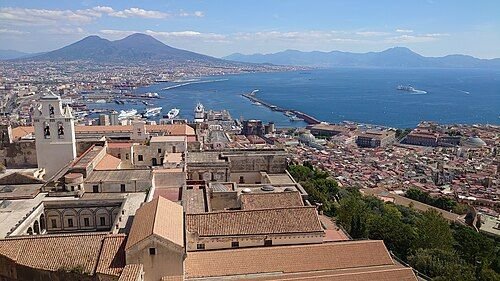
By Richard Nevell – Naples, panoramic view of the city and Mount Vesuvius – Own work – CC BY-SA 4.0 – Wikimedia Commons
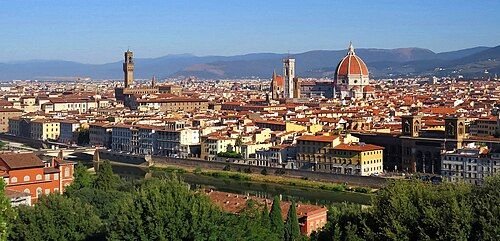
By PROPOLI87 – Florence, panorama from Piazzale Michelangelo – Own work – CC BY-SA 4.0 – Wikimedia Commons
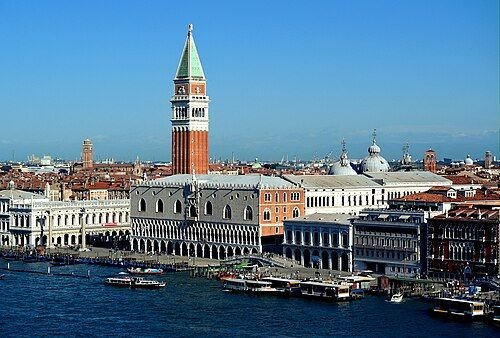
By Luca Aless – Venice, panoramic view of Doge’s Palace and St. Mark’s Campanile – Own work – CC BY-SA 4.0 – Wikimedia Commons
By Anne Offermanns– Panoramic view of Rome from St. Peter’s Basilica – Own work – CC BY-SA 3.0 – Wikimedia Commons


Expand image credits
By Jorge Franganillo – Roma, Pantheon at night beautifully illuminated – Roma: Pantheon – CC BY 2.0 – Wikimedia Commons
By User:Colin – The spiral staircase by Giuseppe Momo decorated with bronze panels by Antonio Maraini (1932) – Wikimedia Commons – CC BY-SA 3.0 – Wikimedia Commons
By Diego Delso – Roma, Basilica di San Pietro illuminated at night – Own work – CC BY-SA 4.0 – Wikimedia Commons
By User:Colin – Roma, Colosseo, interior of the arena floor – Wikimedia Commons – CC BY-SA 3.0 – Wikimedia Commons
By Thomas Fabian – Roma, bridge and Castel Sant’Angelo at twilight – Imported from 500px – CC BY-SA 3.0 – Wikimedia Commons
By Sailko – Roma, Galleria Borghese, Room 3 – Own work – CC BY 3.0 – Wikimedia Commons
By Nicolò Musmeci – Roma, Appia Antica – Public domain photo – Public domain – Wikimedia Commons
By Marie-Lan Nguyen – Roma, Ostia Antica, Podium, Round Temple – Own work – CC BY 2.5 – Wikimedia Commons
By ThePhotografer – Roma, Altare della Patria, Vittoriano – Own work – CC BY-SA 4.0 – Wikimedia Commons
By Dnalor 01 – Roma, Basilica di Santa Maria Maggiore, altar – Own work – CC BY-SA 3.0 – Wikimedia Commons
By NikonZ7II – Roma, Mercati di Traiano – Own work – CC BY-SA 4.0 – Wikimedia Commons
By Cezar Suceveanu – Roma, Carcere Mamertino – Own work – CC BY-SA 4.0 – Wikimedia Commons
By Jastrow – Roma, Musei Capitolini, Palazzo Nuovo – Own photograph – Public domain – Wikimedia Commons
By Myrabella – Roma, Piazza Navona – Own work – CC BY-SA 3.0 – Wikimedia Commons
By Karelj – Roma, Terme di Caracalla – Own work – Public domain – Wikimedia Commons
By Thomas Wolf – Roma, Fontana di Trevi at twilight – Own work – CC BY-SA 3.0 DE – Wikimedia Commons
By NateBergin – Roma, façade of the Basilica di San Giovanni in Laterano – Own work – CC BY 4.0 – Wikimedia Commons
By Arturo Mann – Roma, interior of the Basilica di San Paolo Fuori le Mura – Own work – CC BY-SA 3.0 – Wikimedia Commons
By Fred Romero – Roma, panoramic view of Trinità dei Monti from the Fontana della Barcaccia – Roma – Piazza di Spagna – CC BY 2.0 – Wikimedia Commons
By user:Folegandros – Roma, panoramic view of the Terme di Diocleziano – Own work – CC BY-SA 3.0 – Wikimedia Commons