
Turin Complete Tour – Part 2: Travel itinerary
What to see, opening hours, prices, map


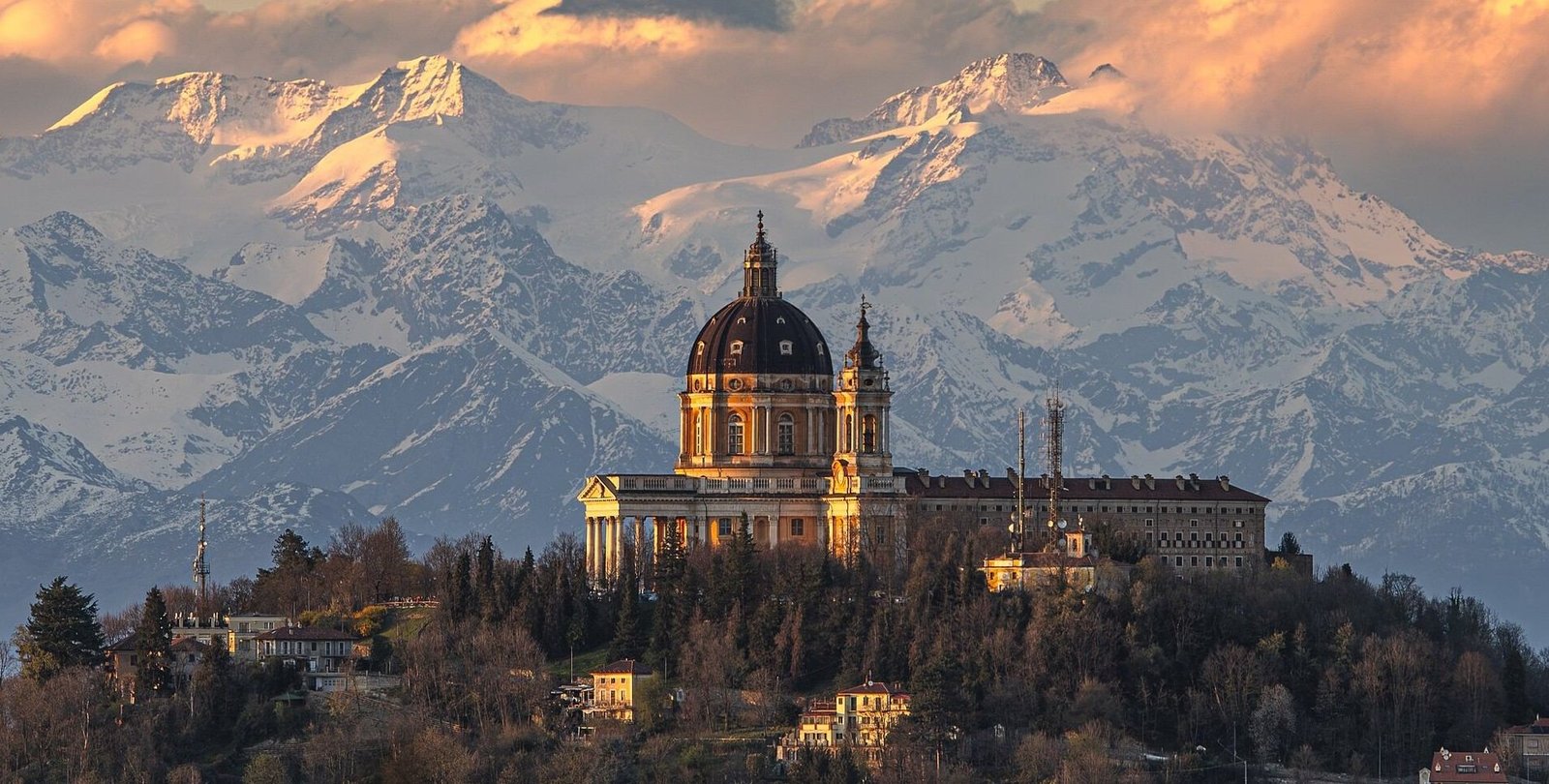
From the panoramic hill of the Basilica of Superga, with views embracing Turin and the majestic Alps in the background 📱🔄️ begins the second part of the Complete Tour of Turin: an itinerary that combines beauty, history, and unforgettable views of the city.
See also:
- Complete Tour 1
- Guide to Turin
- Itineraries: 1d, 3d, CT2
- See: Attractions
- Do: Experiences
- Eat: Where and What
- Getting Around, Pass, Stay
Overview
This second part of Torino Tour Completo unfolds through four thematic itineraries that present the city from different perspectives, alternating culture, nature, innovation and spirituality.
The entire route lasts approximately 30 hours of visits, divided into four days of exploration: two itineraries can be comfortably explored on foot, while the last two are designed by car.
Among the main attractions of these itineraries you will find:
- Regina e Valentino: Parco e Castello del Valentino – an itinerary through historical elegance and one of Turin’s most iconic parks (go to itinerary).
- Torino e l’Automobile: Museo Nazionale dell’Automobile, Lingotto – an itinerary dedicated to the history of automobiles and Turin’s industrial innovation (go to itinerary).
- Memoria e Culture: Museo Diffuso della Resistenza and Museo di Arte Urbana, Quadrilatero Romano – a journey through historical memory and the city’s cultural identity (go to itinerary).
- Sacro e Profano: Basilica di Superga, Reggia di Venaria Reale e Palazzina di Caccia di Stupinigi – an itinerary through spirituality, spectacular panoramas and the great Savoy residences listed as UNESCO World Heritage Sites (go to itinerary).
📌 The 2 walking itineraries are connected (shared stop 🧩), so you always have continuity if you want to skip one or more stops. See also Itinerary Info.
Routes: Maps, Descriptions, Details
REGINA AND VALENTINO
- Open Route Map📍
- Distance: 6,8* km on foot
- Time: 1,37* hrs on foot
- Visit duration: 8 hours
- Stops: 10 main (I-X →I-X)* + 3 secondary
- Chiesa della Gran Madre di Dio (I-X)🧩 → Monte dei Cappuccini (A) → Museo Nazionale della Montagna (B) → Villa della Regina (C) → Museo di Storia Naturale Don Bosco (D) → Ponte Umberto I (E) → Arco monumentale all’Arma di Artiglieria (F) → Castello del Valentino (G) → Borgo Medievale di Torino (H) → Museo di Anatomia Umana “L. Rolando” (I-X)🧩
- For days, times, prices and other info see Itinerary Table 📊
* These values may differ from those shown on Google Maps, as they are continuously recalculated in real time. See also Itinerary Info and Navigator + See here for Shared Stop 🧩
Route Description
SUMMARY
This itinerary unfolds between the elegant banks of the Po River and the hills of Turin, starting from the area of the Chiesa della Gran Madre di Dio and climbing towards the Monte dei Cappuccini, until reaching the splendid Villa della Regina and the historic areas of Parco del Valentino.
The walking route of approximately 6.8 km includes 10 main stops and several sub-stops, for a total of about 8 hours of visits, distributed along a panoramic itinerary alternating climbs, viewpoints and the city’s historic green areas.
Expand STEP DETAIL ⬇️
📌 All the stops summarized here are structured in the Itinerary Table 📊 with days, opening hours, prices, and Wikipedia 🌐 and Google Maps insights.
⬇️ starting point
I/X. Chiesa della Gran Madre di Dio
The route begins from one of the city’s most fascinating symbols, the Chiesa della Gran Madre di Dio. Built in 1831 to celebrate the return of Vittorio Emanuele I from exile, this neoclassical church resembles Rome’s Pantheon. It is surrounded by an aura of mystery, as it is often associated with legends of the Holy Grail.
✨ A scenic entrance suspended between myth and reality: the neoclassical façade reflected on the Po creates an almost cinematic atmosphere, made even more intense by the legends of the Holy Grail surrounding it.
⬇️
A. Monte dei Cappuccini
From the Gran Madre, a short uphill walk leads to Monte dei Cappuccini, a panoramic viewpoint offering breathtaking views over Turin and the Alps. Here stands the Chiesa di Santa Maria al Monte, built in the 17th century and attached to the Capuchin friars’ convent.
✨ The city opens up beneath you with the Po River shaping the landscape and the Alps in the background, especially at sunset when everything turns gold and pink.
❌ During peak times (sunset and weekends), the viewpoint becomes very crowded and the stop is less smooth than expected.
⬇️
B. Museo Nazionale della Montagna
Next to the church stands the Museo Nazionale della Montagna, dedicated to the history of mountaineering and the mountains. The museum hosts collections of photographs, vintage equipment, and temporary exhibitions, telling the deep connection between Turin and the Alps.
⬇️
C. Villa della Regina
Descending from Monte dei Cappuccini, you reach the stunning Villa della Regina (UNESCO World Heritage), one of the Savoy residences in Turin. This Baroque jewel, set in a natural landscape, was the residence of the Savoy queens and is today open to the public with its frescoed interiors and Italian-style gardens with a historic vineyard.
❌ The visit through the gardens and interiors may take longer than the estimated 75 minutes, with the risk of extending the overall itinerary.
⬇️
D. Museo di Storia Naturale Don Bosco
Continuing along the route, you will find the Museo di Storia Naturale Don Bosco, located inside the Salesian Institute Valsalice. This museum preserves a vast collection of minerals, fossils, and taxidermied animals, with a particular focus on biodiversity.
⬇️
E. Ponte Umberto I
Crossing Ponte Umberto I, built in 1908 and dedicated to Umberto I of Savoy, you return to the western bank of the Po. From here, the panorama offers a splendid view of the river and the city.
⬇️
F. Arco monumentale all’Arma di Artiglieria
After crossing the bridge, you encounter the Arco monumentale all’Arma di Artiglieria, built in 1930 to commemorate the heroism of the Italian artillery in the First World War. The monument is located in a strategic position at the entrance of Parco del Valentino.
⬇️
G. Castello del Valentino
Entering the heart of Parco del Valentino, one of the most beloved places by locals, you can explore:
- Castello del Valentino, one of the Savoy residences and home of the Faculty of Architecture of the Polytechnic University of Turin. This French-style castle dates back to the 17th century and is a UNESCO World Heritage site.
- Orto Botanico di Torino, founded in 1729, hosts a rich collection of rare and medicinal plants.
📌 The visit to Castello del Valentino requires mandatory reservation. You can find the phone number in the Google Maps card accessible from the link in the table.
⬇️
H. Borgo Medievale di Torino
The tour ends with a visit to Borgo Medievale di Torino, a fascinating complex reconstructed in 1884 for the Italian General Exhibition. This village faithfully reproduces a medieval Piedmontese settlement with walls, houses, workshops, and the impressive Rocca, a visitable fortress.
❌ During tourist periods and weekends, the area becomes very crowded, especially around the Rocca and internal streets, causing slower visiting flows.
⬇️
I/X. Museo di Anatomia Umana “L. Rolando” is a shared stop 🧩 – see starting point of the next route
TURIN AND THE AUTOMOBILE
- Open Route Map📍
- Distance: 4,9* km on foot
- Time: 1,09* hrs on foot
- Visit duration: 6 hours
- Stops: 6 main (I-X →E)* + 2 secondary
- Museo di Anatomia Umana “L. Rolando” (I-X)🧩 → Museo di Antropologia Criminale (A) → Spazio La Stampa (B) → Centro Storico Fiat (C) → Pinacoteca “G. e M. Agnelli” (D) → Museo Nazionale dell’Automobile (E)
- For days, times, prices and other info see Itinerary Table 📊
* These values may differ from those shown on Google Maps, as they are continuously recalculated in real time. See also Itinerary Info and Navigator + See here for Shared Stop 🧩
Route Description
SUMMARY
This itinerary unfolds through the academic and industrial heart of Turin, with stops ranging from the Museo di Anatomia Umana “L. Rolando” to the Museo Nazionale dell’Automobile, crossing spaces dedicated to science, culture and innovation.
The route covers 4.9 km on foot, with a linear sequence of main stops and sub-stops, for a total duration of approximately 6 hours of visits.
Expand STEP DETAIL ⬇️
📌 All the stops summarized here are structured in the Itinerary Table 📊 with days, opening hours, prices, and Wikipedia 🌐 and Google Maps insights.
I/X. Museo di Anatomia Umana “L. Rolando”
The itinerary begins at the Museo di Anatomia Umana “Luigi Rolando”, located inside the Palazzo degli Istituti Anatomici. Founded in the 19th century, this museum preserves an incredible collection of anatomical specimens, wax preparations, and historical models that illustrate the development of medical studies over time.
✨ An entrance into a fascinating and slightly unsettling world: prepare for a journey inside the human body through historical specimens and wax models that seem suspended between science and memory.
⬇️
A. Museo di Antropologia Criminale
The route continues with 2 interesting highlights:
- Museo di Antropologia Criminale “Cesare Lombroso”: a unique museum dedicated to the studies of Cesare Lombroso, the founder of criminal anthropology. It hosts a collection of skulls, personal belongings of criminals, and historical documents that tell the evolution of criminology.
- Museo della Frutta “Francesco Garnier Valletti”: a curious collection of wax fruit models, created in the 19th century by Francesco Garnier Valletti for the study of different fruit varieties.
❌ The visit can feel very niche: if time is limited, this is an easily skippable stop compared to more significant attractions.
⬇️
B. Spazio La Stampa
Continuing along the route, you reach Spazio La Stampa, an exhibition center dedicated to the history of Turin’s most important newspaper. Here you can retrace the birth of modern journalism and see how the profession has evolved thanks to new technologies.
📌 Spazio La Stampa can be visited by reservation. You can find the phone number in the Google Maps listing accessible via the link in the table.
⬇️
C. Centro Storico Fiat
One of the most significant stops on the itinerary is the Centro Storico Fiat, which tells the story of the famous Turin-based car manufacturer. Founded in 1963, the museum displays documents, photographs, historic car models, and curiosities that trace the evolution of the automotive industry in Italy.
⬇️
D. Pinacoteca “G. e M. Agnelli”
The next stop is the Pinacoteca Giovanni e Marella Agnelli, located on the roof of the famous Lingotto building. This private art collection, donated to the city by the Agnelli family, includes works by artists such as Canaletto, Matisse, and Picasso.
Casa 500: inside the same complex you will also find this exhibition space dedicated to the legendary Fiat 500, one of the icons of Italian automotive history.
⬇️
E. Museo Nazionale dell’Automobile
The itinerary concludes with a visit to the Museo Nazionale dell’Automobile, one of the most important automobile collections in the world. The museum displays over 200 models, from early motor carriages to modern racing cars, illustrating the evolution of mobility and Turin’s crucial role in the automotive industry.
MEMORY AND CULTURES
- Open Route Map📍
- Distance: 12,8* km by car
- Time: 0,32* hrs by car
- Visit duration: 8 hours
- Stops: 8 main (X →G)* + 1 secondary
- Cimitero Monumentale di Torino (X) → Museo Lavazza (A) → Museo Casa Don Bosco (B) → Museo Francesco Faà di Bruno (C) → Museo Scienze Naturali della Consolata (D) → Villa Tesoriera (E) → MAU – Museo di Arte Urbana (F) → MAcA – Museo A come Ambiente (G)
- For days, times, prices and other info see Itinerary Table 📊
* These values may differ from those shown on Google Maps, as they are continuously recalculated in real time. See also Itinerary Info and Navigator + See here for Shared Stop 🧩
Route Description
SUMMARY
This seventh itinerary focuses on some of Turin’s most unique and lesser-known cultural sites, with stops ranging from the evocative Cimitero Monumentale, a true open-air museum, to the elegant Villa Tesoriera with its large historic park.
The route extends for approximately 12.8 km by car, with a linear sequence of main stops and one sub-stop, for a total duration of about 8 hours of visits.
Expand STEP DETAIL ⬇️
📌 All the stops summarized here are structured in the Itinerary Table 📊 with days, opening hours, prices, and Wikipedia 🌐 and Google Maps insights.
⬇️ starting point
X. Cimitero monumentale di Torino
The tour begins in a place of great historical and artistic charm: the Cimitero monumentale di Torino. Founded in 1829, it is a true open-air museum, with tombs and monuments created by important sculptors. Here lie notable figures from Turin’s and Italy’s history, including architect Alessandro Antonelli and writer Edmondo De Amicis.
✨ A place where art and memory intertwine: sculptures, monuments, and silent avenues turn the visit into a surprisingly scenic journey through history and funerary art.
⬇️
A. Museo Lavazza
Continuing on, you reach the Museo Lavazza, an immersive experience into the world of coffee and the historic Turin-based company. The museum tells the story of the Lavazza family, the evolution of advertising, and the coffee production process, with interactive exhibits and tastings.
⬇️
B. Museo Etnografico Missioni Don Bosco
The route continues with a visit to the Museo Etnografico Missioni Don Bosco, which displays artifacts collected by Salesian missionaries around the world. The collection includes handcrafted objects, musical instruments, and traditional costumes from Africa, Latin America, and Asia.
⬇️
C. Museo Francesco Faà di Bruno
This museum is dedicated to Francesco Faà di Bruno, a 19th-century priest, scientist, and patriot. Alongside rich documentation about his life and inventions, the museum hosts a collection of scientific instruments and objects related to his charitable work.
📌 Museo Francesco Faà di Bruno can be visited by reservation. You can find the phone number in the Google Maps listing accessible via the link in the table.
⬇️
D. Museo Etnografico e Scienze Naturali
A fascinating stop for those who love culture and nature is the Museo Etnografico e Scienze Naturali, which displays collections of zoology, botany, and mineralogy. The museum offers a journey through biodiversity and cultural traditions from different regions of the world.
⬇️
E. Villa Tesoriera, Parco della Tesoriera
The itinerary continues with a visit to Villa Tesoriera, a beautiful 18th-century residence surrounded by a large park. Today, the villa houses the Andrea Della Corte Music Library, while the park is one of the most loved places by locals for walks and relaxation.
✨ A relaxing and scenic stop: the 18th-century villa immersed in the green park creates an elegant and peaceful atmosphere, far from the urban rhythm.
⬇️
F. MAU – Museo di Arte Urbana
The seventh stop is the MAU – Museo di Arte Urbana, an open-air museum that transforms neighborhood walls into works of art. An authentic urban route where the city becomes a living, ever-evolving exhibition space.
✨ A different experience from traditional museums: art blends with the urban fabric and is discovered while walking through the neighborhood streets.
⬇️
G. MAcA – Museo A come Ambiente
The itinerary ends at the MAcA – Museo A come Ambiente, an interactive museum dedicated to science and sustainability, where environmental topics are explained through hands-on experiences, installations, and engaging activities.
✨ A modern and dynamic educational journey that makes complex environmental and sustainability concepts easy and accessible.
❌ During school periods and weekends, the museum can be very crowded with organized groups, leading to possible waiting times and a less smooth visit.
SACRED AND PROFANE
- Open Route Map📍
- Distance: 53,5* km by car
- Time: 1,22* hrs by car
- Visit duration: 8 hours
- Stops: 8 main (X →G)* + 0 secondary
- Basilica di Superga (X) → Galleria Storica CNH Industrial Village (A) → Museo piemontese dell’informatica (B) → Juventus Museum (C) → Reggia di Venaria (D) → Abarth Classiche Torino (E) → Mausoleo della Bela Rosin (F) → Palazzina di Caccia di Stupinigi (G)
- For days, times, prices and other info see Itinerary Table 📊
* These values may differ from those shown on Google Maps, as they are continuously recalculated in real time. See also Itinerary Info and Navigator + See here for Shared Stop 🧩
Route Description
SUMMARY
This final driving itinerary unfolds between the hills of Turin and the city’s surrounding areas, connecting some of Turin’s most iconic landmarks, such as the Basilica di Superga and the Juventus Museum, together with the great Savoy residences of the Reggia di Venaria Reale e Palazzina di Caccia di Stupinigi, in a route that combines panoramas, culture, sport, and the historical and industrial identity of the territory.
The driving route extends for approximately 53.5 km, with a linear sequence of main stops requiring around 8 hours of total visits.
Expand STEP DETAIL ⬇️
📌 All the stops summarized here are structured in the Itinerary Table 📊 with days, opening hours, prices, and Wikipedia 🌐 and Google Maps insights.
⬇️ starting point
X. Basilica di Superga
The itinerary begins at one of Turin’s most iconic landmarks, the Basilica di Superga, located on the hill overlooking the city. This Baroque masterpiece, designed by Filippo Juvarra, offers breathtaking panoramic views over Turin and the Alps. In addition to the church, visitors can explore the Royal Tombs of the House of Savoy and the memorial dedicated to the Superga air disaster, which makes this site especially moving for football fans due to its connection with the Grande Torino team.
⬇️
A. Galleria Storica CNH Industrial Village
From religious and royal history, the route continues into industrial heritage with a visit to the Galleria Storica CNH Industrial Village. This exhibition space showcases the evolution of the transport industry, featuring a collection of historic vehicles and an overview of the achievements of this Turin-based leader in mechanics and agricultural engineering.
⬇️
B. Museo Piemontese dell’Informatica
The journey continues into the world of technology at the Museo Piemontese dell’Informatica. Here, visitors can admire historic computers, peripherals, and electronic devices that trace the evolution of the digital sector. It offers a fascinating insight into Turin’s connection with technological innovation, appealing to both tech enthusiasts and curious visitors of all ages.
📌 The Museo Piemontese dell’Informatica can be visited by reservation. You can find the phone number in the Google Maps listing accessible via the link in the table.
⬇️
C. Juventus Museum
For sports lovers, the next stop is the Juventus Museum, located inside the Allianz Stadium. The museum retraces the history of Juventus, one of the most successful football clubs in the world, through trophies, memorabilia, and multimedia installations. The visit can be combined with a stadium tour for a complete experience inside the iconic black-and-white club’s home.
✨ An immersive football experience: trophies, videos, and installations turn Juventus history into an emotional journey through one of the world’s most iconic clubs.
⬇️
D. Reggia di Venaria Reale
The itinerary continues to one of the most extraordinary Savoy residences, the Reggia di Venaria Reale. This Baroque masterpiece, a UNESCO World Heritage Site, is renowned for the monumental Galleria Grande, the royal apartments, and its vast historic gardens, making it one of the most important royal complexes in Europe.
✨ Gardens and monumental spaces create a continuous, high-impact scenic experience.
❌ During weekends and peak season, advance booking is strongly recommended to avoid queues and long waiting times and to optimize the visit.
Book one of the recommended experiences here:
✅ Entrance ticket to the Royal Hunting Lodge of Stupinigi
✅ Guided tour of the Reggia di Venaria
⬇️
E. Abarth Classiche Torino
After football, the journey continues with an automotive icon: the Abarth Classiche Center, a true paradise for car enthusiasts. Here, visitors can admire some of the most famous Abarth models and learn about the brand’s history and the restoration process of historic vehicles.
📌 The Abarth Classiche Torino can be visited by reservation. You can find the phone number in the Google Maps listing accessible via the link in the table.
⬇️
F. Mausoleo della Bela Rosin
The itinerary continues with a visit to the Mausoleo della Bela Rosin, a Neoclassical building inspired by the Pantheon in Rome. Built to house the remains of Rosa Vercellana, morganatic wife of Victor Emmanuel II, the mausoleum is now a charming cultural space surrounded by greenery.
⬇️
G. Palazzina di Caccia di Stupinigi
The journey ends at the Palazzina di Caccia di Stupinigi, one of the most elegant Baroque hunting residences in Europe, designed by Filippo Juvarra. The building is distinguished by its scenic Saint Andrew’s cross layout and richly decorated interiors, set within a vast natural landscape that enhances its historical and architectural value.
Eating
During the itineraries of this second part of the Torino Tour Completo, the best moments to experience Piedmontese cuisine are the breaks between attractions along the urban route and towards the peripheral areas, or the end-of-day dinners, when the city reveals itself through historic restaurants in the center and contemporary venues in former industrial and residential districts:
- Tre Galline, one of Turin’s most representative historic trattorias, perfect for authentic Savoy cuisine in the heart of the historic center.
- Ristorante Consorzio, a reference point for contemporary Piedmontese cuisine, with great attention to ingredients and reinterpreted tradition.
- Del Cambio, an icon of Turin fine dining overlooking Piazza Carignano, ideal for an elegant and historic gastronomic experience.
- Scannabue Caffè Restaurant, in the San Salvario area, represents one of the most modern and accessible interpretations of contemporary Piedmontese cuisine.
- Condividere – Nuvola Lavazza, a signature gastronomic experience in the Aurora district, perfect for a contemporary finale linked to the city’s new industrial and creative identity.
See also Where to eat in Turin.
Between strategic lunch breaks and dinners, Turin’s cuisine therefore becomes an integral part of the journey, allowing you to taste traditional dishes such as:
- Vitello tonnato, one of Piedmont’s signature dishes, served cold and characterized by the perfect balance between meat and creamy tuna sauce.
- Tomini elettrici, fresh cheeses often served with oil, pepper and chili pepper, typical of Turin’s most convivial tables.
- Agnolotti del plin al sugo d’arrosto, an evolution of the classic Piedmontese ravioli, also very common in the trattorias around Turin.
- Trippa alla piemontese, a traditional popular dish also linked to the city’s peripheral and industrial areas.
- Brasato al Barolo, meat slowly cooked in red wine, symbol of Piedmontese cuisine for special occasions.
- Gianduiotto e dessert alla nocciola, an expression of Turin’s pastry tradition connected to the historic processing of cocoa and Nocciola Piemonte IGP.
See also What to eat in Turin
As for wines and beverages, some of the most representative labels of the Turin area are worth trying, perfect to pair with the traditional dishes mentioned above:
- Freisa di Chieri DOC, a lively and traditional red wine from the hills around Turin.
- Erbaluce di Caluso DOCG, an elegant and structured white wine, among the most representative of northern Piedmont.
- Canavese DOC, a versatile wine produced in the areas north of Turin, between hills and rural landscapes.
Sleeping
To fully enjoy this second part of the Torino Tour Completo, the ideal solution is to stay along the axis connecting the historic centre with the areas of San Salvario, Lingotto and the route towards Venaria Reale.
This setup allows you to easily follow the daily itineraries without unnecessary returns to the city centre, reaching directly museums, parks and Savoy residences such as the Reggia di Venaria, the Palazzina di Caccia di Stupinigi, and the museum areas of Lingotto and the historic industrial district.

Staying in these areas offers a balance between logistical convenience and urban authenticity, with modern accommodations, business hotels and quieter options compared to the historic centre, ideal for those travelling by car or following multi-day itineraries.
See also Where to sleep in Turin: Info and Tips.
📊 Itinerary Table
The table below shows all the stops of the four itineraries of Turin Tour Complete – Part 2, helping you to optimize your visit as effectively as possible.
- Scroll the table down and to the right 📱🔄 Rotate your phone horizontally to get an overview of opening days, hours, prices of attractions, and for further details on Wikipedia 🌐 and Google Maps ➡️.
- ⚠️ Always check the opening days and hours of attractions through the Google Maps entries linked in the table. See also Itinerary Info.
- To see the explanation of each data column, click its title (e.g. Attractions Index, Ratings, Org, etc.) at the top of the table.
⏳ Caricamento tabella in corso…
📌 This table is updated every 6–12 months.
🛡️ The tables on Tourplan360.com are original content protected by copyright © and monitored through anti-plagiarism tracking systems.
FAQ
Yes. In the four itineraries of Torino Tour Completo – Part 2 you can remove stops or change their order while always maintaining continuity of movement. This allows you to adapt the route according to your interests and the time available.
📌 See also Itinerary Info
Can these itineraries be explored on foot?
Only some itineraries in Part 2 can be completed entirely on foot, while others require the use of a car to connect museums, Savoy residences and the city’s peripheral areas.
📌 See also Getting around Turin
Is it worth booking the main attractions in advance?
During peak tourist periods, it is recommended to book in advance or join guided tours to avoid queues and secure entry.
📌 See also Experiences in Turin
How much time is needed to complete Part 2 of the tour?
Part 2 of Torino Tour Completo includes approximately 30 hours of visits spread across multiple days, depending on the combination of itineraries selected.
Where can I find opening days, hours and ticket prices for the attractions?
All updated information is available in the Itinerary Table 📊, with direct links to Google Maps and Wikipedia for further details.
See also
- Complete Tour 1
- Turin in 1 day
- Turin in 3 days
- Guide to Turin
- See: Attractions
- Do: Experiences
- Eat: Where and What
- Getting Around, Pass, Stay
Other Destinations
🔐 Some images on this page are used under Creative Commons licenses:
By Maurizio Beatrici – Genoa, port and Lanterna from Castello d’Albertis – Own work – CC BY-SA 4.0 – Wikimedia Commons
By https://www.pexels.com/u/ghostpresenter/ – Milan, Porta Nuova skyline – CC0 – Public Domain – Wikimedia Commons
By Alexis Courthoud – Aosta, panoramic view of the Ancient Roman Theatre – Own work – CC BY-SA 4.0 – Wikimedia Commons
By Pmk58 – Turin, Basilica of Superga with panoramic view of the Alps – Own work – CC BY-SA 4.0 – Wikimedia Commons
