
Venice Sestieri San Polo and Santa Croce: what to see and complete itinerary
Travel guide, opening hours, prices, map


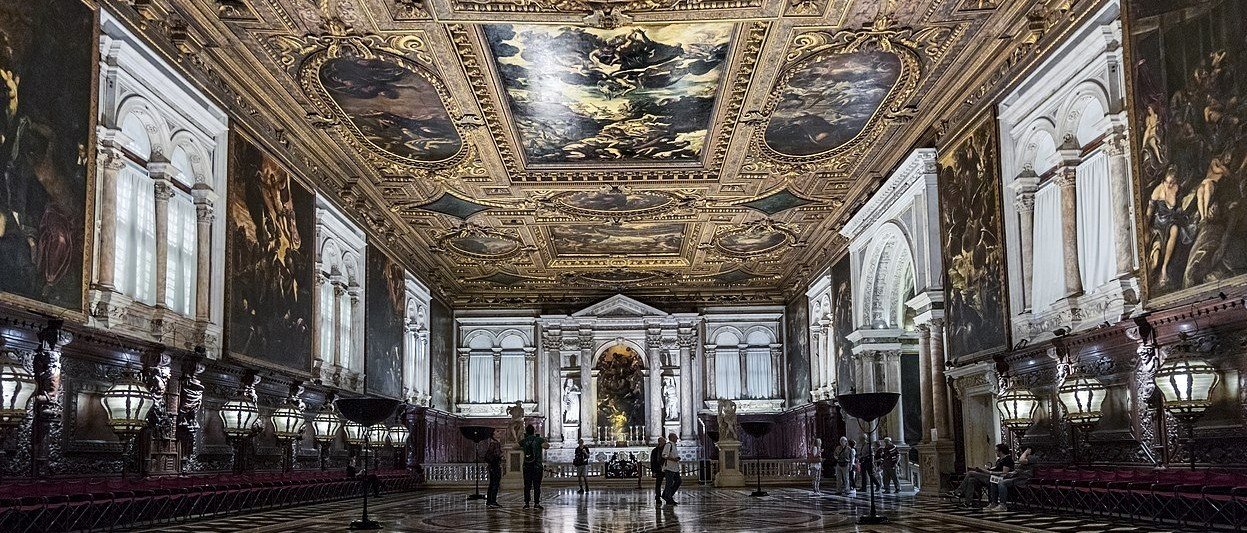
The magnificent Sala Capitolare della Scuola Grande di San Rocco, shown above 📱🔄️, is one of the artistic masterpieces that will accompany you along this itinerary through the Sestieri di San Polo e Santa Croce.
See also:
- Back to Complete Tour
- Guide to Venice
- Itineraries: 1d, 3d
- See: Attractions
- Do: Experiences
- Eat: Where and What
- Getting Around, Pass, Stay
Route Description
The tour of the Sestieri di San Polo e Santa Croce unfolds through narrow alleys, squares, and less crowded views of the city center, in an itinerary that crosses some of the most representative areas of Venice.
The route includes places such as the Basilica dei Frari, the Scuola Grande di San Rocco, and the lively Campo San Polo, where art, spirituality, and daily life intertwine in a deeply Venetian setting.
The experience has a total duration of about 10 hours of visiting time over a 2.7 km loop itinerary, crossing the entire area of San Polo and Santa Croce up to the Canal Grande and the Rialto area, allowing you to discover the most authentic Venice at a slow and immersive pace, through history, culture, and local atmosphere.
SESTIERI SAN POLO and SANTA CROCE
- Open Route Map📍
- Distance: 2,7* km walking
- Time: 0,38* min. walking
- Visit duration: 10 hours
- Stops: 10 main (I-X → I-X)* + 8 secondary
- Museo Palazzo Mocenigo (I-X)🧩 → Chiesa di San Giacomo dall’Orio (A) → Scuola Grande di San Giovanni Evangelista (B) → Scuola Grande di San Rocco (C) → Basilica di Santa Maria Gloriosa dei Frari (D) → Casa di Carlo Goldoni (E) → Campo San Polo (F) → Galleria d’Arte Moderna di Venezia (G) → Fondazione Prada Venezia (H) → Mercato di Rialto (I-X)🧩
- For days, times, prices and other info see Itinerary Table 📊
* These values may differ from those shown on Google Maps, as they are continuously recalculated in real time. See also Itinerary Info and Navigator + See here for Shared Stop 🧩
Steps Details
📌 All the stops summarized here are structured in the Itinerary Table 📊 with days, opening hours, prices, and Wikipedia 🌐 and Google Maps insights.
I/X. Museo Palazzo Mocenigo is a shared stop🧩 – See final stop of the previous route – Cannaregio Sestiere
⬇️
A. Chiesa di San Giacomo dall’Orio
The tour begins with one of the oldest and most fascinating churches in Venice: the Chiesa di San Giacomo dall’Orio. Dating back to the 9th century, it stands out for its wooden ship-keel ceiling and for a collection of artworks including masterpieces by Lorenzo Lotto and Paolo Veneziano. The church overlooks a quiet campo, perfect for experiencing Venetian calm away from tourist crowds.
✨ One of the most authentic sides of Venice: the wooden ceiling and the soft light entering the square create an intimate, almost timeless atmosphere, far from the busiest tourist routes.
⬇️
B. Scuola Grande di San Giovanni Evangelista
Continuing on, you reach the Scuola Grande di San Giovanni Evangelista, one of the six “Scuole Grandi” of Venice, known for its magnificent monumental staircase designed by Mauro Codussi. Inside, beautiful frescoed ceilings and an evocative atmosphere tell centuries of Venetian history.
⬇️
C. Scuola Grande di San Rocco
This stop is a true concentration of art and history. The Scuola Grande di San Rocco is famous for the pictorial cycle by Tintoretto, one of the most important masterpieces of 16th-century Venetian art.
Next to it, the Chiesa di San Rocco houses additional works by the master. For a different kind of experience, the Da Vinci Interactive Museum allows visitors to explore the inventions and projects of Leonardo da Vinci through interactive exhibits. The whole area is framed by the evocative Campo San Rocco, a small but historically rich corner of Venice.
✨ Visiting the Scuola Grande di San Rocco means fully immersing yourself in Tintoretto’s genius: the rooms are filled with painted cycles that surround the viewer, turning the visit into an intense, almost theatrical and continuous experience.
⬇️
D. Basilica di Santa Maria Gloriosa dei Frari
One of Venice’s absolute gems, the Basilica di Santa Maria Gloriosa dei Frari is an imposing Gothic church housing extraordinary masterpieces, including Titian’s Assumption and Canova’s funerary monument. The nearby Campo dei Frari, with its well and historic façades, enhances the atmosphere.
✨ The Gothic space, Titian’s Assumption, and the monumentality of the interiors create an immediate and overwhelming visual and spiritual impact.
⬇️
E. Casa di Carlo Goldoni
A small but interesting museum dedicated to the famous Venetian playwright Carlo Goldoni, located in his birthplace. Here you can discover 18th-century Venice through manuscripts, stage designs, and theatrical costumes.
❌ An interesting museum but with a small scale and limited emotional impact compared to the major artistic and religious highlights of the route.
⬇️
F. Campo San Polo, Chiesa di San Polo
The Campo San Polo, the second largest square in Venice after St. Mark’s Square, is a lively area rich in history. It hosts the Chiesa di San Polo, which preserves important artworks, including paintings by Tintoretto. The square is often animated by events and markets, making it a true meeting point of Venetian life.
❌ A large but somewhat dispersed area, often crossed without a clear focal point; best seen as a transitional urban space between major stops.
⬇️
G. Ca’ Pesaro – Modern Art Gallery & Oriental Art Museum
This stop is dedicated to art and culture:
- Ca’ Pesaro – International Gallery of Modern Art: located inside the majestic Ca’ Pesaro palace, it hosts works from the 19th and 20th centuries, including artists such as Klimt, Kandinsky, and Chagall.
- Museum of Oriental Art in Venice: preserves a rich collection of objects from Japan, China, and Indonesia, offering insight into Eastern artistic influences in Venice.
- Ca’ Pesaro: the palace itself is a Baroque architectural masterpiece overlooking the Grand Canal.
⬇️
H. Fondazione Prada Venezia
Contemporary art finds its place in the Fondazione Prada Venezia, hosted inside the evocative Ca’ Corner della Regina. The exhibitions here always offer an innovative perspective on the international art scene.
✨ Contemporary art meets one of the most elegant palaces on the Grand Canal: installations and historic spaces merge into a highly scenographic, essential, and conceptual visual experience.
⬇️
I/X. Rialto Market
The final stop of the itinerary is the Rialto Market, the beating heart of Venetian trade since the Middle Ages. Among stalls of fresh fish, fruit, and vegetables, you can feel the city’s authentic atmosphere. Rialto is also one of the best spots for photographing the Grand Canal and admiring the iconic Ponte di Rialto, one of Venice’s symbols.
✨ Pure Venetian energy: voices, colors, and market aromas blend with the view over the Grand Canal, creating one of the most authentic and vibrant moments of the entire itinerary.
Dinner
In the vibrant heart of Venice, between the Rialto Market and the narrow streets leading toward Santa Croce, the local cuisine takes on a livelier character, closely tied to the city’s mercantile tradition.
- Sarde in saor, a traditional appetizer that tells the maritime and commercial history of the Serenissima.
- Risi e bisi, a historic dish of the Venetian lagoon, creamy and delicate, symbol of seasonal cuisine.
- Spaghetti alle vongole alla veneziana, a local version of a great classic, enriched by the flavor of lagoon shellfish.
- Baccalà mantecato alla veneziana, often served in the osterias around Rialto, perfect on crostini or warm polenta.
- Fegato alla veneziana, an iconic recipe of the city’s tradition, intense and deeply connected to the popular culture of the markets.
- Frìtoła veneziana, a traditional festive dessert, often sold around the market area as well.
Especially around Rialto and its fondamenta, you can find some of the most historic and popular osterias in Venice:
- Antiche Carampane – one of the most authentic restaurants in the city, famous for its seafood Venetian cuisine and timeless atmosphere.
- Osteria Antico Giardinetto – a small, refined osteria hidden among the narrow streets, perfect for those seeking traditional dishes in an intimate setting.
- Trattoria alla Madonna – a historic institution near the Rialto Market, renowned for its fish dishes and classic Venetian cuisine.
See also Where and What to Eat in Venice
Sleeping
For those who wish to stay in a central and well-connected location, the Sestieri of San Polo and Santa Croce represent a particularly strategic choice: from here it is easy to reach Rialto, the Grand Canal, and Piazza San Marco, moving on foot through some of the city’s most characteristic areas.

Alternatively, for those who prioritize convenience for arrivals and transport, the areas near the Ponte di Rialto and Venezia Santa Lucia Station offer an excellent balance between accessibility, services, and proximity to the main attractions of the itinerary, allowing you to explore Venice without long transfers.
See also Where to sleep in Venice: Info and Tips.
📊 Itinerary Table
In the table below you will find all the attractions included in the itinerary, designed to enhance and better guide your visit to the San Polo and Santa Croce districts:
- Scroll the table down and to the right 📱🔄 Rotate your phone horizontally to get an overview of opening days, hours, prices of attractions, and for further details on Wikipedia 🌐 and Google Maps ➡️.
- ⚠️ Always check the opening days and hours of attractions through the Google Maps entries linked in the table. See also Itinerary Info.
- To see the explanation of each data column, click its title (e.g. Attractions Index, Ratings, Org, etc.) at the top of the table.
⏳ Caricamento tabella in corso…
📌 This table is updated every 6–12 months.
🛡️ The tables on Tourplan360.com are original content protected by copyright © and monitored through anti-plagiarism tracking systems.
FAQ
You can open the Route Map 📍 directly from here. Alternatively, you can check the dedicated section with all the details.
📌 See the Route Description
How much time do I need to visit the San Polo and Santa Croce districts?
The itinerary allows you to visit the main attractions in about 10 hours.
Can this San Polo and Santa Croce itinerary be done on foot?
Yes. The route is approximately 2.7 km long and runs entirely through the streets, squares, and bridges of the two districts.
📌 See also Getting around Venice
Is it worth booking the main attractions in advance?
During peak tourist periods, it is advisable to book in advance or join guided tours to avoid queues and ensure entry.
📌 See also Experiences in Venice
Where can I find opening days, times, and prices for the attractions?
All updated information is available in the dedicated itinerary table, which also includes direct links to Google Maps ➡️ and Wikipedia 🌐 for each attraction.
📌 See the Itinerary Table 📊
See also
- Back to Complete Tour
- Venice in 1 day
- Venice in 3 days
- Guide to Venice
- See: Attractions
- Do: Experiences
- Eat: Where and What
- Getting Around, Pass, Stay
Other Destinations
🔐 Some images on this page are used under Creative Commons licenses:
By Maretta Angelini – Bologna, panoramic view of Piazza Maggiore – Own work – CC BY-SA 4.0 – Wikimedia Commons
By Meri Valenti (TCI) – Trieste, Piazza Unità d’Italia at night – Own work – CC BY 4.0 – Wikimedia Commons
By Franco Visintainer – Trento, city panorama – Own work – CC BY-SA 3.0 – Wikimedia Commons
By Didier Descouens – Venice, San Polo district, Scuola Grande di San Rocco – Own work, CC BY-SA 4.0 – Wikimedia Commons