
Venice Cannaregio: what to see and complete itinerary
Travel guide, opening hours, prices, map


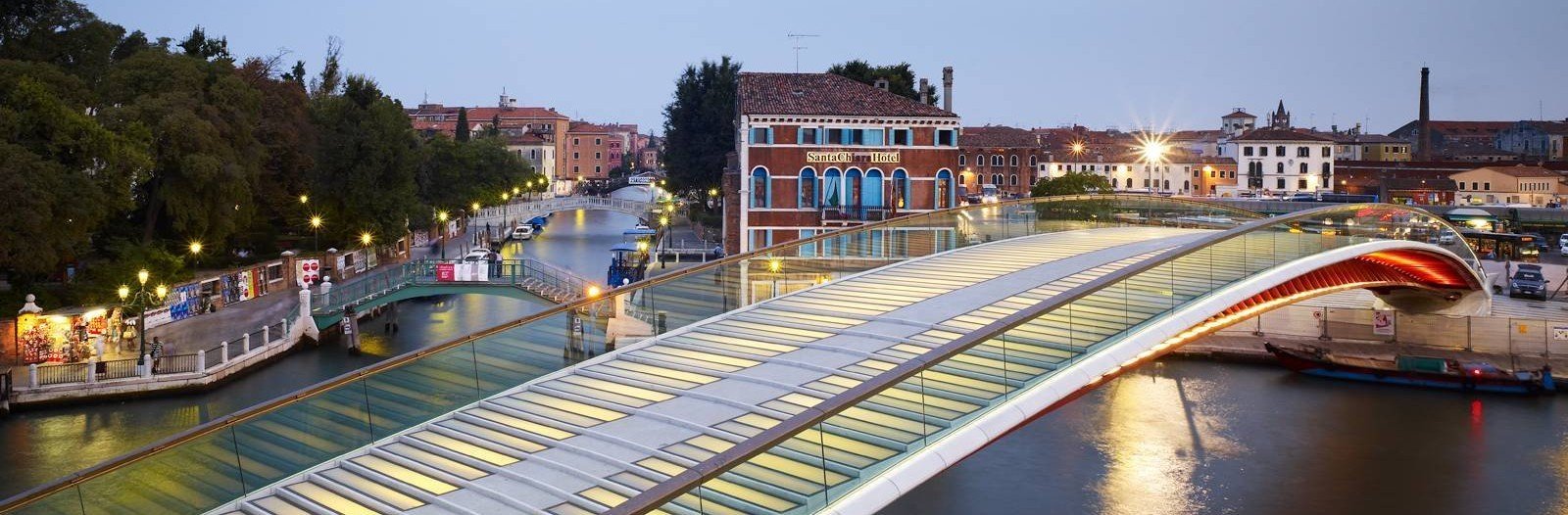
The Ponte della Costituzione by Santiago Calatrava, shown above 📱🔄️, is the starting point of this itinerary that will take you to discover the Sestiere Cannaregio of Venice.
See also:
- Back to Complete Tour
- Guide to Venice
- Itineraries: 1d, 3d
- See: Attractions
- Do: Experiences
- Eat: Where and What
- Getting Around, Pass, Stay
Route Description
The tour of the Sestiere Cannaregio is a journey through the most authentic and lived-in side of Venice, which from the Ponte della Costituzione develops along the Canal Grande and the inner areas of the district, through narrow alleys, bridges, and less crowded views, until reaching the evocative Ghetto Ebraico and its historical landmarks, together with churches, palaces, and places that tell the story of the evolution of the Serenissima.
The experience ends with a return towards the Canal Grande and the museum areas of the district, for a total itinerary of about 5 hours of walking over a 5.2 km loop, ideal for discovering Cannaregio at a slow and in-depth pace, through authenticity, history, and Venetian atmosphere.
SESTIERE CANNAREGIO
- Open Route Map📍
- Distance: 5,2* km walking
- Time: 1,13* min. walking
- Visit duration: 5 hours
- Stops: 10 main (X → I-X)* + 9 secondary
- Ponte della Costituzione Santiago Calatrava (X) → Chiesa di San Simeon Piccolo (A) → Chiesa di Santa Maria di Nazareth (B) → Santuario di Lucia (C) → Museo Ebraico di Venezia (D) → Chiesa della Madonna dell’Orto (E) → Chiesa di S.M. Assunta Detta Ai Gesuiti (F) → Casinò di Venezia (G) → Museo di Storia Naturale di Venezia (H) → Museo Palazzo Mocenigo (I-X)🧩
- For days, times, prices and other info see Itinerary Table 📊
* These values may differ from those shown on Google Maps, as they are continuously recalculated in real time. See also Itinerary Info and Navigator + See here for Shared Stop 🧩
Steps Details
📌 All the stops summarized here are structured in the Itinerary Table 📊 with days, opening hours, prices, and Wikipedia 🌐 and Google Maps insights.
⬇️ starting point
X. Ponte della Costituzione Santiago Calatrava
The route starts from the Ponte della Costituzione, designed by architect Santiago Calatrava, one of the city’s most modern infrastructures, connecting Venezia Santa Lucia station to Piazzale Roma. Right after, you encounter the greenery of the Giardini Papadopoli, a peaceful area perfect for beginning the visit with a moment of relaxation.
✨ A contemporary cut suspended over the Grand Canal: lines of glass and steel create a sharp and striking contrast with historic Venice, especially at sunset when the structure lights up with golden reflections.
⬇️
A. Chiesa di San Simeon Piccolo
One of the most recognizable religious buildings in Venice thanks to its large green dome, the Chiesa di San Simeon Piccolo is located right in front of the train station. Its special feature? The evocative underground crypt, accessible to visitors.
❌ Visit recommended only if you have extra time; the emotional impact is mainly external and can be replicated with other churches along the route.
⬇️
B. Chiesa di Santa Maria di Nazareth
Continuing along the Grand Canal, you will reach the Chiesa di Santa Maria di Nazareth, better known as the Chiesa degli Scalzi, a Baroque masterpiece with spectacular frescoes. Next to the church, the Ponte degli Scalzi is one of the four bridges crossing the Grand Canal, offering one of the most beautiful views over Venetian palaces.
❌ The interiors and frescoes require a dedicated visit; it risks slowing down the itinerary without a real added value compared to other religious stops.
⬇️
C. Santuario di Lucia
Just a few steps away is the Santuario di Santa Lucia, which houses the relics of the patron saint of eyesight. Not far away, Campo San Geremia is a large Venetian square overlooked by the church of the same name. Crossing the characteristic Ponte delle Guglie, decorated with stone pinnacles, you enter the heart of Cannaregio.
❌ The passage is often congested and fragmented into several small urban stops; it is better experienced as a quick transit without long stops.
⬇️
D. Museo e Ghetto Ebraico di Venezia
Cannaregio is home to one of the city’s most significant places: the Ghetto Ebraico di Venezia, the oldest in Europe. The Museo Ebraico tells the history of the Jewish community in the Serenissima, while a walk through the Campo di Ghetto Nuovo allows you to discover historic synagogues and highly evocative corners.
✨ A place that strikes deeply: the silence of the squares, hidden synagogues, and the layered history of the Ghetto create an intense atmosphere, almost suspended in time.
❌ A complete visit between museum and square requires more time than a simple passing walk.
💡 Guided tours make the experience much more complete than a self-guided visit.
Book one of the recommended experiences:
✅ Walking tour of the Ghetto with optional synagogue visit
✅ Guided tour of the synagogues and Ghetto area
⬇️
E. Chiesa della Madonna dell’Orto
Continuing along the route, you reach the Chiesa della Madonna dell’Orto, a Gothic gem that preserves works by Tintoretto, who is also buried here. The silence and spirituality of this place make it an unmissable stop.
✨ One of the most poetic corners of Venice: the severe Gothic façade, soft lateral light, and the direct connection with Tintoretto turn the visit into a deeply evocative artistic and spiritual experience.
⬇️
F. Chiesa di Santa Maria Assunta Detta I Gesuiti
The next stop is the Chiesa di Santa Maria Assunta, known as the Chisa dei Gesuiti. Inside, the use of white and green marble creates a unique scenographic effect. The nearby Campo dei Gesuiti is a less touristy corner of Venice, perfect for a short break.
⬇️
G. Casinò di Venezia
Heading back along the Grand Canal, you reach the Casinò di Venezia, located inside the prestigious Palazzo Vendramin-Calergi. This historic casino is one of the oldest in Europe and, beyond entertainment, offers a spectacular view over the city.
❌ Access is often restricted to internal activities and the venue is not always freely visitable; the experience is therefore more limited compared to the external visual impact from the Grand Canal.
⬇️
H. Museo di Storia Naturale di Venezia
The route continues towards the Museo di Storia Naturale di Venezia, housed in the evocative Fondaco dei Turchi, a palace overlooking the Grand Canal. The museum is perfect for those who love science and nature, with exhibitions ranging from paleontology to zoology.
⬇️
I/X. Museo Palazzo Mocenigo, Palazzo Mocenigo
The itinerary concludes at the Museo di Palazzo Mocenigo, a historic residence dedicated to Venetian fashion and 18th-century costumes. Here you can discover the charm of aristocratic Venice, with exhibitions showcasing the world of perfume and tailoring of the era.
✨ Fabrics, perfumes, and garments recreate an elegant and sensory world that tells the story of the city from a completely different perspective.
Dinner
In the Sestiere Cannaregio, among quiet canals and authentic narrow streets, Venetian cuisine expresses itself in a simpler and more traditional way, perfect for those who want to experience the city away from the most touristy areas.
- Seppie al nero, an iconic dish of Venetian tradition, where the intense flavor of cuttlefish blends with the characteristic squid ink sauce.
- Risotto di gò, a typical specialty of lagoon taverns, prepared with local “poor fish” from the lagoon, offering a delicate and authentic taste.
- Baccalà mantecato alla veneziana, a soft and flavorful cream served on crostini or polenta, a true symbol of local osterias.
- Anguilla della laguna, a typical fish from lagoon areas, often grilled or stewed according to tradition.
- Frìtole veneziane, a traditional festive dessert, soft and fragrant, often enriched with raisins or cream.
- Baicoli artigianali, thin and crunchy biscuits originally made for long preservation and traditionally served with zabaglione or sweet wines.
Among the places in the district where you can enjoy traditional cuisine:
- Al Timon / Bragozzo – overlooking Fondamenta della Misericordia, one of the liveliest bacari in the area, perfect for cicchetti, spritz, and a relaxed canal-side atmosphere.
- Ca’ d’Oro alla Vedova – a historic Venetian osteria famous for its meatballs and traditional cuisine, just steps from the stunning Ca’ d’Oro palace.
- Vini da Gigio – an elegant yet authentic Cannaregio trattoria, known for lagoon traditional dishes and an excellent selection of local wines.
See also Where and What to Eat in Venice
Sleeping
For those who want to experience Venice in an authentic way without giving up easy mobility, the Sestiere Cannaregio is one of the best options: less crowded than the San Marco area, yet well connected and ideal for walking along the Grand Canal and towards Rialto and the main attractions of the itinerary.

Alternatively, for those seeking a quieter but still strategic stay, the areas around Fondamenta della Misericordia and Ca’ d’Oro offer a perfect balance between local atmosphere, traditional restaurants, and direct access to the city’s main transport connections, making Cannaregio an ideal base for exploring Venice away from the busiest tourist areas.
See also Where to sleep in Venice: Info and Tips.
📊 Itinerary Table
In the table below you will find all the attractions included in the itinerary, designed to enhance and better guide your visit to the Cannaregio Sestiere:
- Scroll the table down and to the right 📱🔄 Rotate your phone horizontally to get an overview of opening days, hours, prices of attractions, and for further details on Wikipedia 🌐 and Google Maps ➡️.
- ⚠️ Always check the opening days and hours of attractions through the Google Maps entries linked in the table. See also Itinerary Info.
- To see the explanation of each data column, click its title (e.g. Attractions Index, Ratings, Org, etc.) at the top of the table.
⏳ Caricamento tabella in corso…
📌 This table is updated every 6–12 months.
🛡️ The tables on Tourplan360.com are original content protected by copyright © and monitored through anti-plagiarism tracking systems.
FAQ
You can open the Route Map 📍 directly from here. Alternatively, you can check the dedicated section with all the details.
📌 See the Route Description
How much time do I need to visit the Cannaregio district?
The itinerary allows you to visit the main attractions in about 5 hours.
Can this Cannaregio itinerary be done on foot?
Yes. The route is approximately 5.2 km long and runs entirely within the district, through characteristic streets, squares, and canals.
📌 See also Getting around Venice
Is it worth booking the main attractions in advance?
During peak tourist periods, it is advisable to book in advance or join guided tours to avoid queues and ensure entry.
📌 See also Experiences in Venice
Where can I find opening days, times, and prices for the attractions?
All updated information is available in the dedicated itinerary table, which also includes direct links to Google Maps ➡️ and Wikipedia 🌐 for each attraction.
📌 See the Itinerary Table 📊
See also
- Back to Complete Tour
- Venice in 1 day
- Venice in 3 days
- Guide to Venice
- See: Attractions
- Do: Experiences
- Eat: Where and What
- Getting Around, Pass, Stay
Other Destinations
🔐 Some images on this page are used under Creative Commons licenses:
By Maretta Angelini – Bologna, panoramic view of Piazza Maggiore – Own work – CC BY-SA 4.0 – Wikimedia Commons
By Meri Valenti (TCI) – Trieste, Piazza Unità d’Italia at night – Own work – CC BY 4.0 – Wikimedia Commons
By Franco Visintainer – Trento, city panorama – Own work – CC BY-SA 3.0 – Wikimedia Commons
By Ethen Rera – Venice, Constitution Bridge, Santiago Calatrava – Own work, CC BY-SA 2.0 – Wikimedia Commons