
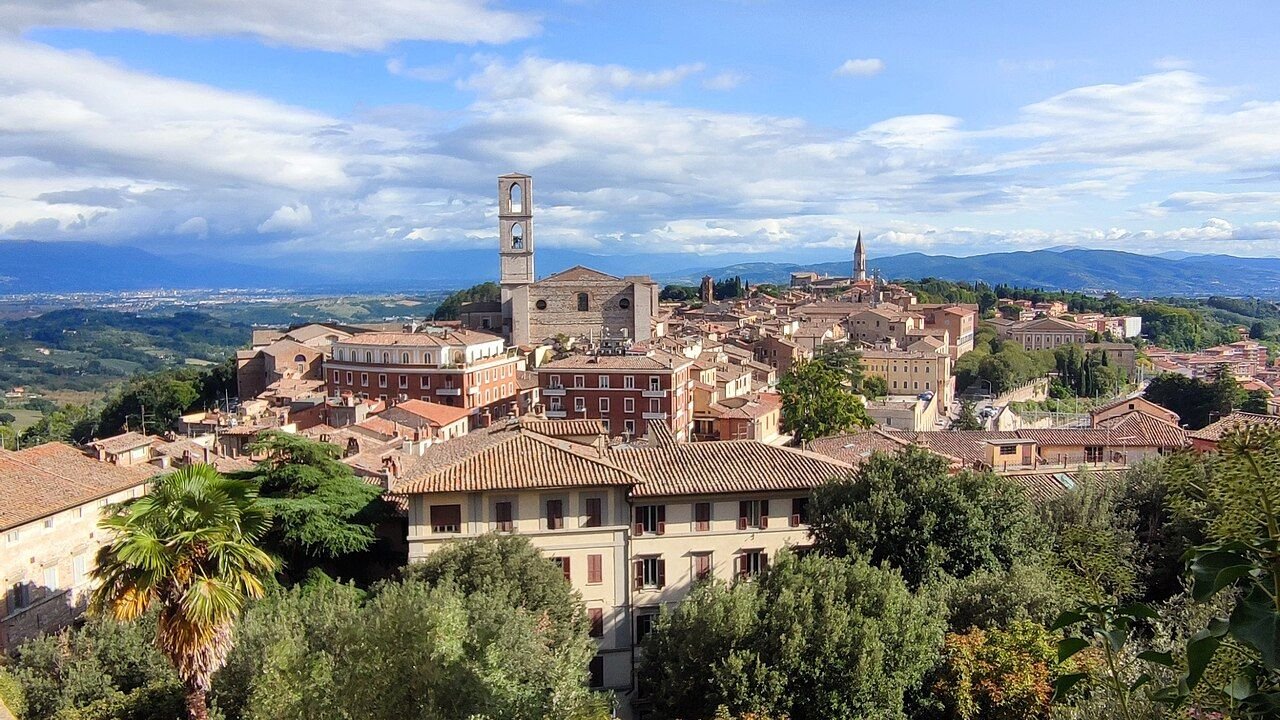
Guide to Perugia: what to see, do, eat
Travel Guide to the Best of the City


Perugia, an ancient Etruscan city, is known for its medieval historic center, chocolate, and vibrant cultural atmosphere. This guide will take you to discover the beating heart of Umbria.
📌 For a more complete overview of certain items, click on the links to detailed pages +🔗
- When to Go
- Getting There
- Getting Around +🔗
- Useful Tips
- What +🔗 and Where +🔗 to Eat
- Where to Sleep +🔗
Overview
📌 A large part of the references covered in this Overview section and in the Practical Info section, are summarized in the Orientation Table 📊 with further details on Wikipedia 🌐 and Google Maps ➡️ where available.
Welcome to Perugia, a city of art perched among the hills of Umbria, where medieval streets, Etruscan walls, and panoramic squares blend into a timeless landscape, making it one of the most authentic and captivating destinations in central Italy.
GEOGRAPHY
Perugia is located in central Italy, in the region of Umbria, of which it is the capital, and sits at approximately 450 meters above sea level on a system of hills overlooking the Tiber Valley and the Umbrian plain, within a landscape typical of the Apennines.
The surrounding area extends beyond the historic center to include places such as Assisi, Corciano, Deruta, and Magione, reaching as far as Lago Trasimeno and the region’s main transport routes.
A satellite view of the area clearly highlights the main geographical directions around Perugia:
- North: the landscape opens towards northern Umbria and Tuscany, with connections to Gubbio, Città di Castello, and the province of Arezzo, crossing inland valleys and Apennine hill systems.
- Northwest: routes extend into the heart of Tuscany, leading towards Arezzo and later Florence, through a landscape of rolling hills, mountain passes, and historic villages.
- West: the area opens towards the Tiber Valley and western Umbria, with connections to Orvieto and the route leading to Rome, the main urban and cultural center of central Italy.
- South: connections lead towards southern Umbria, with cities such as Terni and the Apennine landscapes characterized by river valleys, natural and man-made waterfalls such as the Marmore, and extensive woodlands.
- Southeast: the landscape continues towards Assisi and the Umbrian Valley, reaching connections with Spoleto and the inland areas of the central Apennines, rich in historic towns and nature trails.
- East: the territory extends towards Lago Trasimeno and the border with Marche, with connections to Città della Pieve and routes leading to Urbino and the inland Adriatic area.
Perugia is one of the main transport hubs in central Italy and enjoys strategic connections with the major cities of Umbria, Tuscany, Lazio, and the rest of the peninsula thanks to an efficient road, rail, and airport network.
Expand OVERVIEW ⬇️
HISTORY
The history of Perugia spans more than three thousand years of continuous development, from its Etruscan origins to its present-day role as the capital of Umbria.
- Etruscan origins: Etruscan Perusia was founded as a fortified settlement of great strategic importance, as evidenced by the city walls that are still visible today.
- Roman period: it became part of the Roman sphere as a municipium; the Perusine War marked a period of crisis before the city’s integration into the Roman Empire.
- Early Middle Ages: the city went through a period of instability but retained its defensive and religious importance, gradually passing under Lombard and later Papal rule.
- Medieval commune: between the 12th and 14th centuries, Perugia experienced its greatest development as a free commune, with remarkable political, cultural, and institutional growth.
- Papal rule: from the 15th century onward, it became permanently part of the Papal States while maintaining an important administrative and cultural role in central Italy.
- Modern and contemporary era: from the Italian Risorgimento and the Unification of Italy to the present day, Perugia has become one of Umbria’s leading university and cultural centers.
MAIN ATTRACTIONS
Architecture and Monuments – Perugia preserves a layered architectural heritage that reflects the different historical phases of the city:
- Palazzo dei Priori: a symbol of medieval communal power, it still serves as the seat of civic institutions and is one of the finest examples of Italian civic Gothic architecture.
- Rocca Paolina: a Renaissance fortress commissioned by Pope Paul III, it is an underground complex that bears witness to the city’s political transformation under the Papal States.
- Cattedrale di San Lorenzo: the main religious building of Perugia, it dominates Piazza IV Novembre and is a central landmark of the city’s historical and spiritual life.
- Fontana Maggiore: a medieval sculptural masterpiece created by the Pisano family, it is one of the most important artistic symbols of the historic center and Piazza IV Novembre.
Visiting these places means stepping into the historical and symbolic heart of one of Italy’s best-preserved medieval cities, and a key reference point for Umbrian art and architecture.
Art and Culture – Perugia preserves an important museum and archaeological heritage that tells the story of the city and the Umbrian territory.
- Galleria Nazionale dell’Umbria: the city’s main museum, it houses a rich collection of works from the Middle Ages to the Renaissance, reflecting the artistic evolution of Umbria and Italy.
- Museo Archeologico Nazionale dell’Umbria: located in the San Domenico complex, it collects Etruscan, Roman, and prehistoric artifacts that tell the story of the region’s origins.
- Museo delle Mura e delle Porte Urbiche: dedicated to the city’s fortifications, it illustrates the evolution of Perugia’s defensive system from Etruscan times to the Middle Ages.
- Perugia Sotterranea – Area Archeologica: an underground urban route that reveals the historical layering of the city, from ancient times to the Middle Ages.
Exploring these places means gaining a deeper understanding of the historical and cultural stratification of Perugia.
PARKS AND NATURE
The territory of Perugia is set within a rich and varied natural environment, characterized by hills, wooded areas, and lake basins that offer numerous opportunities for outdoor activities and nature tourism.
- Parco del Lago Trasimeno: the largest lake in central Italy, with wetlands, hills, and historic villages, it is an important natural ecosystem and protected area.
- Parco del Monte Subasio: a mountainous area between Assisi and Spello, with meadows and forests overlooking the Umbrian Valley and offering scenic hiking trails.
- Monte Tezio: a hill near Perugia with trails and panoramic viewpoints over the city and the surrounding valley.
- Monte Malbe: a wooded area close to the city, ideal for walks and outdoor sports in nature.
- Colle della Trinità: a panoramic viewpoint south of Perugia with views over the city and the valley below.
EVENTS & CELEBRATIONS
The annual events in Perugia turn the historic center into an open-air stage, attracting visitors from all over Italy and abroad. The most important include:
- Festival Internazionale del Giornalismo (April) – One of the most important European events dedicated to journalism and contemporary information.
- Umbria Jazz (July) – One of the most important jazz festivals in Europe, dedicated to jazz and its contemporary influences. During this period, the city turns into a large open-air stage, with concerts animating squares, theaters, and historic venues.
- Eurochocolate (October) – An international chocolate festival, among the most famous of its kind in Europe.
📊 Orientation Table
If you want an immediate and practical overview of the city, the table below summarizes all the key points of the overview, to quickly get oriented and better organize your visit through our itineraries (see Itinerary Overview).
- Scroll the table down and to the right 📱🔄 Rotate your phone horizontally to get an overview of opening days, hours, prices of attractions, and for further details on Wikipedia 🌐 and Google Maps ➡️.
- ⚠️ Always check the opening days and hours of attractions through the Google Maps entries linked in the table. See also Itinerary Info.
- To see the explanation of each data column, click its title (e.g. Attractions Index, Ratings, Org, etc.) at the top of the table.
⏳ Caricamento tabella in corso…
📌 This table is updated every 6–12 months.
🛡️ The tables on Tourplan360.com are original content protected by copyright © and monitored through anti-plagiarism tracking systems.
Itinerary Overview
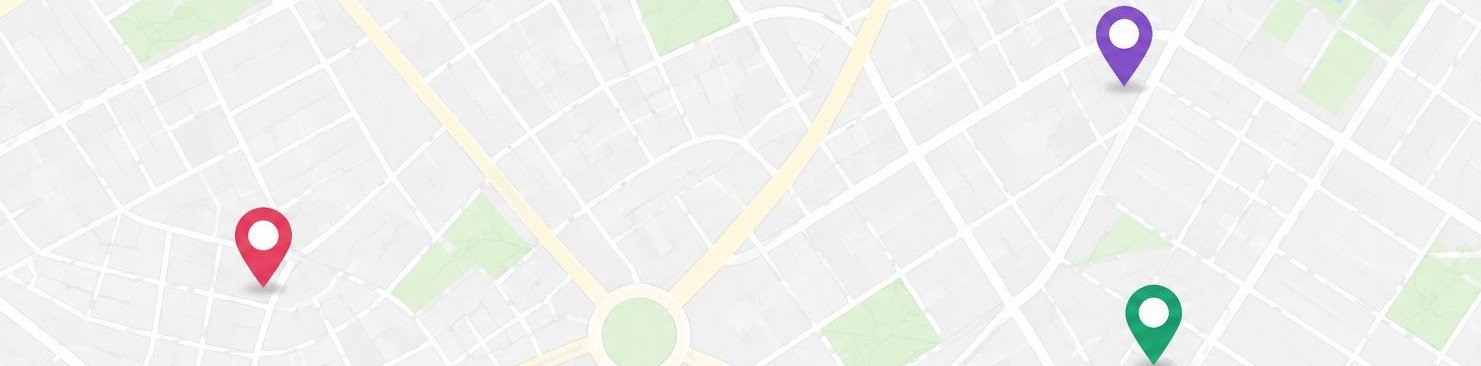
The most important attractions selected in the table have been divided into the two itineraries summarized below, in order to quickly identify the one best suited to your needs and then explore it in more detail on the dedicated itinerary and map pages.
PERUGIA IN 1 DAY
If you only have one day to visit Perugia, this itinerary allows you to enjoy an intense experience in the heart of the historic center, among medieval squares, historic palaces, and panoramic views.
The route focuses especially on Piazza IV Novembre and the complex of the Rocca Paolina, two of the city’s main landmarks.
PERUGIA IN 3 DAYS
The three-day tour of Perugia allows you to discover the city at a more relaxed pace, alternating between the historic center, monumental areas, and neighborhoods outside the city walls.
The itinerary develops through the medieval heart, the area of Sant’Angelo and the confraternities, and the district of San Domenico, offering a more complete view of the city.
Practical Info
WHEN TO GO
Perugia is a city that can be visited throughout the year thanks to the typical Umbrian climate, which is continental but softened by its hilly elevation. It offers cool winters and hot summers that are generally less humid compared to many other Italian cities.
- Spring (April–June): one of the best times to visit Perugia, with mild temperatures, green and blooming landscapes, and ideal conditions for walking through the historic center and surrounding villages.
- Summer (July–August): a warm and sunny season, perfect for enjoying outdoor events and festivals, although the midday hours can be quite hot in the more exposed areas of the historic center.
- Autumn (September–October): a particularly charming period, with still pleasant weather, warm colors across the Umbrian hills, and a quieter atmosphere after the peak tourist season.
- Winter (November–March): the coldest season but still fascinating, with often clear days, fewer crowds, and an authentic, intimate atmosphere ideal for discovering the city at a relaxed pace.
GETTING THERE
Perugia is a well-connected city, easily accessible thanks to its strategic location in the heart of Umbria and its road and rail links that connect it to major Italian cities.
- By plane: Perugia is served by Perugia-Sant’Egidio Airport, a regional airport connecting Umbria with selected national and European destinations. From the airport, the city center can be reached by car, taxi, or shuttle services in a short travel time.
- By train: the city is connected to the Umbrian and Italian rail network via Perugia Fontivegge station, with links to Rome, Florence, and other major cities. From the station, the historic center can be reached by minimetrò, bus, or taxi.
- By bus: Perugia is served by a regional and national bus network connecting it with major Umbrian towns and nearby cities. The main terminal is located in the Fontivegge area, well connected to the historic center.
- By car: Perugia is easily reachable via the A1 motorway (Valdichiana or Orte exits) and the E45 highway, which quickly connects Umbria with northern and southern Italy. Several parking areas are available on the outskirts of the historic center, from where it can be reached by minimetrò or escalators.
✅ To search for or book a flight you can check Booking.com Flights.
✅ You can check routes, schedules, prices and buy train or bus tickets with Trainline.
✅ For car rentals you can refer to Booking.com Cars.
GETTING AROUND
The historic center of Perugia is located on a hilly system and develops through narrow streets, stairways, and medieval squares. Getting around the city means alternating between walking routes and modern infrastructure such as escalators and the minimetrò, which make it easier to move between different urban areas.
- On foot: Perugia is mainly explored on foot, especially in the historic center, where distances between main attractions are short but characterized by steep climbs, descents, and typical Umbrian medieval alleys.
- Escalators and mechanical routes: a distinctive feature of Perugia is its network of escalators and elevators that connect parking areas and lower zones with the historic center, making it easier to reach the old town.
- Urban buses: the bus network connects the historic center with peripheral areas and main interchange hubs, including the Fontivegge railway station and park-and-ride areas.
- Cars and access: the historic center is largely a restricted traffic zone (ZTL). Car access is allowed only in specific areas, while main parking lots are located on the outskirts and connected to the center via minimetrò and escalators.
- Minimetrò: the Perugia Minimetrò is an automated transport system connecting Pian di Massiano with the historic center (Pincetto), representing one of the fastest and most convenient ways to reach the upper city while avoiding traffic.
See also Getting around Perugia: Info and Tips
USEFUL TIPS
To visit Perugia in the most comfortable and organized way possible, here are some practical tips that can help you optimize your visiting time and fully enjoy the historic center as well as the connections with the modern city and the surrounding Umbrian countryside.
- Perugia Card and local tourist passes: some local solutions allow access to museums, attractions, and city services through combined or discounted packages, especially useful for those who want to visit multiple points of interest in a short time.
- Comfortable shoes: essential for visiting Perugia, which features steep climbs, descents, and medieval paving that require good walking mobility to move between the different areas of the city.
- Minimetrò and escalators: using urban infrastructure is essential to reduce effort when moving between parking areas, the station, and the historic center, especially for those visiting the city in a single day.
- Water and sun protection: especially useful during summer months, when temperatures can be high during the central hours of the day, even if moderated by the hilly altitude.
- Respect for historical and cultural sites: Perugia is a city rich in medieval buildings, churches, and cultural spaces, where it is important to behave respectfully and appropriately during visits.
WHAT TO EAT
Perugian cuisine represents one of the most authentic expressions of Umbrian gastronomic tradition, based on peasant recipes, simple yet intense ingredients, and flavors deeply tied to the local territory.
- Umbricelli: a rustic fresh pasta from the Perugian tradition, served with rich sauces such as meat ragù or truffle, and considered one of the most characteristic first courses of the area.
- Scaloppine alla perugina: a traditional main course made with thin veal slices pan-cooked and flavored with a rich and aromatic sauce.
- Ciaramicola: a typical Perugian dessert, traditionally prepared during Easter celebrations, characterized by a white icing and colorful sprinkles, symbol of local pastry tradition.
See also What to eat in Perugia
WHERE TO EAT
From traditional osterias and trattorias to more contemporary venues, Perugia offers an authentic gastronomic scene deeply rooted in Umbrian culture.
- La Taverna: one of the best-known restaurants in the historic center, offering well-executed traditional Umbrian cuisine, ideal for discovering local flavors in a warm and typical setting.
- Antica Trattoria San Lorenzo: a historic restaurant located in one of the most charming areas of the city, known for its refined yet authentic Umbrian culinary tradition.
- Osteria A Priori: a venue in the heart of the historic center, perfect for simple, high-quality cuisine based on local products and a genuine dining experience.
See also Where to eat in Perugia
WHERE TO SLEEP
Perugia offers a range of accommodation options, from hotels in the historic center to more modern structures located in the lower areas of the city, as well as agritourisms set in the green Umbrian hills.

Choosing the right area is essential to fully experience the city and optimize travel between the historic center and surrounding areas.
- Historic center (Corso Vannucci and Piazza IV Novembre): the ideal choice for those who want to stay in the medieval heart of the city, just steps away from the main monuments, museums, and iconic viewpoints.
- Fontivegge area: a modern and strategic district near the train station, perfect for those seeking fast connections to other Umbrian and Italian cities and good access to services.
- Monteluce and nearby hillside areas: residential and quieter neighborhoods, ideal for a relaxing stay still close to the historic center, often offering panoramic views of the city.
- Surroundings of Perugia (agritourisms and Umbrian countryside): perfect for those seeking a nature-immersed experience among hills, villages, and rural structures typical of Umbria, just a short distance from the city center.
See also Where to sleep in Perugia: Info and Tips
FAQ
Top highlights include Piazza IV Novembre, Fontana Maggiore, and Rocca Paolina, the historic and symbolic heart of the city.
Which museums and monuments should I visit in Perugia?The city hosts important museums and monuments such as the National Gallery of Umbria, Palazzo dei Priori, and the Cathedral of San Lorenzo.
📌 Read more in the section Main Attractions.
Are there parks or green areas in Perugia?
Yes, among the main natural areas near Perugia are the Lake Trasimeno Park and the Monte Subasio Park, ideal for nature, hiking, and outdoor activities.
📌 Read more in the section Parks and Nature.
Is Perugia suitable for a short visit?
Yes, the historic center is compact but rich in attractions, making it easy to plan 1- or 3-day itineraries combining history, art, and panoramic views.
📌 Read more in the section Itinerary Overview.
What is the best time to visit Perugia?
Spring and autumn offer the best weather, with mild temperatures and beautiful colors over the Umbrian hills.
Is Perugia easy to visit?Yes, although it is a hilly city: the historic center is well connected thanks to the minimetrò, escalators, and pedestrian paths.
📌 Read more in the section When to Go.
Which typical dishes should I try in Perugia?
Local specialties include Torta al testo, Umbricelli with truffle, and Ciaramicola, a traditional Umbrian dessert.
📌 Read more in the section What to Eat.
Where to eat well in Perugia?The best areas are the historic center and surrounding panoramic districts, where you can find traditional Umbrian osterias and restaurants.
📌 Read more in the section Where to Eat.
What is the best area to stay in Perugia?
The historic center is ideal for exploring on foot, while Fontivegge is convenient for transport connections and hillside areas offer quieter stays.
Are there budget hotels in Perugia?Yes, more affordable options can be found in Fontivegge and the surrounding hillside areas compared to the historic center.
📌 Read more in the section Where to Sleep.
Where can I find days, hours, and prices of attractions?
All information is available in the table within the dedicated attraction sections.
Where can I find links and online information about attractions?The table also includes direct links to Google Maps ➡️ and Wikipedia 🌐 for each attraction.
📌 Check the Orientation Table 📊
See also
Other Destinations
🔐 Certaines images présentes sur cette page sont utilisées sous licence Creative Commons :
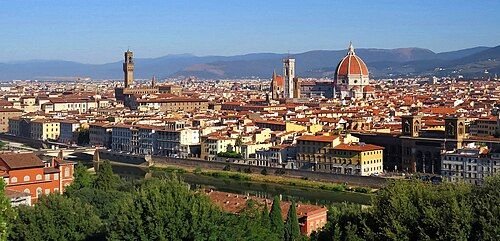
Par PROPOLI87 – Florence, panorama depuis le Piazzale Michelangelo – œuvre personnelle – CC BY-SA 4.0 – Wikimedia Commons
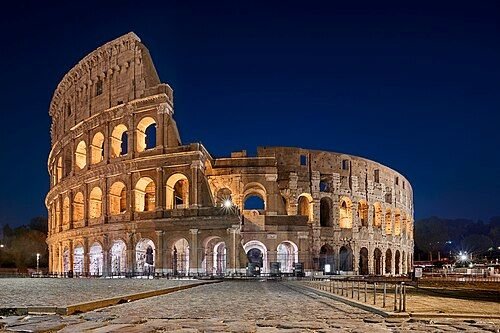
Par © Anil Öztas – Rome, le Colisée illuminé la nuit – œuvre personnelle – CC BY-SA 4.0 – Wikimedia Commons
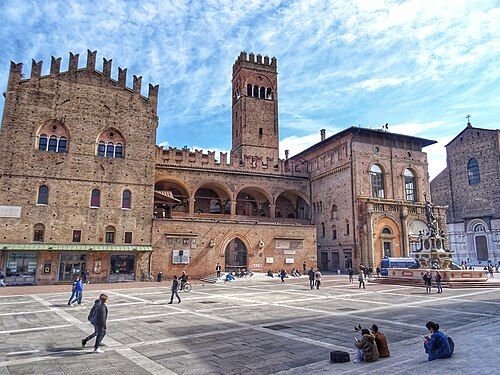
Par Maretta Angelini – Bologne, vue panoramique de la Piazza Maggiore – œuvre personnelle – CC BY-SA 4.0 – Wikimedia Commons
Di AliasXX00– Perugia, vista panoramica da Viale Indipendenza – Opera propria – CC BY 4.0 – WikiCommons
,_Kolosseum_--_2024_--_0610.jpg)
