
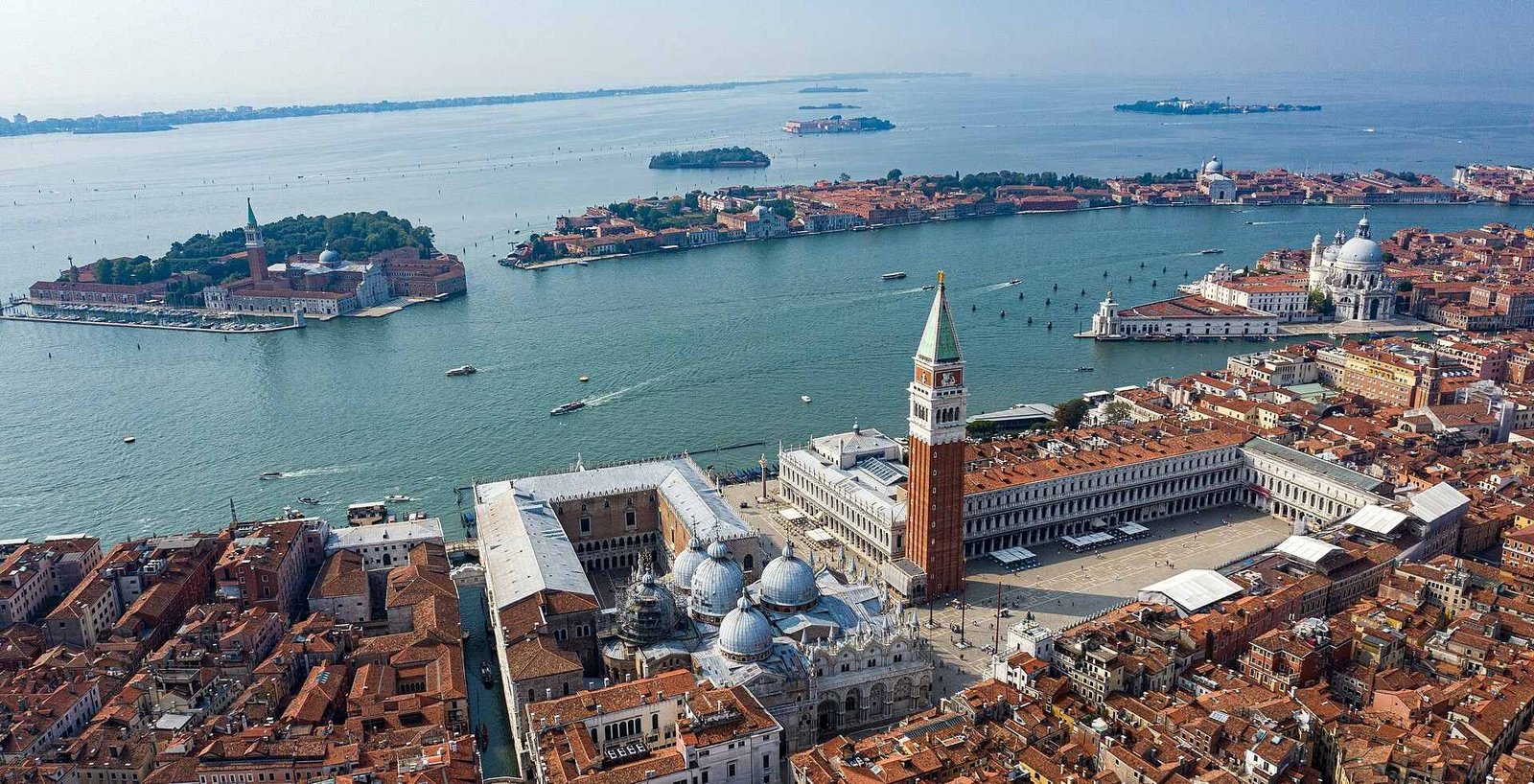
Venice Venetian Lagoon Islands: what to see and complete itinerary
Travel guide, opening hours, prices, map


The Isole della Laguna di Venezia represent a world of their own, where the city dissolves into water and gives way to landscapes suspended between land and sea, rich in history, traditions, and unique identities.
See also:
- Back to Complete Tour
- Guide to Venice
- Itineraries: 1d, 3d
- See: Attractions
- Do: Experiences
- Eat: Where and What
- Getting Around, Pass, Stay
Route Description
The Tour of the Lagoon Islands of Venice is a unique route that crosses the entire Venetian island system, connecting some of the most iconic islands of the lagoon.
Among these stand out Murano, world-famous for the art of glassmaking and its historic furnaces, Burano, with its colorful houses and lace-making tradition, and Torcello, one of the oldest centers of Venetian civilization. Completing the experience is the charm of Pellestrina, where lagoon life still follows traditional rhythms linked to fishing.
The itinerary takes about 10 hours and covers approximately 51.7 km in total, through natural landscapes and small inhabited centers. It is designed to showcase a more widespread and authentic Venice beyond the historic center.
⚠️ Important note – Distances and times indicated by Google Maps are purely approximate. The itinerary includes travel by vaporetto and ferry between the lagoon islands, which the system does not always calculate correctly. For this reason, estimated distances and travel times may be longer than the actual duration.
ISLANDS OF THE VENETIAN LAGOON
- Open Route Map📍
- Distance: 51,7* km on foot + vaporetto
- Time: 9,03* min. on foot + vaporetto
- Visit duration: 10 hours
- Stops: 10 main (X → I)* + 2 secondary
- Isola di San Michele (X) → Murano (A) → Torcello (B) → Burano (C) → San Francesco del Deserto (D) → Sant’Erasmo (E) → San Lazzaro degli Armeni (F) → San Servolo (G) → Lido di Venezia (H) → Pellestrina (I)
- For days, times, prices and other info see Itinerary Table 📊
* These values may differ from those shown on Google Maps, as they are continuously recalculated in real time. See also Itinerary Info and Navigator + See here for Shared Stop 🧩
Steps Details
📌 All the stops summarized here are structured in the Itinerary Table 📊 with days, opening hours, prices, and Wikipedia 🌐 and Google Maps insights.
⬇️ starting point
X. Isola di San Michele
Our journey begins from San Michele, the cemetery island of Venice. Separated from the city yet closely tied to its history, it is a place of great atmosphere and contemplation.
Walking through its silent avenues, you can admire the graves of illustrious figures such as the poet Ezra Pound and the composer Igor Stravinsky. Renaissance architecture and well-kept gardens make this island a peaceful oasis, perfect for a contemplative visit before diving into the energy of the nearby islands.
✨ Among cypress trees, Renaissance architecture and absolute silence, this is one of the most evocative and unusual places in the Venetian lagoon.
❌ The visit is particularly suitable for those who appreciate historical and contemplative places; it may feel less engaging in an itinerary focused on more dynamic attractions.
⬇️
A. Murano
After a short vaporetto ride, you reach Murano, world-famous for its centuries-old glassmaking tradition. Here you can visit historic furnaces where master glassmakers transform sand into incredibly beautiful works of art.
Among the main points of interest are the Museo del Vetro, which tells the story of this fascinating art form, and the Basilica di Santa Maria e San Donato, one of the oldest churches in Venice, famous for its Byzantine mosaics and for allegedly housing, according to legend, the bones of a dragon.
To deepen your visit to Murano, check our Murano Itinerary with a dedicated route.
⬇️
B. Torcello
Leaving Murano, you arrive at Torcello, an island that seems suspended in time. This small corner of tranquility preserves the charm of ancient Venice, being one of the earliest settlements in the lagoon.
Here you can visit the extraordinary Basilica di Santa Maria Assunta, with its medieval mosaics depicting scenes of the Last Judgment, and walk across the evocative Ponte del Diavolo, wrapped in mysterious legends.
✨ Walking among meadows, canals and unreal silence, it feels like stepping into the lagoon as it was a thousand years ago, long before the Venice we know today existed.
💡 The atmosphere here is completely different from Venice: time truly seems to slow down.
❌ Consider longer travel times compared to other islands: Torcello requires a dedicated detour and is not a quick stop.
⬇️
C. Burano and Mazzorbo
A short vaporetto ride takes you to Burano, an island with a unique charm, famous for its colorful houses, painted in bright shades according to an ancient maritime tradition.
Here you can visit the Museo del Merletto, which tells the story of a centuries-old craft still passionately practiced by the women of the island. Another curiosity is the leaning bell tower of San Martino, an iconic landmark easily recognizable.
✨ The colorful houses reflected in the canals create one of the most photogenic and recognizable scenes in the entire Venetian lagoon.
❌ Avoid peak hours during high season: the main alleys can become very crowded.
Connected by a bridge, Mazzorbo offers a more authentic and less touristy experience, with vineyards, vegetable gardens and hidden gardens that tell the more genuine life of the lagoon.
📌: The Venissa Wine Resort in Mazzorbo can be visited upon request. You will find the phone number in the Google Maps card accessible via the table link.
⬇️
D. San Francesco del Deserto
Sailing southward, you reach San Francesco del Deserto, a mystical and timeless place. This island hosts an ancient Franciscan monastery, founded by Saint Francis of Assisi in 1220 and still inhabited by friars today. Cloisters and gardens immersed in silence create an atmosphere of deep spirituality, ideal for a meditative walk.
✨ The absolute silence of the cloisters and the sound of the lagoon water offer one of the most spiritual and timeless experiences in the entire Venetian archipelago.
📌 The visit to the Convento di San Francesco del Deserto requires mandatory booking. You will find the phone number in the Google Maps card accessible via the table link.
⬇️
E. Sant’Erasmo
The next stop is Sant’Erasmo, known as the “vegetable garden of Venice” thanks to its extensive cultivation of fruit and vegetables, including the famous violet artichoke. This large island is perfect for nature lovers, with paths, fields, and quiet beaches.
Not far away is the Lazzaretto Nuovo, once a Venetian health quarantine station for sailors and now a fascinating museum that tells stories of epidemics, quarantines, and archaeological discoveries.
💡 It is one of the best places to understand how lagoon communities lived away from the historic city center.
❌ If your main goal is to visit monuments and museums, this can be considered an optional stop.
📌 The Torre Massimiliana of Sant’Erasmo is currently closed to the public.
⬇️
F. San Lazzaro degli Armeni
Small but of enormous cultural value, San Lazzaro degli Armeni is home to one of the most important Armenian monasteries in Europe. It hosts an extraordinary library with ancient manuscripts and a museum preserving priceless artworks. The island represents a bridge between Venice and the Armenian world, bearing witness to the strong historical ties between the two cultures.
📌 Visits to the Mechitarist Armenian Monastery and the Art Gallery and Museum of San Lazzaro Island require mandatory booking. You will find the phone number in the Google Maps listing accessible via the table link.
⬇️
G. San Servolo
Located between Venice and the Lido, San Servolo has an intriguing past: formerly a psychiatric hospital, today it is a cultural center hosting exhibitions and international events. The Museum of Madness tells the history of psychiatry through documents and moving testimonies. The island is a place of reflection and discovery, surrounded by a fascinating natural setting.
✨ Walking among the historic buildings and gardens of the island gives a surprising sense of isolation and tranquility just a few minutes from Venice.
❌ The visit may feel less engaging for those not interested in the history of psychiatry or the island’s cultural aspects.
⬇️
H. Lido di Venezia
After a vaporetto ride, you arrive at Lido di Venezia, the long island that separates the lagoon from the Adriatic Sea. Here you’ll find golden beaches and historic beach resorts, such as the famous Excelsior, which hosts the Venice Film Festival every year, one of the most important film events in the world. The Lido preserves a Liberty-style charm, with elegant villas and historic hotels evoking the atmosphere of the Belle Époque.
✨ Between elegant Art Nouveau villas, long beaches, and timeless atmospheres, it feels like discovering a completely different Venice from the one of canals.
💡 At sunset, the seafront offers some of the most stunning views over the Adriatic.
❌ During the Venice Film Festival and summer weekends, visitor numbers increase significantly, with longer waiting times for transport and services.
⬇️
I. Pellestrina
The final stop of our tour is Pellestrina, a quiet and little-touristy island, ideal for those who want to immerse themselves in nature and the daily life of fishermen. Small villages with pastel-colored houses overlook the lagoon, while the Ca’ Roman Nature Reserve provides a perfect habitat for many bird species.
✨ Here the lagoon shows its most authentic face: small harbors, slow rhythms, and landscapes that seem unchanged over time.
💡 The Ca’ Roman area is one of the most fascinating places to observe lagoon nature away from traditional tourist routes.
❌ Travel connections require more time compared to the main islands: consider carefully this stop if you only have one day available.
Dinner
The islands of the Venetian Lagoon offer a widespread gastronomic journey, where cuisine follows the rhythms of the water and the seasons. Among vegetable gardens, fishermen, and small communities, dishes and products are created that tell the story of Venice’s most authentic side.
- Folpetti della laguna, small tender octopuses served boiled or in salads, a symbol of traditional Venetian cuisine.
- Baccalà mantecato alla veneziana, a codfish cream served as a traditional appetizer in lagoon taverns and trattorias.
- Polenta e schie, a typical lagoon dish linked to the fishing of small local shrimp.
- Gò della Laguna di Venezia, a humble yet emblematic fish, often prepared in broth or grilled on the smaller islands.
- Carciofo violetto di Sant’Erasmo, a specialty of the island’s market gardens and a key ingredient of Venetian spring cuisine.
- Asparago di Sant’Erasmo, a renowned product of the Venetian Lagoon, appreciated for its delicate and slightly sweet flavor, and a protagonist of spring dishes.
- Fritole veneziane, a traditional dessert found throughout the lagoon, especially during festive periods.
Scattered across the lagoon islands are historic taverns and restaurants offering authentic gastronomic experiences, often connected to local fishing traditions and island life.
- Trattoria da Romano – located in Burano, it is one of the lagoon’s most iconic restaurants, famous for its seafood risotto and artistic traditions linked to the island.
- Trattoria Al Gatto Nero – also located in Burano, renowned for its seafood cuisine and welcoming atmosphere overlooking the colorful canals.
See also Where to eat in Venice and What to eat in Venice.
Sleeping
The Venetian Lagoon islands are a unique choice for those who wish to experience Venice in a slower, more authentic dimension, far from the historic center and immersed in a natural setting made of water, silence, and small villages suspended in the lagoon.

Alternatively, the areas of Burano and Mazzorbo offer a lively yet intimate atmosphere, while islands such as Torcello, San Francesco del Deserto, and Sant’Erasmo provide a quieter experience immersed in nature. Options on the Lido Island and Pellestrina are ideal for those also seeking the sea and wider open spaces, while still remaining well connected to Venice.
See also Where to sleep in Venice: Info and Tips.
📊 Itinerary Table
In the table below you will find all the attractions included in the itinerary, to enhance and best guide your visit to the Venetian Lagoon Islands:
- Scroll the table down and to the right 📱🔄 Rotate your phone horizontally to get an overview of opening days, hours, prices of attractions, and for further details on Wikipedia 🌐 and Google Maps ➡️.
- ⚠️ Always check the opening days and hours of attractions through the Google Maps entries linked in the table. See also Itinerary Info.
- To see the explanation of each data column, click its title (e.g. Attractions Index, Ratings, Org, etc.) at the top of the table.
⏳ Caricamento tabella in corso…
📌 This table is updated every 6–12 months.
🛡️ The tables on Tourplan360.com are original content protected by copyright © and monitored through anti-plagiarism tracking systems.
FAQ
You can also open the Route Map 📍 directly from here. Alternatively, you can check the dedicated section with all the details.
📌 See the Route Description
How much time do I need to visit the Lagoon Islands?
The itinerary allows you to visit the main islands in approximately 10 hours.
Can this Lagoon Islands itinerary be done on foot?
The overall route combines walking sections with vaporetto (water bus) transfers. The approximate distance is around 51.7 km, but this value may vary because travel times and routes can change depending on connections and the itinerary chosen.
📌 See also Getting around Venice: Info and Tips
Is it worth booking the main attractions in advance?
During peak tourist periods, it is advisable to book in advance or join guided tours to avoid queues and ensure entry.
📌 See also Experiences in Venice: Tours, Tickets and Useful Info
Where can I find opening days, times, and prices for the attractions?
All updated information is available in the dedicated itinerary table, which also includes direct links to Google Maps ➡️ and Wikipedia 🌐 for each island and attraction.
📌 See the Itinerary Table 📊
See also
- Back to Complete Tour
- Venice in 1 day
- Venice in 3 days
- Guide to Venice
- See: Attractions
- Do: Experiences
- Eat: Where and What
- Getting Around, Pass, Stay
Other Destinations
🔐 Some images on this page are used under Creative Commons licenses:
By Maretta Angelini – Bologna, panoramic view of Piazza Maggiore – Own work – CC BY-SA 4.0 – Wikimedia Commons
By Meri Valenti (TCI) – Trieste, Piazza Unità d’Italia at night – Own work – CC BY 4.0 – Wikimedia Commons
By Franco Visintainer – Trento, city panorama – Own work – CC BY-SA 3.0 – Wikimedia Commons
By Kasa Fue – Venice, aerial view of St. Mark’s Square and the Venetian Lagoon with its islands – Own work, CC BY-SA 4.0 – Wikimedia Common