
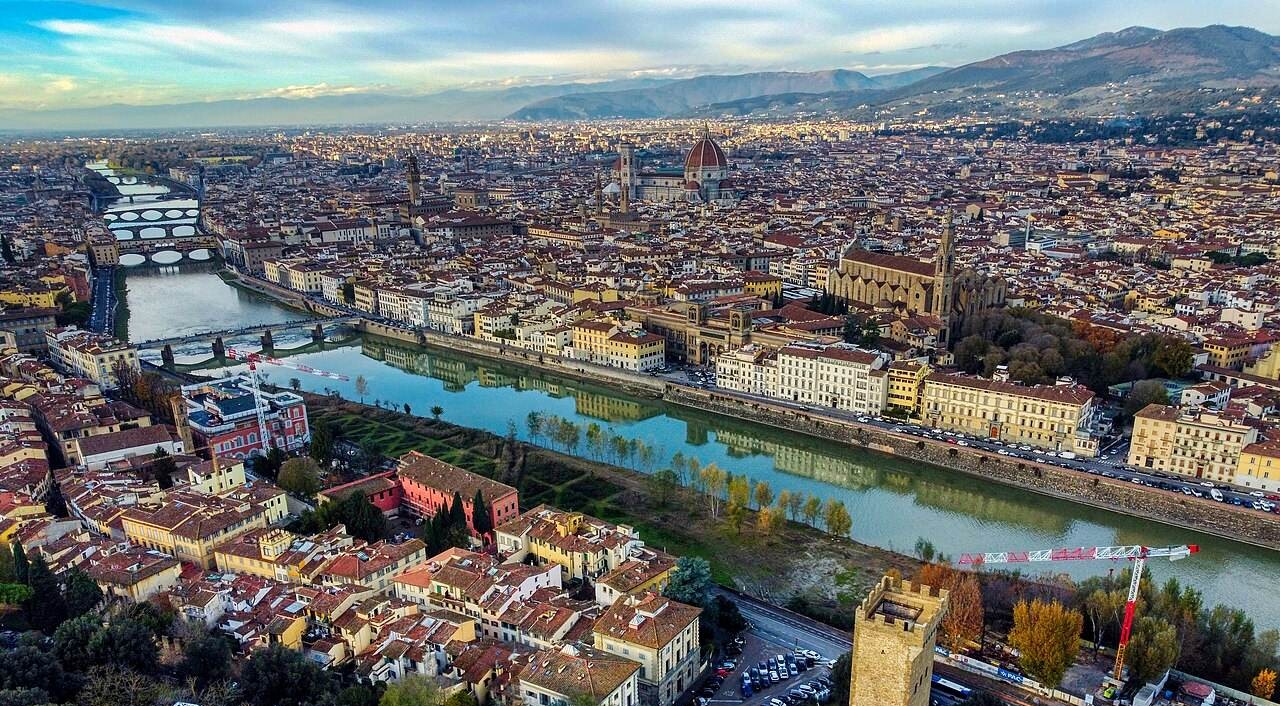
Main Attractions in Florence
Quick Guide to the Best Things to See


Florence brings together monumental churches, artistic masterpieces and famous landmarks that have made the birthplace of the Renaissance one of the world’s most important cultural destinations.
📌 To learn more, click on the links to the dedicated pages +🔗
Places of worship
- Cathedral of Santa Maria del Fiore + 🔗
- Brunelleschi’s Dome + 🔗
- Giotto’s Bell Tower + 🔗
- Baptistery of San Giovanni
- Basilica of Santa Croce
- Basilica of Santa Maria Novella
- Medici Chapels + 🔗
Museums and galleries
- Uffizi Gallery + 🔗
- Accademia Gallery + 🔗
- Pitti Palace + 🔗
- Museo Galileo
- Bargello National Museum + 🔗
- San Marco Museum
- Museo dell’Opera del Duomo
Monuments and landmarks
See also
- Guide to Florence
- Itineraries: 1d, 3d, CT1, CT2
- See: Attractions
- Do: Experiences
- Eat: Where and What
- Getting Around, Pass, Stay
Cathedral of Santa Maria del Fiore
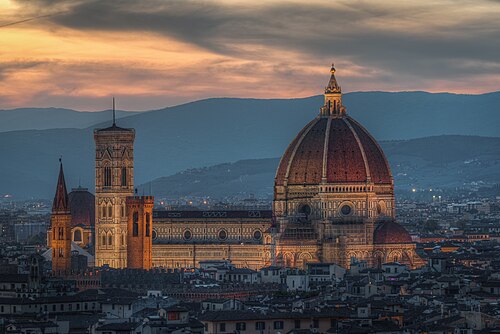
Florence Cathedral, officially the Cathedral of Santa Maria del Fiore, is the monumental heart of the city and one of the greatest masterpieces of Renaissance architecture. Its imposing marble façade and the complex formed by the cathedral, dome, bell tower and baptistery unmistakably define Florence’s skyline.
Construction began in the 13th century and was completed over the following centuries. The complex houses important works of art and bears witness to the exceptional artistic period that transformed Florence into the heart of the Italian Renaissance.
- Estimated visit time: about 60 minutes.
- For days, opening hours, prices and all the details on Wikipedia 🌐 and Google Maps ➡️ see the Travel Itinerary Table 📊 Florence in 1 day.
- ❌ During periods of heavy tourist traffic, it is advisable to book in advance or join guided tours to avoid queues and ensure admission.
- To see the selection of experiences, visit the page Cathedral of Santa Maria del Fiore: Tours, Tickets and Useful Info.
Brunelleschi’s Dome
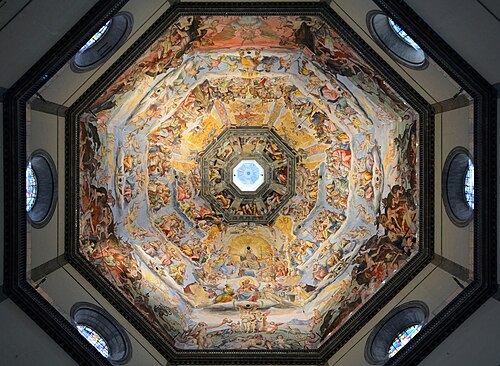
Dominating the historic centre with its distinctive red-tiled covering, Brunelleschi’s Dome is one of Florence’s most iconic symbols and one of the greatest masterpieces of Renaissance architecture. Designed by Filippo Brunelleschi in the 15th century, its monumental structure still defines the city’s skyline today.
Its construction was an extraordinary engineering achievement for its time and helped make Florence one of the leading cultural centres of the Renaissance. Climbing to the top also allows visitors to observe the structure of the dome up close and admire the city from above.
- Estimated visit time: about 60 minutes.
- ✨ Climbing to the top is an engaging experience: through narrow passages and alongside the frescoes, you reach a breathtaking view over the whole of Florence.
- For days, opening hours, prices and all the details on Wikipedia 🌐 and Google Maps ➡️ see the Travel Itinerary Table 📊 Florence in 1 day
- ❌ During periods of heavy tourist traffic, it is advisable to book in advance or join guided tours to avoid queues and ensure admission.
- To see the selection of experiences, visit the page Brunelleschi’s Dome: Tours, Tickets and Useful Info.
Giotto’s Bell Tower
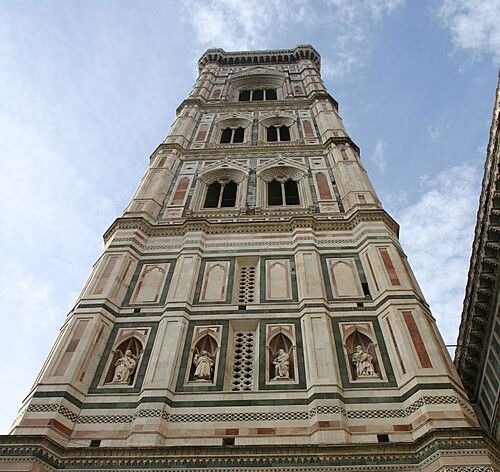
Giotto’s Bell Tower is one of Florence’s most recognizable monuments and an integral part of the Duomo complex. Clad in white, green and pink marble, it stands out for the elegance of its proportions and the richness of the decorations that characterize its different levels.
Designed by Giotto and completed after his death, the bell tower preserves important reliefs and sculptures and is today one of the main panoramic viewpoints in the historic center, thanks to the climb to the top.
- Estimated visit time: about 60 minutes.
- For days, opening hours, prices and all the details on Wikipedia 🌐 and Google Maps ➡️ see the Travel Itinerary Table 📊 Florence in 1 day
- To see the selected experiences, visit the page Giotto’s Bell Tower: Tours, Tickets and Useful Info.
Baptistery of San Giovanni
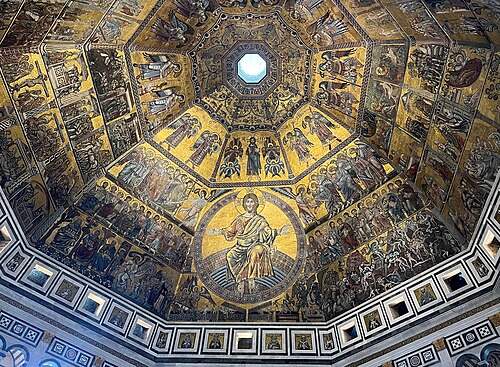
The Baptistery of San Giovanni is one of Florence’s oldest and most important buildings and completes the great monumental complex of Piazza del Duomo. Its characteristic octagonal plan and white and green marble cladding make it immediately recognizable.
The baptistery is particularly famous for its monumental bronze doors, including Lorenzo Ghiberti’s famous Gates of Paradise, and for the precious mosaics that decorate the interior of the dome.
- Estimated visit time: about 30 minutes.
- For days, opening hours, prices and all the details on Wikipedia 🌐 and Google Maps ➡️ see the Travel Itinerary Table 📊 Florence in 1 day
Basilica of Santa Croce
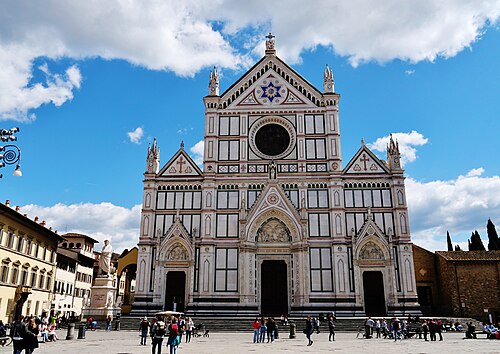
With its monumental marble façade overlooking the square of the same name, the Basilica of Santa Croce recounts some of the most important chapters in Italian history and culture. Inside, it houses numerous works of art and important frescoed chapels.
The basilica is also known as the Temple of the Italian Glories because of the tombs and monuments dedicated to great figures such as Michelangelo, Galileo Galilei, Machiavelli and Rossini.
- Estimated visit time: about 145 minutes for the entire complex.
- For days, opening hours, prices and all the details on Wikipedia 🌐 and Google Maps ➡️ see the Travel Itinerary Table 📊 Florence Complete Tour – Part 1 – Santa Croce and Science Route.
Basilica of Santa Maria Novella
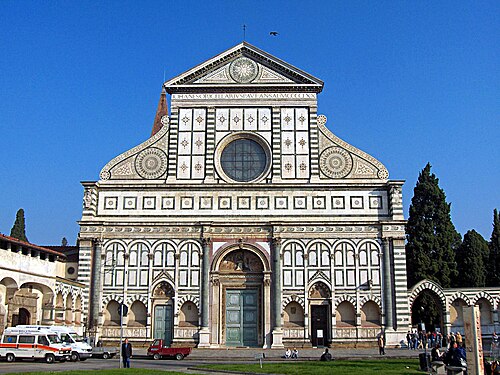
The Basilica of Santa Maria Novella is one of the masterpieces of Florentine architecture and one of the city’s main monuments. The famous marble façade, designed by Leon Battista Alberti, leads to an interior rich in chapels, frescoes and works of art.
Located next to Florence’s main railway station, the basilica preserves important artistic works by Masaccio, Giotto and other leading figures in the history of Italian art, within a complex of great historical value.
- Estimated visit time: about 150 minutes for the entire complex.
- ✨ Entering Santa Maria Novella means immersing yourself in a space where art and spirituality come together in a unique atmosphere.
- For days, opening hours, prices and all the details on Wikipedia 🌐 and Google Maps ➡️ see the Travel Itinerary Table 📊 Florence in 3 days – Day 3.
Medici Chapels
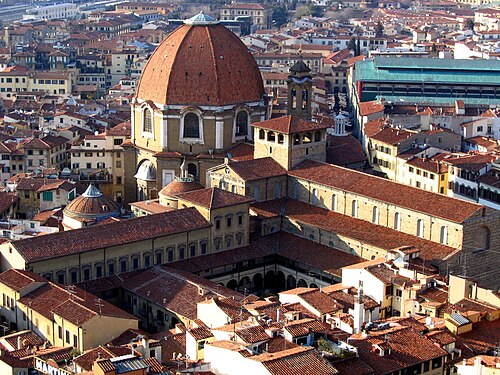
The Medici Chapels form the monumental funerary complex of the Medici family. The interiors are characterized by imposing polychrome marble decoration and extraordinary ornamental richness.
Among the most celebrated spaces is the New Sacristy, designed by Michelangelo, which houses the monumental Medici tombs with the famous sculptures representing the allegories of Day, Night, Dawn and Dusk.
- Estimated visit time: about 135 minutes for the entire complex.
- For days, opening hours, prices and all the information on Wikipedia 🌐 and Google Maps ➡️ see the Travel Itinerary Table 📊 Florence in 3 days – Day 3.
- To see the selection of experiences, visit the page Medici Chapels: Tours, Tickets and Useful Info.
Uffizi Gallery
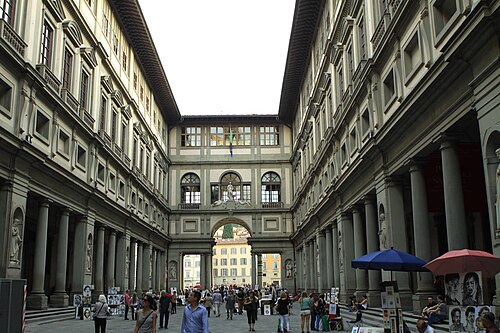
Masterpieces by Botticelli, Leonardo da Vinci, Michelangelo, Raphael and Caravaggio accompany visitors through the rooms of the Uffizi Gallery, one of Florence’s main attractions and one of the most important art museums in the world. Its collections contain an extraordinary concentration of works from the Italian and European Renaissance.
The historic building was designed by Giorgio Vasari for Cosimo I de’ Medici and still preserves the imprint of the great artistic and cultural period that made Florence one of the leading centres of the Renaissance.
- Estimated visit time: about 240 minutes.
- ✨ Entering the Uffizi means standing before some of the most celebrated masterpieces in art history: an experience that takes on a completely different power in person compared with any reproduction.
- For days, opening hours, prices and all the information on Wikipedia 🌐 and Google Maps ➡️ see the Travel Itinerary Table 📊 Florence in 3 days – Day 2
- ❌ During periods of high visitor numbers, strong demand can affect access times: if the Uffizi is a priority stop, it is advisable to plan the visit in advance.
- To see the selection of experiences, visit the page Uffizi Gallery: Tours, Tickets and Useful Info.
Accademia Gallery
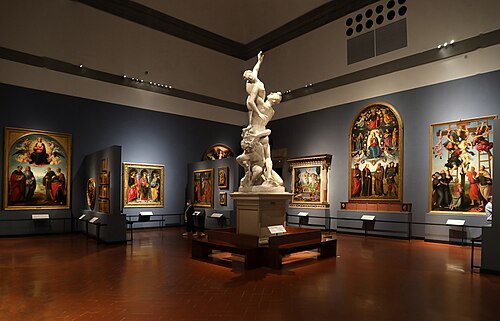
The Accademia Gallery in Florence is one of the city’s most visited museums and houses an extraordinary collection of works connected with Florentine sculpture. The museum preserves important artistic works from the Middle Ages to the 19th century, with particular attention to the art of Michelangelo.
Its worldwide fame is above all linked to the presence of Michelangelo’s David, displayed in the Tribune of David, together with other works by the artist and numerous examples of Florence’s great sculptural tradition.
- Estimated visit time: about 180 minutes.
- ✨ Standing before the sculptures of Michelangelo, Giambologna and other masters changes the scale of the experience: seeing the perfection of the details and the power of the marble up close makes the visit much more intense than one might expect.
- For days, opening hours, prices and all the information on Wikipedia 🌐 and Google Maps ➡️ see the Travel Itinerary Table 📊 Florence in 3 days – Day 3.
- ❌ Without a reservation, waiting times for admission can become long; it is preferable to book an entry time in advance.
- To see the selection of experiences, visit the page Accademia Gallery: Tours, Tickets and Useful Info.
Michelangelo’s David
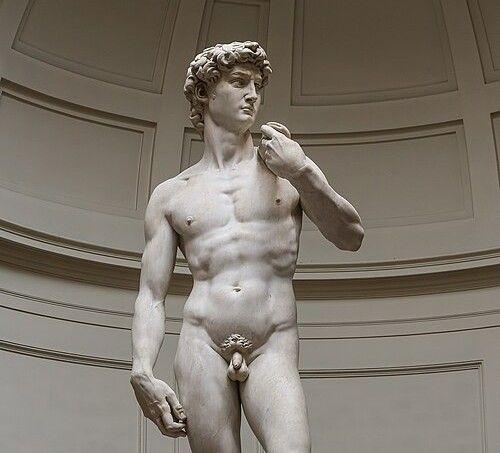
Michelangelo’s David is one of the most famous sculptures in art history and one of the absolute symbols of Florence. Created by Michelangelo at the beginning of the 16th century, it represents the young David before his encounter with Goliath and is considered one of the greatest masterpieces of the Renaissance.
The monumental sculpture is now housed in the Accademia Gallery, where it can be admired in the Tribune of David. The anatomical perfection and imposing presence of the work make it one of the most important artistic experiences in the city.
- Estimated visit time: varies depending on visitor flow.
- ✨ Standing before Michelangelo’s David is a moment that leaves you speechless: a masterpiece that impresses with its perfection and stage presence.
- For days, opening hours, prices and all the information on Wikipedia 🌐 and Google Maps ➡️ see the Travel Itinerary Table 📊 Florence in 3 days – Day 3.
- ❌ During periods of high visitor numbers, strong demand can affect access times: if the Accademia and David are a priority stop, it is advisable to plan the visit in advance.
- To see the selection of experiences, visit the page Michelangelo’s David: Tours, Tickets and Useful Info.
Pitti Palace
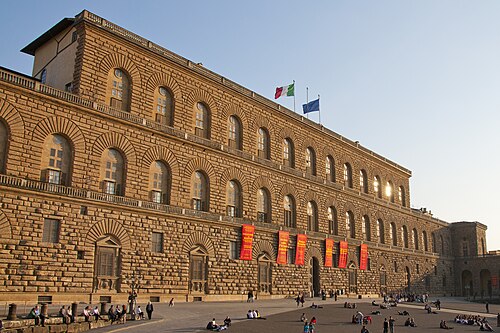
Pitti Palace is one of the largest and most important historic palaces in Florence and overlooks the southern side of the Arno, at the foot of the Boboli hills. Acquired by the Medici in the 16th century, it became the family’s principal residence and later the seat of the courts that ruled Tuscany.
Today the complex houses several museums and important collections, including the Palatine Gallery, the Royal Apartments and other art collections. A visit offers the opportunity to discover the interiors of the Medici court and the palace’s long history.
- Estimated visit time: about 180 minutes.
- For days, opening hours, prices and all the information on Wikipedia 🌐 and Google Maps ➡️ see the Travel Itinerary Table 📊 Florence in 3 days – Day 2.
- To see the selection of experiences, visit the page Pitti Palace: Tours, Tickets and Useful Info.
Museo Galileo
The Museo Galileo is one of Italy’s leading museums dedicated to the history of science and houses an extraordinary collection of historic scientific instruments. Located in Florence’s historic centre, it documents the important role played by the city in the development of European scientific research.
The collections include instruments related to astronomy, mathematics, physics and medicine, as well as numerous objects connected with Galileo Galilei and the scientific tradition supported by the Medici and Lorraine families.
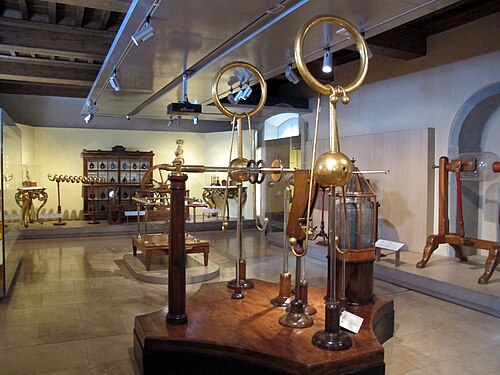
- Estimated visit time: about 90 minutes.
- For days, opening hours, prices and all the information on Wikipedia 🌐 and Google Maps ➡️ see the Travel Itinerary Table 📊 Florence Complete Tour – Part 1 – Santa Croce and Science Route.
Bargello National Museum
The Bargello National Museum is one of Italy’s most important museums dedicated to sculpture and occupies one of Florence’s most fascinating medieval buildings. The former Palazzo del Podestà houses a rich collection of works ranging from the Middle Ages to the Renaissance.
Among the most important works are masterpieces by Donatello, Michelangelo, Verrocchio and Cellini, displayed in the monumental rooms and in the characteristic courtyard of the former palace.
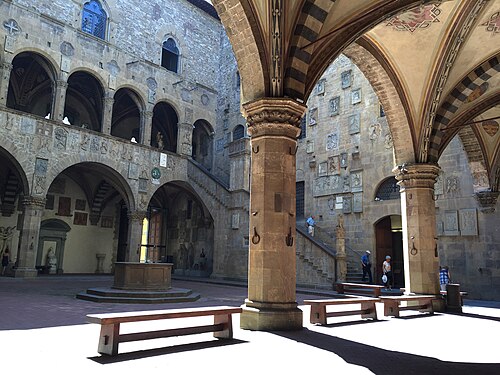
- Estimated visit time: about 150 minutes.
- For days, opening hours, prices and all the information on Wikipedia 🌐 and Google Maps ➡️ see the Travel Itinerary Table 📊 Florence Complete Tour – Part 1 – The Heart of Florence Route.
- To browse the selection of experiences, visit the page Bargello National Museum: Tours, Tickets and Useful Info.
San Marco Museum
The San Marco Museum occupies the former Dominican convent of San Marco, one of the most fascinating places in Renaissance Florence. The complex still preserves the convent rooms, the friars’ cells, the cloister and the famous Library of Michelozzo.
The museum is particularly associated with Fra Angelico, who created numerous frescoes decorating the convent, and offers an extraordinary combination of art, architecture and spirituality in the heart of fifteenth-century Florence.
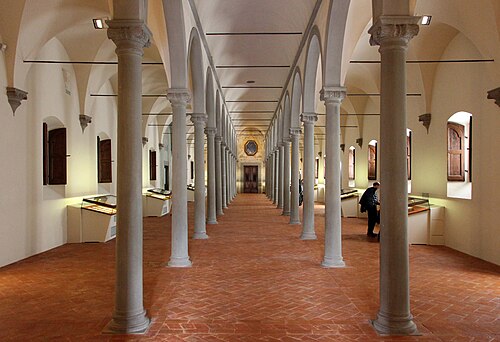
- Estimated visit time: about 60 minutes.
- ✨ Let yourself be captivated by the atmosphere of the place: art and history create a unique setting that stays with you.
- For days, opening hours, prices and all the information on Wikipedia 🌐 and Google Maps ➡️ see the Travel Itinerary Table 📊 Florence Complete Tour – Part 2 – Science and Faith Route.
Museo dell’Opera del Duomo
The Museo dell’Opera del Duomo houses one of the most important collections of Italian sacred art and is dedicated to the history and construction of the monumental complex in Piazza del Duomo. Its galleries contain sculptures, paintings and works from the cathedral, baptistery and bell tower.
Among the masterpieces are works by Michelangelo, Donatello and Lorenzo Ghiberti, as well as the reconstruction of the medieval façade of the Duomo and the famous Gates of Paradise of the Baptistery.
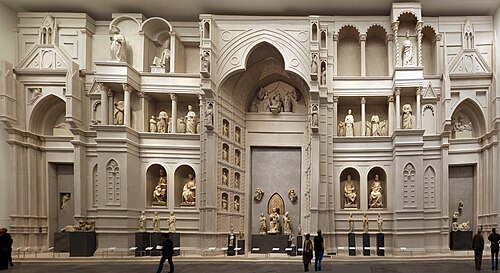
- Estimated visit time: about 120 minutes.
- For days, opening hours, prices and all the information on Wikipedia 🌐 and Google Maps ➡️ see the Travel Itinerary Table 📊 Florence in 1 day
Palazzo Vecchio
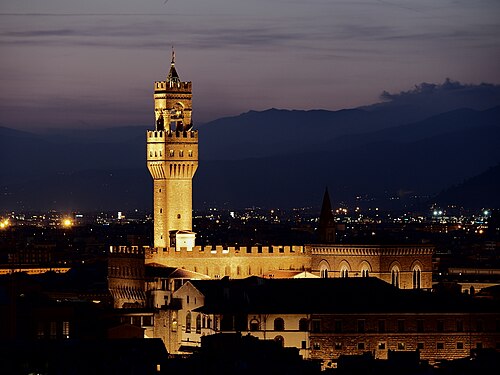
Palazzo Vecchio is the historic and political heart of Florence and dominates Piazza della Signoria with its imposing crenellated tower. Built at the end of the 13th century as the seat of the city government, it is still one of the city’s most recognizable landmarks.
Its interiors contain magnificent frescoed halls and important works of art, while the history of the palace is closely linked to the Florentine Republic and the Medici family. The tower also offers an impressive view over the historic centre.
- Estimated visit time: about 150 minutes for the entire complex.
- ✨ Entering the monumental halls of Palazzo Vecchio means immersing yourself in a spectacular atmosphere where the palace’s architecture, decorations and history come together in a surprisingly engaging experience.
- For days, opening hours, prices and all the information on Wikipedia 🌐 and Google Maps ➡️ see the Travel Itinerary Table 📊 Florence in 1 day
- ❌ During periods of high visitor numbers, it is advisable to arrange entry in advance, also considering options with priority access or a guided tour.
- To browse the selection of experiences, visit the page Palazzo Vecchio: Tours, Tickets and Useful Info.
Piazza della Signoria
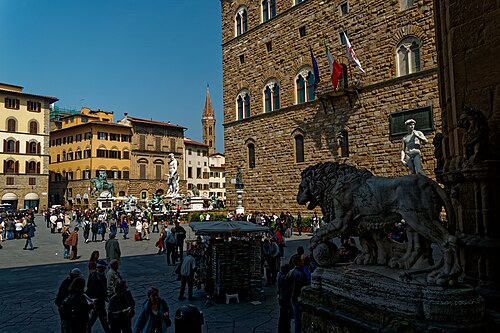
Piazza della Signoria is one of Florence’s most famous squares and the main monumental space in the historic centre. Dominated by Palazzo Vecchio, it is home to an exceptional collection of statues, loggias and palaces that tell centuries of the city’s political and artistic history.
The Loggia dei Lanzi and the numerous sculptures surrounding the square transform this space into a true open-air museum, with works by artists such as Cellini, Giambologna and Michelangelo.
- Estimated visit time: about 15 minutes.
- ✨ Walking between Piazza della Signoria and Palazzo Vecchio feels like stepping back in time: you are surrounded by history and Renaissance masterpieces.
- For days, opening hours, prices and all the information on Wikipedia 🌐 and Google Maps ➡️ see the Travel Itinerary Table 📊 Florence in 1 day
Ponte Vecchio
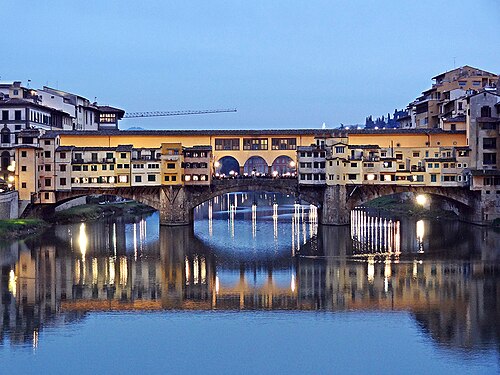
With its characteristic shops built along both sides, Ponte Vecchio crosses the Arno at the oldest point of the city and has become one of Florence’s most famous symbols and one of Italy’s most recognizable historic bridges.
The shops, today mainly associated with jewellery, are part of the bridge’s identity, while above them runs the Vasari Corridor, the elevated passage built to connect Palazzo Vecchio with Palazzo Pitti.
- Estimated visit time: about 20 minutes.
- ✨ At sunset, Ponte Vecchio is at its most beautiful, when the lights reflected on the Arno make it even more atmospheric.
- For days, opening hours, prices and all the information on Wikipedia 🌐 and Google Maps ➡️ see the Travel Itinerary Table 📊 Florence in 3 days – Day 2.
Boboli Gardens
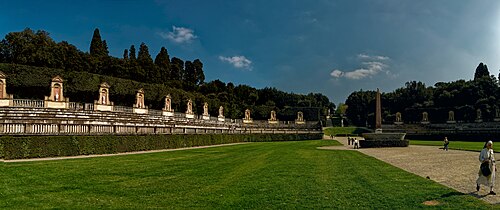
The Boboli Gardens are one of the most important examples of the Italian garden and extend behind Pitti Palace. Designed and enlarged over the centuries, they combine avenues, terraces, fountains, grottoes and sculptures in a large green space overlooking the centre of Florence.
The gardens were conceived as a space for the Medici court to display its prestige and became a model for numerous European gardens. Walking along their paths, visitors encounter important sculptures and picturesque viewpoints.
- Estimated visit time: about 120 minutes.
- For days, opening hours, prices and all further information on Wikipedia 🌐 and Google Maps ➡️ see the Travel Itinerary Table 📊 Florence in 3 days – Day 2.
- To see the selected experiences, go to the Boboli Gardens: Tours, Tickets and Useful Info page.
Piazzale Michelangelo
From Piazzale Michelangelo, the most spectacular view of Florence’s historic centre unfolds: the Cathedral, Palazzo Vecchio, Santa Croce, Ponte Vecchio and the Arno stretch out before the terrace, with the Tuscan hills in the background. The square is the city’s most famous panoramic viewpoint.
Built in the 19th century on the hill of San Miniato, the square is characterised by the bronze copy of Michelangelo’s David and is one of the best places in the city to admire Florence from above, especially around sunset.
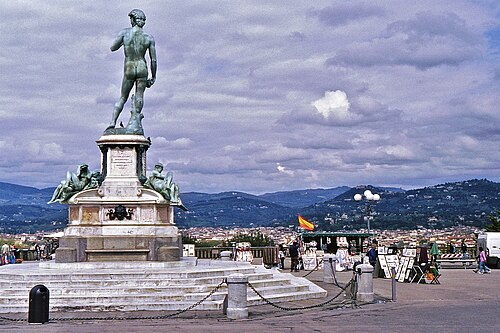
- Estimated visit time: about 60 minutes.
- ✨ As the sun begins to set, the view from here becomes unforgettable: Florence slowly lights up, creating one of the most beautiful sights in Italy.
- For days, opening hours, prices and all further information on Wikipedia 🌐 and Google Maps ➡️ see the Travel Itinerary Table 📊 Florence in 1 day
See also
- Guide to Florence
- Florence in 1 day
- Florence in 3 days
- Complete Tour P1 + P2
- See: Attractions
- Do: Experiences
- Eat: Where and What
- Getting Around, Pass, Stay
Other Destinations
🔐 Some images present on this page are used under Creative Commons licenses:
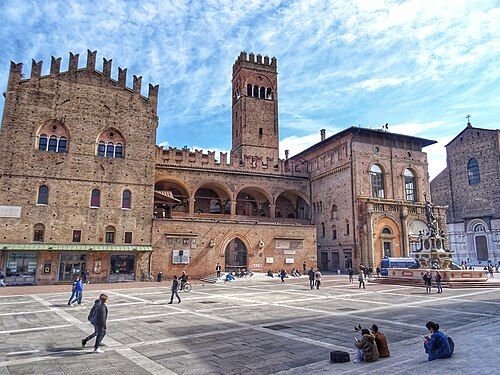
By Maretta Angelini – Bologna, panoramic view of Piazza Maggiore – Own work – CC BY-SA 4.0 – Wikimedia Commons
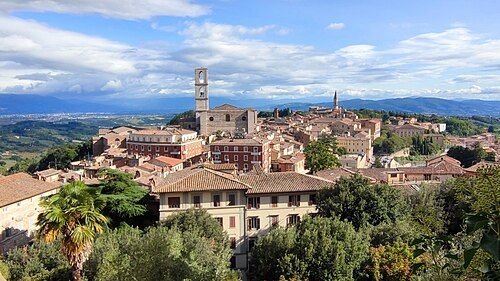
By AliasXX00 – Perugia, view from Viale Indipendenza – Own work – CC BY-SA 4.0 – Wikimedia Commons
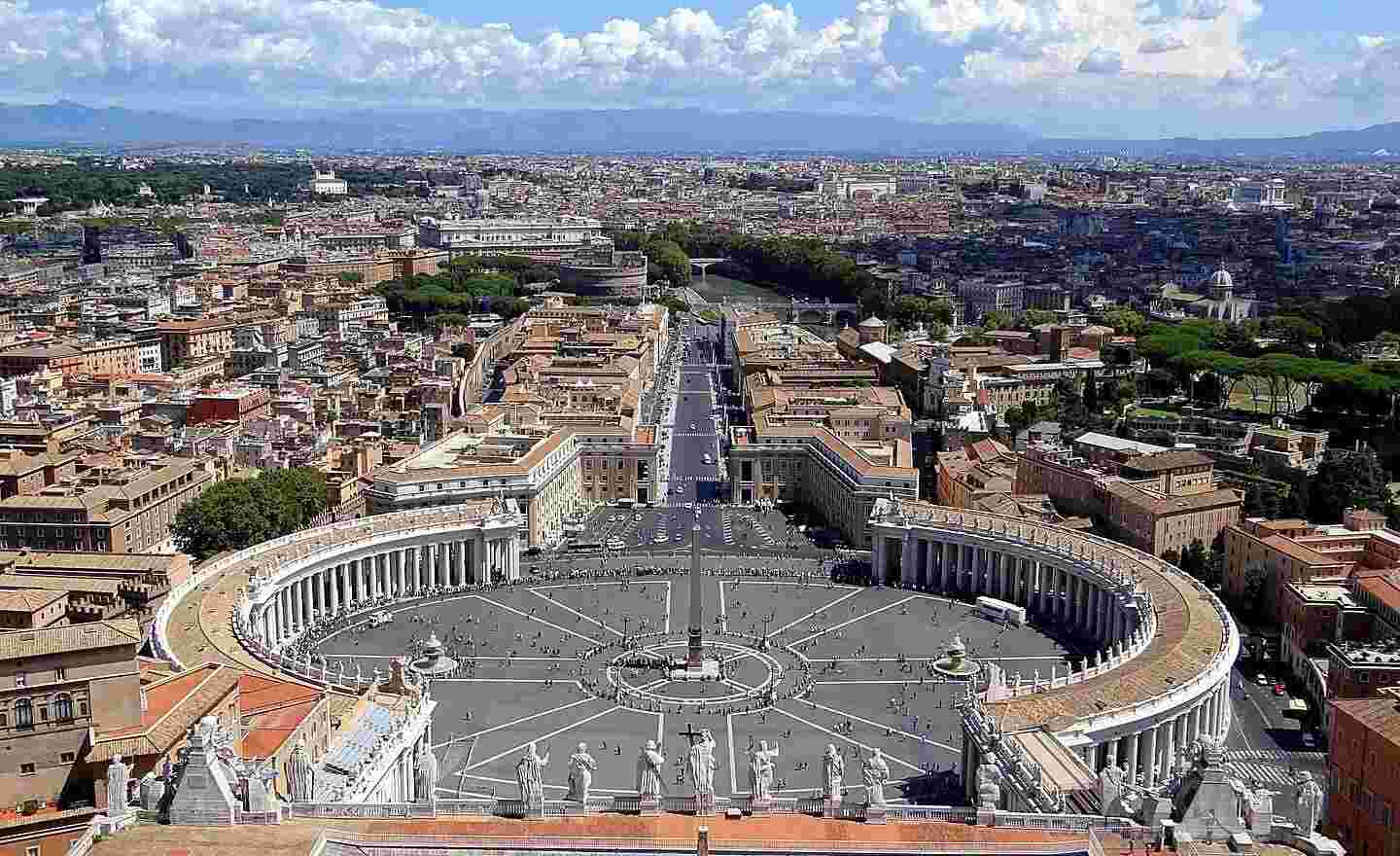
By Anne Offermanns – Panoramic view of Rome from St. Peter’s Basilica – Own work – CC BY-SA 3.0 – Wikimedia Commons
By Hagai Agmon-Snir – Florence, aerial panoramic view of the city with the Arno – Own work, CC BY-SA 4.0 – Wikimedia Commons


Expand image credits
By FrancescoSchiraldi85 – Florence, Cathedral of Santa Maria del Fiore illuminated at dusk – Own work – CC BY-SA 4.0 – Wikimedia Commons
By Livioandronico2013 – Florence, interior of Brunelleschi’s Dome with the fresco of the Last Judgment – Transferred from en.wikipedia to Commons – CC BY-SA 4.0 – Wikimedia Commons
By Giovanni Dall’Orto – Florence, detail of Giotto’s Campanile – Own work – Attribution – Wikimedia Commons
By Petar Milošević – Florence, the tower of Palazzo Vecchio masterfully illuminated at night – Own work – CC BY-SA 4.0 – Wikimedia Commons
By Arek N. – Florence, Piazza della Galleria degli Uffizi – Own work – CC BY-SA 3.0 – Wikimedia Commons
By Francesco Bini – Florence, Galleria dell’Accademia, Hall of the Colossus – Own work – CC BY-SA 4.0 – Wikimedia Commons
By Jörg Bittner Unna – Florence, Michelangelo’s David displayed at the Galleria dell’Accademia – Own work – CC BY 3.0 – Wikimedia Commons
By Almaak – Florence, Palazzo Pitti in the late afternoon – Own work – CC BY-SA 3.0 – Wikimedia Commons
By Txllxt TxllxT – Florence, panoramic view of the Boboli Gardens – Own work – CC BY-SA 4.0 – Wikimedia Commons
By Lauramcr92 – Florence, Bargello Museum, courtyard detail – Own work – CC BY-SA 4.0 – Wikimedia Commons
By No author – Florence, Aerial view of the San Lorenzo complex – Presumed own work – Public domain – Wikimedia Commons
By Chabe01 – Florence, Baptistery of San Giovanni, interior – Own work – CC BY-SA 4.0 – Wikimedia Commons
By Zairon – Florence, Basilica of Santa Croce, façade – Own work – CC BY 4.0 – Wikimedia Commons
By JoJan – Florence, Basilica of Santa Maria Novella, façade – Own work – CC BY-SA 3.0 – Wikimedia Commons
By Sailko – Florence, Museo Galileo, interior Room 2 – Own work – CC BY-SA 3.0 – Wikimedia Commons
By Francesco Bini – Florence, Museo Nazionale di San Marco, Michelozzo Library – Own work – CC BY-SA 4.0 – Wikimedia Commons
By Sailko – Florence, Museo dell’Opera del Duomo, Arnolfian façade of Santa Maria del Fiore – Own work – CC BY 3.0 – Wikimedia Commons
By Txllxt TxllxT – Florence, Piazza della Signoria, entrance to Palazzo Vecchio – Own work – CC BY-SA 4.0 – Wikimedia Commons
By Revol Web from Bologna, Italy – Florence, Ponte Vecchio in the evening – Own work – CC BY-SA 2.0 – Wikimedia Commons
By Michael Wittwer – Florence, Piazzale Michelangelo with David statue – Own work – CC BY-SA 4.0 – Wikimedia Commons