
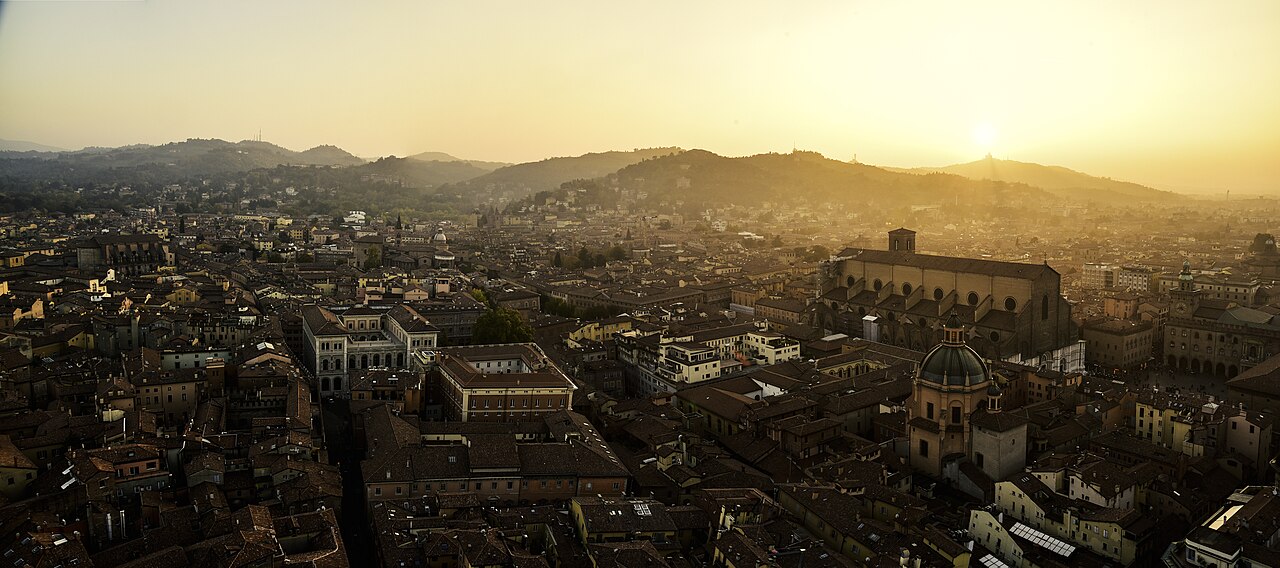
Main Attractions in Bologna
Quick Guide to the Best Things to See


The main attractions in Bologna reveal the charm of a city rich in history and culture, from medieval towers and UNESCO-listed porticoes to basilicas and museums preserving its extraordinary artistic heritage.
📌 To learn more, click on the links to the dedicated pages +🔗
Monuments and Places of Interest
- Piazza Maggiore
- Fontana del Nettuno
- Le Due Torri
- I Portici di Bologna
- Quadrilatero
- Mercato delle Erbe
Places of Worship
- Basilica di San Petronio
- Santuario di San Luca +🔗
- Complesso di Santo Stefano – Le Sette Chiese
- Cattedrale di San Pietro
- Basilica di Santa Maria della Vita
- Certosa di Bologna and Cimitero Monumentale
Museums and Galleries
- Archiginnasio +🔗
- Palazzo d’Accursio
- Museo Civico Archeologico
- Museo della Storia di Bologna
- Pinacoteca Nazionale di Bologna
See also:
- Guide to Bologna
- Itineraries: 1d, 3d, CT1, CT2
- See: Attractions
- Do: Experiences
- Eat: Where and What
- Getting Around, Pass, Stay
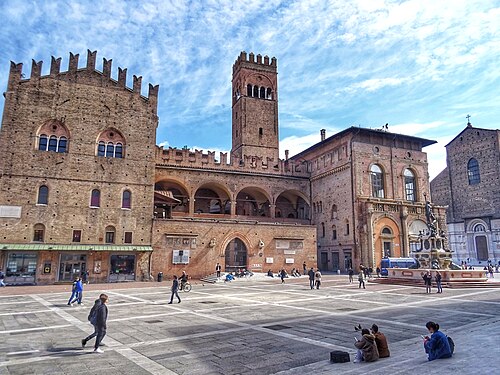
Piazza Maggiore
The heart of city life and one of the most representative urban spaces in Emilia-Romagna, Piazza Maggiore is surrounded by some of Bologna’s most important historic buildings. Its medieval and Renaissance palaces tell the story of centuries of history, while the spacious square remains a popular meeting place for residents and visitors alike.
Stepping into this square means immersing yourself in the atmosphere of the historic city centre, among monumental architecture, cafés and picturesque views.
- Estimated visiting time: varies according to personal interests.
- For further information on Wikipedia 🌐 and Google Maps ➡️ see the Itinerary Table 📊 Bologna in 1 Day.
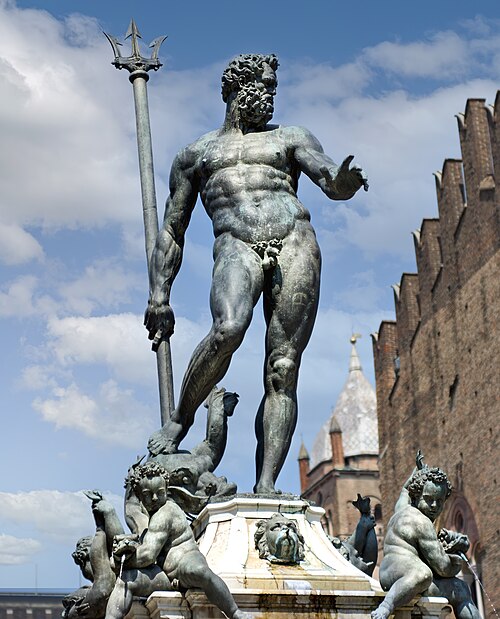
Fontana del Nettuno
One of Bologna’s most famous landmarks, the Fontana del Nettuno dominates the square of the same name with its imposing bronze figure, created by Giambologna in the 16th century. The architectural design was entrusted to Tommaso Laureti, who conceived a structure adorned with sculptural elements and decorations inspired by mythology.
The statue of the god of the sea, surrounded by allegorical figures and artistic details, is one of the city’s Renaissance masterpieces.
- Estimated visiting time: varies according to personal interests.
- For further information on Wikipedia 🌐 and Google Maps ➡️ see the Itinerary Table 📊 Bologna in 1 Day.
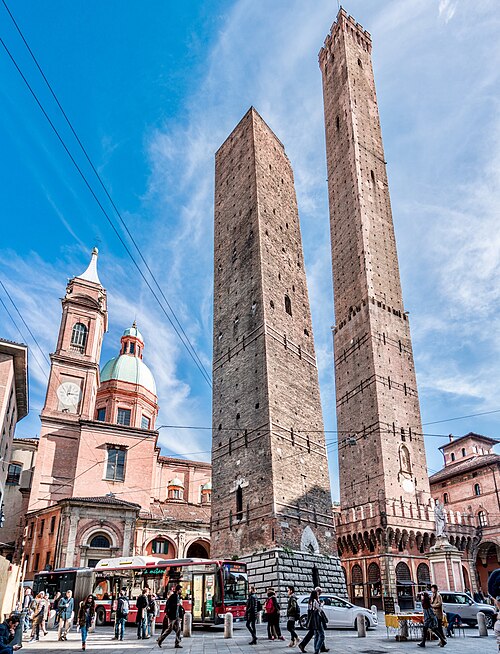
Le Due Torri
Unmistakable features of Bologna’s skyline, the Le Due Torri, the Asinelli and Garisenda towers, are among the most significant reminders of the city’s medieval past. Built between the 11th and 12th centuries, they recall a time when the most influential families erected towers to assert their prestige and power.
The two structures differ in height, shape and inclination, becoming over time some of the city’s most recognizable landmarks. Their presence evokes Bologna’s ancient character and offers a fascinating glimpse into the urban history of its historic centre.
- Estimated visiting time: exterior viewing only.
- 📌 The Torre degli Asinelli is currently closed to visitors due to stability concerns affecting the Garisenda Tower.
- For further information on Wikipedia 🌐 and Google Maps ➡️ see the Itinerary Table 📊 Bologna in 1 Day.
I Portici di Bologna
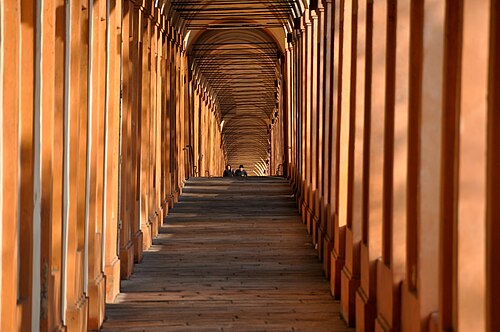
A distinctive feature of the urban landscape, the I Portici di Bologna line the streets and squares with an extraordinary variety of arches, columns and decorative details. Developed over the centuries, partly to expand living spaces, they have become an essential feature of the city’s architecture and everyday life.
Walking beneath them means discovering charming corners, historic buildings and views that change from one part of the city centre to another. Recognized as a UNESCO World Heritage Site, they represent a unique example of the integration of architecture, functionality and urban tradition.
- Estimated visiting time: varies according to personal interests.
- For further information on Wikipedia 🌐 and Google Maps ➡️ see the Itinerary Table 📊 Bologna in 1 Day.
Quadrilatero
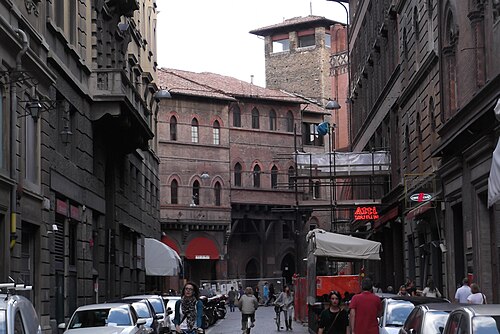
In the heart of the historic centre, the Quadrilatero preserves the atmosphere of Bologna’s traditional market, with its characteristic narrow streets, historic shops and food stores. Streets such as Via Pescherie Vecchie and Via Drapperie tell the story of a commercial tradition that continues to thrive every day.
The area is particularly renowned for its culinary specialities, from fresh pasta to cured meats and traditional cheeses. Strolling through its narrow streets offers an opportunity to discover the local food culture up close and experience one of Bologna’s liveliest corners.
- Estimated visiting time: varies according to personal interests.
- For further information on Wikipedia 🌐 and Google Maps ➡️ consult the Itinerary Table 📊 Bologna in 3 Days – Day 3.
Mercato delle Erbe
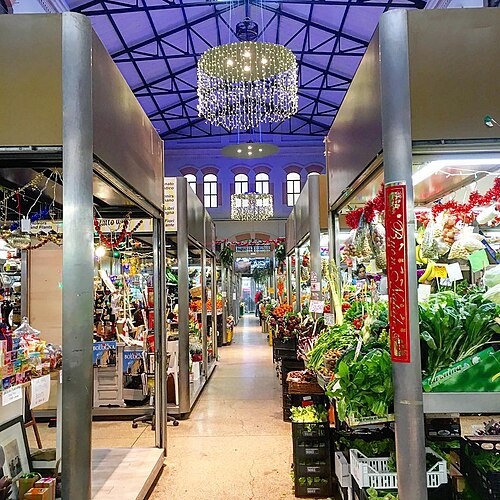
Housed in a covered structure dating back to the early decades of the 20th century, the Mercato delle Erbe is one of the liveliest places in everyday Bolognese life. The stalls offer fruit, vegetables, cheeses, cured meats and other specialities, keeping the local area’s food traditions alive.
Alongside its traditional market activity, the venue also houses eateries and refreshment spots frequented throughout the day. It is an interesting stop for discovering the flavours of Emilia and experiencing an authentic side of city life, away from the main monumental sights.
- Estimated visit time: varies according to personal interest.
- For further information on Wikipedia 🌐 and Google Maps ➡️ see the Itinerary Table 📊 Bologna in 3 Days – Day 3.
Basilica di San Petronio
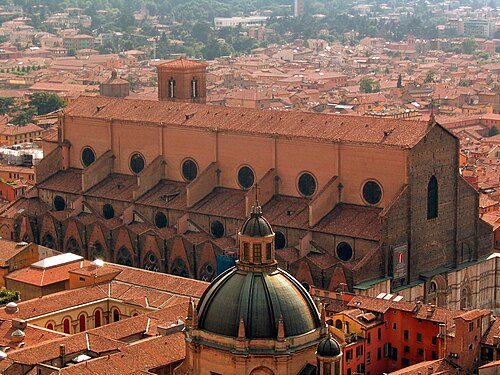
Overlooking Piazza Maggiore, the Basilica di San Petronio is one of the most imposing religious buildings in Italy and one of Bologna’s landmark monuments. Its unfinished façade features a lower section clad in marble and an upper section made of brick, while the interior houses numerous chapels and works of art.
The basilica is an essential stop for understanding the city’s religious, artistic and civic history.
- Estimated visiting time: approximately 60 minutes, including the museum and the Cappella dei Magi.
- For opening days, times, prices and further information on Wikipedia 🌐 and Google Maps ➡️ consult the Itinerary Table 📊 Bologna in 1 Day.
Santuario di San Luca
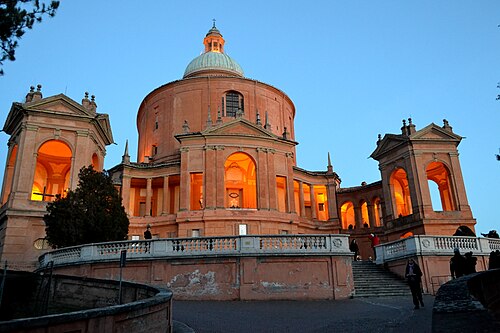
Perched atop Colle della Guardia, the Santuario della Madonna di San Luca is one of Bologna’s most beloved and recognisable landmarks. Its panoramic position overlooks the surrounding landscape, while the sanctuary houses an image of the Madonna that is particularly venerated by the people of Bologna.
The sanctuary is connected to the city by a long portico that runs through both urban and hilly stretches, making it one of the area’s most distinctive routes. A visit combines spirituality, architecture and splendid views over Bologna’s rooftops and the surrounding hills.
- Estimated visiting time: approximately 30 minutes.
- ✨ Walking beneath the 666 arches all the way to the sanctuary is an almost meditative experience, combining physical effort, silence and panoramic views that gradually open up over the city.
- For opening days, times and further information on Wikipedia 🌐 and Google Maps ➡️ consult the Itinerary Table 📊 Bologna Complete Tour – Part 2 – First Outskirts.
- To explore the available experiences, visit the page San Luca: Tours and Useful Information.
Complesso di Santo Stefano – Le Sette Chiese
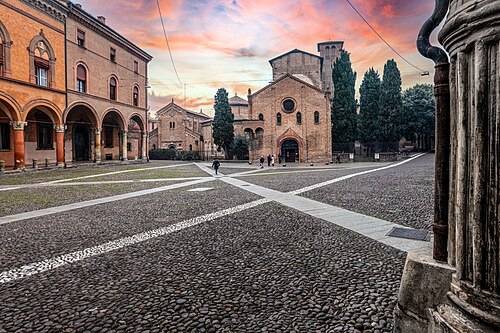
Known as the Sette Chiese (Seven Churches) complex, Santo Stefano is one of the most evocative and historically rich places in Bologna’s city centre. The complex brings together churches, courtyards and cloisters from different periods, forming an architectural ensemble closely linked to the city’s religious tradition.
As you explore its spaces, you will encounter secluded areas, ancient structures and artistic treasures that evoke centuries of devotion. The complex’s distinctive atmosphere makes it a rewarding stop for discovering Bologna’s spiritual and historical heritage.
- Estimated visiting time: approximately 60 minutes, including the museum.
- ✨ A place suspended in time: silent courtyards and interconnected churches create an almost mystical atmosphere in the heart of Bologna.
- For opening days, times and further information on Wikipedia 🌐 and Google Maps ➡️ consult the Itinerary Table 📊 Bologna in 1 Day.
Cattedrale di San Pietro
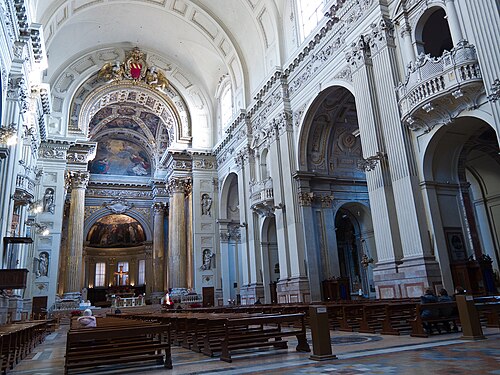
Located along Via dell’Indipendenza, the Cattedrale Metropolitana di San Pietro is the principal church of the Archdiocese of Bologna. Renovated over the centuries, the building features a monumental façade and richly decorated interiors with chapels, paintings and ornamental details.
A visit to the cathedral offers an opportunity to explore Bologna’s religious history and admire an artistic heritage that may be less conspicuous than that of the city’s most famous monuments, but is no less significant.
- Estimated visiting time: approximately 80 minutes, including the museum and bell tower.
- ✨ Walking beneath the cathedral’s immense nave gives you the feeling of being inside one of Europe’s most monumental churches. Look for the meridian line on the floor: it is one of the longest in the world.
- 📌 The Museo di San Pietro can be visited by appointment.
- For opening days, times, prices and further information on Wikipedia 🌐 and Google Maps ➡️ consult the Itinerary Table 📊 Bologna in 1 Day.
Basilica di Santa Maria della Vita
In the heart of the historic centre, the Basilica di Santa Maria della Vita stands out for its Baroque architecture and its connection with an ancient confraternity dedicated to caring for the sick and those in need. The interior houses works of great artistic value and bears witness to the building’s long religious history.
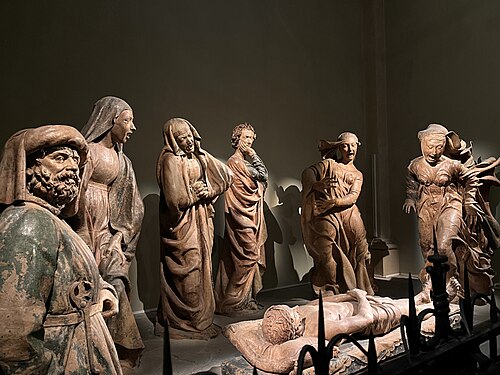
Its most famous masterpiece is Compianto sul Cristo morto (Lamentation over the Dead Christ) by Niccolò dell’Arca, a sculptural group of extraordinary emotional intensity. The expressions and gestures of the figures make this work one of the most moving examples of 15th-century Italian sculpture.
- Estimated visit time: approximately 45 minutes, including the Oratory and the Lamentation.
- ✨ Niccolò dell’Arca’s Lamentation is as striking as few other works of art in the world: expressions so intense they seem alive, pure emotion carved in stone.
- For opening days and hours, prices and further information on Wikipedia 🌐 and Google Maps ➡️ see the 📊 Bologna in 3 Days Itinerary Table – Day 3.
Certosa di Bologna and Cimitero Monumentale
Originally a Carthusian monastery, the Certosa di Bologna was converted into a cemetery at the end of the 18th century and became one of the city’s most important monumental complexes. Its cloisters, porticoes and historic spaces contain tombs, chapels and sculptures of great artistic value.
The route offers the opportunity to admire funerary monuments in a variety of styles and retrace the lives of people who have shaped Bologna’s history.
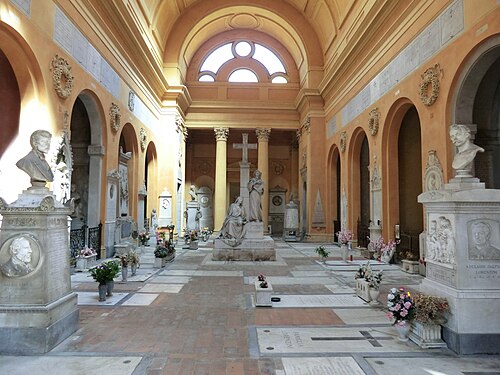
- Estimated visit time: approximately 110 minutes.
- For opening days and hours and further information on Wikipedia 🌐 and Google Maps ➡️ see the 📊 Bologna Complete Tour – Part 2 Itinerary Table – First Outskirts.
Archiginnasio
Built in the 16th century as the unified headquarters of the University of Bologna, the Palazzo dell’Archiginnasio is one of the most iconic landmarks of the city’s long academic tradition. Its walls and halls preserve coats of arms, inscriptions and decorations that bear witness to the presence of students and scholars from across Europe.
Inside is the famous Teatro Anatomico, a wooden anatomical theatre built in the 17th century for anatomy lessons. Its sculptures and layout recreate the atmosphere of early medical studies and illustrate Bologna’s central role in the history of medicine.
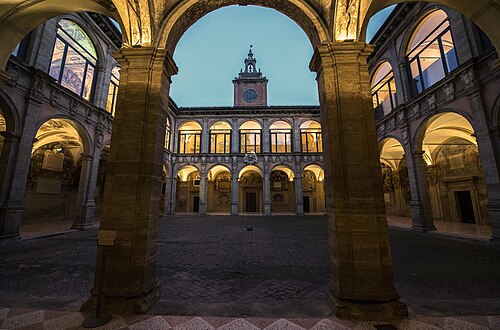
- Estimated visit time: approximately 80 minutes, including the Anatomical Theatre and Library.
- For opening days and hours, prices and further information on Wikipedia 🌐 and Google Maps ➡️ see the 📊 Bologna in 1 Day Itinerary Table.
- To explore the selection of experiences, visit the page Archiginnasio of Bologna: Tours, Tickets and Useful Information.
Palazzo d’Accursio
Overlooking Piazza Maggiore, Palazzo d’Accursio is one of the buildings most representative of Bologna’s political and administrative history. Developed over the centuries, the complex is distinguished by its Clock Tower and by interiors that preserve traces of the city’s civic past.
Inside, the Collezioni Comunali d’Arte (Municipal Art Collections) bring together paintings, furnishings and other works that illustrate the evolution of Bolognese art. A visit combines the discovery of a historic palace with the opportunity to encounter important examples of the local cultural heritage.
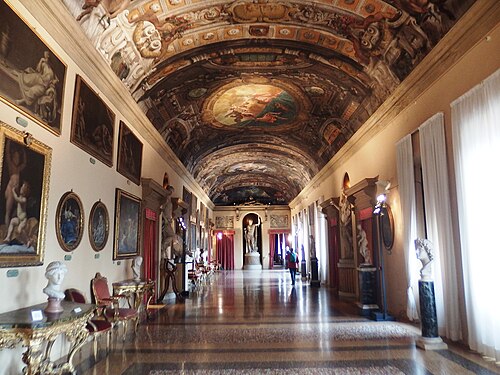
- Estimated visit time: approximately 100 minutes, including the Clock Tower.
- For opening days and hours, prices and further information on Wikipedia 🌐 and Google Maps ➡️ see the 📊 Bologna in 1 Day Itinerary Table.
Museo Civico Archeologico
Housed in the historic Palazzo Galvani, the Museo Civico Archeologico (Civic Archaeological Museum) preserves a rich collection of artefacts documenting the area’s civilizations, from prehistoric times to the Roman era. The collections trace the cultural and social changes that shaped Bologna and its surrounding region.
Particularly noteworthy is the Egyptian collection, one of the most important in Italy, featuring funerary artefacts, sculptures and objects from everyday life.
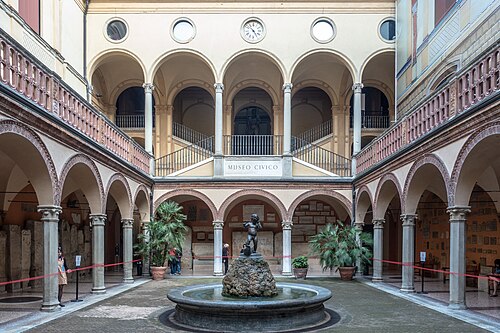
- Estimated visit time: approximately 120 minutes.
- For opening days and hours, prices and further information on Wikipedia 🌐 and Google Maps ➡️ see the 📊 Bologna in 1 Day Itinerary Table.
Museo della Storia di Bologna
In the historic centre, Palazzo Pepoli houses the Museo della Storia di Bologna (Museum of the History of Bologna), an exhibition journey exploring the events that transformed the city from its origins to the contemporary era. The historic palace presents a collection that brings together the people, places and key events that have shaped Bologna’s identity.
Artefacts, reconstructions and multimedia installations guide visitors through the different periods, illustrating the urban, cultural and economic development of the capital of Emilia-Romagna.
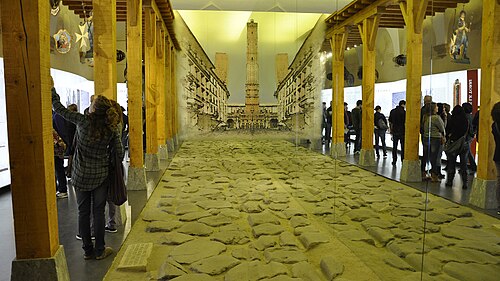
- Estimated visit time: approximately 135 minutes, including Palazzo Pepoli.
- For opening days and hours, prices and further information on Wikipedia 🌐 and Google Maps ➡️ see the 📊 Bologna in 3 Days Itinerary Table – Day 3.
Pinacoteca Nazionale di Bologna
Housed in the former Jesuit novitiate of Sant’Ignazio, the Pinacoteca Nazionale di Bologna (National Art Gallery of Bologna) holds one of the most important painting collections in Emilia-Romagna. The exhibition takes visitors through centuries of art history, from the Middle Ages to the modern era, with particular emphasis on the Bolognese school.
The works on display include paintings by Giotto, Raphael, the Carracci family and Guido Reni, all key figures in important periods of Italian painting. The galleries allow visitors to observe the evolution of artistic styles and explore Bologna’s role in Italy’s artistic heritage.
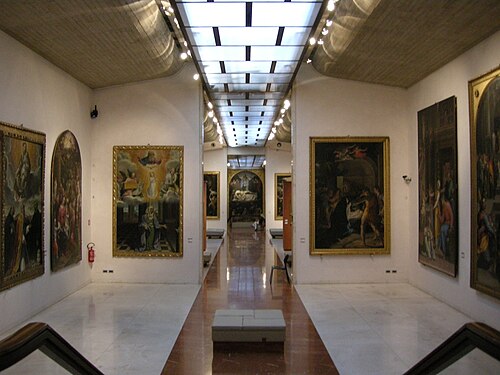
- Estimated visit time: approximately 90 minutes.
- For opening days and hours, prices and further information on Wikipedia 🌐 and Google Maps ➡️ see the 📊 Bologna in 3 Days Itinerary Table – Day 3.
See also
- Guide to Bologna
- Itineraries: 1d, 3d, CT1, CT2
- See: Attractions
- Do: Experiences
- Eat: Where and What
- Getting Around, Pass, Stay
Other Destinations
🔐 Some images on this page are used under Creative Commons licenses:
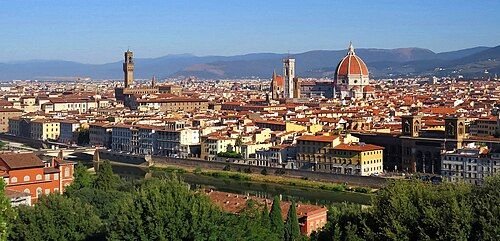
By PROPOLI87 – Florence, panoramic view from Piazzale Michelangelo – Own work – CC BY-SA 4.0 – Wikimedia Commons
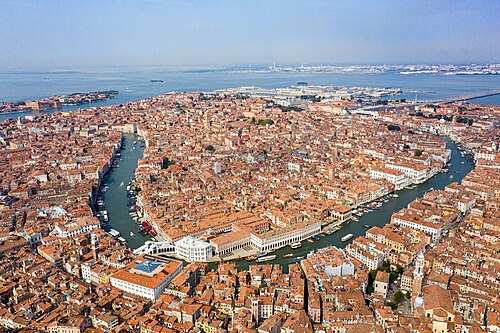
By Kasa Fue – Venice, aerial view of the Grand Canal – Own work – CC BY-SA 4.0 – Wikimedia Commons
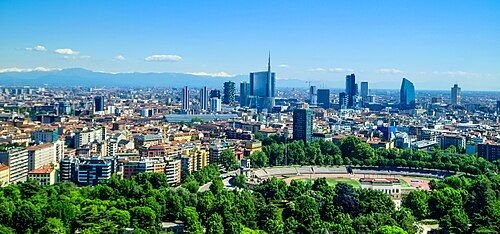
By https://www.pexels.com/u/ghostpresenter/ – Milan, Porta Nuova skyline – CC0 – Public Domain – Wikimedia Commons
By alexpapad – Bologna, panoramic view at sunset – CC BY 2.0 – Wikimedia Commons
Expand image credits
By Maretta Angelini – Bologna, panoramic view of Piazza Maggiore – Own work – CC BY-SA 4.0 – Wikimedia Commons
By Didier Descouens – Bologna, Fountain of Neptune in Piazza Maggiore – Own work – CC BY-SA 4.0 – Wikimedia Commons
By Vanni Lazzari – Bologna, panoramic view of the Two Towers, Asinelli and Garisenda – Own work – CC BY-SA 4.0 – Wikimedia Commons
By Giorgio Minguzzi – Bologna, a glimpse of the San Luca portico – Originally published on Flickr under the title Salire a San Luca – CC BY-SA 2.0 – Wikimedia Commons
By karel291 – Bologna, Quadrilatero district – Photograph – CC BY 3.0 – Wikimedia Commons
By Lorenzo Viscanti – Bologna, Mercato delle Erbe, interior – Own work – CC BY-SA 4.0 – Wikimedia Commons
By ZeWrestler (attribution presumed according to copyright information) – Bologna, Basilica of San Petronio viewed from the Asinelli Tower – Author and source not automatically verifiable – Public domain – Wikimedia Commons
By Anita.malina – Bologna, Sanctuary of the Madonna di San Luca – Own work – CC BY-SA 4.0 – Wikimedia Commons
By Vanni Lazzari – Bologna, Piazza Santo Stefano and the Seven Churches complex – Own work – CC BY-SA 4.0 – Wikimedia Commons
By Maretta Angelini – Bologna, Piazza Santo Stefano and the Basilica of Santo Stefano – Own work – CC BY-SA 4.0 – Wikimedia Commons
By CEphoto, Uwe Aranas – Bologna, Cathedral of San Pietro, interior – Own work – CC BY-SA 3.0 – Wikimedia Commons
By Monica Rondoni – Bologna, Sanctuary of Santa Maria della Vita and the Lamentation over the Dead Christ – Own work – CC BY-SA 4.0 – Wikimedia Commons
By Mattis – Bologna, Certosa Monumental Cemetery – Own work – CC BY-SA 4.0 – Wikimedia Commons
By Wwikiwalter – Bologna, Archiginnasio, inner atrium and clock tower – Own work – CC BY-SA 4.0 – Wikimedia Commons
By Palickap – Bologna, Palazzo d’Accursio, Galleria Vidoniana and Municipal Art Collections – Own work – CC BY-SA 4.0 – Wikimedia Commons
By Ugeorge – Bologna, Civic Archaeological Museum, outer cloister – Own work – CC BY-SA 3.0 – Wikimedia Commons
By Paul Hermans – Bologna, Museum of the History of Bologna, Palazzo Pepoli – Own work – CC BY-SA 4.0 – Wikimedia Commons
By Sailko – Bologna, National Art Gallery, interior – Photograph – CC BY-SA 3.0 – Wikimedia Commons