

Main Attractions in Naples
Quick Guide to the Best Things to See


This overview of the main attractions in Naples reveals the soul of the city through monuments, museums, historic sites, characteristic neighborhoods and panoramic views over the Gulf.
📌 To learn more, click on the links to the dedicated pages +🔗
Monuments and Museums
- Piazza del Plebiscito
- Castel Nuovo – Maschio Angioino
- Palazzo Reale di Napoli
- Castel dell’Ovo
- Teatro San Carlo
- Archaeological Museum of Naples 🔗
- San Severo Chapel – Veiled Christ 🔗
- Capodimonte Museum and Real Bosco
Places of Worship and Underground Sites
- Duomo di Napoli and Tesoro di San Gennaro
- Santa Chiara – Chiostro Maiolicato
- Naples Underground 🔗
- Catacombs of San Gennaro 🔗
- Bourbon Gallery 🔗
Neighborhoods and Panoramas
Archaeological and Natural Parks
See also
- Guide to Naples
- Itineraries: 1d, 3d, CT1, CT2
- See: Attractions
- Do: Experiences
- Eat: Where and What
- Getting Around, Pass, Stay
Piazza del Plebiscito
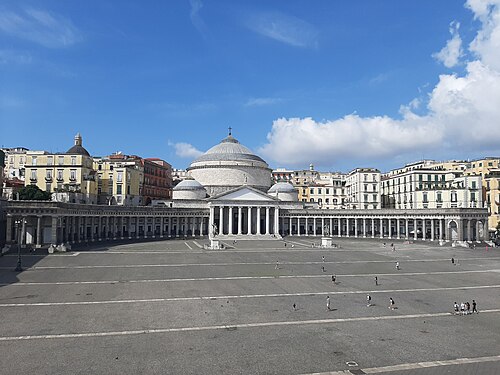
Piazza del Plebiscito is one of the most famous places in Naples and one of the city’s symbols. The large square, dominated by the majestic Basilica of San Francesco di Paola and the Royal Palace, is one of the most impressive monumental spaces in the city centre.
Its wide and scenic layout, overlooking the Gulf of Naples, makes it an ideal starting point for exploring the city and admiring some of its most important historic buildings.
- Estimated visit time: about 30 minutes.
- For all the additional information on Wikipedia 🌐 and Google Maps ➡️ see the Itinerary Table 📊 Naples in 1 Day.
Castel Nuovo – Maschio Angioino
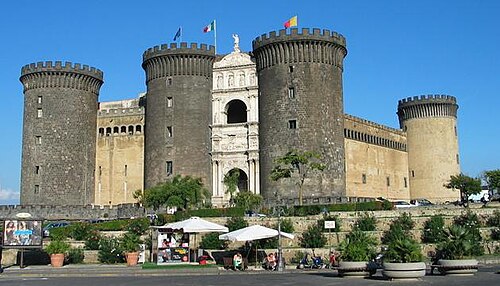
Castel Nuovo, also known as Maschio Angioino, is one of the most recognisable monuments in Naples. Built from the 13th century onwards at the behest of Charles I of Anjou, the castle has witnessed several periods of Neapolitan history, becoming over time a royal residence and an important centre of the city’s political life.
Its imposing walls and distinctive towers dominate Piazza Municipio today, while the monumental entrance with its Triumphal Arch bears witness to the transformations the building underwent over the centuries.
- Estimated visit time: about 60 minutes.
- ✨ A monumental castle overlooking the harbour: imposing, scenic and an absolute symbol of historic Naples.
- For days, opening hours, prices and all the additional information on Wikipedia 🌐 and Google Maps ➡️ see the Itinerary Table 📊 Naples in 1 Day.
Palazzo Reale di Napoli
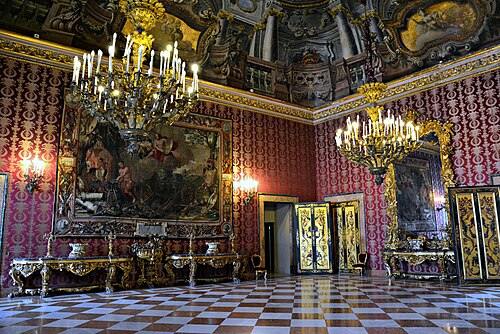
The Palazzo Reale di Napoli is one of the main testimonies to the city’s monarchical past. Overlooking Piazza Plebiscito, it was built from the 17th century onwards and gradually became one of the main residences of the sovereigns who ruled Naples.
The historic apartments, monumental halls and decorated rooms offer an insight into court life and the evolution of the palace through different periods, while its location in the heart of the city makes it one of the most interesting places to visit in the historic and monumental centre.
- Estimated visit time: about 90 minutes.
- ✨ Walking through the rooms and gardens of the Palazzo Reale means stepping into the Naples of the sovereigns: an experience that is especially impressive for the variety of its spaces and the view over the Gulf from the Hanging Garden.
- For days, opening hours, prices and all the additional information on Wikipedia 🌐 and Google Maps ➡️ see the Itinerary Table 📊 Naples in 3 Days.
Castel dell’Ovo
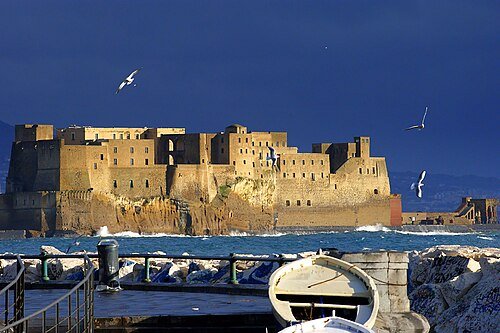
Castel dell’Ovo stands on the small island of Megaris, in the picturesque stretch of coastline opposite the Borgo Marinari. It is the oldest castle in Naples and owes its present appearance to the numerous transformations that have affected the area over the centuries.
Its position directly on the sea is one of the most characteristic elements of the visit: from the castle’s terraces and panoramic viewpoints, you can admire the Gulf of Naples, the seafront and the profile of Mount Vesuvius, in one of the city’s most evocative settings.
- Estimated visit time: exterior view only.
- ✨ From Castel dell’Ovo, Naples becomes pure poetry: the sea, light and seagulls around the castle create one of the Gulf’s most iconic settings.
- 📌 Castel dell’Ovo is currently closed to the public due to major renovation works.
- For all the additional information on Wikipedia 🌐 and Google Maps ➡️ see the Itinerary Table 📊 Naples Complete Tour – Part 2 – Chiaia Route 2.
Teatro San Carlo
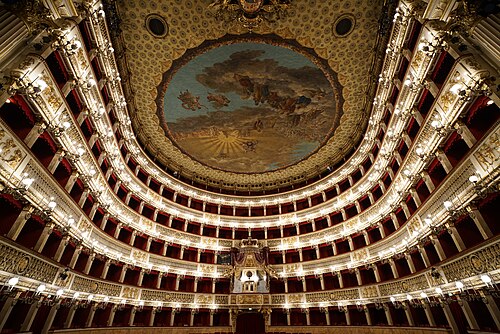
Teatro San Carlo is one of Italy’s most important and prestigious opera houses and one of the landmarks of Naples’ musical tradition. Opened in the 18th century, it has a long history closely connected to music, theatre and the city’s cultural life.
A visit allows you to admire the sumptuous horseshoe-shaped auditorium, the boxes and the interior decorations, which preserve the elegance of this historic theatre. Its proximity to Piazza Plebiscito and the Royal Palace also places it at the heart of Naples’ main monumental route.
- Estimated visit time: approximately 90 minutes.
- ✨ Entering Teatro San Carlo is like stepping back in time: gold, velvet and solemn silence before the music fills one of the most fascinating theatres in Europe.
- For days, opening hours, prices and all further information on Wikipedia 🌐 and Google Maps ➡️ see the Itinerary Table 📊 Naples Complete Tour – Part 2 – Chiaia Route 1.
National Archaeological Museum of Naples
The National Archaeological Museum of Naples is one of Italy’s most important archaeological museums and houses an extraordinary collection of artefacts, mainly from the area around Mount Vesuvius. Its galleries contain sculptures, mosaics, frescoes and everyday objects that offer a closer look at the world of antiquity.
Among its most famous collections are the artefacts from Pompeii and Herculaneum, together with the important Farnese and Egyptian collections. The variety of works on display makes the museum an essential stop for understanding the history and art of ancient Campania.

- Estimated visit time: approximately 150 minutes.
- For days, opening hours, prices and all further information on Wikipedia 🌐 and Google Maps ➡️ see the Itinerary Table 📊 Naples in 1 Day.
- To view the selection of experiences, go to the page National Archaeological Museum of Naples: Tours, Tickets and Useful Information.
Sansevero Chapel – Veiled Christ
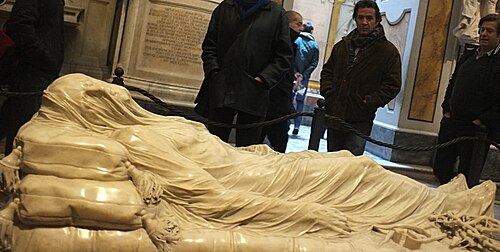
The Sansevero Chapel is one of the most fascinating places in the historic centre of Naples, best known for Giuseppe Sanmartino’s Veiled Christ. Created in the 18th century, the sculpture is remarkable for the realism of the body and the extraordinary rendering of the veil, which appears to envelop the marble figure.
The chapel also houses other works and decorations connected to the complex figure of Raimondo di Sangro, Prince of Sansevero. The combination of sculptures, symbols and architectural elements makes this small building one of the city’s most evocative and unique places.
- Estimated visit time: approximately 90 minutes.
- ✨ A work that challenges reality: the Veiled Christ seems almost to breathe, sculpted with such a level of detail that it creates an immediate silence of absolute wonder.
- 📌 The Museo Cappella Sansevero can be visited by reservation. You will find the telephone number in the Google Maps listing accessible through the link in the table.
- For days, opening hours, prices and all further information on Wikipedia 🌐 and Google Maps ➡️ see the Itinerary Table 📊 Naples in 3 Days.
- To view the selection of experiences, go to the page Sansevero Chapel > Veiled Christ: Tours, Tickets and Useful Information.
Museum and Real Bosco di Capodimonte
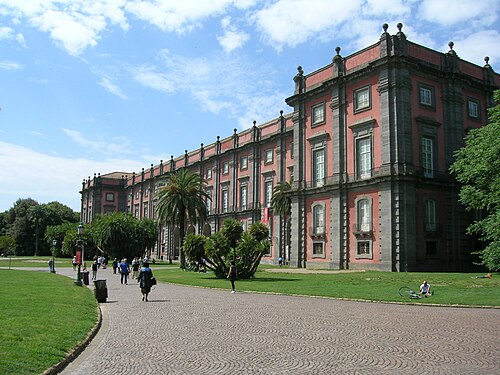
The Museum and Real Bosco di Capodimonte brings together one of Naples’ most important artistic and natural heritage complexes. Housed in the former Bourbon royal palace, the museum preserves an extensive collection of paintings and works of art from different periods of Italian and European history.
Among the most important works are masterpieces by Caravaggio, Titian, Raphael and Masaccio, while the large Real Bosco offers an extensive green space with avenues, gardens and panoramic views. It is a particularly interesting destination for combining art, history and nature during a visit to Naples.
- Estimated visit time: approximately 120 minutes for the museum + 60 minutes for the park.
- For days, opening hours, prices and all further information on Wikipedia 🌐 and Google Maps ➡️ see the Itinerary Table 📊 Naples in 1 Day.
Duomo di Napoli and Tesoro di San Gennaro
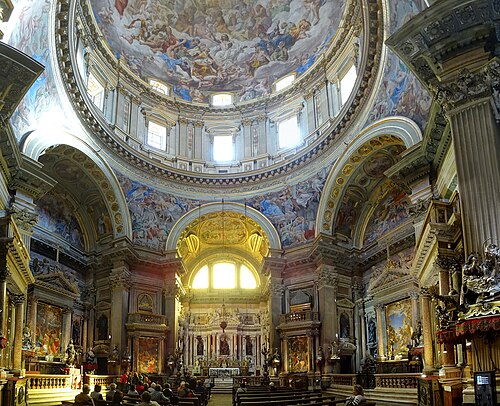
Duomo di Napoli is the city’s main church and one of the most important places in the Neapolitan religious tradition. The cathedral, dedicated to Santa Maria Assunta, houses numerous works of art and monumental spaces, including the famous Chapel of the Treasury of San Gennaro.
The chapel preserves some of the most precious treasures associated with the veneration of Naples’ patron saint, including the reliquary bust of San Gennaro and his relics. A visit therefore offers an opportunity to discover one of the places most deeply connected to the history and identity of the city.
- Estimated visit time: approximately 120 minutes for the entire complex, including the Museum of the Tesoro di San Gennaro.
- For days, opening hours, prices and all further information on Wikipedia 🌐 and Google Maps ➡️ see the Itinerary Table 📊 Naples in 1 Day.
Chiostro Maiolicato of Santa Chiara
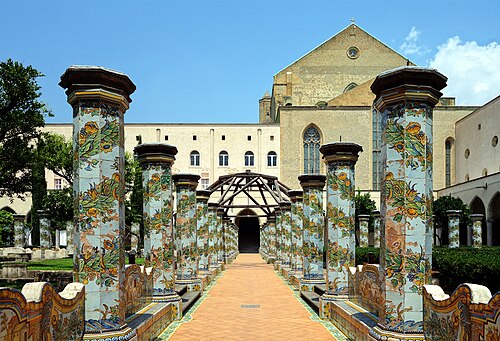
The Santa Chiara monumental complex is one of the most characteristic places in the historic centre of Naples. Founded in the 14th century, it comprises the basilica, the monastery and the famous Chiostro Maiolicato, which was transformed in the 18th century with maiolica tile decorations and frescoes.
The cloister impresses with the contrast between the greenery of the gardens, the decorated columns and the vibrant colours of the maiolica tiles, which depict scenes and landscapes from the Neapolitan tradition. It is one of the most evocative corners of the historic centre, ideal for a break while exploring the city.
- Estimated visit time: approximately 90 minutes for the entire Santa Chiara Monumental Complex.
- For days, opening hours, prices and all further information on Wikipedia 🌐 and Google Maps ➡️ see the Itinerary Table 📊 Naples Complete Tour – Part 1 – Decumani Route.
Naples Underground
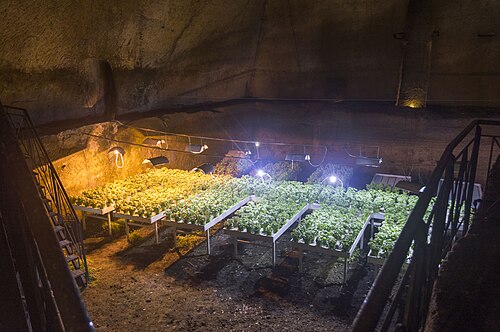
Naples Underground allows you to discover a hidden part of the city, developed beneath the historic centre over centuries of history. Galleries, tunnels and ancient cavities tell the story of Naples, from the extraction of tuff used to build the city to the spaces reused in later periods.
The route leads through underground environments that also bear witness to the role of these spaces during World War II, when they were used as shelters by the population. It is a unique experience that offers an insight into a very different Naples from the one visible above ground.
- Estimated visit time: approximately 120 minutes.
- For days, opening hours, prices and all further information on Wikipedia 🌐 and Google Maps ➡️ see the Itinerary Table 📊 Naples in 3 Days.
- 📌 Naples Underground can be visited by reservation. You will find the telephone number in the Google Maps listing, accessible through the link in the table.
- To browse the selection of experiences, visit the page Naples Underground: Tours, Tickets and Useful Information.
Catacombs of San Gennaro
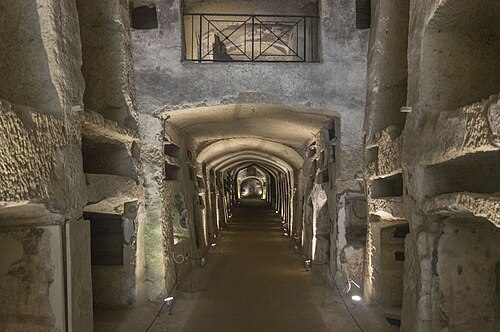
The Catacombs of San Gennaro are one of the most important early Christian complexes in Naples and preserve an extraordinary testimony to the city’s religious history. Carved into the tuff of the Capodimonte hill, they extend over two levels characterised by spacious rooms, ancient tombs and precious decorative elements.
The complex is closely linked to San Gennaro, the patron saint of Naples, and preserves some of the oldest evidence of the Neapolitan Christian community. The visit allows you to explore an evocative environment and discover an important part of the history of the city beneath the surface.
- Estimated visit time: approximately 90 minutes.
- ✨ A timeless place: silence, soft light and millennia-old galleries that tell the story of the deepest origins of Naples
- For days, opening hours, prices and all further information on Wikipedia 🌐 and Google Maps ➡️ see the Itinerary Table 📊 Naples Complete Tour – Part 2 – Capodimonte and Santità Route.
- To browse the selection of experiences, visit the page Catacombs of San Gennaro: Tours, Tickets and Useful Information.
Bourbon Gallery
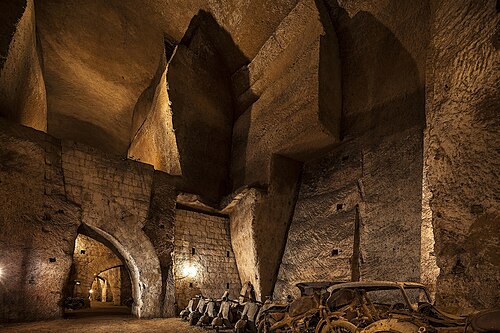
The Bourbon Gallery is one of the most fascinating underground routes in Naples and originated from an ambitious project commissioned in the 19th century to connect the Royal Palace with the Chiaia area. The tunnel runs beneath the city and preserves spaces and structures linked to the different functions it has served over time.
During the visit, you encounter large cisterns, galleries and spaces that were also used as air-raid shelters during World War II. The route thus tells the story of different periods of Neapolitan history through a surprisingly vast and complex underground environment.
- Estimated visit time: approximately 120 minutes.
- 📌 Visits to the Bourbon Tunnel are by reservation. You will find the telephone number in the Google Maps listing, accessible through the link in the table.
- For days, opening hours, prices and all further information on Wikipedia 🌐 and Google Maps ➡️ see the Itinerary Table 📊 Naples Complete Tour – Part 2 – Chiaia Route 2.
- To browse the selection of experiences, visit the page Bourbon Gallery: Tours, Tickets and Useful Information.
Spaccanapoli
Spaccanapoli is one of the most characteristic thoroughfares in the historic centre of Naples and crosses the city along one of the ancient Greek routes. The long street connects some of the most important places in the city centre, passing churches, historic buildings, squares and traditional shops.
Walking along Spaccanapoli means immersing yourself in the city’s most authentic atmosphere, among narrow streets, historic buildings and everyday life. The route also provides easy access to some of the main attractions in the historic centre, making it an almost unmissable stop during a visit to Naples.
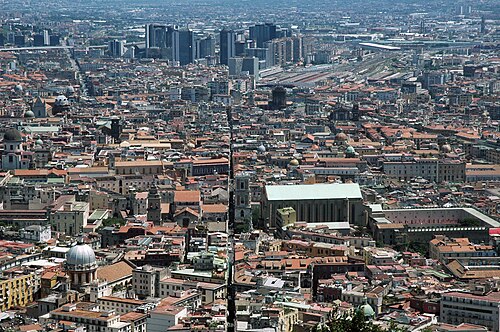
- Estimated visit time: dependent on the duration of the itinerary.
- For all further information on Wikipedia 🌐 and Google Maps ➡️ see the Itinerary Table 📊 Naples Complete Tour – Part 1 – Cathedral and Spaccanapoli Route.
Quartieri Spagnoli
The Quartieri Spagnoli are among the most characteristic and lively areas of Naples, with a dense network of streets and alleys stretching along the slopes of San Martino hill. Created in the 16th century to house Spanish troops, they have retained a strong popular identity over time and are today one of the areas most visited by travellers.
Among narrow alleys, balconies, traditional shops and murals dedicated to Maradona, the area offers a glimpse into everyday Neapolitan life. Taking a leisurely walk through its streets allows you to experience one of the city’s most authentic and recognisable sides.
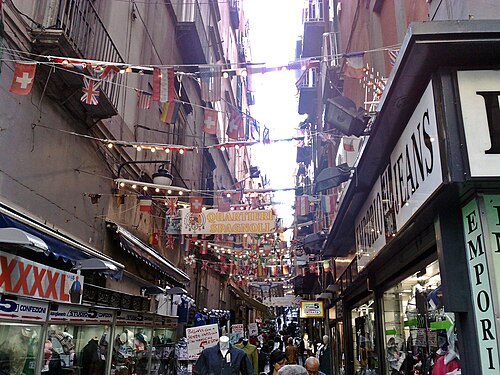
- Estimated visit time: approximately 80 minutes, including secondary stops.
- ✨ The Via Toledo metro station, in the Quartieri Spagnoli, is one of the most beautiful metro stations in Europe: getting off here feels like stepping into a work of contemporary art.
- For all further information on Wikipedia 🌐 and Google Maps ➡️ see the Itinerary Table 📊 Naples Complete Tour – Part 1 – Spagnoli, Vomero and San Martino Route.
Posillipo Viewpoint
The Posillipo Viewpoint offers one of the most spectacular panoramic views of Naples, overlooking the Gulf of Naples, Mount Vesuvius and the surrounding coastline. The elevated position of the hill provides a particularly scenic perspective over the city and the sea.
The Posillipo area is characterised by panoramic roads, historic villas and views over the coastline, with some of the most beautiful viewpoints in the city. It is an ideal destination for those who want to alternate sightseeing with a moment dedicated to the landscape and views over the Gulf.
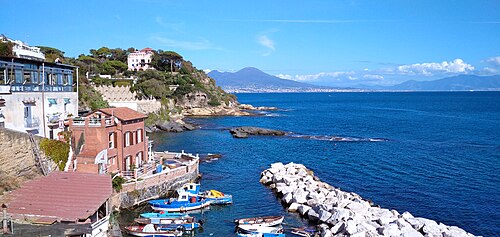
- Estimated visit time: exterior view only.
- Itinerary Table 📊 Naples Complete Tour – Part 2 – Mergellina and Posillipo Route.
Certosa di San Martino and Castel Sant’Elmo
The Certosa di San Martino and Castel Sant’Elmo dominate Naples from the Vomero hill and form one of the city’s most fascinating monumental complexes. The charterhouse, founded in the 14th century, preserves monastic rooms, cloisters and important works of art, while the castle overlooks the hill with its distinctive star-shaped structure.
In addition to its historical and artistic value, this area offers some of the most spectacular views of Naples. From the terraces and viewpoints, you can admire the historic centre, the Gulf of Naples, Mount Vesuvius and, on the clearest days, the coastline and the islands of the Gulf.
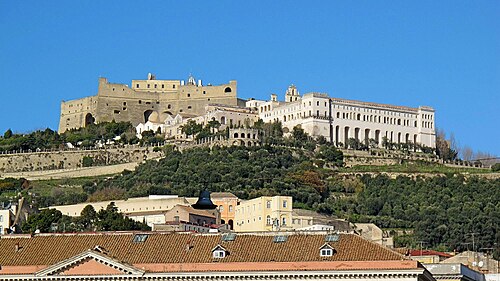
- Estimated visit time: about 180 minutes for the entire San Martino complex
- For days, opening hours, prices and all further information on Wikipedia 🌐 and Google Maps ➡️ see the Itinerary Table 📊 Naples in 3 Days.
Pompeii
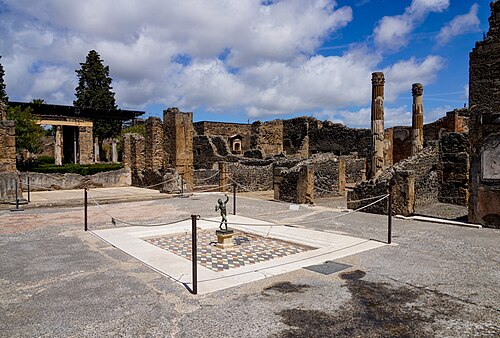
Pompeii is one of the most important and well-known archaeological sites in the world. The Roman city was buried by the eruption of Mount Vesuvius in AD 79, preserving streets, homes, public buildings, frescoes and numerous objects from everyday life beneath the ash.
The vast Archaeological Park of Pompeii allows visitors to walk along the ancient streets of the city and enter the domus, baths, theatres and other buildings that bear witness to the life of the Roman community. The visit therefore offers a unique experience for discovering at close quarters an ancient city that has remained extraordinarily well preserved.
- Estimated visit time: variable.
- 📌 Pompeii generally requires 2 to 4 hours, but for a more complete experience it is recommended to dedicate the entire day. Short guided tours (1.5–2 hours) allow you to discover the main attractions such as the Forum, the House of the Faun and the Amphitheatre.
- For days, opening hours, prices and all further information on Wikipedia 🌐 and Google Maps ➡️ see the Orientation Table 📊 Guide to Naples – Must-See > Suburb.
- To see the selection of experiences, visit the page Pompeii: Tours, Tickets and Useful Information.
Herculaneum
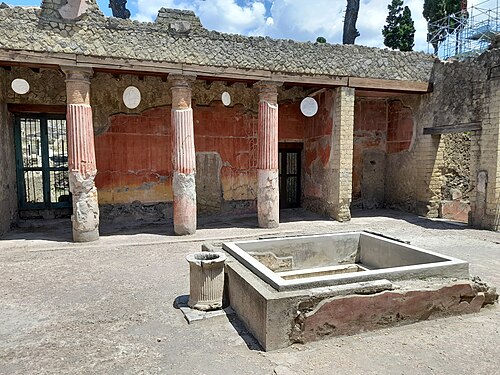
Herculaneum is an important archaeological site in the Vesuvius area, also buried by the eruption of Mount Vesuvius in AD 79. Compared with Pompeii, the city is smaller in size, but it preserves numerous buildings, decorations and organic materials remarkably well, offering a valuable insight into Roman life.
Walking along the ancient streets, you can admire richly decorated villas, baths, shops and houses, with mosaics and frescoes still visible. The site’s more compact dimensions make it easier to explore, while preserving the fascination of a Roman city that remained buried for centuries.
- Estimated visit time: variable.
- 📌 Exploring the archaeological site of Herculaneum generally takes 1.5–3 hours. For those wishing to explore the domus, mosaics and frescoes in greater depth, or combine the visit with Mount Vesuvius, it is advisable to dedicate half a day or more. Short guided tours (1–2 hours) allow you to discover the main attractions such as the House of the Deer, the Palaestra and the Theatre.
- For days, opening hours, prices and all further information on Wikipedia 🌐 and Google Maps ➡️ see the Orientation Table 📊 Guide to Naples – Must-See > Suburb.
- To see the selection of experiences, visit the page Herculaneum: Tours, Tickets and Useful Information.
Vesuvius
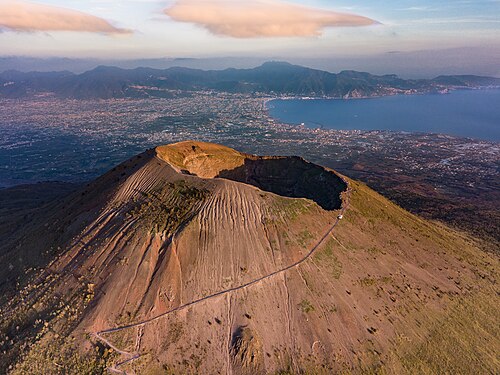
Vesuvius is one of the most recognizable symbols of Naples and the Campania landscape. The volcano dominates the Gulf of Naples and is known throughout the world for the great eruption of AD 79, which destroyed the ancient cities of Pompeii and Herculaneum.
The Mount Vesuvius National Park protects an environment characterized by volcanic landscapes and Mediterranean vegetation. The hike to the crater allows visitors to observe the structure of the volcano up close and enjoy extensive views over the Gulf of Naples and the surrounding area.
- Estimated visit time: variable.
- 📌 Exploring Mount Vesuvius generally takes 2–4 hours, depending on the route chosen and whether you join a guided tour. For those wishing to combine the climb to the crater with experiences such as tastings or visits to the surrounding vineyards, it is advisable to dedicate half a day or more.
- For days, opening hours, prices and all further information on Wikipedia 🌐 and Google Maps ➡️ see the Orientation Table 📊 Guide to Naples – Must-See > Suburb.
- To see the selection of experiences, visit the page Vesuvius: Tours and Useful Information.
See also
- Guide to Naples
- Itineraries: 1d, 3d, CT1, CT2
- See: Attractions
- Do: Experiences
- Eat: Where and What
- Getting Around, Pass, Stay
Other Destinations
🔐 Some images on this page are used under Creative Commons licenses:
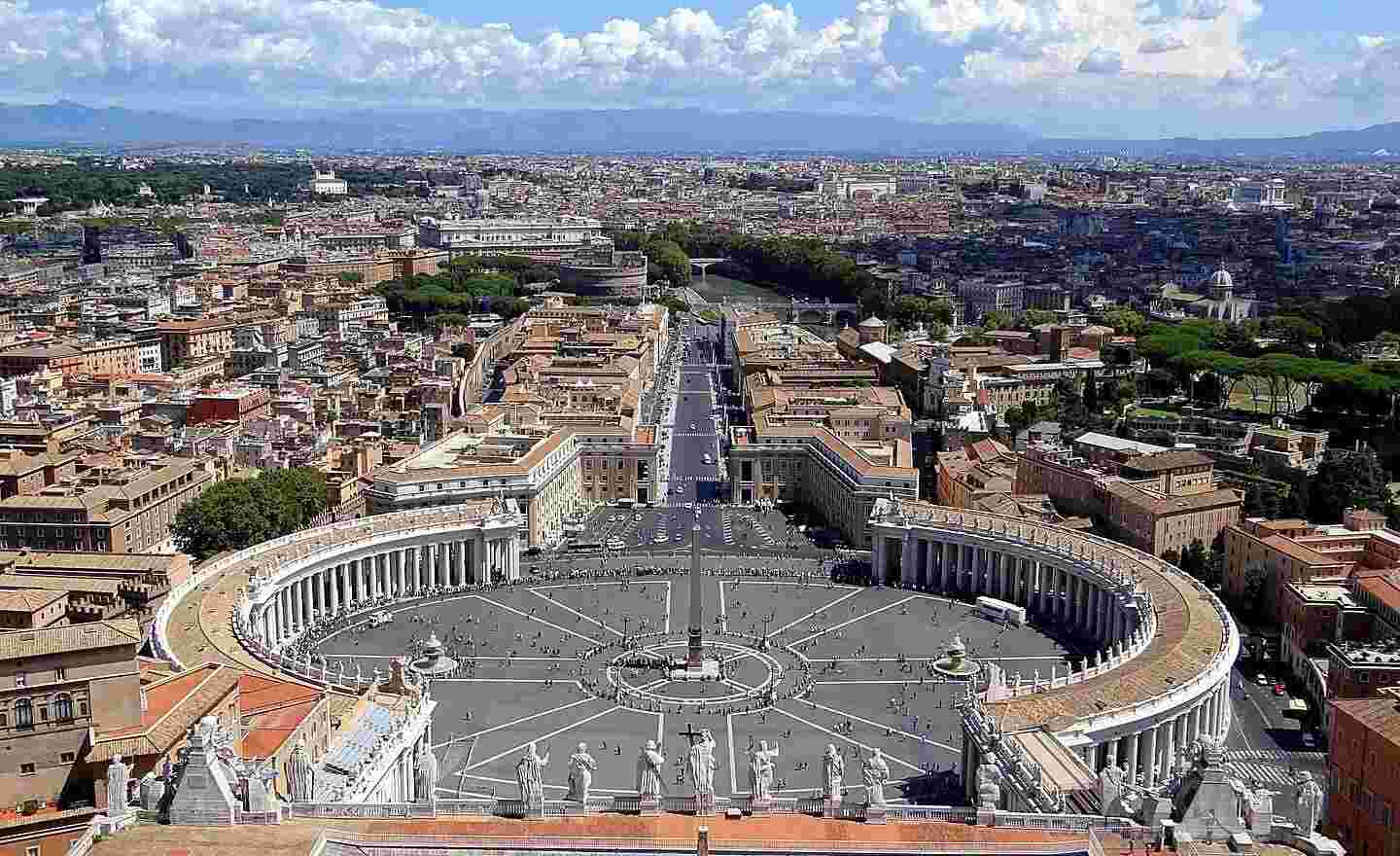
By Anne Offermanns– Panoramic view of Rome from St. Peter’s Basilica – Own work – CC BY-SA 3.0 – Wikimedia Commons
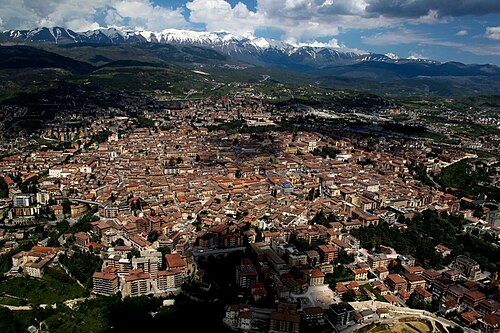
By Lasagnolo9 – Abruzzo, L’Aquila, panoramic view of the city – Own work – CC BY-SA 4.0 – Wikimedia Commons
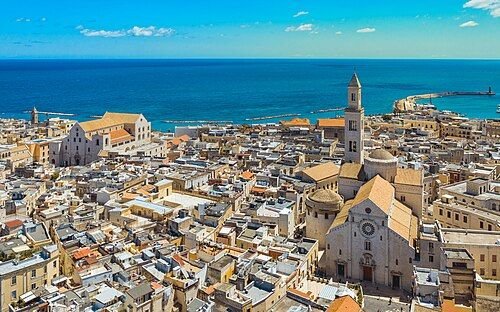
By Francesco Di Stefano 08 – Bari, panoramic view of the Old Town – Own work – CC BY-SA 4.0 – Wikimedia Commons
By Giuseppe Guida – Napoli, vista aerea della città – Opera propria, CC BY-SA 4.0 – Wikimedia Commons

.jpg)
Expand image credits
By Baku – Naples, panoramic view of Piazza del Plebiscito – Own work – CC BY-SA 4.0 – Wikimedia Commons
By Marco Vito (MV001) – Naples, Maschio Angioino/Castel Nuovo – Own work – CC BY-SA 4.0 – Wikimedia Commons
By Dominik Matus – The underground basil garden managed by the Napoli Sotterranea association – Own work – CC BY-SA 4.0 – Wikimedia Commons
By Associazione Culturale Borbonica Sotterranea – Naples, Bourbon Gallery Shelter – www.galleriaborbonica.com – CC BY-SA 4.0 – Wikimedia Commons
By Magrippa at the English Wikipedia – Naples National Archaeological Museum, Battle of Issus – English Wikipedia – CC BY-SA 3.0 – Wikimedia Commons
By David Sivyer from United Kingdom – Naples, Sansevero Chapel, Veiled Christ by Giuseppe Sanmartino – Cappella Sansevero – CC BY-SA 2.0 – Wikimedia Commons
By ErwinMeier – Naples, interior of the Royal Chapel of the Treasure of San Gennaro in Naples Cathedral – Own work – CC BY-SA 4.0 – Wikimedia Commons
By DimiTalen – Naples, panoramic view of Spaccanapoli – Own work – CC0 – Wikimedia Commons
By Sony photographer – Naples, San Carlo Theatre, interior – Flickr – Public domain – Wikimedia Commons
By Mentnafunangann – Naples, Royal Palace of Capodimonte – Own work – CC BY-SA 4.0 – Wikimedia Commons
By IlSistemone – Naples, glimpse of the Spanish Quarter – Own work – CC BY-SA 3.0 – Wikimedia Commons
By Maritè Toledo – Naples, panoramic view of Castel dell’Ovo – Castel dell’Ovo – CC BY-SA 2.0 – Wikimedia Commons
By Mentnafunangann – Naples, Room II, Royal Palace of Naples – Own work – CC BY-SA 4.0 – Wikimedia Commons
By Dominik Matus – Catacombs of San Gennaro, Naples – Own work – CC BY-SA 4.0 – Wikimedia Commons
By Velvet – View of the monastery and basilica from the majolica-tiled cloister – Own work – CC BY-SA 3.0 – Wikimedia Commons
By Baku – Scoglione di Marechiaro – Own work – CC BY-SA 4.0 – Wikimedia Commons
By pietro scerrato – Castel Sant’ Elmo and Certosa – Own work – CC BY 3.0 – Wikimedia Commons
By NikonZ7II – Naples, Pompeii, House of the Faun – Own work – CC BY-SA 4.0 – Wikimedia Commons
By The Dronaut – Mount Vesuvius, symbol of Campania – Own work – CC BY-SA 4.0 – Wikimedia Commons
By Argo Navis – Archaeological Park of Herculaneum – Own work – CC BY-SA 4.0 – Wikimedia Commons