
Venice Sestiere Castello: what to see and complete itinerary
Travel guide, opening hours, prices, map


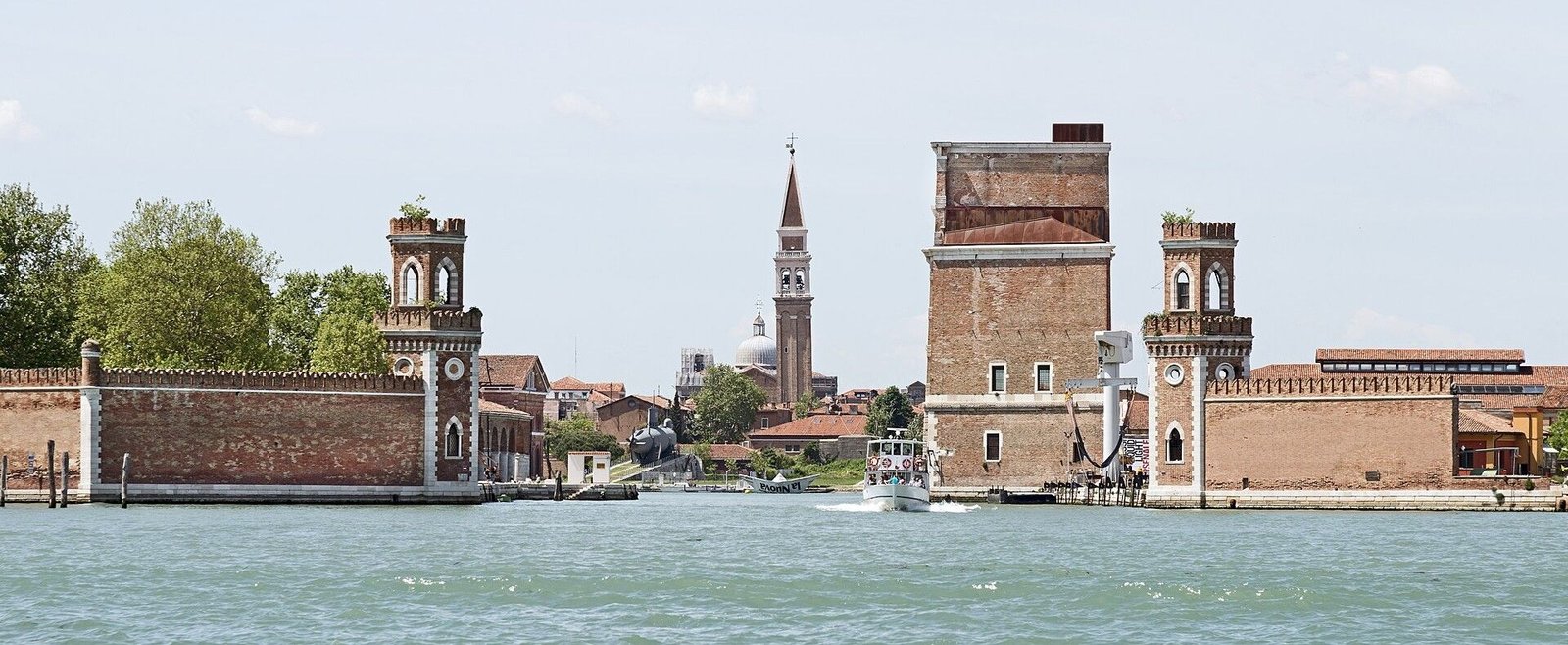
The canale di Porta Nuova, shown above 📱🔄️ with its historic towers, marks the entrance to the impressive Arsenale di Venezia, the most authentic symbol of the Sestiere Castello that you will discover on this itinerary.
See also:
- Back to Complete Tour
- Guide to Venice
- Itineraries: 1d, 3d
- See: Attractions
- Do: Experiences
- Eat: Where and What
- Getting Around, Pass, Stay
Route Description
The itinerary dedicated to the Sestiere Castello leads you to discover the most historic and monumental side of Venice, all the way to the eastern edge of the city.
The route passes through some of the most iconic landmarks of the Serenissima, such as the famous Ponte dei Sospiri with the Prigioni Nuove, the impressive Arsenale di Venezia, the heart of Venice’s naval power, and the Museo Storico Navale, guardian of the city’s great maritime tradition.
The route ends in the quieter part of the district, between the Giardini della Biennale and the evocative Basilica di San Pietro di Castello, offering an itinerary of about 5 hours of visiting time over a 4.6 km walk, far from the most crowded tourist paths.
SESTIERE CASTELLO
- Open Route Map📍
- Distance: 4,6* km walking
- Time: 1,03* min. walking
- Visit duration: 5 hours
- Stops: 10 main (X → I)* + 2 secondary
- Palazzo Ducale di Venezia (X)⚠️ → Ponte dei Sospiri (A) → Chiesa di San Giorgio dei Greci (B) → Museo di Palazzo Grimani (C) → Chiesa di San Francesco della Vigna (D) → Scuola Dalmata dei SS. Giorgio e Trifone (E) → Arsenale di Venezia (F) → Museo Storico Navale di Venezia (G) → Giardini della Biennale (H) → Basilica di San Pietro di Castello (I)
- For days, times, prices and other info see Itinerary Table 📊
* These values may differ from those shown on Google Maps, as they are continuously recalculated in real time. See also Itinerary Info and Navigator + See here for Shared Stop 🧩
Steps Details
📌 All the stops summarized here are structured in the Itinerary Table 📊 with days, opening hours, prices, and Wikipedia 🌐 and Google Maps insights.
⬇️ starting point
X. Palazzo Ducale di Venezia
⚠️ Important Note – Since this route is not connected to any of the previous six itineraries, you will see Palazzo Ducale as the starting point on Google Maps because it is very close to the Castello district and is also easily accessible by vaporetto if you arrive by sea.
⬇️
A. Ponte dei Sospiri
The journey begins at one of the city’s most iconic landmarks, the Ponte dei Sospiri, which connects the Palazzo Ducale to the Prigioni Nuove. Built in the 17th century from Istrian stone, it owes its name to the evocative legend that prisoners crossing it before imprisonment would sigh as they gazed upon the beauty of Venice for the last time.
Just a few steps away, the Palazzo delle Prigioni Nuove represents one of the first modern prison structures in Europe. Connected to the Palazzo Ducale by an internal passageway, it is a place steeped in history, bearing witness to an era when Venetian justice exercised its power with great rigor.
✨ Watching it from the nearby bridge as it reflects on the water creates one of the most romantic and photographed views in the entire city.
❌ The small panoramic bridge from which most photos are taken fills up quickly: if you want to avoid the crowds, do not stop here during peak hours.
Book one of the recommended experiences here:
✅ Doge’s Palace and Bridge of Sighs Tour
✅ Skip-the-Line Doge’s Palace and Prisons Tour
⬇️
B. Chiesa di San Giorgio dei Greci
Continuing onward, you enter the heart of Venice’s Greek quarter, home to the evocative Chiesa di San Giorgio dei Greci, a testament to the long-standing presence of the Greek Orthodox community in the city.
The building immediately stands out thanks to its leaning bell tower, an architectural curiosity that makes this corner of Venice even more fascinating. Inside, a rich decorative ensemble of Byzantine icons and frescoes immerses visitors in a solemn and spiritual atmosphere, evoking the artistic traditions of the Christian East.
⬇️
C. Museo di Palazzo Grimani
Just a short walk away, the Museo di Palazzo Grimani opens its doors to a journey through Renaissance art and culture. Once the residence of the powerful Grimani family, the palace stands out for its architecture inspired by classical Roman models, a unique feature within the Venetian landscape.
Among its most spectacular spaces is the Tribuna, a majestic hall housing classical-inspired sculptures in a setting reminiscent of the ancient collections assembled by Renaissance nobles.
❌ The visit often requires more time than expected for those who appreciate art and architectural details: consider allowing for a longer stop rather than a quick visit.
⬇️
E. Scuola Dalmata dei Santi Giorgio e Trifone
Hidden among the narrow streets of Castello, the Scuola Dalmata dei Santi Giorgio e Trifone is a small gem that preserves an extraordinary cycle of paintings by Vittore Carpaccio. The canvases, dedicated to the legendary deeds of Saint George, are among the most fascinating works of Venetian painting, renowned for their vivid storytelling and masterful use of color.
✨ Viewing Carpaccio’s paintings from just a few steps away creates a rare and intimate experience, impossible to replicate in large crowded museums.
❌ If your time is limited, this can become an optional stop compared to the major monuments of the historic center.
⬇️
F. Arsenale di Venezia
Continuing toward the heart of the Serenissima’s naval power, you reach the Arsenale di Venezia, once one of the most advanced shipyards in Europe. For centuries, the vessels that made Venice the dominant power of the Mediterranean were built here.
Passing through its imposing entrance gates, guarded by majestic marble lions, means stepping into a place that symbolizes Venetian power and ingenuity.
Today, the Arsenale hosts events and artistic installations during the Venice Biennale, blending history and contemporary culture in a fascinating dialogue between past and present.
✨ Standing before the monumental entrance, you can still sense the grandeur of the Serenissima, as if Venice’s maritime power had been carved into the very stones.
💡 During the Biennale, some areas that are normally closed become even more captivating thanks to contemporary art installations.
⬇️
G. Museo Storico Navale di Venezia
To gain a deeper understanding of Venice’s maritime heritage, a stop at the Museo Storico Navale is a must. Here you can admire models of ancient galleys, nautical instruments, and artifacts that tell the story of the Serenissima’s epic adventures at sea.
The museum reveals how Venice built a commercial and military empire through its fleet, while also showcasing details of historic vessels, including the sumptuous Bucintori, the ceremonial ships of the Doges.
❌ Less of a priority than the Arsenale if your time is limited.
⬇️
H. Giardini della Biennale
Leaving the Arsenale behind, the route continues into the Giardini della Biennale, one of the few green spaces in Venice. This area becomes the beating heart of the city during the Biennale Arte and Architecture Exhibition, welcoming artists from around the world in its national pavilions. Even outside Biennale periods, the gardens provide a pleasant place to relax among centuries-old trees and lagoon views.
✨ Walking here means discovering an unexpected side of Venice, defined by silence, monumental trees, and open views across the lagoon.
❌ Outside exhibition periods, the cultural appeal decreases significantly: consider visiting mainly if you are looking for a green break along the route.
⬇️
I. Basilica di San Pietro di Castello
The final stop takes us to the evocative Basilica di San Pietro di Castello, once the cathedral of Venice before the title was transferred to the Basilica di San Marco.
This less-visited corner of the city retains an authentic charm. Its white brick bell tower, designed by Mauro Codussi, stands out thanks to its imposing structure. Inside, among the many works of art, a painting attributed to Paolo Veronese adds further prestige to this place of worship.
✨ Here Venice reveals its most authentic face: few visitors, an intimate atmosphere, and a sense of peace that is increasingly rare in the historic center.
💡 The square in front of the basilica is one of the best places in the area to sit for a few minutes away from the crowds.
Dinner
In the Sestiere Castello, cuisine is deeply connected to the lagoon and the life of fishermen, with dishes that directly reflect the Venetian maritime tradition.
- Sarde in saor, a symbol of Venetian cuisine, widely found in the district’s osterias with variations passed down through generations.
- Gò della Laguna di Venezia, a typical fish from the sandy lagoon seabeds, often served in broth or simple preparations.
- Polenta e schie, a humble but iconic dish combining lagoon shrimp and soft polenta.
- Spaghetti alle vongole alla veneziana, a local version of a classic dish, enriched by the flavor of lagoon shellfish.
- Anguilla della laguna, a typical fish from lagoon and valley areas, often grilled or stewed according to tradition.
- Moeche e masanete, a true seasonal delicacy of the lagoon, closely linked to the tradition of local fishermen.
Among quiet narrow streets and lagoon-facing fondamenta, Castello offers some of the most authentic osterias in Venice, mainly frequented by locals and workers from the area.
- Al Covo – a historic restaurant near the Biennale, known for its Venetian cuisine reinterpreted with great attention to quality ingredients.
- Osteria alle Testiere – a small and highly regarded restaurant famous for fresh fish and simple but excellent cuisine.
- Al Cà d’Oro alla Vedova (border area Cannaregio/Castello) – a reference point for traditional Venetian cuisine without compromise.
See also Where and What to Eat in Venice
Sleeping
Thanks to its size and the presence of quieter areas compared to the monumental city center, the Sestiere Castello is one of the most interesting areas to stay in Venice. From here, it is easy to reach Piazza San Marco, the Arsenale, and the Giardini della Biennale, while enjoying a more authentic and relaxed atmosphere.

Alternatively, the areas near Riva degli Schiavoni and the Giardini della Biennale offer a particularly pleasant location for those wishing to stay close to the lagoon, with beautiful waterfront views and easy access to the main attractions of the district.
See also Where to sleep in Venice: Info and Tips.
📊 Itinerary Table
In the table below you will find all the attractions included in the itinerary, designed to enhance and better guide your visit to the Castello Sestiere:
- Scroll the table down and to the right 📱🔄 Rotate your phone horizontally to get an overview of opening days, hours, prices of attractions, and for further details on Wikipedia 🌐 and Google Maps ➡️.
- ⚠️ Always check the opening days and hours of attractions through the Google Maps entries linked in the table. See also Itinerary Info.
- To see the explanation of each data column, click its title (e.g. Attractions Index, Ratings, Org, etc.) at the top of the table.
⏳ Caricamento tabella in corso…
📌 This table is updated every 6–12 months.
🛡️ The tables on Tourplan360.com are original content protected by copyright © and monitored through anti-plagiarism tracking systems.
FAQ
You can open the Route Map 📍 directly from here. Alternatively, you can check the dedicated section with all the details.
📌 See the Route Description
How much time do I need to visit the Castello district?
The itinerary allows you to visit the main attractions in about 5 hours.
Can this Castello itinerary be done on foot?
Yes. The route is approximately 4.6 km long and runs entirely within the district, through historic streets, squares, and monumental areas.
📌 See also Getting around Venice
Is it worth booking the main attractions in advance?
During peak tourist periods, it is advisable to book in advance or join guided tours to avoid queues and ensure entry.
📌 See also Experiences in Venice
Where can I find opening days, times, and prices for the attractions?
All updated information is available in the dedicated itinerary table, which also includes direct links to Google Maps ➡️ and Wikipedia 🌐 for each attraction.
📌 See the Itinerary Table 📊
See also
- Back to Complete Tour
- Venice in 1 day
- Venice in 3 days
- Guide to Venice
- See: Attractions
- Do: Experiences
- Eat: Where and What
- Getting Around, Pass, Stay
Other Destinations
🔐 Some images on this page are used under Creative Commons licenses:
By Maretta Angelini – Bologna, panoramic view of Piazza Maggiore – Own work – CC BY-SA 4.0 – Wikimedia Commons
By Meri Valenti (TCI) – Trieste, Piazza Unità d’Italia at night – Own work – CC BY 4.0 – Wikimedia Commons
By Franco Visintainer – Trento, city panorama – Own work – CC BY-SA 3.0 – Wikimedia Commons
By Didier Descouens – Venice, Castello district, entrance from the Porta Nova canal with the towers – Own work, CC BY-SA 4.0 – Wikimedia Commons