
Domus Aurea: Tours, Tickets and Useful Info
Quick Guide and Experiences


The Domus Aurea is one of the hidden treasures of ancient Rome: the monumental residence of Emperor Nero, buried for centuries and now open to visitors through a fascinating route that blends archaeology, history, and technology.
See also
- Colosseum
- Guide to Rome
- Itineraries: 1d, 3d, CT1, CT2
- See: Attractions
- Do: Experiences
- Eat: Where and What
- Getting Around, Pass, Stay
Main Attractions
Domus Aurea: Visiting the Domus Aurea means descending into the heart of Imperial Rome, inside the legendary residence of Emperor Nero. This monumental complex, buried for centuries beneath later constructions, represents one of the most fascinating examples of Roman architecture from the 1st century AD.
The underground frescoed halls: The visitor route winds through hypogeal spaces decorated with original frescoes of extraordinary refinement. The painted walls, featuring vegetal motifs, mythological figures, and elegant geometries, inspired artists such as Raphael and profoundly influenced the history of Renaissance art.
The Octagonal Hall: The symbolic heart of the Domus Aurea, the Octagonal Hall is a masterpiece of Roman engineering. Featuring a large dome with a central opening, it represents one of the most innovative architectural solutions of its time and anticipates concepts later developed in the Pantheon.
The multimedia route: The visit is enhanced by multimedia installations and virtual reality experiences that reconstruct the original appearance of the residence. Thanks to these immersive technologies, visitors can imagine the spaces in their ancient splendor, with water features, precious marbles, and decorations that have now disappeared.
Selected Experiences
An unmissable experience: Exploring the Domus Aurea is a unique experience, unlike any other archaeological site in Rome. A guided tour allows visitors to understand the historical context, architectural innovations, and artistic value of this extraordinary place, making the visit evocative, engaging, and truly memorable.
- Rome: Domus Aurea guided group tour – A complete experience combining a guided visit and virtual reality, ideal for understanding the original appearance of Nero’s residence and its extraordinary architectural innovations.
- Rome: Guided visit to the Domus Aurea, Nero’s Golden House – A tour led by an expert guide to discover the history, frescoes, and secrets of one of ancient Rome’s most enigmatic complexes.
- Rome: Domus Aurea guided tour and virtual reality experience – An immersive route combining archaeology and technology to relive the Domus Aurea in its original splendor, among frescoed halls and imperial settings.
Useful Information and Tips
Visit duration: a visit to the Domus Aurea lasts on average about 1 hour to 1 hour and 30 minutes. Access is limited and takes place exclusively with a guided tour, in order to protect the site and ensure a proper understanding of the archaeological complex.
Opening hours, prices and reservations: the Domus Aurea can only be visited on specific days and at set times, which vary depending on the season and ongoing restoration works. Advance booking is mandatory. For updated information, it is recommended to consult the official website or refer to the Selected experiences section.
📌 Site access: entry to the Domus Aurea is allowed only at scheduled times and with a mandatory guided tour. It is recommended to arrive at least 15 minutes before the time indicated on your ticket.
Security checks: security checks are carried out before entry. Large backpacks and bulky bags are not allowed. It is advisable to travel light and arrive slightly in advance of the scheduled time.
Available services: information points and assistance staff are present at the entrance. As this is an underground archaeological site, there are no restrooms along the visiting route. Cafés and services are available in the nearby Colle Oppio area.
Accessibility: the Domus Aurea features stairs, walkways and uneven surfaces. Access may be limited for visitors with reduced mobility. It is advisable to check accessibility conditions and available routes in advance.
Temperature and clothing: the interior maintains a cool and constant temperature throughout the year. Comfortable shoes and practical clothing are recommended; even in summer, a light jacket may be useful.
Recommended time slots: all visits take place at scheduled times. Tours with smaller groups offer a more intimate experience and allow you to better appreciate the spaces and the guide’s explanations.
Photography: photography without flash is generally allowed, but restrictions may vary depending on conservation conditions. The use of professional equipment or video recording requires authorization.
How to Get There
On foot: if you are staying in the historic center of Rome, the Domus Aurea is easily reachable on foot from areas such as the Colosseum, Monti, Fori Imperiali, or San Giovanni. The entrance is located within the Parco del Colle Oppio, just a few minutes from the Flavian Amphitheater.
By subway: this is the most convenient and recommended option. Get off at the Colosseo station on Line B (Blue). From there, walk through the Colosseum area and continue to the Parco del Colle Oppio; the Domus Aurea entrance is about a 10-minute walk away.
By bus and tram: several urban lines connect the Domus Aurea area with the rest of the city. Main bus lines include 51, 75, 85, 87, 117, and 118, while tram 3 stops nearby. Stops are located along Via Labicana and Via Merulana.
By train: if arriving from other cities, get off at Roma Termini and continue by subway (Line B, direction Laurentina) for one stop to Colosseo. Alternatively, the area is reachable on foot in about 25 minutes.
By car: private car access is not recommended. The area is part of the Historic Center ZTL and has traffic restrictions. Paid parking is available nearby (Via Labicana, Via Merulana), but public transport is preferable.
By taxi or private transfer: taxis and private transfers can drop you near the Parco del Colle Oppio, observing traffic restrictions. This is convenient especially for those with limited time or traveling in groups.
FAQ
How long does a visit to the Domus Aurea take?
A visit typically takes about 1 to 1.5 hours.
Is it necessary to book in advance?Yes, booking is mandatory and visits take place at scheduled times.
Is a visit to the Domus Aurea always guided?Yes, access is exclusively through a guided visit, to protect the site and better understand its history.
Is the Domus Aurea accessible to visitors with reduced mobility?Access may be limited by stairs, walkways, and uneven surfaces; it is advisable to check before your visit.
📌 For more information, see the section Useful info & tips.
Are guided tours of the Domus Aurea available?
Yes, guided tours are available to discover the history, frescoes, and architecture of Nero’s residence.
Is it possible to experience virtual reality?Yes, some experiences combine a guided visit with virtual reality to reconstruct the original appearance of the Domus Aurea.
📌 For more information, see the section Selected experiences.
What is the best way to reach the Domus Aurea?
The metro is the most convenient option: the Colosseo station on Line B is about a 10-minute walk from the entrance.
Is it advisable to reach the Domus Aurea by car?It is not recommended, as the area is within the Historic Center ZTL; public transport is preferable.
📌 For more details, see the section How to get there.
See also
- Colosseum
- Roman Forum and Mamertine Prison
- Imperial Forum and Trajan’s Markets
- Colosseum in 1 day
- Guide to Rome
- Itineraries: 1d, 3d, CT1, CT2
- See: Attractions
- Do: Experiences
- Eat: Where and What
- Getting Around, Pass, Stay
Other Destinations


🔐 Some images on this page are used under Creative Commons licenses:
By Richard Nevell – Naples, panoramic view of the city and Mount Vesuvius – Own work – CC BY-SA 4.0 – Wikimedia Commons
By PROPOLI87 – Florence, panorama from Piazzale Michelangelo – Own work – CC BY-SA 4.0 – Wikimedia Commons
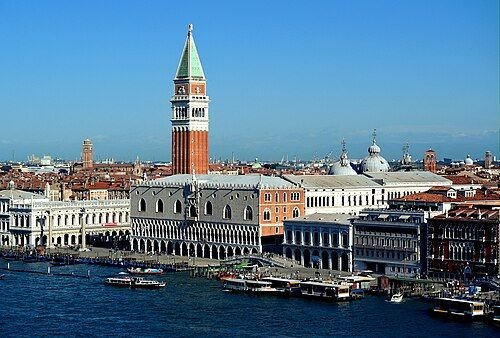
By Luca Aless – Venice, panoramic view of Doge’s Palace and St. Mark’s Campanile – Own work – CC BY-SA 4.0 – Wikimedia Commons
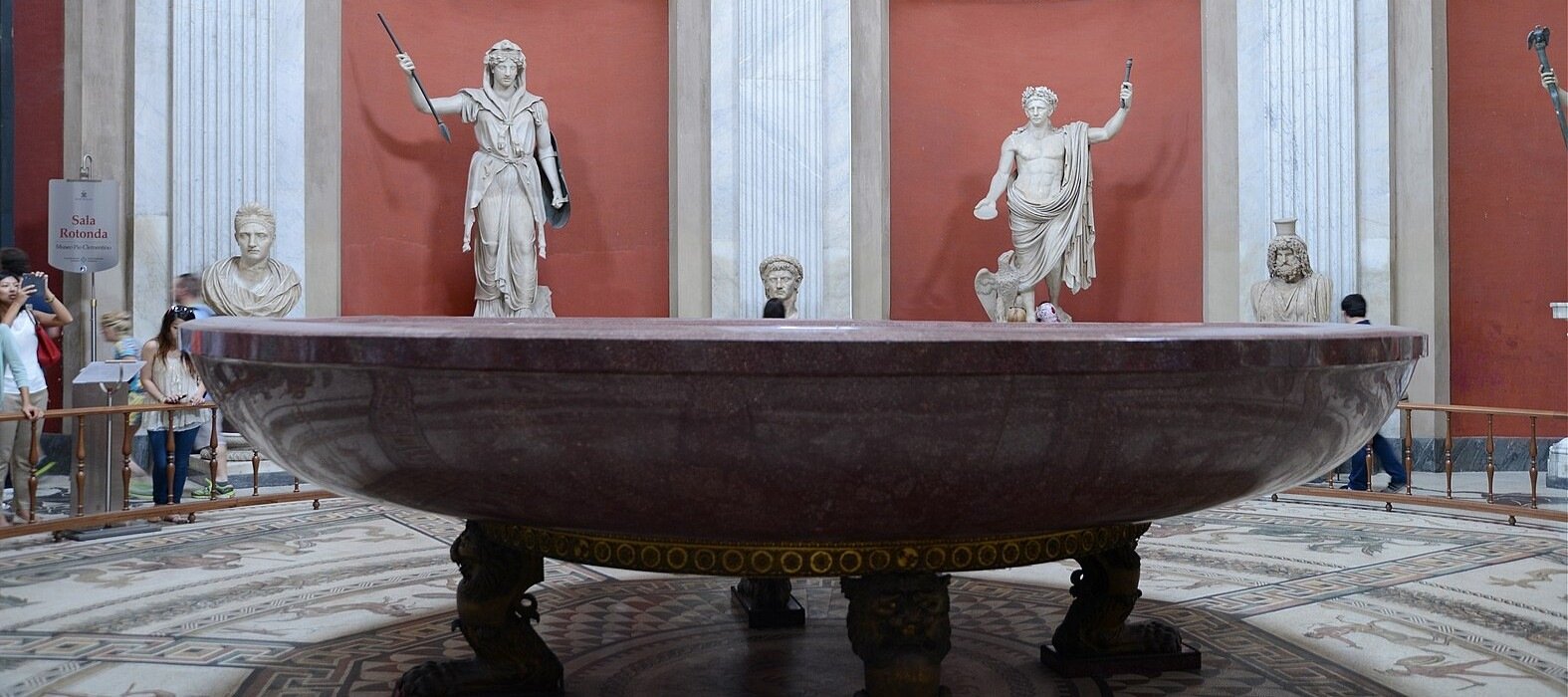
By Alvesgaspar – Porphyry cup, possibly from the Domus Aurea – CC BY-SA 4.0 – Wikimedia Commons
