
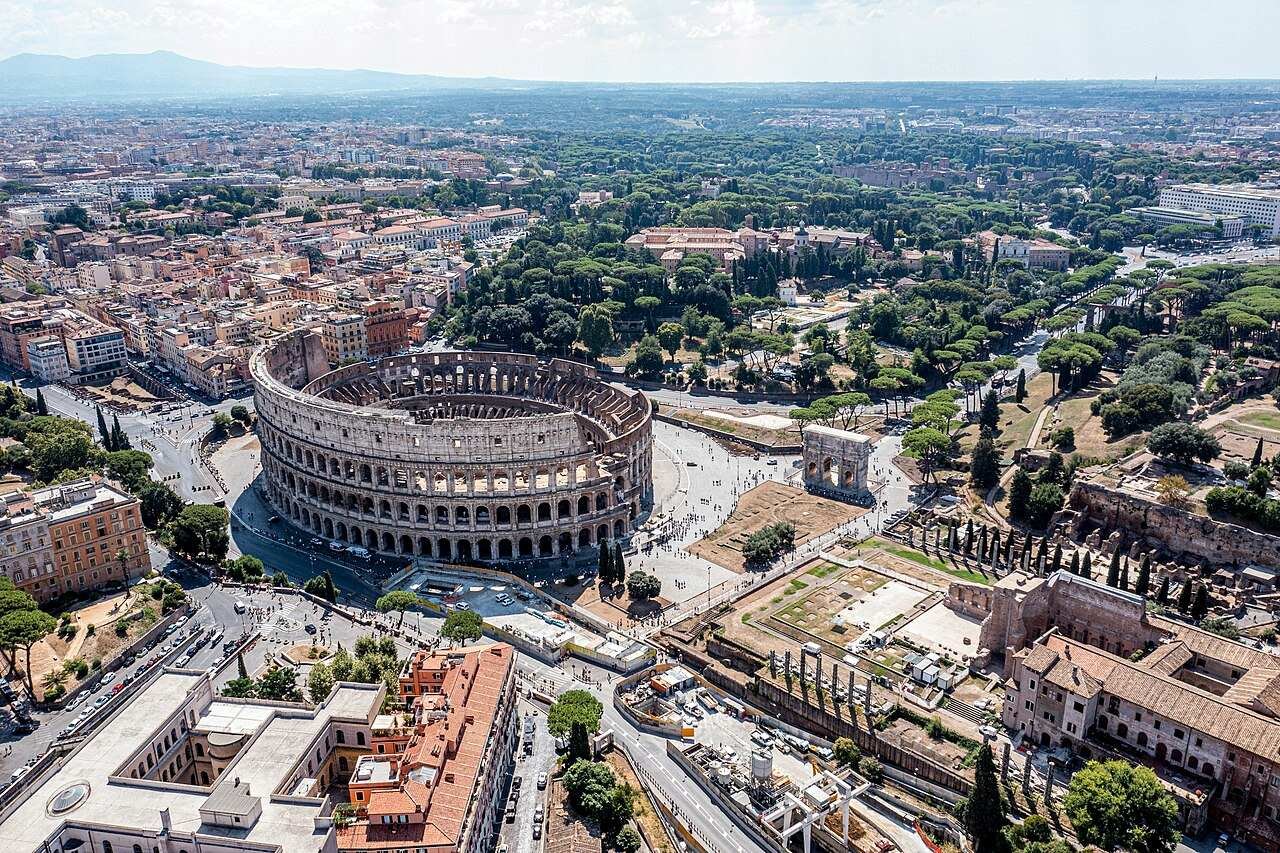
Main Attractions in Rome
Quick Guide to the Best Things to See


The main attractions of Rome tell the story of more than two thousand years of history: from the great monuments of ancient Rome to the city’s most important museums, as well as the basilicas and the symbolic places of Christianity.
📌 To learn more, click on the links to the dedicated pages +🔗
Monuments
- Colosseum +🔗
- Pantheon Rome +🔗
- Trevi Fountain +🔗
- Piazza Navona +🔗
- Piazza di Spagna +🔗
- Castel Sant’Angelo +🔗
- Imperial Forum and Trajan’s Markets +🔗
- Roman Forum and Mamertine Prison +🔗
- Caracalla Baths +🔗
- Appian Way +🔗
- Ostia Antica +🔗
- Altare della Patria and Vittoriano +🔗
Museums
- Vatican Museums and Sistine Chapel +🔗
- Galleria Borghese +🔗
- Capitoline Museums +🔗
- National Roman Museum +🔗
Religious Sites
- St. Peter’s Basilica +🔗
- Archbasilica of Saint John Lateran +🔗
- Basilica of Santa Maria Maggiore +🔗
- Basilica of Saint Paul Outside the Walls +🔗
See also
- Guide to Rome
- Itineraries: 1d, 3d, CT1, CT2
- See: Attractions
- Do: Experiences
- Eat: Where and What
- Getting Around, Pass, Stay
Colosseum
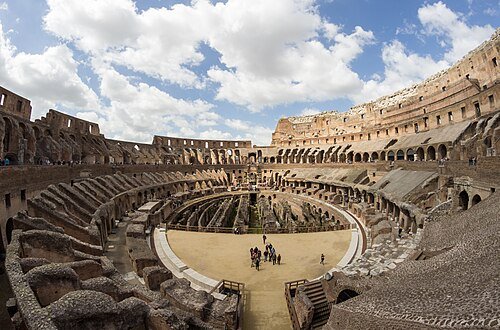
The Colosseum is the most famous symbol of Rome and one of the best-known ancient monuments in the world. Built during the imperial era to host spectacles and gladiatorial combats, it still preserves its extraordinary structure, with the ancient arena and the underground areas where the shows were prepared.
Part of the Colosseum Archaeological Park, which also includes the Roman Forum and the Palatine Hill, it represents one of the most important testimonies to the history of ancient Rome and allows visitors to discover the monumental heart of the imperial city.
- Estimated visit time: about 2 hours.
- For days, opening hours, prices and all the details on Wikipedia 🌐 and Google Maps ➡️ consult the Itinerary Table 📊 Colosseum in 1 day.
- ❌ The most requested visits, especially those including the underground areas and the arena, often sell out. If you have already chosen your travel date, book in advance.
- To view the selected experiences, go to the page Colosseum: Tours, Tickets and Useful Info.
Pantheon of Rome
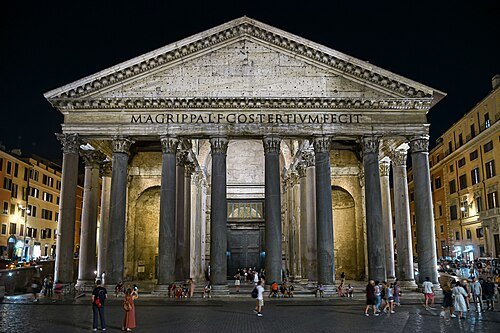
The Pantheon Rome is one of the best-preserved ancient buildings in the world and one of the most extraordinary examples of Roman architecture. Built during the imperial era as a temple dedicated to the gods, it is renowned for its imposing dome with a central oculus and for the perfect balance of its forms, which still make it one of the city’s most fascinating landmarks.
- Estimated visit time: about 30 minutes.
- For days, opening hours, prices and all the details on Wikipedia 🌐 and Google Maps ➡️ consult the Itinerary Table 📊 Rome in 1 day.
- To view the selected experiences, go to the page Pantheon di Roma: Tours, Tickets and Useful Info.
Trevi Fountain
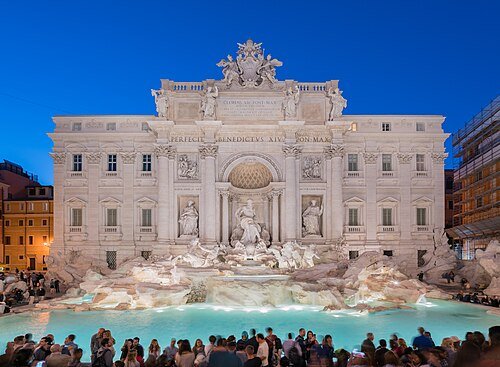
The Trevi Fountain is one of Rome’s most famous attractions and one of the city’s most recognizable symbols. Created in the 18th century in the full Baroque style based on a design by Nicola Salvi, it is a masterpiece of scenic composition, with the god Oceanus at the center of the composition, surrounded by mythological figures and water features.
Today, it is one of the capital’s most visited landmarks, also famous for the tradition of tossing a coin into the fountain, which according to legend guarantees a return to Rome.
- Estimated visit time: about 30 minutes.
- For days, opening hours, prices and all the details on Wikipedia 🌐 and Google Maps ➡️ consult the Itinerary Table 📊 Rome in 1 day.
- To view the selected experiences, go to the page Trevi Fountain: Tours, Tickets and Useful Info.
Piazza Navona
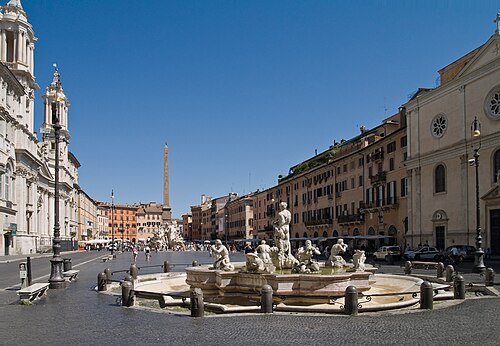
Piazza Navona is one of the most fascinating squares in Rome, built along the layout of the ancient Stadio di Domiziano, where sporting competitions and public events took place during Roman times.
Its elongated shape still preserves the imprint of the ancient structure and hosts some of the masterpieces of Roman Baroque, including the famous Fontana dei Quattro Fiumi by Gian Lorenzo Bernini.
- Estimated visit time: about 30 minutes.
- For all the details on Wikipedia 🌐 and Google Maps ➡️ consult the Itinerary Table 📊 Rome in 1 day.
- To view the selected experiences, go to the page Piazza Navona: Experiences and Useful Info.
Piazza di Spagna
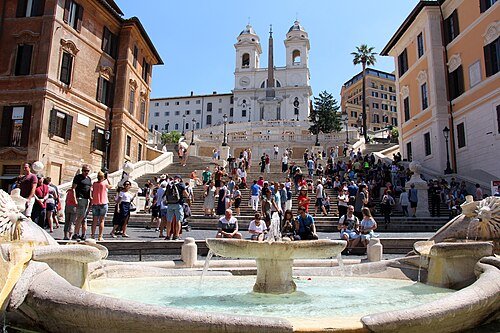
Piazza di Spagna is one of the iconic places of Rome and one of the most photographed squares in the world. Dominated by the monumental Scalinata di Trinità dei Monti, built in the 18th century to connect the square with the church above, it has always been a meeting point for visitors and Romans.
At its foot stands the charming Fontana della Barcaccia by Pietro and Gian Lorenzo Bernini, while the elegant surrounding streets help make this area one of the most representative parts of the city.
- Estimated visit time: about 30 minutes.
- For all the details on Wikipedia 🌐 and Google Maps ➡️ consult the Itinerary Table 📊 Rome in 1 day.
- To view the selected experiences, go to the page Piazza di Spagna: Experiences and Useful Info.
Castel Sant’Angelo
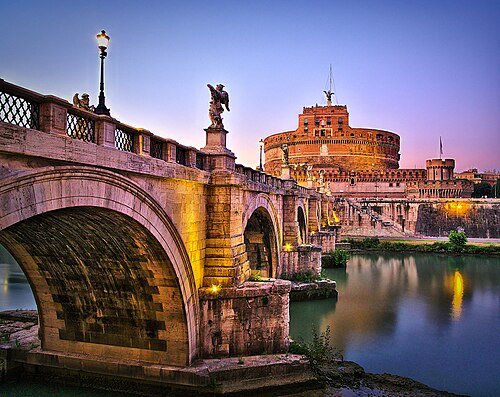
Castel Sant’Angelo is one of Rome’s most fascinating monuments, with a history spanning almost two thousand years. Originally built in the 2nd century as the mausoleum of Emperor Hadrian, it was transformed over time into a military fortress, a refuge for popes, a residence and a prison.
Today, it houses a museum that tells the story of the building’s different eras and offers splendid panoramic views of the city, the Tiber River and the nearby St. Peter’s Basilica.
- Estimated visit time: about 2 hours.
- For days, opening hours, prices and all the details on Wikipedia 🌐 and Google Maps ➡️ consult the Itinerary Table 📊 Rome in 1 day.
- ❌ During the central hours of the day, entry may require long waiting times.
- To view the selected experiences, go to the page Castel Sant’Angelo: Tours, Tickets and Useful Info.
Imperial Forum and Trajan’s Markets
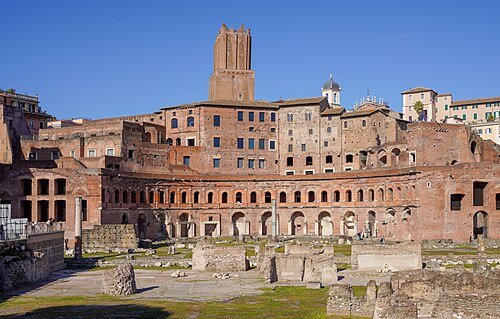
The Imperial Forums represent one of the most important archaeological complexes in Rome and tell the story of the political and monumental grandeur of the ancient Roman Empire.
Built between the 1st century BC and the 2nd century AD at the initiative of several emperors, they were large public squares surrounded by temples, basilicas and spaces dedicated to political and administrative life.
Walking among the remains of the Forum of Caesar, the Forum of Augustus and the other imperial complexes, it is possible to immerse yourself in the history of ancient Rome.
- Estimated visit time: about 4 hours.
- For days, opening hours, prices and all the details on Wikipedia 🌐 and Google Maps ➡️ consult the Itinerary Table 📊 Imperial Fora: what to see and complete itinerary.
- ❌ The Imperial Fora Route is outside the Colosseum Archaeological Park circuit. A specific ticket is therefore required.
- To view the selected experiences, go to the page Imperial Forum and Trajan’s Markets: Tours, Tickets and Useful Info.
Roman Forum and Mamertine Prison
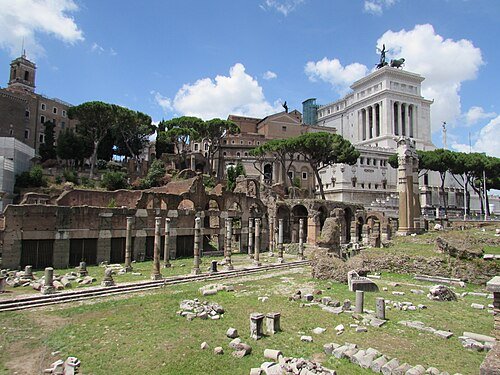
The Roman Forum was for centuries the center of public life in ancient Rome, the place where political, religious, commercial and judicial activities were concentrated.
Among its remains are some of the most important buildings of the ancient city, including temples, basilicas and triumphal arches that testify to the evolution of Rome from a small community into the capital of a vast empire.
- Estimated visit time: about 2 hours.
- For days, opening hours, prices and all the details on Wikipedia 🌐 and Google Maps ➡️ consult the Itinerary Table 📊 Colosseum in 1 day.
- ✅ Access to the Roman Forum is included in the ticket for the Colosseum Archaeological Park.
- To view the selected experiences, go to the page Roman Forum and Mamertine Prison: Tours, Tickets and Useful Info.
Caracalla Baths
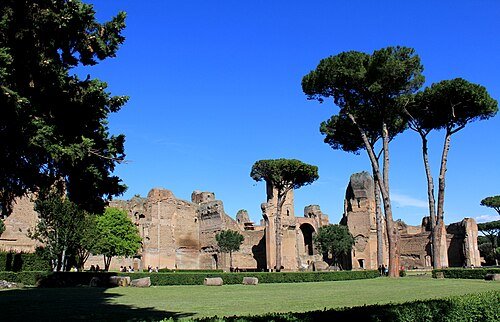
The Baths of Caracalla are one of the best-preserved bath complexes of ancient Rome and bear witness to the extraordinary grandeur of imperial architecture, offering one of the capital’s most evocative archaeological visits.
Inaugurated in the 3rd century AD at the initiative of Emperor Caracalla, they occupied a vast area and included bathing halls, gymnasiums, gardens, libraries and spaces dedicated to leisure.
- Estimated visit time: about 2 hours.
- For days, opening hours, prices and all the details on Wikipedia 🌐 and Google Maps ➡️ consult the Itinerary Table 📊 Rome, Rione Celio: what to see and complete itinerary.
- ❌ To make the most of your visit, a guided tour is recommended: the vastness of the complex and its thousand-year history are easier to appreciate with the support of an expert guide.
- To view the selected experiences, go to the page Caracalla Baths: Tours, Tickets and Useful Info.
Appian Way
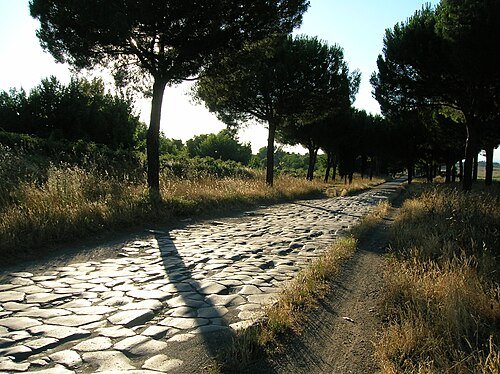
The Appian Way, known since antiquity as the Regina Viarum, is one of the most important and best-preserved Roman roads in the world. Built in the 4th century BC, it connected Rome with southern Italy and is today at the heart of the Appian Way Archaeological Park, a vast area where historical remains and natural landscapes blend together.
Along its route, visitors can encounter mausoleums, villas, aqueducts, catacombs and long stretches of the ancient Roman paving stones. The evocative Aqueduct Park is also part of the park, where it is possible to admire the remains of the great Roman aqueducts surrounded by the Roman countryside.
- Estimated visit time: about 8 hours.
- For days, opening hours, prices and all the details on Wikipedia 🌐 and Google Maps ➡️ consult the Itinerary Table 📊 Appia Antica in 1 day: what to see and complete itinerary.
- To view the selected experiences, go to the page Appian Way: Experiences and Useful Info.
Ostia Antica
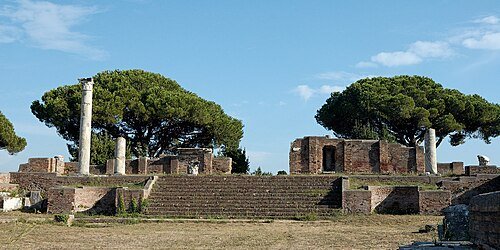
Ostia Antica represents one of the most extraordinary archaeological sites in Italy and allows visitors to discover how people lived in a Roman city more than two thousand years ago.
The ancient commercial port of Rome, it still preserves streets, houses, workshops, thermal baths, temples and a large Roman theatre in an exceptional state of conservation.
- Estimated visit time: about 9 hours.
- For days, opening hours, prices and all the details on Wikipedia 🌐 and Google Maps ➡️ consult the Itinerary Table 📊 Ostia Antica in 1 day: what to see and complete itinerary.
- To view the selected experiences, go to the page Ostia Antica: Tours, Tickets and Useful Info.
Altare della Patria e Vittoriano
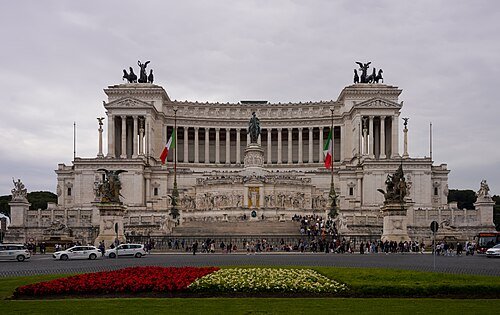
The Altare della Patria, also known as the Vittoriano, is one of the most imposing and representative monuments of modern Rome.
Built between the end of the 19th century and the beginning of the 20th century to celebrate Vittorio Emanuele II and the Unification of Italy, it houses the Milite Ignoto, a symbol of national remembrance.
From its panoramic terraces, visitors can also enjoy one of the most spectacular views over the historic centre of the capital.
- Estimated visit time: about 60 minutes.
- For days, opening hours, prices and all the details on Wikipedia 🌐 and Google Maps ➡️ consult the Itinerary Table 📊 Rome in 1 day.
- To view the selected experiences, go to the page Altare della Patria and Vittoriano: Experiences and Useful Info.
Vatican Museums and Sistine Chapel
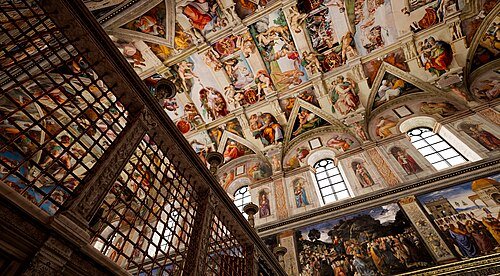
The Vatican Museums constitute one of the most important and visited museum complexes in the world. Originating from the art collections of the popes, they house thousands of works that tell more than two thousand years of history, from classical antiquity to the great masterpieces of the Renaissance.
The visitor route passes through monumental galleries, courtyards, richly decorated rooms and the papal apartments, before reaching the famous Sistine Chapel, where Michelangelo’s frescoes, including the Creation of Adam and the majestic Last Judgment, represent some of the greatest masterpieces in the history of Western art.
- Estimated visit time: about 4 hours.
- For days, opening hours, prices and all the details on Wikipedia 🌐 and Google Maps ➡️ consult the Itinerary Table 📊 Vatican in 1 day: what to see and complete itinerary.
- ❌ The Sistine Chapel is located within the Vatican Museums route and cannot be visited separately: consider long visiting times and possible crowds along the museum route.
- To view the selected experiences, go to the page Vatican Museums and Sistine Chapel: Tours, Tickets and Useful Info.
Gellaria Borghese
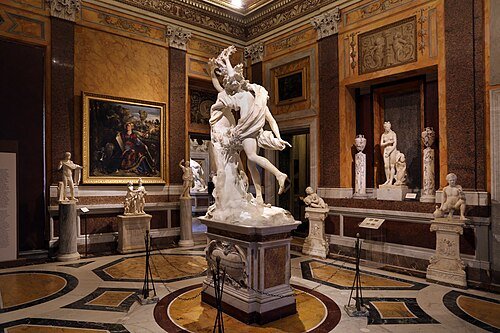
The Galleria Borghese is one of the most prestigious art museums in Italy and houses the extraordinary collection commissioned by Cardinal Scipione Borghese in the 17th century.
Located inside the elegant Villa Borghese, it allows visitors to admire masterpieces of painting and sculpture in a refined setting that still preserves the charm of the original noble residence.
Among its most famous works are the spectacular sculptures by Gian Lorenzo Bernini, paintings by Caravaggio, Raffaello and Tiziano, as well as numerous masterpieces of the Renaissance and Baroque periods.
- Estimated visit time: about 2 hours.
- For days, opening hours, prices and all the details on Wikipedia 🌐 and Google Maps ➡️ consult the Itinerary Table 📊 Rome, Pinciano District: what to see and complete itinerary.
- ❌ Mandatory reservation makes it advisable to organize the visit well in advance, especially during periods of higher tourist attendance.
- To view the selected experiences, go to the page Galleria Borghese: Tours, Tickets and Useful Info.
Capitoline Museums
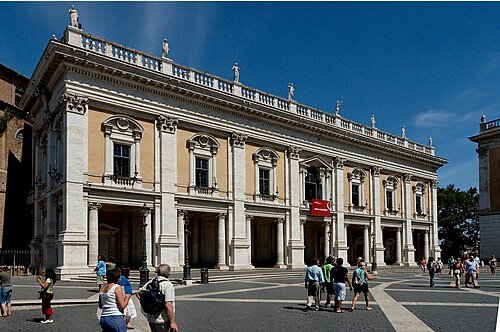
The Capitoline Museums, located on the scenic Piazza del Campidoglio designed by Michelangelo, are considered the oldest public museum in the world. The collections tell the story of Rome through sculptures, mosaics, paintings and precious archaeological artifacts.
Among the most famous works are the Capitoline Wolf, the monumental equestrian statue of Marcus Aurelius and numerous masterpieces from ancient Rome, allowing visitors to retrace more than two thousand years of history.
- Estimated visit time: about 2 hours.
- For days, opening hours, prices and all the details on Wikipedia 🌐 and Google Maps ➡️ consult the Itinerary Table 📊 Rome in 3 days: travel itinerary.
- To view the selected experiences, go to the page Capitoline Museums: Tours, Tickets and Useful Info.
National Roman Museum
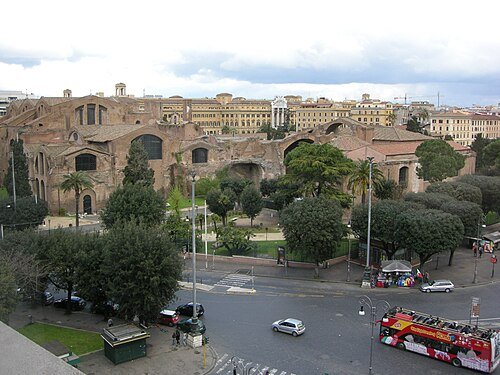
The National Roman Museum is one of Italy’s most important archaeological museums and houses an extraordinary collection of artifacts that tell the story of Rome from ancient times through the late imperial period.
The museum is divided into four locations: Palazzo Massimo alle Terme, Baths of Diocletian, Palazzo Altemps and Crypta Balbi, each dedicated to different aspects of art and life in ancient Rome.
The Baths of Diocletian, the largest bath complex of ancient Rome, house statues, inscriptions and important archaeological remains, offering a fascinating journey into the history of the imperial city.
- Estimated visit time: about 3 hours.
- For days, opening hours, prices and all the details on Wikipedia 🌐 and Google Maps ➡️ consult the Itinerary Table 📊 Rome, Rioni Monti and Castro Pretorio: what to see and complete itinerary.
- To view the selected experiences, go to the page National Roman Museum: Tours, Tickets and Useful Info.
St. Peter’s Basilica
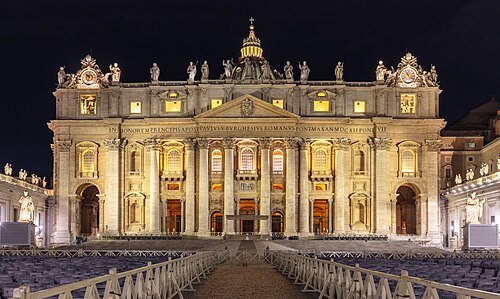
St. Peter’s Basilica is the main place of worship of the Catholic Church and the spiritual heart of Vatican City. Traditionally built over the tomb of the Apostle Peter, it is one of the most important and spectacular destinations in Rome.
Inside, it houses absolute masterpieces such as Michelangelo’s Pietà and Bernini’s Baldachin, while the complex also includes the Treasury Museum, with important works of sacred art.
The visit can be extended to the Dome of St. Peter’s, the Vatican Grottoes and the Vatican Necropolis, offering a journey through art, history and spirituality spanning almost two thousand years.
- Estimated visit time: about 5 hours.
- For days, opening hours, prices and all the details on Wikipedia 🌐 and Google Maps ➡️ consult the Itinerary Table 📊 Vatican in 1 day: what to see and complete itinerary.
- ✅ To fully appreciate the history and masterpieces of the Basilica, consider a guided visit.
- ❌ The climb to the Dome requires time and physical effort: consider access according to the overall duration of the visit and the presence of possible queues.
- ❌ The Vatican Necropolis is not a stop that can be improvised: access is limited and must be scheduled well in advance.
- To view the selected experiences, go to the page St. Peter’s Basilica: Tours, Tickets and Useful Info.
Archbasilica of Saint John Lateran
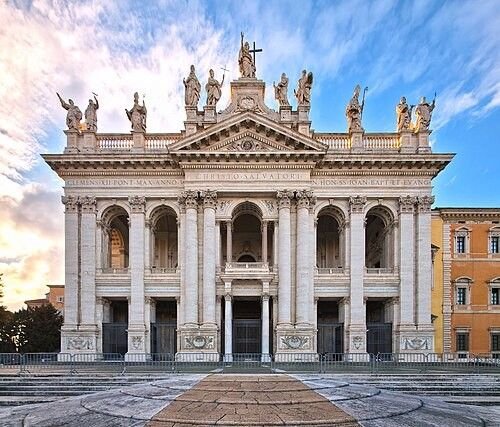
The Archbasilica of Saint John Lateran is the cathedral of the Diocese of Rome and serves as the official seat of the Pope as Bishop of Rome. It is the oldest of the four papal basilicas and is often referred to as the “mother of all churches.”
Its monumental façade, imposing statues of the Apostles and spacious interior make it one of the most important religious complexes in the Christian world, further enriched by the nearby Lateran Baptistery and the Holy Stairs.
- Estimated visit time: about 3 hours.
- For days, opening hours, prices and all the details on Wikipedia 🌐 and Google Maps ➡️ consult the Itinerary Table 📊 Rome, Rione Celio: what to see and complete itinerary.
- ❌ During periods of higher visitor numbers, it is recommended to visit it in the early hours of the day to avoid large groups and make the experience more enjoyable.
- To view the selected experiences, go to the page Archbasilica of Saint John Lateran: Tours, Tickets and Useful Info.
Basilica of Santa Maria Maggiore
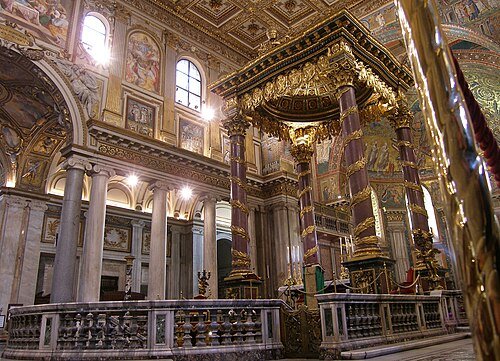
The Basilica of Santa Maria Maggiore is one of the four papal basilicas of Rome and one of the most important places of worship dedicated to the Virgin Mary. Founded in the 5th century, it still preserves splendid early Christian mosaics and a rich artistic heritage.
The interior impresses visitors with the magnificence of its decorations, golden ceilings and monumental chapels, which testify to the central role of the basilica in the religious and artistic history of the city.
- Estimated visit time: about 1 hour.
- For days, opening hours, prices and all the details on Wikipedia 🌐 and Google Maps ➡️ consult the Itinerary Table 📊 Rome, Rione Esquilino: what to see and complete itinerary.
- ❌ Arrive in the early morning hours to visit it with greater peace and quiet: during the central hours of the day, visitor numbers can increase significantly.
- To view the selected experiences, go to the page Basilica of Santa Maria Maggiore: Experiences and Useful Info.
Basilica of Saint Paul Outside the Walls
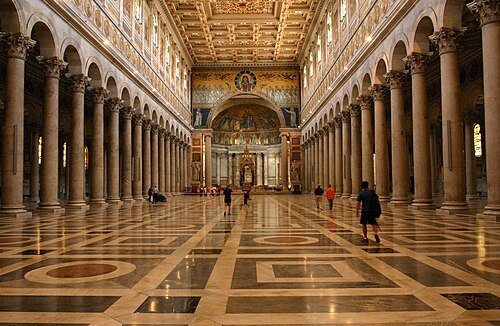
The Basilica of Saint Paul Outside the Walls stands along the ancient Via Ostiense, at the site where, according to Christian tradition, the Apostle Paul was buried. It is one of the four papal basilicas and one of the main pilgrimage sites in Christianity.
The building impresses with its monumental dimensions, elegant cloisters, precious mosaics and the famous gallery of portraits of the Popes, offering visitors an atmosphere of great spirituality and contemplation.
- Estimated visit time: about 90 minutes.
- For days, opening hours, prices and all the details on Wikipedia 🌐 and Google Maps ➡️ consult the Itinerary Table 📊 Rome, Districts Beyond the Historic Center: what to see and complete itinerary.
- To view the selected experiences, go to the page Basilica of Saint Paul Outside the Walls: Tours, Tickets and Useful Info.
See also
- Guide to Rome
- Itineraries: 1d, 3d, CT1, CT2
- See: Attractions
- Do: Experiences
- Eat: Where and What
- Getting Around, Pass, Stay
Other Destinations
🔐 Some images on this page are used under Creative Commons licenses:
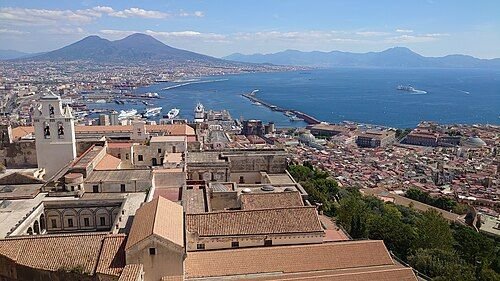
By Richard Nevell – Naples, panoramic view of the city and Mount Vesuvius – Own work – CC BY-SA 4.0 – Wikimedia Commons
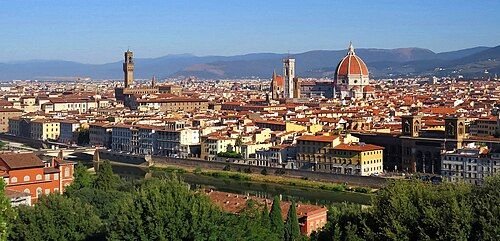
By PROPOLI87 – Florence, panorama from Piazzale Michelangelo – Own work – CC BY-SA 4.0 – Wikimedia Commons
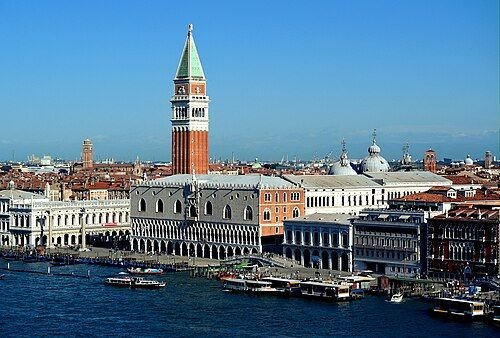
By Luca Aless – Venice, panoramic view of Doge’s Palace and St. Mark’s Campanile – Own work – CC BY-SA 4.0 – Wikimedia Commons
By Kasa Fue– Roma, vista aerea del Colosseo con parte dell’arena – Opera propria – CC BY-SA 4.0 – Wikimedia Commons


Expand image credits
By Jorge Franganillo – Roma, Pantheon at night beautifully illuminated – Roma: Pantheon – CC BY 2.0 – Wikimedia Commons
By User:Colin – The spiral staircase by Giuseppe Momo decorated with bronze panels by Antonio Maraini (1932) – Wikimedia Commons – CC BY-SA 3.0 – Wikimedia Commons
By Diego Delso – Roma, Basilica di San Pietro illuminated at night – Own work – CC BY-SA 4.0 – Wikimedia Commons
By User:Colin – Roma, Colosseo, interior of the arena floor – Wikimedia Commons – CC BY-SA 3.0 – Wikimedia Commons
By Thomas Fabian – Roma, bridge and Castel Sant’Angelo at twilight – Imported from 500px – CC BY-SA 3.0 – Wikimedia Commons
By Sailko – Roma, Galleria Borghese, Room 3 – Own work – CC BY 3.0 – Wikimedia Commons
By Nicolò Musmeci – Roma, Appia Antica – Public domain photo – Public domain – Wikimedia Commons
By Marie-Lan Nguyen – Roma, Ostia Antica, Podium, Round Temple – Own work – CC BY 2.5 – Wikimedia Commons
By ThePhotografer – Roma, Altare della Patria, Vittoriano – Own work – CC BY-SA 4.0 – Wikimedia Commons
By Dnalor 01 – Roma, Basilica di Santa Maria Maggiore, altar – Own work – CC BY-SA 3.0 – Wikimedia Commons
By NikonZ7II – Roma, Mercati di Traiano – Own work – CC BY-SA 4.0 – Wikimedia Commons
By Cezar Suceveanu – Roma, Carcere Mamertino – Own work – CC BY-SA 4.0 – Wikimedia Commons
By Jastrow – Roma, Musei Capitolini, Palazzo Nuovo – Own photograph – Public domain – Wikimedia Commons
By Myrabella – Roma, Piazza Navona – Own work – CC BY-SA 3.0 – Wikimedia Commons
By Karelj – Roma, Terme di Caracalla – Own work – Public domain – Wikimedia Commons
By Thomas Wolf – Roma, Fontana di Trevi at twilight – Own work – CC BY-SA 3.0 DE – Wikimedia Commons
By NateBergin – Roma, façade of the Basilica di San Giovanni in Laterano – Own work – CC BY 4.0 – Wikimedia Commons
By Arturo Mann – Roma, interior of the Basilica di San Paolo Fuori le Mura – Own work – CC BY-SA 3.0 – Wikimedia Commons
By Fred Romero – Roma, panoramic view of Trinità dei Monti from the Fontana della Barcaccia – Roma – Piazza di Spagna – CC BY 2.0 – Wikimedia Commons
By user:Folegandros – Roma, panoramic view of the Terme di Diocleziano – Own work – CC BY-SA 3.0 – Wikimedia Commons