
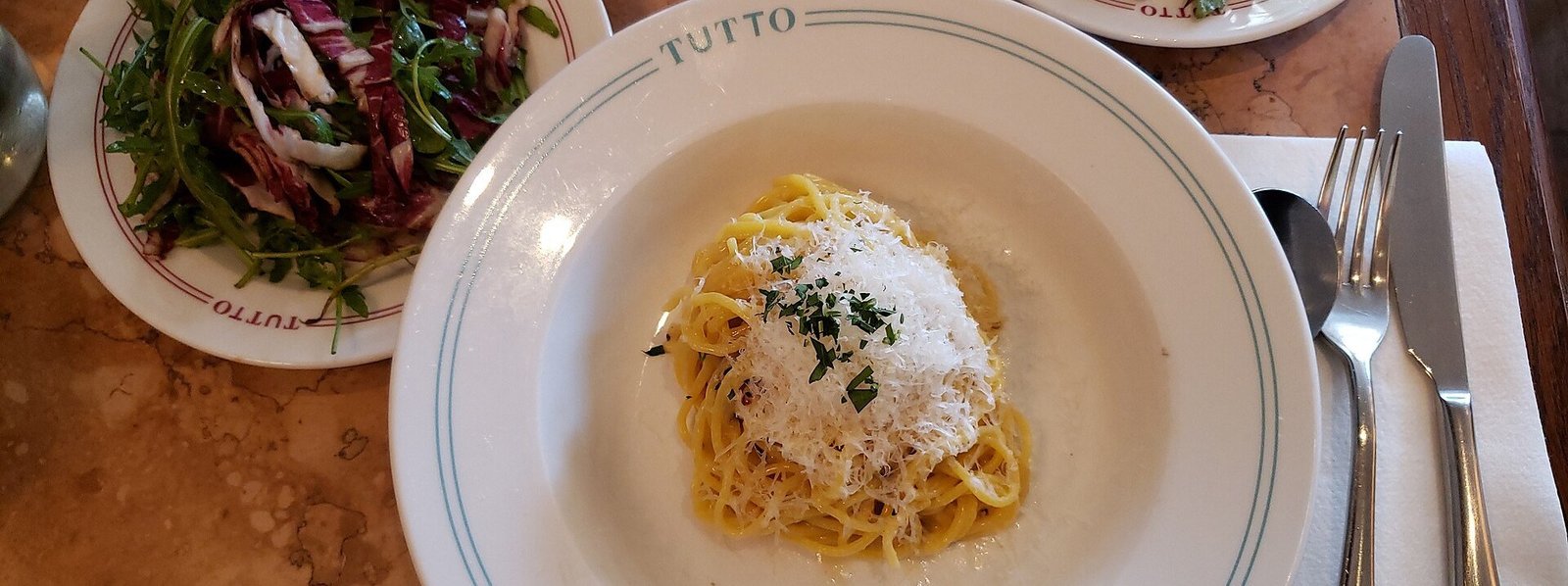
What to eat in Rome
Quick Guide to Taste in the City


On this page you will find an overview of some of the most representative dishes, products and wines of Rome, which you can enjoy in one of the restaurants featured in our selection.
See also
- Guide to Rome
- Itineraries: 1d, 3d, CT1, CT2
- See: Attractions
- Do: Experiences
- Eat: Where and What
- Getting Around, Pass, Stay
Overview
Gastronomic identity of the city
Rome’s cuisine is rich, varied and deeply connected to the city’s history: flavorful dishes, genuine ingredients and millennia-old traditions reflect the Roman character. Fresh pasta, meats, cheeses and extra virgin olive oil define the gastronomic identity of the capital and make every meal a memorable experience.
Historical influences
Roman cuisine has its roots in ancient Rome, with recipes of rural and popular origin that have evolved over time. Medieval, Renaissance and bourgeois influences enriched simple dishes, transforming them into symbols of the city’s gastronomic tradition.
Territory and raw materials
Lazio and the surroundings of Rome offer fresh, high-quality ingredients: selected meats, seasonal vegetables, legumes, local cheeses and extra virgin olive oil take center stage. Regional wines complete the dishes, making Roman cuisine immediately recognizable and authentic.
An experience beyond the plate
Eating in Rome means immersing yourself in centuries of tradition: enjoying a creamy carbonara, breaking bread with coda alla vaccinara, savoring a freshly fried supplì and pairing it with a glass of Lazio wine. Every meal is a journey through history, flavors and conviviality.
It is an intense, authentic and engaging experience that remains in the memory of those who visit the city.
Food-Wine Table
In the table below, you will find a list of typical local products and wines, classified according to the main national quality marks such as DOP, IGP, etc. (see the legend). Traditional dishes are included for their historical and cultural value.
The table structure provides a clear criterion to understand the value and gastronomic identity of the territory.
- Scroll the table down and to the right to view all data in the columns and access Wikipedia links 🌐 for further information (when available).
- To see the explanation of each data column, click on the column title itself (e.g., Index, Ratings, Org, etc.) at the top of the table.
⏳ Caricamento tabella in corso…
📌 The dishes, products, and wines listed above, while representing the local gastronomic identity, are not always exclusive, but often shared with the provincial or regional territory.
📌 For the main certifications (DOP, IGP, DOC, and DOCG), the selection is based on the official production specifications, checking – where possible – whether the municipality is included in the authorized area.
Signature Dishes
Pasta alla Carbonara
The ultimate symbol of Roman cuisine, Pasta alla Carbonara combines crispy guanciale, Pecorino Romano cheese and fresh eggs. The perfect cooking technique creates a natural creamy sauce that coats the pasta, transforming a simple dish into an authentic and unforgettable gastronomic experience.
Pasta Cacio e Pepe
An emblem of Roman simplicity, Pasta Cacio e Pepe brings together just Pecorino cheese and freshly ground black pepper. Despite its few ingredients, the dish captivates with its balance of flavors and its ability to tell the story of the city’s rural culinary tradition.
Gricia
Considered the ancestor of Carbonara and Amatriciana, Gricia combines guanciale, Pecorino cheese and black pepper to create a dish with a bold and intense flavor. Its simplicity and authenticity make it a true symbol of traditional Roman cuisine.
Coda alla Vaccinara
A typical “quinto quarto” stew, Coda alla Vaccinara tells the story of working-class Rome through oxtail, tomato, celery and aromatic herbs. Slow cooking and rich flavors make this dish a must in the city’s historic trattorias.
Saltimbocca alla Romana
Thin slices of veal delicately pounded, topped with prosciutto and sage leaves: Saltimbocca alla Romana combines simple ingredients with technique and flavor. A dish that embodies the elegance of Roman cuisine and wins over every palate.
Abbacchio alla Scottadito
Milk-fed lamb grilled and served “alla scottadito” (so hot you burn your fingers), Abbacchio alla Scottadito is a classic of Roman festivals and celebrations. Simple in preparation yet intense in flavor, it represents Lazio’s culinary tradition at the table.
Carciofi alla Romana and alla Giudia
Carciofi alla Romana and alla Giudia are two icons of the Capitoline culinary heritage. One braised with mint and garlic, the other deep-fried until crisp, both reflect the history of Rome’s Jewish quarter and its historic trattorias.
Puntarelle alla Romana
A fresh chicory salad dressed with anchovy sauce, garlic and olive oil, Puntarelle alla Romana is a crisp and flavorful side dish. It reflects the Roman tradition of enhancing simple, seasonal ingredients with great taste.
Supplì al telefono
Fried rice croquettes with a melting mozzarella center, Supplì al telefono are Roman street food at its finest. Perfect as a snack or appetizer, they tell the story of the city’s popular food culture and love of conviviality.
Maritozzo con la panna
A soft sweet bun filled with fresh whipped cream, Maritozzo con la panna is a true Roman icon. Typical for breakfast or an afternoon treat, it brings the sweetness of tradition and the unique flavor of the city’s pastry shops to the table.
Traditional Products
Pecorino Romano PDO
Aged sheep’s milk cheese typical of Lazio, a key ingredient in iconic dishes such as Carbonara, Cacio e Pepe and Gricia. Its bold and intense flavor makes it instantly recognizable on Roman tables and a true symbol of the city’s gastronomic tradition.
Lazio milk-fed lamb
The base of Abbacchio alla Scottadito, a symbol of Roman cuisine, Lazio milk-fed lamb brings delicate yet distinctive flavors to the table. It is part of the broader designation “Lamb of Central Italy” and represents a centuries-old culinary tradition.
Guanciale from the Lepini Mountains
Cured pork jowl, essential for dishes such as Carbonara, Gricia and Amatriciana. Guanciale from the Lepini Mountains, produced with black pig, combines tradition and quality, giving Roman dishes the authentic flavor of the capital’s historic cuisine.
Roman artichokes – Lazio varieties
Among the protagonists of Rome’s most iconic dishes, the famous Romanesco artichoke of Lazio and other local varieties are used in Carciofi alla Romana and Carciofi alla Giudia. Aromatic, seasonal vegetables that symbolize the quality of local produce.
Lazio extra virgin olive oil
An essential base for dressings and cooking, Lazio extra virgin olive oil includes the main PDO and PGI certifications: Oliva di Gaeta PDO, Sabina PDO and Olio di Roma PGI. The quality of local olives enhances typical Roman dishes, from pasta to vegetables and traditional seasonings.
Wines and Beverages
Wines of Rome and its Province
Roma DOC is the most representative wine of the city, available in white, red, and rosé versions, and a symbol of the urban winemaking tradition. Fresh and versatile, it perfectly accompanies pasta dishes, meats, and typical Roman specialties, telling the oenological story of the capital.
Alongside Roma DOC, in local trattorias and restaurants you can also find wines from the surrounding areas: Castelli Romani DOC, Colli Albani, Frascati DOC and Frascati Superiore DOCG, Marino DOC, Capena DOC, and Tarquinia DOC. Although territorially provincial, these wines are an integral part of the Roman table, expressing the aromas and flavors of Lazio.
Traditional Liqueurs
Among the city’s typical beverages, Roman liqueurs hold a special place. Mistrà, a historic anise-flavored liqueur, is enjoyed as a digestif and represents the tradition of Roman cafés and pastry shops. Roman Sambuca, also anise-based with sweet and aromatic notes, accompanies desserts, coffee, and convivial moments, reflecting the liqueur culture of the capital.
FAQ
Overview
An excerpt featuring the most representative dishes, products, and beverages of Rome, selected to introduce you to the authentic flavors of the city.
How does it work?Scroll through the entries in the Table and the various sections; each section provides concise information and links for further reading 🔗.
Signature DishesIn this section you will find some of the city’s most iconic dishes, presented with concise descriptions.
Traditional ProductsThis part mentions some typical products, also widespread at a regional level, yet pillars of the local cuisine.
Wines and BeveragesA selection of the city’s distinctive wines and beverages, with notes on the territory and traditional pairings.
See also
- Guide to Rome
- Itineraries: 1d, 3d, CT1, CT2
- See: Attractions
- Do: Experiences
- Eat: Where and What
- Getting Around, Pass, Stay
Other Destinations
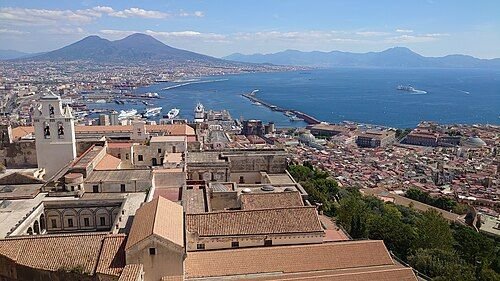
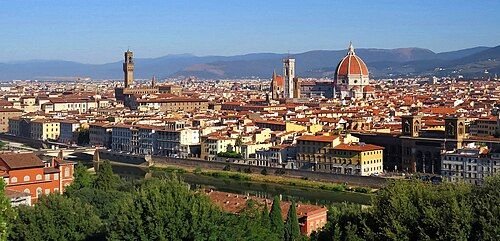
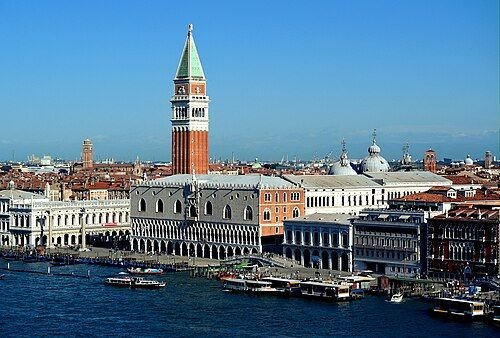
🔐 Some images on this page are used under Creative Commons licenses:
By Richard Nevell – Naples, panoramic view of the city and Mount Vesuvius – Own work – CC BY-SA 4.0 – Wikimedia Commons
By PROPOLI87 – Florence, panorama from Piazzale Michelangelo – Own work – CC BY-SA 4.0 – Wikimedia Commons
By Luca Aless – Venice, panoramic view of Doge’s Palace and St. Mark’s Campanile – Own work – CC BY-SA 4.0 – Wikimedia Commons
By Andy Li – Roma, Spaghetti Cacio e Pepe – CC0 – Wikimedia Commons
