
Rome, Rioni Testaccio and Ripa: what to see and complete itinerary
Travel guide, opening hours, prices, map


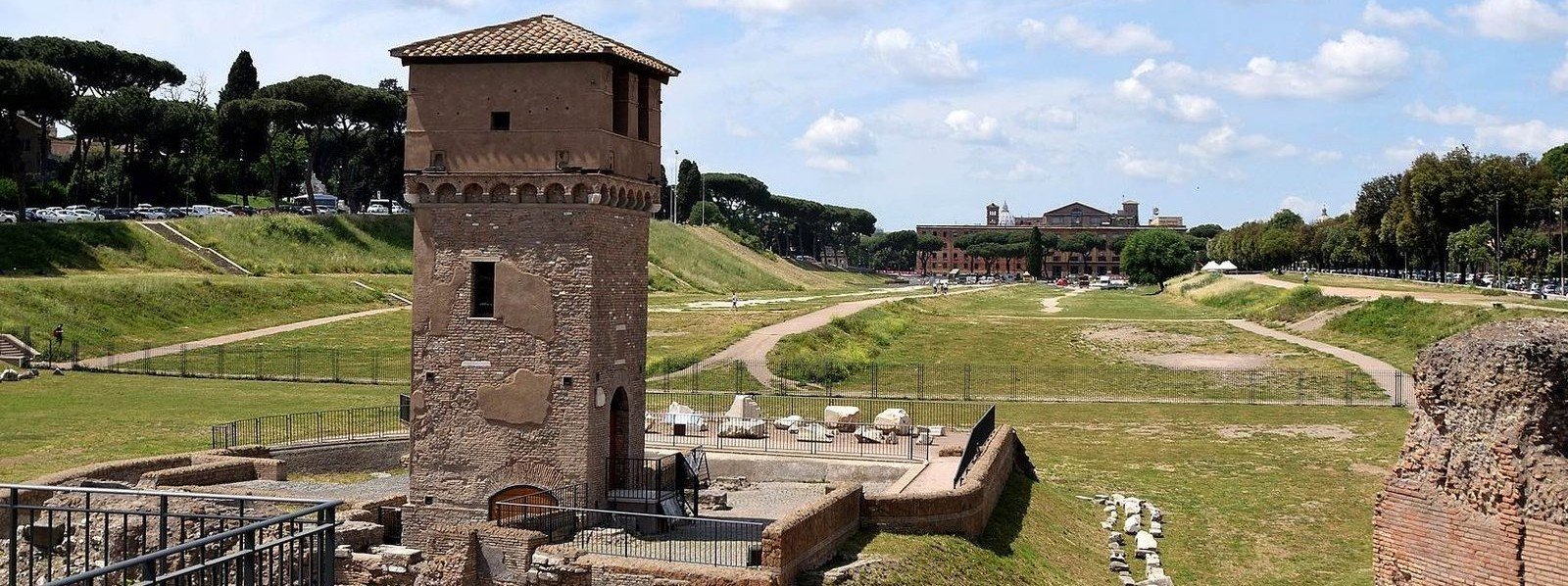
The fascinating archaeological area of the Circo Massimo, shown above, is one of the attractions included in this itinerary, which will take you on a discovery of the Rioni Testaccio and Ripa.
See also:
- Back to Complete Tour 1
- Guide to Rome
- Itineraries: 1d, 3d, CT2
- See: Attractions
- Do: Experiences
- Eat: Where and What
- Getting Around, Pass, Stay
Route Description
This 6.7 km circular walking itinerary will guide you through the authentic atmosphere of the Rioni Testaccio and Ripa, among history, archaeology and unique viewpoints, for an estimated total visit duration of 8 hours.
The highlights along the route include the Piramide Cestia, the Giardino degli Aranci with its stunning panorama, the charming Buco della Serratura dell’Ordine di Malta framing the dome of St. Peter’s perfectly, and the Circo Massimo, a symbol of the grandeur of ancient Rome.
RIONI TESTACCIO and RIPA
- Open Route Map📍
- Distance: 6.7* km on foot
- Time: 1.34* min. on foot
- Visit duration: 8 hours
- Stops: 10 main stops (X → I)* + 10 secondary stops
- Porta Portese (X) → Emporium – Porto Fluviale del Testaccio (A) → Mercato di Testaccio (B) → Piramide Cestia (C) → Basilica di San Saba (D) → Buco della Serratura dell’Ordine di Malta (E) → Basilica di Santa Sabina all’Aventino (F) → Giardino degli Aranci – Parco Savello (G) → Monumento a Giuseppe Mazzini (H) → Basilica di Sant’Anastasia al Palatino (I)
- For days, times, prices and other info see Itinerary Table 📊
* These values may differ from those shown on Google Maps, as they are continuously recalculated in real time. See also Itinerary Info and Navigator + See here for Shared Stop 🧩
Steps Details
📌 All the stops summarized here are structured in the Itinerary Table 📊 with days, opening hours, prices, and Wikipedia 🌐 and Google Maps insights.
Morning
⬇️ starting point
X. Porta Portese
The tour begins at Porta Portese, the famous entrance to Rome’s largest Sunday market. Here you will find a mix of antique stalls, vintage clothes and curious objects that attract locals and tourists looking for small treasures.
✨ The charm of Porta Portese lies in its authentic Roman soul: getting lost among stalls and curious objects means experiencing an everyday scene of the capital far from the usual tourist routes.
📌 Although the Mercato di Porta Portese takes place only on Sunday mornings, we have included it in the itinerary because of its strong local character.
⬇️
A. Emporium – Porto Fluviale del Testaccio
Walking along the Lungotevere Testaccio, you will reach the Porto Fluviale del Testaccio, an ancient river port of Rome. This archaeological site tells the story of Roman trade and river transportation.
⬇️
B. Mercato di Testaccio
Next, you will immerse yourself in the lively atmosphere of the Mercato di Testaccio, a place where you can taste the delicacies of Roman cuisine. Nearby, the Mattatoio now houses a cultural space and one of the most important archaeological areas: Monte Testaccio, an artificial hill made of fragments of amphorae, known as “Monte dei Cocci”, which bears witness to the intense commercial activity of ancient Rome.
✨ Through aromas, flavours and popular traditions, the Mercato di Testaccio offers an authentic glimpse into the everyday life of the neighbourhood.
📌 The Area archeologica nuovo mercato Testaccio and Monte dei Cocci can be visited upon request. You can find the phone number in their respective Google Maps pages, accessible through the links in the table.
⬇️
C. Piramide Cestia
Continue towards the majestic Piramide Cestia, a Roman tomb in Egyptian style built in the 1st century BC. Here you will also find Porta San Paolo, one of the gates of the Aurelian Walls, and the Museo della Via Ostiense, which tells the story of the ancient road leading to the port of Ostia.
📌 The Museo della Via Ostiense is temporarily closed.
⬇️
D. Basilica di San Saba
The morning ends with a visit to the Basilica di San Saba, a medieval church located on the Aventine Hill, famous for its frescoes and for the intimate and peaceful atmosphere that distinguishes it.
Afternoon
⬇️
E. Buco della serratura dell’Ordine di Malta
Moving slightly higher up on the Aventine Hill, stop at the Buco della Serratura dell’Ordine di Malta. Through this small opening, you will see a perfect view of the dome of St. Peter’s Basilica, framed by the surrounding gardens.
❌ During high season, a queue may form at the entrance: include it in your route considering a short waiting time.
⬇️
F. Basilica di Santa Sabina all’Aventino
The next stop is the Basilica di Santa Sabina, one of the oldest and most important churches in Rome, founded in the 5th century. Inside, you will find precious mosaics and the famous inlaid wooden door, one of the masterpieces of Early Christian art.
✨ Entering Santa Sabina means taking a journey into Early Christian Rome, in an atmosphere of rare tranquillity far from the city’s chaos.
⬇️
G. Giardino degli Aranci – Parco Savello
Terrazza Belvedere Aventino – After visiting the basilica, head to the nearby Giardino degli Aranci. Here you can relax while admiring the city from above thanks to the Terrazza Belvedere dell’Aventino, which offers a splendid panoramic view of Rome and the Tiber River.
❌ At sunset, it is one of the most popular panoramic spots on the Aventine Hill: expect possible crowds during periods of higher tourist attendance.
⬇️
H. Monumento a Giuseppe Mazzini
In the nearby Roseto Comunale, open during the spring season, you will find the Monumento a Giuseppe Mazzini (National Monument), as well as a collection of roses from all over the world. This garden is perfect for a relaxing break and a walk among scents and colours.
⬇️
I. Basilica di Sant’Anastasia al Palatino
The itinerary ends with a visit to the Basilica di Sant’Anastasia al Palatino, an ancient church located next to the Circo Massimo, the immense Roman stadium once used for chariot races. Here you can imagine the competitions and celebrations that once animated this space.
❌ The vast area of the Circo Massimo is a public park and the outdoor walk is free and accessible at any time. However, to visit the fenced archaeological remains (with the galleries and the Torre della Moletta), an entrance ticket is required and can be purchased at the entrance in Piazza di Porta Capena.
Dinner
After exploring the districts of Testaccio and Ripa, the best way to end the day is to enjoy dinner in one of the historic trattorias in the area, the birthplace of the most authentic Roman cuisine. Among the typical dishes to try, we recommend:
- Carciofi alla romana, one of the most representative appetizers of Roman culinary tradition;
- Rigatoni con la pajata, a historic first course and symbol of traditional Roman cuisine;
- Coda alla vaccinara, a rich speciality that originated precisely in the Testaccio district;
- Pangiallo, an ancient Roman dessert prepared with dried fruit, honey and spices.
To taste these specialities, you can choose some of the most renowned restaurants in the area, such as Felice a Testaccio, famous for its traditional Roman cuisine, Flavio al Velavevodetto, overlooking Monte Testaccio, or Checchino dal 1887, a historic restaurant considered one of the symbols of Testaccio gastronomy.
For a complete overview of where and what to eat in Rome, visit our dedicated guides: Where to eat in Rome and What to eat in Rome.
Sleeping
For this itinerary dedicated to the districts of Testaccio and Ripa, the best solution is to stay right in the Testaccio neighbourhood, one of the most authentic areas of Rome. From here, you can easily reach many of the itinerary’s attractions on foot, while experiencing the atmosphere of traditional Roman life.
An excellent alternative is the area around the Aventino and the Circo Massimo, ideal for those who wish to stay in a quiet area, rich in green spaces and within a short distance of the main points of interest along the route.
The nearby neighbourhood of Trastevere is also an excellent base, thanks to its lively selection of restaurants and traditional venues, as well as the possibility of easily reaching Testaccio, Ripa and the historic centre either on foot or by public transport.
For more information on where to stay in the city, you can consult our dedicated guide: Where to sleep in Rome: Info and Tips.

📊 Itinerary Table
In the table below you will find all the attractions included in the itinerary, to enhance and better guide your visit.
- Scroll the table down and to the right 📱🔄 Rotate your phone horizontally to get an overview of opening days, hours, prices of attractions, and for further details on Wikipedia 🌐 and Google Maps ➡️.
- ⚠️ Always check the opening days and hours of attractions through the Google Maps entries linked in the table. See also Itinerary Info.
- To see the explanation of each data column, click its title (e.g. Attractions Index, Ratings, Org, etc.) at the top of the table.
⏳ Caricamento tabella in corso…
📌 This table is updated every 6–12 months.
🛡️ The tables on Tourplan360.com are original content protected by copyright © and monitored through anti-plagiarism tracking systems.
FAQ
You can open the Route Map📍 also from here. Alternatively, you can consult the dedicated section with all the details.
📌 See the Route Description
How long does it take to visit the Testaccio and Ripa districts?
The complete itinerary allows you to discover the main attractions of Testaccio, Ripa and Aventino in about 8 hours.
Can this Testaccio and Ripa itinerary be done on foot?
Yes. The route is pedestrian and covers approximately 6.7 km, connecting Porta Portese, the Testaccio district, the Aventino and the Circo Massimo.
📌 See also Getting around Rome
Is it possible to do this itinerary in half a day?
Yes. It is possible to visit the main stops in half a day by adapting the route according to your needs and interests.
Where can I find opening days, times and ticket prices for the attractions?
All updated information is available in the dedicated itinerary table, where direct links to Google Maps ➡️ and Wikipedia 🌐 are also provided for each attraction.
📌 See the Itinerary Table 📊
See also
- Back to Complete Tour 1
- Complete Tour 2
- Rome in 1 day
- Rome in 3 days
- Guide to Rome
- See: Attractions
- Do: Experiences
- Eat: Where and What
- Getting Around, Pass, Stay
Other Destinations
🔐 Some images on this page are used under Creative Commons licenses:
By Richard Nevell – Naples, panoramic view of the city and Mount Vesuvius – Own work – CC BY-SA 4.0 – Wikimedia Commons
By PROPOLI87 – Florence, panorama from Piazzale Michelangelo – Own work – CC BY-SA 4.0 – Wikimedia Commons
By Luca Aless – Venice, panoramic view of Doge’s Palace and St. Mark’s Campanile – Own work – CC BY-SA 4.0 – Wikimedia Commons
By Rabax63– Roma, panoramica del Circo Massimo – Opera propria – CC BY-SA 4.0 – Wikimedia Commons

