
Rome, Districts Beyond the Historic Center: what to see and complete itinerary
Main Attractions, Maps and Useful Information


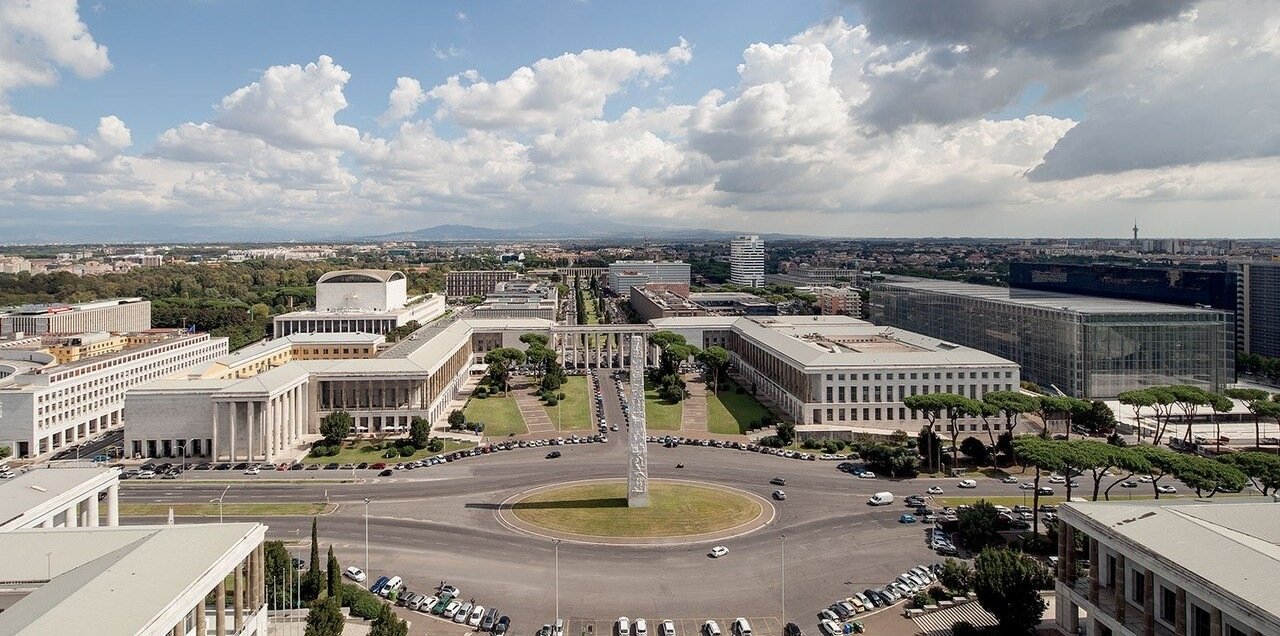
This itinerary dedicated to the districts beyond the Historic Center of Rome will take you to discover unique areas such as EUR, shown in the panorama above, with its monumental architecture.
See also:
- Back to Complete Tour 2
- Guide to Rome
- Itineraries: 1d, 3d, CT1
- See: Attractions
- Do: Experiences
- Eat: Where and What
- Getting Around, Pass, Stay
Overview
Rome does not end with its famous Historic Center: beyond the monumental squares and the places most visited by tourist circuits, a surprising city unfolds, made up of neighbourhoods with a unique character.
From the monumental architecture of EUR, to the archaeological remains of Ostiense and Prenestino, passing through the catacombs of Tiburtino, the historic villas of Nomentano, and finally the modern and contemporary art museums of Flaminio.
To allow you to explore these neighbourhoods, we have developed two itineraries to follow by car, guiding you on a journey to discover a lesser-known Rome that is equally fascinating.
Routes: Maps, Descriptions, Details
EUR, OSTIENSE and PRENESTINO
- Open Route Map📍
- Distance: 21.2* km by car
- Travel time: 55* min. by car
- Visit duration: 11 hours spread over 2 days
- Stops: 10 main (X → I)* + 19 secondary
- Palazzo della Civiltà Italiana (X) → Museo delle Civiltà (A) → Museo della Civiltà Romana (B) → Abbazia delle Tre Fontane (C) → Basilica di San Paolo fuori le Mura (D) → Abbazia di San Paolo Fuori le Mura (E) → Centrale Montemartini / Musei Capitolini (F) → Acquedotto Alessandrino (G) → Catacombe dei Santi Marcellino e Pietro (H) → Basilica Sotterranea di Porta Maggiore (I)
- For days, times, prices and other info see Itinerary Table 📊
* These values may differ from those shown on Google Maps, as they are continuously recalculated in real time. See also Itinerary Info and Navigator + See here for Shared Stop 🧩
Route Description
SUMMARY
The route we have created for the EUR, Ostiense and Prenestino neighbourhoods covers a distance of approximately 21 km by car, divided into 10 main stops, with an estimated total visiting time of around 11 hours, spread over two days.
The first day is dedicated to EUR, a symbolic neighbourhood of modern Rome, with a visit to the Museo delle Civiltà, the monumental architecture of the area and the Abbazia delle Tre Fontane complex, a place of great historical and religious importance.
The second day continues through Ostiense and Prenestino, with the majestic Basilica of Saint Paul Outside the Walls, the Catacombs of Saints Marcellinus and Peter, and other important archaeological and monumental sites that tell the story of Christian Rome and the hidden heritage of ancient Rome.
Expand STEP DETAIL ⬇️
📌 All the stops summarized here are structured in the Itinerary Table 📊 with days, opening hours, prices, and Wikipedia 🌐 and Google Maps insights.
Day 1
⬇️ starting point
X. Palazzo della Civiltà Italiana
The itinerary begins at the Palazzo della Civiltà Italiana, also known as the “Square Colosseum”, one of the most iconic buildings in the EUR district. This masterpiece of Rationalist architecture reflects the modern face of Rome and stands as one of the most recognizable symbols of the contemporary city.
⬇️
A. Museo delle Civiltà
The visit continues to the Museo delle Civiltà, a large museum complex dedicated to the cultures, arts, and traditions of the world. It houses important collections from different historical periods and geographical regions:
- Museo Preistorico Etnografico “L. Pigorini”: displays archaeological finds and evidence of prehistoric and ethnographic cultures.
- Museo Nazionale d’Arte Orientale “G. Tucci”: features artworks and artifacts dedicated to Asian and Eastern civilizations.
- Museo delle Arti e Tradizioni Popolari “L. Loria”: preserves objects and testimonies related to Italian folk culture.
- Museo Nazionale dell’Alto Medioevo “A. Vaccaro”: showcases artworks and archaeological finds from the Early Middle Ages.
- Piazza Guglielmo Marconi and its obelisk complete the visit to the monumental EUR district.
✨ A journey through distant cultures and diverse traditions, where prehistoric artifacts, Eastern art, and folk heritage reveal the extraordinary diversity of human civilizations.
❌ Allow approximately 150 minutes to visit the different sections of the Museo delle Civiltà; a shorter stop will only allow for a partial visit of the complex.
⬇️
B. Museo della Civiltà Romana
The EUR complex also includes the Museo della Civiltà Romana, a museum dedicated to the history, art, and daily life of Ancient Rome, renowned for its extensive collection of reconstructions, scale models, and replicas that illustrate the city’s evolution through the centuries.
In the same area, you will also find the Planetario di Roma, an immersive experience among stars, planets, and galaxies, where you can explore the universe as if it were just a few steps away.
📌 The Museo della Civiltà Romana is currently closed. Please check for updates on its reopening before your visit.
⬇️
C. Abbazia delle Tre Fontane
The itinerary concludes with a visit to the Abbazia delle Tre Fontane, a (National Monument) of great historical and religious significance. The complex includes three important historic churches:
- Chiesa dei Santi Vincenzo e Anastasio: one of the oldest churches in the complex, preserving an intimate atmosphere and bearing witness to the abbey’s long spiritual history.
- Chiesa di Santa Maria Scala Coeli: an evocative underground church associated with Christian tradition and the cult of the martyrs, distinguished by its particularly peaceful atmosphere.
- Chiesa di San Paolo alle Tre Fontane: according to tradition, it stands on the site of Saint Paul’s martyrdom, where three springs are said to have emerged at the moment of the Apostle’s beheading.
✨ The Abbazia delle Tre Fontane is a peaceful corner of silence and spirituality hidden within the EUR district, where history, nature, and religion come together to offer a surprising escape from the bustle of the city.
Day 2
⬇️
D. Papal Basilica of Saint Paul Outside the Walls
One of the four papal basilicas, the Basilica of Saint Paul Outside the Walls (UNESCO World Heritage) is well worth a visit for its impressive scale and extraordinary artistic heritage. Entering through the monumental quadriportico, with the statue of Saint Paul at its center and the colonnade surrounding the basilica, leads you into a place of remarkable beauty. Inside, you can admire the magnificent mosaics, visit the Pinacoteca with its works of art, and explore the archaeological area containing the remains of the original basilica.
✨ Walking into the quadriportico of the Basilica of Saint Paul Outside the Walls means entering one of the most evocative spaces of Christian Rome, where the colonnade, mosaics, and monumental architecture create a truly unique atmosphere.
❌ A complete visit requires more time than exploring the basilica alone: allow extra time for the quadriportico, the Pinacoteca, and the archaeological area.
⬇️
E. Abbazia di San Paolo Fuori le Mura
Visit the Abbazia di San Paolo and its magnificent medieval cloister, as well as the Monastic Garden and the Necropoli di San Paolo, which tell the story of the site and its Early Christian origins.
📌 The Monastic Garden can be visited upon request, while access to the Necropoli di San Paolo requires advance booking. You can find the phone numbers in the respective Google Maps listings accessible through the links in the table.
⬇️
F. Centrale Montemartini – 2nd Capitoline Museums Venue
Continue to Centrale Montemartini, a one-of-a-kind museum where sculptures from ancient Rome stand alongside turbines, engines, and machinery from a historic power station. This extraordinary contrast between classical archaeology and industrial archaeology creates one of the most original museum displays in the capital.
⬇️
G. Acquedotto Alessandrino
Continuing the route, you will reach the Acquedotto Alessandrino, built by Emperor Alexander Severus in the 3rd century. It is a remarkable testament to the engineering brilliance of the ancient Romans.
⬇️
H. Catacombe dei Santi Marcellino e Pietro
The Catacombs of Santi Marcellino e Pietro are another Early Christian site, featuring well-preserved frescoes and ancient sarcophagi. Nearby stands the Mausoleo di Elena, dedicated to the mother of Emperor Constantine.
✨ Descending into the underground catacombs means entering a hidden Rome, among ancient galleries, Early Christian frescoes, and the remains of the first Christian community.
📌 Visits to the Catacombe dei Santi Marcellino e Pietro and the Mausoleo di Elena require advance booking. You can find the phone number in the Google Maps listing accessible through the link in the table.
⬇️
I. Basilica Sotterranea di Porta Maggiore
End the afternoon with a visit to the fascinating Basilica Sotterranea di Porta Maggiore and the Sepolcro di Eurisace, one of Rome’s most mysterious archaeological sites. Discovered by chance in the 20th century, this underground monument preserves refined decorative elements and reveals a lesser-known chapter in the city’s history.
📌 The Basilica Sotterranea di Porta Maggiore can be visited upon request. You can find the phone number in the Google Maps listing accessible through the link in the table.
TIBURTINO, NOMENTANO and FLAMINIO
- Open Route Map📍
- Distance: 24.8* km by car
- Travel time: 58* min. by car
- Visit duration: 10 hours evenly spread over 2 days
- Stops: 10 main (X → I)* + 13 secondary
- Basilica di San Lorenzo fuori le Mura (X) → Chiesa di Santa Maria Immacolata (A) → Musei di Villa Torlonia (B) → MACRO Roma (C) → Museo Storico dei Bersaglieri (D) → Museo “Hendrik C. Andersen” (E) → MAXXI Roma (F) → Catacombe di Priscilla (G) → Museo della Zecca di Roma (H) → Basilica di Sant’Agnese fuori le Mura (I)
- For days, times, prices and other info see Itinerary Table 📊
* These values may differ from those shown on Google Maps, as they are continuously recalculated in real time. See also Itinerary Info and Navigator + See here for Shared Stop 🧩
Route Description
SUMMARY
The itinerary dedicated to the Tiburtino, Nomentano and Flaminio neighbourhoods covers a route of approximately 24.8 km by car, with 10 main stops and an estimated total visiting time of around 10 hours, organised over two days.
The first day takes visitors to discover the Tiburtino neighbourhood and the Nomentana area, among places of worship and historical landmarks such as the Basilica di San Lorenzo fuori le Mura, its catacombs, the Capuchin Crypt and the charming spaces of Villa Torlonia.
The second day continues towards the Flaminio neighbourhood and the surrounding areas, with the MAXXI, important museums and historic sites, up to the Basilica di Sant’Agnese fuori le Mura and the Mausoleo di Santa Costanza, valuable testimonies of Early Christian Rome.
Expand STEP DETAIL ⬇️
📌 All the stops summarized here are structured in the Itinerary Table 📊 with days, opening hours, prices, and Wikipedia 🌐 and Google Maps insights.
Day 1
⬇️ starting point
X. Basilica di San Lorenzo fuori le Mura
The day begins with the Basilica di San Lorenzo fuori le Mura, one of the seven churches of the Roman pilgrimage and among the oldest religious buildings in the city. Built on the burial site of San Lorenzo, it preserves precious medieval mosaics, an elegant cloister and numerous testimonies of the Christian history of Rome.
Next to the basilica is the Catacomba Ciriaca, an important early Christian funerary complex that preserves ancient burials and tells the story of the origins of the Roman Christian community.
📌 The Catacomba Ciriaca can be visited upon request. You will find the telephone number in the Google Maps listing accessible through the link in the table.
⬇️
A. Chiesa di Santa Maria Immacolata
Continue towards the Chiesa di Santa Maria Immacolata dei Cappuccini, one of the most unusual places in Rome. In addition to the church, you can visit the Museo dei Frati Cappuccini, which tells the history of the order through works of art, documents and liturgical objects.
The most famous attraction is undoubtedly the Cripta dei Frati Cappuccini, decorated with the bones of thousands of religious figures according to a symbolism that invites visitors to reflect on the fleeting nature of life.
✨ Entering the Cripta dei Frati Cappuccini is an experience that is difficult to forget: a unique place in the world, capable of surprising and inspiring reflection at the same time.
⬇️
B. Musei di Villa Torlonia
The visit continues at the Musei di Villa Torlonia, one of the most fascinating museum complexes in the capital, set within an elegant historic park. The villa’s buildings house art collections, original architectural features and historical testimonies from the 20th century, offering a rich and varied itinerary.
During the visit you can discover:
- Casina delle Civette, decorated with magnificent artistic stained-glass windows;
- Serra Moresca, with its unique architectural elements;
- Teatro di Villa Torlonia and the Catacombe di Villa Torlonia;
- Rifugio antiaereo di Mussolini, which illustrates the historical period of the Second World War.
📌 A visit to the Musei di Villa Torlonia requires a reservation. You will find the telephone number in the Google Maps listing accessible through the link in the table.
📌 Teatro di Villa Torlonia, Catacombe di Villa Torlonia and Rifugio antiaereo di Mussolini can be visited upon request. You will find the telephone number in the Google Maps listing of the Musei di Villa Torlonia accessible through the link in the table.
⬇️
C. MACRO Roma
End the day at the MACRO – Museo d’Arte Contemporanea di Roma, one of the main spaces dedicated to contemporary art in the capital. Housed in a modern design building created from the former Birra Peroni factory, the museum features installations, photography, multimedia artworks and temporary exhibitions by Italian and international artists.
✨ Every visit to the MACRO is different from the previous one: exhibitions and installations change regularly, always offering new ideas and perspectives on contemporary art.
Day 2
⬇️
D. Museo Storico dei Bersaglieri
The second day of the visit starts at the Museo Storico dei Bersaglieri, located next to Porta Pia, one of the symbolic places of the Italian Risorgimento. The museum retraces the history of the famous military corps through uniforms, weapons, memorabilia, photographs and historical documents.
Outside, you can also admire the Monumento al Bersagliere, dedicated to the courage and sacrifice of Italian soldiers.
📌 The Museo Storico dei Bersaglieri can be visited upon request. You will find the telephone number in the Google Maps listing accessible through the link in the table.
⬇️
E. Museo “Hendrik C. Andersen”
Continue towards the Museo Hendrik C. Andersen, housed in the residence of the Norwegian-American artist. The museum preserves monumental sculptures, paintings, photographs and architectural projects that tell the artistic vision of Andersen and his ambitious project of a “World City”, conceived as a symbol of art, culture and international cooperation.
⬇️
F. MAXXI Roma
The MAXXI – Museo Nazionale delle Arti del XXI Secolo is one of the main Italian museums dedicated to contemporary art. Designed by the architect Zaha Hadid, the building is considered a masterpiece of modern architecture thanks to its fluid lines and large exhibition spaces. Inside, you can admire permanent and temporary exhibitions dedicated to art, architecture, photography and design, featuring works by Italian and international artists.
✨ The futuristic lines designed by Zaha Hadid transform the museum itself into a work of art: it is worth visiting even before entering the exhibition halls.
❌ If you have little time, focus on the exhibitions that interest you most: a complete visit may take more hours than expected.
⬇️
G. Catacombe di Priscilla
The Catacombe di Priscilla represent one of the most important early Christian funerary complexes in Rome. Along the underground galleries, you can observe ancient frescoes, burials and testimonies of the first Christian communities, including the famous depiction of the Madonna con Bambino, considered one of the oldest known representations.
Not far away extends Villa Ada Savoia, one of the largest public parks in the city, ideal for enjoying a walk surrounded by greenery.
📌 A visit to the Catacombe di Priscilla requires a reservation. You will find the telephone number in the Google Maps listing accessible through the link in the table.
⬇️
H. Museo della Zecca di Roma
The Museo della Zecca di Roma allows visitors to discover the history of Italian coin production through ancient machinery, minting tools, medals and a rich collection of historical and modern coins. The visit offers an interesting journey dedicated to the evolution of manufacturing techniques and engraving art over the centuries.
📌 The Museo della Zecca di Roma can be visited upon request. You will find the telephone number in the Google Maps listing accessible through the link in the table.
⬇️
I. Basilica di Sant’Agnese fuori le mura
End the day at the Basilica di Sant’Agnese fuori le mura, built on the site where, according to tradition, the young martyr Sant’Agnese was buried. The basilica preserves precious medieval mosaics and a peaceful atmosphere that makes it one of the most evocative churches in Rome. Next to it stands the Mausoleo di Santa Costanza, famous for its circular plan and the splendid early Christian mosaics that decorate its interior.
✨ The tranquillity of the basilica and the beauty of the nearby Mausoleo di Santa Costanza offer one of the most authentic and intimate corners of Christian Rome.
Eating
The best way to conclude each itinerary is with a dinner to savour some of the specialities of Roman cuisine. Among the dishes not to be missed are:
- Filetti di baccalà fritti, one of the most loved appetisers of Roman tradition, crispy on the outside and soft on the inside;
- Spaghetti alla gricia, one of the great classics of Roman cuisine, prepared with guanciale, pecorino romano and black pepper;
- Abbacchio alla romana, a signature dish of Lazio tradition, slowly cooked with aromatic herbs;
- Maritozzo, the quintessential Roman dessert, perfect for ending the day with a typical local speciality.
To taste these specialities, you can choose some selected restaurants featured in our guides:
- Il Sanlorenzo, a restaurant appreciated for its high-level cuisine and refined gastronomic offerings;
- L’Arcangelo, renowned for enhancing Roman tradition through carefully prepared dishes and quality ingredients;
- Antico Arco, ideal for those looking for refined Italian cuisine in an elegant and charming setting;
- Trattoria Da Cesare, one of the most appreciated places to enjoy authentic Roman cuisine rooted in tradition.
For a complete overview of where and what to eat in the capital, also consult our dedicated guides: Where to eat in Rome and What to eat in Rome.
Sleeping
For this itinerary discovering the neighbourhoods of Rome beyond the historic centre, the most interesting areas to stay are those connected to the different points along the route:
- Flaminio, ideal for those who want to stay close to the MAXXI and the northern part of the city, with excellent connections to the historic centre;
- Nomentano, a good choice for those looking for a quiet and residential neighbourhood, close to Villa Torlonia, the Catacombe di Priscilla and well connected with the rest of Rome;
- Ostiense, perfect for those looking for a lively and alternative area, with restaurants, evening venues and convenient connections to the centre and the city’s archaeological areas;
- Eur, recommended for those who prefer a modern, organised neighbourhood with large green spaces, also ideal for those travelling by car thanks to easier parking compared to central areas;
- Tiburtino, a practical solution for those looking for an area well served by public transport and convenient for reaching the attractions in the eastern part of the city;
- Tor Tre Teste, particularly suitable for those who want a quieter accommodation away from the tourist crowds, while accepting longer travel times to the centre.
For more information on where to stay in the capital, you can consult our dedicated guide: Where to sleep in Rome: Info and Tips.

📊 Itinerary Table
The following table shows all the stops of the two routes to help you better organise your visit.
- Scroll the table down and to the right 📱🔄 Rotate your phone horizontally to get an overview of opening days, hours, prices of attractions, and for further details on Wikipedia 🌐 and Google Maps ➡️.
- ⚠️ Always check the opening days and hours of attractions through the Google Maps entries linked in the table. See also Itinerary Info.
- To see the explanation of each data column, click its title (e.g. Attractions Index, Ratings, Org, etc.) at the top of the table.
⏳ Caricamento tabella in corso…
📌 This table is updated every 6–12 months.
🛡️ The tables on Tourplan360.com are original content protected by copyright © and monitored through anti-plagiarism tracking systems.
FAQ
You can open the maps of the two routes also from here:
Alternatively, you can consult the dedicated overview with all the details of the routes, stops and attractions visited.
📌 Consult the Overview
How much time is needed to visit the neighbourhoods beyond the historic centre of Rome?
To visit the neighbourhoods and historical sites beyond the centre of Rome, you need approximately 4 days in total, divided into 2 different itineraries of about 10 hours each.
Can this Rome itinerary be done on foot?
No. The routes have been designed to be completed mainly by car or by using public transport, considering the distances between the different neighbourhoods and the attractions spread across various areas of the city.
📌 See also Getting around Rome: Info and Tips
Is it worth booking the main attractions in advance?
Yes. It is advisable to check access procedures, reservations and availability in advance, especially for some attractions that require limited entry or visits upon request.
📌 See also Experiences in Rome: Tours, Tickets and Useful Info
Is it possible to complete these itineraries in just one day?
Yes. In one day it is possible to visit some of the main attractions, adapting the itineraries according to your interests and available time.
Where can I find days, opening hours and prices of the attractions?
All updated information is available in the itinerary tables, where you will also find direct links to Google Maps ➡️ and Wikipedia 🌐 for each attraction.
📌 Consult the Itinerary Table 📊
See also
- Back to Complete Tour 2
- Complete Tour 1
- Rome in 1 day
- Rome in 3 days
- Guide to Rome
- Itineraries: 1d, 3d, CT1, CT2
- See: Attractions
- Do: Experiences
- Eat: Where and What
- Getting Around, Pass, Stay
Other Destinations
🔐 Some images on this page are used under Creative Commons licenses:
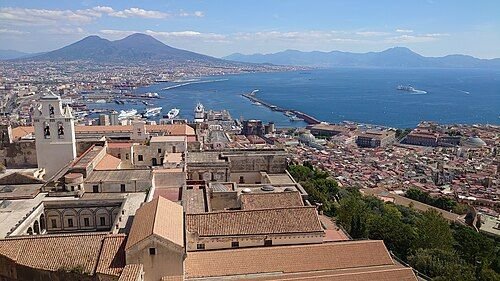
By Richard Nevell – Naples, panoramic view of the city and Mount Vesuvius – Own work – CC BY-SA 4.0 – Wikimedia Commons
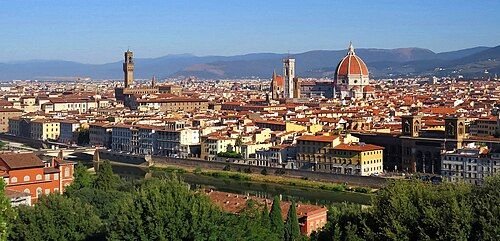
By PROPOLI87 – Florence, panorama from Piazzale Michelangelo – Own work – CC BY-SA 4.0 – Wikimedia Commons
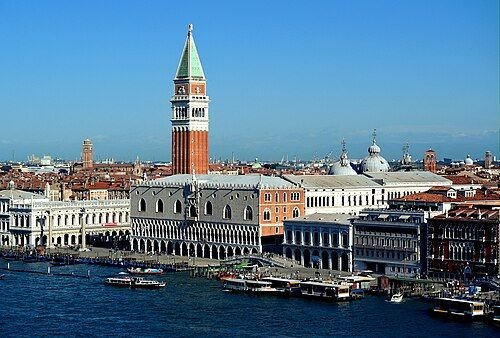
By Luca Aless – Venice, panoramic view of Doge’s Palace and St. Mark’s Campanile – Own work – CC BY-SA 4.0 – Wikimedia Commons
By Andrea Ricci – Panoramica dall’alto della Piazza Guglielmo Marconi (EUR, Roma) e del Museo delle Civiltà – Opera propria, CC BY-SA 4.0 – Wikimedia Commons
