
Rome, Rioni Colonna and Ponte: what to see and complete itinerary
Travel guide, opening hours, prices, map


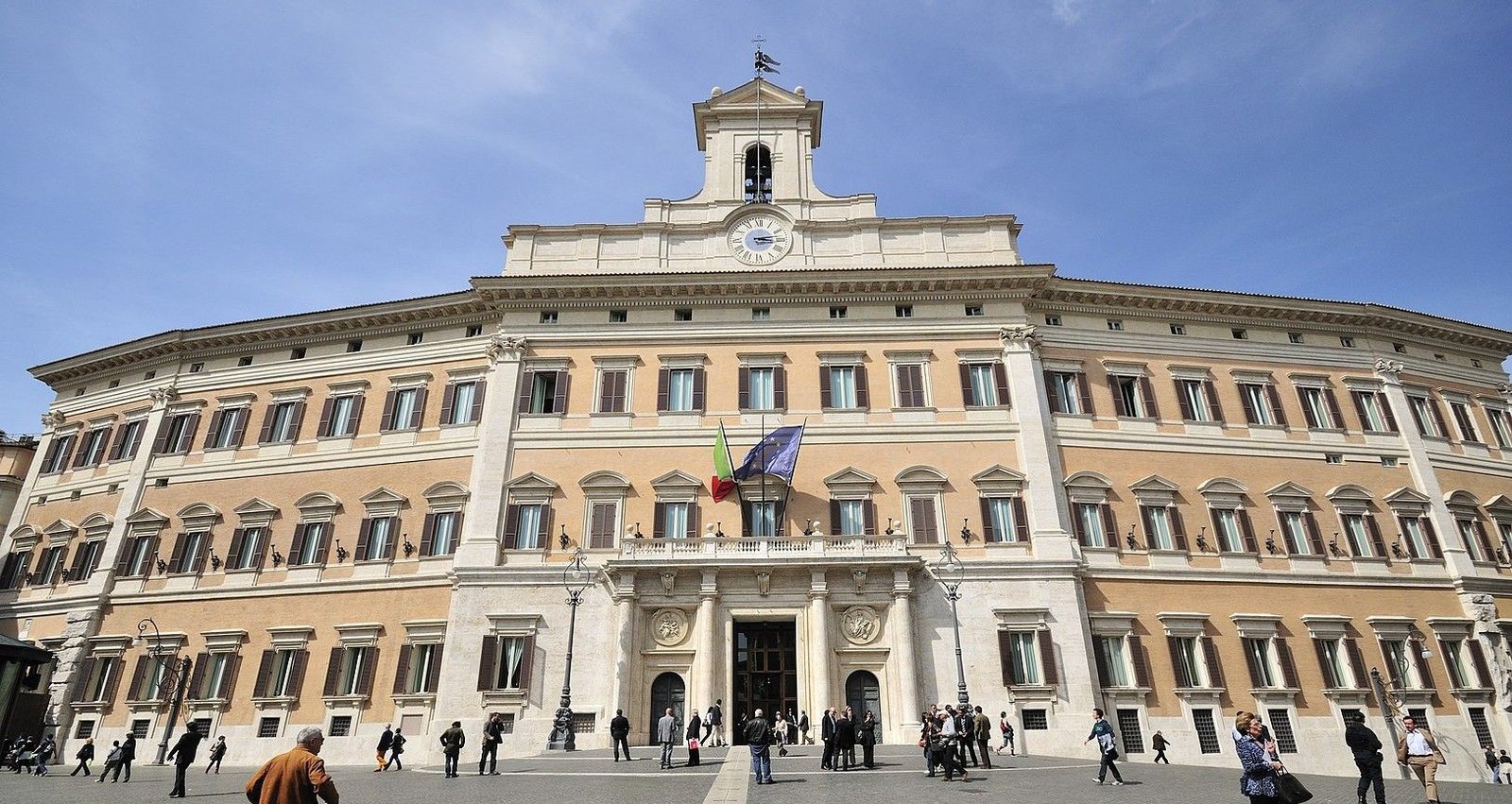
This itinerary dedicated to the Rioni Colonna and Ponte will take you through monumental squares, institutional buildings such as Montecitorio, pictured above, historic churches and charming corners of the Eternal City.
See also:
- Back to Complete Tour 1
- Guide to Rome
- Itineraries: 1d, 3d, CT2
- See: Attractions
- Do: Experiences
- Eat: Where and What
- Getting Around, Pass, Stay
Route Description
This approximately 2.9 km walking itinerary, with an estimated visit duration of 6 hours, will take you to discover the Rioni Colonna and Ponte, two central areas of Rome rich in history and artistic heritage.
The itinerary passes through some of the most significant places in the area, from Palazzo Chigi, Montecitorio and Palazzo Madama, seats of Italian institutional power, to Piazza Colonna with the Colonna di Marco Aurelio, up to the charming Chiostro del Bramante and the Museo Nazionale Romano of Palazzo Altemps.
RIONI COLONNA and PONTE
- Open Route Map📍
- Distance: 2.9* km on foot
- Time: 0.4* min. on foot
- Visit duration: 6 hours
- Stops: 10 main stops (X → I)* + 7 secondary stops
- Palazzo Chigi (X) → Palazzo Montecitorio (A) → Palazzo Madama (B) → Chiesa di Santa Maria della Pace (C) → Museo Naz. Romano, Palazzo Altemps (D) → Casa Museo Mario Praz (E) → Museo Napoleonico (F) → Basilica di San Lorenzo in Lucina (G) → Basilica di San Silvestro in Capite (H) → Basilica di Sant’Andrea delle Fratte (I)
- For days, times, prices and other info see Itinerary Table 📊
* These values may differ from those shown on Google Maps, as they are continuously recalculated in real time. See also Itinerary Info and Navigator + See here for Shared Stop 🧩
Steps Details
📌 All the stops summarized here are structured in the Itinerary Table 📊 with days, opening hours, prices, and Wikipedia 🌐 and Google Maps insights.
Morning
⬇️ starting point
X. Palazzo Chigi
The itinerary starts from Palazzo Chigi, the seat of the Italian Government, located in the historic Piazza Colonna, named after the majestic Colonna di Marco Aurelio standing at its centre. This column, almost 30 metres high, was erected to celebrate the victories of the Roman emperor Marcus Aurelius, with carved reliefs depicting his military campaigns.
📌 The visit to Palazzo Chigi requires mandatory reservation. You can find the phone number in the Google Maps listing accessible through the link in the table.
⬇️
A. Palazzo di Montecitorio
A few steps will take you to Piazza di Montecitorio, where the imposing Palazzo Montecitorio, the seat of the Chamber of Deputies, stands. The square, with its Egyptian obelisk, is a place of great political and historical importance, and a stop here will allow you to appreciate Italian architecture and political history.
📌 Palazzo di Montecitorio can be visited upon request. You can find the phone number in the Google Maps listing accessible through the link in the table.
⬇️
B. Palazzo Madama
Continuing onwards, you will reach Palazzo Madama, the seat of the Senate of the Republic. The palace, built during the Renaissance, is another important symbol of political power in Rome. You will be able to admire its magnificent façade and the atmosphere of this central area.
📌 Palazzo Madama can be visited upon request. You can find the phone number in the Google Maps listing accessible through the link in the table.
⬇️
C. Chiesa di Santa Maria della Pace
Venture into the narrow streets to discover the splendid Chiesa di Santa Maria della Pace. In addition to its Baroque façade, the church houses the famous Chiostro del Bramante, a Renaissance masterpiece. A visit to the cloister will allow you to explore a peaceful and artistic space, with temporary exhibitions that enrich the experience.
✨ The intimate atmosphere of the church offers a pleasant contrast with the lively historic centre, providing one of the quietest places along the itinerary.
❌ If no temporary exhibitions are scheduled, the visit to the cloister is rather short and can be evaluated according to the time available.
⬇️
D. Museo Nazionale Romano di Palazzo Altemps
The morning ends with a visit to the Museo Nazionale Romano of Palazzo Altemps, which houses an extraordinary collection of ancient sculptures and classical artworks. Next to the palace, you will find the Basilica di Sant’Apollinare, a historic church that is worth visiting.
✨ Among Renaissance courtyards and masterpieces of classical sculpture, the Museo Nazionale Romano of Palazzo Altemps is one of the less crowded museums where you can experience Rome in greater tranquillity.
Afternoon
⬇️
E. Casa Museo Mario Praz
The afternoon begins with a visit to Casa Museo Mario Praz, a lesser-known but incredibly fascinating place. This house museum preserves the personal collection of Mario Praz, a writer and art critic, with 19th-century furnishings and artworks that transport visitors to another era.
📌 The visit to Casa Museo Mario Praz requires mandatory reservation. You can find the phone number in the Google Maps listing accessible through the link in the table.
⬇️
F. Museo Napoleonico
Continuing along the Tiber, you will reach Museo Napoleonico, which displays a vast collection of objects related to the Bonaparte family and the Napoleonic era. It is a museum rich in historical memorabilia, perfect for enthusiasts.
⬇️
G. Basilica di San Lorenzo in Lucina
Not far away, in the square bearing the same name, you will find the Basilica di San Lorenzo in Lucina, one of the oldest churches in Rome. Its interior hides treasures such as a crucifix by Guido Reni, and its intimate atmosphere is ideal for a spiritual break.
⬇️
H. Basilica di San Silvestro in Capite
The next stop is the Basilica di San Silvestro in Capite, a church that, according to tradition, houses the head of Saint John the Baptist. The Baroque façade and the richly decorated interior make this church a hidden gem.
⬇️
I. Basilica di Sant’Andrea delle Fratte
End the afternoon with a visit to the Basilica di Sant’Andrea delle Fratte, famous for Bernini’s angel sculptures that decorate the altar. This Baroque church is a masterpiece of art and faith, perfect for concluding your cultural itinerary.
Dinner
After exploring the Rioni Colonna and Ponte, the best way to end the day is to enjoy dinner at one of the restaurants in the historic centre, tasting some of the most representative dishes of Roman culinary tradition. Among the specialties not to be missed are:
- Supplì, the classic Roman appetizer with a melted mozzarella heart;
- Spaghetti alla gricia, one of the great first courses of Roman cuisine, prepared with guanciale and pecorino romano;
- Coda alla vaccinara, one of the most iconic main courses of Roman tradition, slowly cooked until it becomes extremely tender;
- Maritozzo, the famous Roman dessert filled with whipped cream, perfect to end the dinner.
Among the restaurants in the area where you can taste these specialties, it is worth stopping at Da Gino al Parlamento, just a few steps from Palazzo Montecitorio, Casa Coppelle, in the heart of the Rione Ponte, and Pierluigi, a historic restaurant located near Piazza Navona.
For a complete overview of where and what to eat in Rome, visit our dedicated guides: Where to eat in Rome and What to eat in Rome.
Sleeping
To visit the Rioni Colonna and Ponte, the best area to stay in is the Centro Storico, especially between Piazza Colonna, Piazza Navona and the Pantheon. This location allows you to reach all the main stops of the itinerary and many of Rome’s most famous attractions on foot.
An excellent alternative is the Campo de’ Fiori area, ideal for those who want to stay in a neighbourhood full of restaurants, cafés and monuments, just a few minutes from the Rioni Colonna and Ponte.
For those who enjoy walking after dinner, the historic centre allows you to easily reach Fontana di Trevi, Piazza di Spagna and the riverfront along the Tiber on foot, continuing to discover the city even in the evening hours.
For more information on where to stay in the city, you can consult our dedicated guide: Where to sleep in Rome: Info and Tips.

📊 Itinerary Table
In the table below you will find all the attractions included in the itinerary, to enhance and better plan your visit:
- Scroll the table down and to the right 📱🔄 Rotate your phone horizontally to get an overview of opening days, hours, prices of attractions, and for further details on Wikipedia 🌐 and Google Maps ➡️.
- ⚠️ Always check the opening days and hours of attractions through the Google Maps entries linked in the table. See also Itinerary Info.
- To see the explanation of each data column, click its title (e.g. Attractions Index, Ratings, Org, etc.) at the top of the table.
⏳ Caricamento tabella in corso…
📌 This table is updated every 6–12 months.
🛡️ The tables on Tourplan360.com are original content protected by copyright © and monitored through anti-plagiarism tracking systems.
FAQ
You can open the Route Map📍 also from here. Alternatively, you can consult the dedicated section with all the details.
📌 See the Route Description
How long does it take to visit the Colonna and Ponte districts?
The itinerary takes about 6 hours and includes the main points of interest in the Colonna and Ponte districts.
Can this Colonna and Ponte itinerary be done on foot?
Yes. The route is entirely pedestrian and covers approximately 2.9 km through the historic centre of Rome.
📌 See also Getting around Rome
Is it worth booking some attractions included in the itinerary?
Yes. Some attractions, such as Palazzo Chigi, Palazzo Montecitorio and Palazzo Madama, can be visited by request or reservation. It is advisable to check availability and access conditions before your visit.
📌 See also Experiences in Rome
Is it possible to do this itinerary in half a day?
Yes. In half a day, it is possible to visit the main attractions, focusing on the historic buildings, churches and museums you prefer.
Where can I find opening days, times and ticket prices for the attractions?
All updated information is available in the dedicated itinerary table, which also includes direct links to Google Maps ➡️ and Wikipedia 🌐 for each attraction.
📌 See the Itinerary Table 📊
See also
- Back to Complete Tour 1
- Complete Tour 2
- Rome in 1 day
- Rome in 3 days
- Guide to Rome
- See: Attractions
- Do: Experiences
- Eat: Where and What
- Getting Around, Pass, Stay
Other Destinations
🔐 Some images on this page are used under Creative Commons licenses:
By Richard Nevell – Naples, panoramic view of the city and Mount Vesuvius – Own work – CC BY-SA 4.0 – Wikimedia Commons
By PROPOLI87 – Florence, panorama from Piazzale Michelangelo – Own work – CC BY-SA 4.0 – Wikimedia Commons
By Luca Aless – Venice, panoramic view of Doge’s Palace and St. Mark’s Campanile – Own work – CC BY-SA 4.0 – Wikimedia Commons
By Vlad Lesnov – Roma Montecitorio vista panoramica fronte – Opera propria – CC BY- 3.0 – Wikimedia Commons

