
Rome, Rioni Sant’Eustachio and Pigna: what to see and complete itinerary
Travel guide, opening hours, prices, map


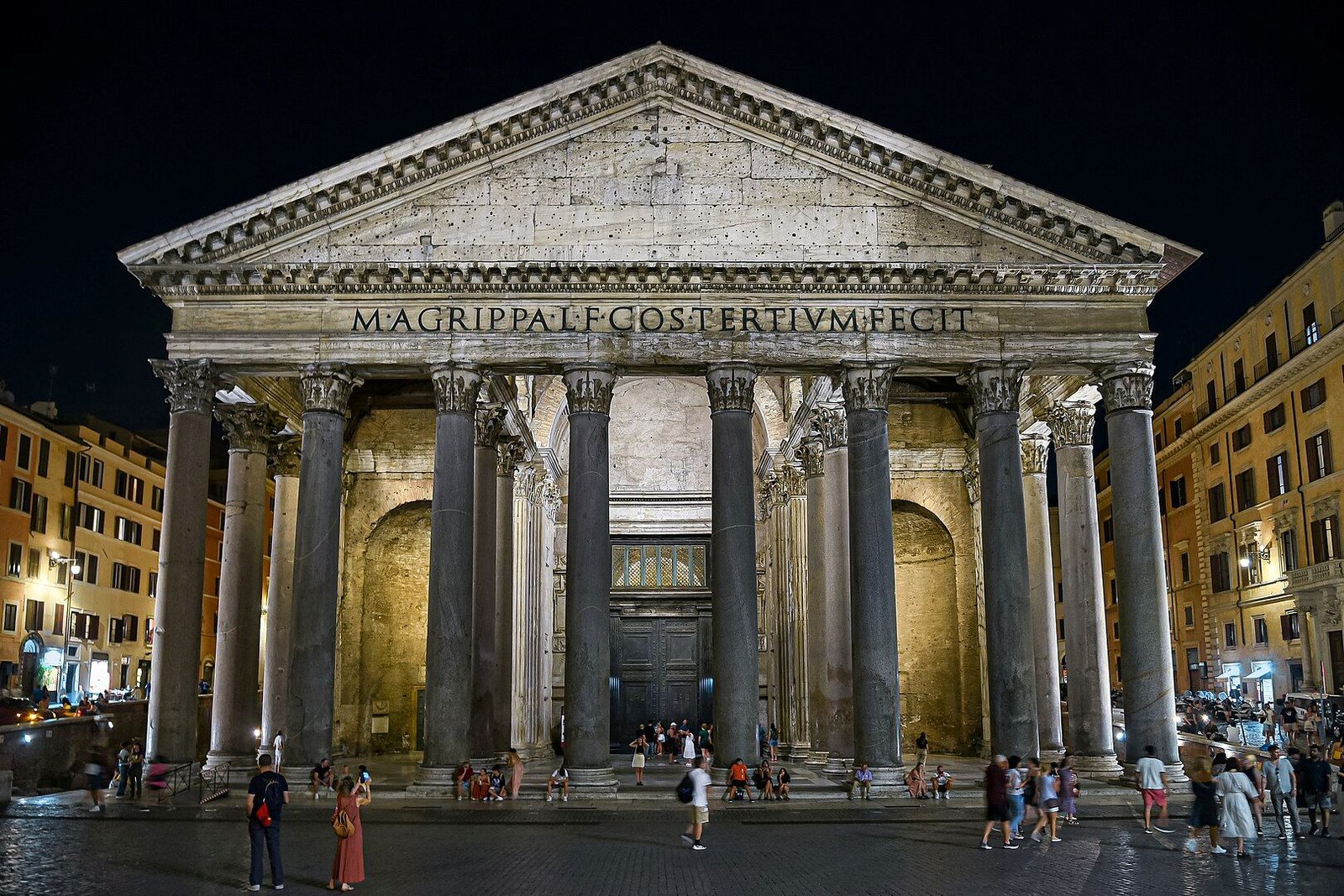
From the photo above, the full monumentality of the Pantheon 📱🔄️ emerges, one of the most famous symbols of Rome and the ideal starting point for this route through the Rioni Sant’Eustachio and Pigna.
See also:
- Back to Complete Tour 1
- Guide to Rome
- Itineraries: 1d, 3d, CT2
- See: Attractions
- Do: Experiences
- Eat: Where and What
- Getting Around, Pass, Stay
Route Description
This 3.4 km walking itinerary leads through the Sant’Eustachio and Pigna districts, in the heart of Rome, along a route that winds through some of the city’s most fascinating places, with an estimated visit duration of around 7 hours.
Notable attractions include the Pantheon, with its imposing dome and the spectacular Piazza della Rotonda, the Chiesa di San Luigi dei Francesi, famous for Caravaggio’s masterpieces, and the Area Sacra di Largo Argentina, a fascinating archaeological site preserving the remains of ancient temples and the place where Julius Caesar was assassinated.
RIONI SANT’EUSTACHIO and PIGNA
- Open Route Map📍
- Distance: 3.4* km on foot
- Time: 47 min.* on foot
- Visit duration: 7 hours
- Stops: 10 main stops (X → I)* + 14 secondary stops
- Pantheon (X) → Basilica di Santa Maria sopra Minerva (A) → Chiesa di San Luigi dei Francesi (B) → Basilica di Sant’Agostino in Campo Marzio (C) → Museo di Roma – Palazzo Braschi (D) → Basilica di Sant’Andrea della Valle (E) → Area Sacra di Largo Argentina (F) → Museo Naz. Romano, Crypta Balbi (G) → Piazza della Bocca della Verità (H) → Chiesa di San Giorgio in Velabro (I)
- For days, times, prices and other info see Itinerary Table 📊
* These values may differ from those shown on Google Maps, as they are continuously recalculated in real time. See also Itinerary Info and Navigator + See here for Shared Stop 🧩
Steps Details
📌 All the stops summarized here are structured in the Itinerary Table 📊 with days, opening hours, prices, and Wikipedia 🌐 and Google Maps insights.
Morning
⬇️ starting point
X. Pantheon
The itinerary begins in the charming Piazza della Rotonda, dominated by the famous Pantheon (UNESCO World Heritage). This ancient Roman temple, transformed into a church, is famous for its impressive dome, a masterpiece of Roman engineering. The Fontana di Piazza della Rotonda and the Obelisco del Pantheon complete the fascinating atmosphere of this historic square.
✨ The natural light passing through the dome’s oculus creates a unique atmosphere, transforming the interior of the Pantheon into one of the most surprising architectural spaces in Rome.
❌ During periods of high visitor numbers, the queue at the entrance can increase significantly: it is advisable to arrive in the early hours of the day to reduce waiting times.
Book here one of the recommended experiences:
✅ Fast Track Ticket for the Pantheon and official audio guide
✅ Priority entrance ticket to the Pantheon with audio guide
✅ Pantheon Meraviglia senza tempo guided tour with entrance ticket
✅ Small group guided tour of the Pantheon with entrance ticket
⬇️
A. Basilica di Santa Maria sopra Minerva
Continuing the route, you will find the Basilica di Santa Maria sopra Minerva, one of the few Gothic churches in Rome, which houses treasures such as Michelangelo’s Christ. In the square in front, the Obelisco della Minerva, resting on an elephant sculpted by Bernini, is one of the city’s most characteristic symbols.
✨ Entering the Basilica di Santa Maria sopra Minerva means discovering a less crowded corner of Rome, where Gothic architecture meets works by great Renaissance masters.
⬇️
B. Chiesa di San Luigi dei Francesi
A few steps away, you will find the Chiesa di San Luigi dei Francesi, famous for housing three masterpieces by Caravaggio. Its Renaissance architecture and impressive organ, together with the paintings, make this stop unmissable for art lovers.
✨ In front of Caravaggio’s paintings in the Cappella Contarelli, visitors experience one of the most intense artistic moments in Rome’s historic centre, with the works visible just a few steps away.
❌ The interior lighting may be limited and access to the chapel can create small delays during the busiest periods: it is better to avoid the peak tourist hours.
⬇️
C. Basilica di Sant’Agostino in Campo Marzio
Next, visit the Basilica di Sant’Agostino, known for the “Madonna del Parto” by Sansovino and the Caravaggio masterpiece “La Madonna dei Pellegrini”. A stop rich in Renaissance art and spirituality.
✨ One of the most surprising stops of the itinerary: inside an apparently discreet church, visitors encounter works of extraordinary artistic importance.
⬇️
D. Museo di Roma – Palazzo Braschi
A short distance away, the Museo di Roma at Palazzo Braschi offers an extensive collection dedicated to the history of the city through the centuries. The Monumento a Marco Minghetti (National Monument), located outside, is dedicated to one of the most distinguished Italian politicians of the 19th century.
✨ Climbing through the rooms of Palazzo Braschi allows visitors to combine art and urban views, with a journey through Rome’s history and its transformations over time.
Afternoon
⬇️
E. Basilica di Sant’Andrea della Valle
In the afternoon, your next stop will be the Basilica di Sant’Andrea della Valle, a Baroque church famous for its impressive dome, the second tallest in Rome after St. Peter’s, and for its frescoes by Giovanni Lanfranco.
✨ The great dome of Sant’Andrea della Valle impresses visitors with its grandeur and offers one of the most spectacular examples of Roman Baroque architecture, often discovered away from the busiest tourist routes.
⬇️
F. Area Sacra di Largo Argentina
Continuing south, you will reach the Area Sacra di Largo Argentina, an archaeological site that preserves the remains of four temples dating back to the Roman Republic. This place also holds great historical significance, as it was here that Julius Caesar was assassinated.
📌 Visits to the Area Sacra di Largo Argentina are by reservation only. You will find the phone number in the clickable Google Maps listing linked in the table.
⬇️
G. Museo Nazionale Romano – Crypta Balbi
Your next stop is the National Roman Museum – Crypta Balbi, a fascinating site that offers an immersive journey through Rome’s urban history, from the Roman Republic to the Middle Ages.
📌 As indicated in the table, the National Roman Museum is currently closed for renovation works.
⬇️
H. Piazza della Bocca della Verità
Reach the historic Piazza della Bocca della Verità, where you can see the famous Bocca della Verità sculpture, located inside the Basilica di Santa Maria in Cosmedin. Here you will also find the Tempio di Ercole Vincitore and the Foro Boario, an ancient marketplace from Republican Rome.
✨ The opportunity to place your hand inside the famous Bocca della Verità creates one of Rome’s most iconic and photographed experiences, especially for first-time visitors.
❌ During periods of high visitor numbers, the queue for the Bocca della Verità can significantly extend your stop: if your schedule is tight, consider visiting during quieter hours.
📌 The Tempio di Ercole Vincitore can be visited upon request. You will find the phone number in the clickable Google Maps listing linked in the table.
⬇️
I. Chiesa di San Giorgio in Velabro
Your final stop will take you to the Chiesa di San Giorgio in Velabro, one of the oldest churches in Rome. Nearby, the Arco degli Argentari and the imposing Arco di Giano bear witness to the historical importance of this area.
✨ In this small church in the Velabro district, visitors experience a more intimate and ancient side of Rome, away from the main tourist crowds and surrounded by remarkable remains of the Imperial city.
Dinner
After a day exploring the Sant’Eustachio and Pigna districts, among the Pantheon, historic squares and the remains of ancient Rome, the best way to end the itinerary is with dinner at a restaurant or a typical Roman trattoria in the historic centre, where you can enjoy the great classics of Roman cuisine. Among the specialties not to be missed are:
- Filetti di baccalà fritti, one of the most representative appetizers of Roman tradition, crispy on the outside and soft on the inside;
- Fettuccine alla papalina, a first course created in 20th-century Rome, prepared with eggs, ham and Parmigiano according to Roman tradition;
- Trippa alla romana, an ancient dish of Roman popular cuisine, seasoned with tomato, mint and pecorino romano;
- Nocciola romana, a sweet specialty from the Lazio region, ideal for ending dinner with a product linked to local tradition.
To taste these specialties, you can stop at some restaurants in the historic centre, such as Da Armando al Pantheon, just a few steps from the Pantheon and renowned for traditional Roman cuisine, L’Arcangelo, appreciated for the quality of its Roman recipes, or Casa Coppelle, an elegant venue in the historic centre where Roman tradition meets a refined atmosphere.
For a complete overview of where and what to eat in Rome, visit our dedicated guides: Where to eat in Rome and What to eat in Rome.
Sleeping
For this itinerary to discover the Sant’Eustachio and Pigna districts, the best area to stay is the Centro Storico, between the Pantheon, Piazza Navona, Campo de’ Fiori and Largo Argentina. This location allows you to easily reach the main stops of the route on foot, while experiencing the most authentic atmosphere of Rome even in the evening hours.
An excellent alternative is the Monti and Colosseo area, ideal for those who want to combine a visit to the historic centre with proximity to some of the most famous monuments of ancient Rome, while still maintaining good connections with the rest of the city.
For those who prefer to stay in an elegant and peaceful area, the Prati district can also be a good choice, with the possibility of easily reaching the centre and dedicating part of the stay to visiting the Vatican area.
For more information on where to stay in the city, you can consult our dedicated guide: Where to sleep in Rome: Info and Tips.

📊 Itinerary Table
In the table below you will find all the attractions included in the itinerary, to enhance and better guide your visit.
- Scroll the table down and to the right 📱🔄 Rotate your phone horizontally to get an overview of opening days, hours, prices of attractions, and for further details on Wikipedia 🌐 and Google Maps ➡️.
- ⚠️ Always check the opening days and hours of attractions through the Google Maps entries linked in the table. See also Itinerary Info.
- To see the explanation of each data column, click its title (e.g. Attractions Index, Ratings, Org, etc.) at the top of the table.
⏳ Caricamento tabella in corso…
📌 This table is updated every 6–12 months.
🛡️ The tables on Tourplan360.com are original content protected by copyright © and monitored through anti-plagiarism tracking systems.
FAQ
You can open the Route Map📍 also from here. Alternatively, you can consult the dedicated section with all the details.
📌 See the Route Description
How long does it take to visit the Sant’Eustachio and Pigna districts?
The itinerary allows you to visit the main attractions of both districts and the surrounding areas in about 7 hours.
Can this itinerary be done on foot?
Yes. The route is entirely pedestrian and covers approximately 3.4 km through the heart of Rome’s historic centre, between the Pantheon, Largo Argentina and the Bocca della Verità area.
📌 See also Getting around Rome
Is it worth booking the main attractions in advance?
Yes. For some attractions along the route, it is recommended to check access procedures, availability and booking requirements in advance, especially during periods of high tourist demand.
📌 See also Experiences in Rome
Is it possible to do this itinerary in half a day?
Yes. In half a day, it is possible to visit only the main attractions. You can adapt the route according to the time available and your interests.
Where can I find opening days, times and ticket prices for the attractions?
All updated information is available in the dedicated itinerary table, which also includes direct links to Google Maps ➡️ and Wikipedia 🌐 for each attraction.
📌 See the Itinerary Table 📊
See also
- Back to Complete Tour 1
- Complete Tour 2
- Rome in 1 day
- Rome in 3 days
- Guide to Rome
- See: Attractions
- Do: Experiences
- Eat: Where and What
- Getting Around, Pass, Stay
Other Destinations
🔐 Some images on this page are used under Creative Commons licenses:
By Richard Nevell – Naples, panoramic view of the city and Mount Vesuvius – Own work – CC BY-SA 4.0 – Wikimedia Commons
By PROPOLI87 – Florence, panorama from Piazzale Michelangelo – Own work – CC BY-SA 4.0 – Wikimedia Commons
By Luca Aless – Venice, panoramic view of Doge’s Palace and St. Mark’s Campanile – Own work – CC BY-SA 4.0 – Wikimedia Commons
By Jorge Franganillo – Roma, Pantheon di notte magistralmente illuminato – Opera propria – CC BY-2.0 – Wikimedia Commons

.jpg)