
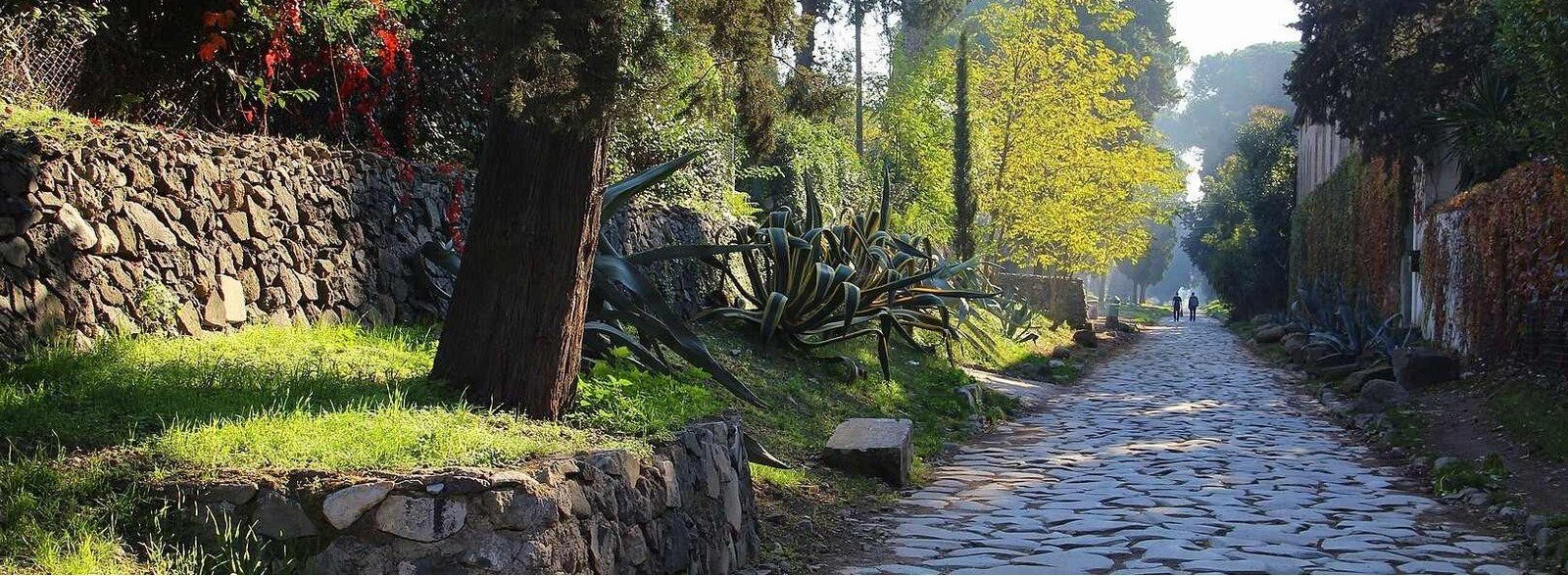
Appian Way in 1 Day: What to See and Complete Guide
Main Attractions, Maps and Useful Information


Along the historic Regina Viarum, you will encounter archaeological remains and unique landscapes that tell more than two thousand years of history. This 1-day visit to discover the Via Appia Antica allows you to explore its most significant monuments.
See also:
- Back to Complete Tour 2
- Guide to Rome
- Itineraries: 1d, 3d, CT1
- See: Attractions
- Do: Experiences
- Eat: Where and What
- Getting Around, Pass, Stay
Overwiev
The Parco Archeologico dell’Appia Antica (UNESCO World Heritage Site) and the Parco degli Acquedotti are two green areas of exceptional historical and scenic value located south of Rome, rich in remains from Ancient Rome. Together, they form one of the largest archaeological parks in the world, offering the opportunity to explore the remains of ancient monuments, tombs, and Roman infrastructure such as aqueducts and consular roads.
Parco dell’Appia Antica
The Parco Archeologico dell’Appia Antica is famous for the Via Appia, one of the earliest and most important Roman roads, built in 312 BC to connect Rome with Brindisi.
The Via Appia is renowned for its large stone paving slabs which, despite centuries of wear, are still walkable today. The park was expanded to protect these places from urban development, preserving them as a vast green area that retains the charm of Ancient Rome.
In addition to the road itself, the park includes numerous Roman monuments and tombs, such as the Tomba di Cecilia Metella, the Complesso di Capo di Bove, and the remains of ancient Roman villas (see references in the table).
Parco degli Acquedotti
Adjacent to the Parco dell’Appia Antica lies the Parco degli Acquedotti, a green area named after the seven ancient and medieval aqueducts that cross it, including the Claudio and the Anio Novus.
Built between the 3rd century BC and the 2nd century AD, these aqueducts are monumental examples of Roman engineering that carried water to the city from distant springs, ensuring a constant water supply.
The remains of the aqueducts, rising majestically above the landscape, offer a spectacular and unique view while showcasing the ingenuity and greatness of Roman engineering.
Important note
For both parks, we have not created a Google Maps itinerary due to their vast size and the large number of archaeological sites. In the table, you will find references to the main attractions along with their estimated visit durations, which amount to approximately 8 hours for the entire park.
On the official website of the Parco Archeologico dell’Appia Antica, you can find a detailed park map and a list of available itineraries.
APPIA ANTICA IN 1 DAY
- Parco dell’Appia Antica – Open Google Maps📍
- Parco degli Acquedotti – Open Google Maps📍
- Visit duration: 8 hours
- Attractions: 13 main + 15 secondary
- Museo delle Mura → Basilica di San Cesareo de Appia → Catacombe di San Sebastiano → Mausoleo di Cecilia Metella → Complesso di Capo di Bove → Complesso di Santa Maria Nova → Villa dei Quintili → Antiquarium Villa dei Quintili → Catacombe di San Callisto → Tombe della Via Latina → Villa di Massenzio → Antiquarium di Lucrezia Romana
- For days, times, prices and other info see Attractions Table 📊
Main Attractions
📌 All the attractions summarized here are listed in the Attractions Table 📊, including Wikipedia 🌐 and Google Maps references.
Parco dell’Appia Antica
⬇️
Villa dei Quintili
Villa dei Quintili is one of the largest and most prestigious archaeological complexes along the Via Appia Antica. Built in the 2nd century AD by the brothers Sextus Quintilius Condianus and Sextus Quintilius Valerius Maximus, it was later confiscated by Emperor Commodus and transformed into a magnificent imperial residence. The complex preserves residential quarters, bath structures, and important evidence of Roman aristocratic life.
✨ The vast extent of the imperial residence and the relationship between archaeology and the surrounding landscape make Villa dei Quintili one of the most evocative experiences along the entire Via Appia Antica.
❌ The complex is much larger than it may appear: if you have limited time, carefully consider the amount of time required before including it in your visit.
⬇️
Antiquarium Villa dei Quintili
The Antiquarium Villa dei Quintili houses artifacts discovered during the archaeological excavations of the complex, including architectural elements, decorations, and materials that provide deeper insight into the history of the villa and its inhabitants. The exhibition complements the visit to the archaeological site by offering a broader understanding of the richness of the imperial residence.
⬇️
Complesso di Santa Maria Nova
The Complesso di Santa Maria Nova includes a Roman villa, an archaeological area, and a medieval church built on the remains of ancient buildings. The site offers an interesting example of the transformation of the Via Appia Antica landscape, where Roman structures, Christian heritage, and medieval architecture coexist in the same place.
⬇️
Complesso di Capo di Bove
The Complesso di Capo di Bove includes a large Roman villa built in the 2nd century AD and later transformed over the centuries. The site preserves the remains of bath facilities, mosaics, and residential structures that testify to the prestige of the suburban Roman villas along the Via Appia. It also houses a museum dedicated to the history of the archaeological excavations and the preservation of the area.
✨ The charm of Capo di Bove lies in the combination of archaeology and everyday Roman life: not only ancient remains, but also a place that tells the story of the modern restoration and enhancement of the Via Appia.
⬇️
Mausoleo di Cecilia Metella
The Mausoleo di Cecilia Metella is one of the most famous monuments along the Via Appia Antica. Built in the 1st century BC for the daughter of the consul Quintus Caecilius Metellus Creticus, it features a monumental cylindrical structure clad in travertine and represents one of the finest examples of an aristocratic Roman tomb. Its commanding position along the ancient road has made it one of the enduring symbols of the Via Appia.
✨ Standing before this monument means experiencing one of the most iconic views of Ancient Rome.
❌ It is one of the most popular attractions along the Via Appia Antica: during peak periods, it is advisable to plan your visit outside the busiest hours of the day.
⬇️
Catacombe di San Sebastiano
The Catacombe di San Sebastiano are one of the most important Christian underground complexes along the Via Appia Antica. Used as a burial place by the first Christians, they preserve galleries, funerary chambers, and archaeological evidence connected to the history of Christianity in Rome. According to tradition, the area was also linked to the memory of the apostles Peter and Paul.
✨ Descending into the depths of the catacombs allows visitors to experience something different from the open-air monuments, coming into contact with the most hidden and spiritual side of Ancient Rome.
❌ The visit takes place according to regulated procedures and it is not always possible to access freely: check availability and opening hours before including it in your itinerary.
⬇️
Tombe della Via Latina
The Tombe della Via Latina preserve some important Roman tombs built along an ancient road that connected Rome to Campania. The complex includes mausoleums and decorated tombs that allow visitors to observe the different funerary styles used by the Romans and understand the role of consular roads as places of memory and social representation.
⬇️
Catacombe di San Callisto
The Catacombe di San Callisto represent one of the most important Christian funerary complexes of Ancient Rome. Extending for kilometres beneath the ground of the Via Appia Antica, they contain thousands of burials and were also used as a burial place for numerous early Christian popes. The visit offers the opportunity to discover one of the most fascinating aspects of underground Rome.
✨ Considered among the most important Christian underground complexes in Rome, they offer a unique experience at the heart of the city’s religious history, among ancient galleries and evidence of the first Christian communities.
❌ The visit requires organised access and is not always compatible with an independent visit of the Via Appia Antica: always check availability and opening hours before planning this stop.
⬇️
Antiquarium di Lucrezia Romana
The Antiquarium di Lucrezia Romana houses archaeological finds from excavations carried out in the south-eastern area of Rome. The exhibition allows visitors to explore the history of the territory through materials, everyday objects, and evidence of the communities that inhabited this area over the centuries.
⬇️
Villa di Massenzio
The Villa di Massenzio is one of the most significant archaeological complexes of late imperial Rome. Built by Emperor Maxentius at the beginning of the 4th century AD, it includes an imperial residence, public buildings, and important monumental structures connected with the celebration of imperial power.
✨ The imperial complex of Massenzio is one of the most fascinating places along the Via Appia Antica: the combination of villa, circus, and mausoleum creates a complete and spectacular archaeological experience.
❌ The area includes several separate monuments and requires time to be truly appreciated: a visit that is too quick risks missing the overall value of the complex.
⬇️
Circo di Massenzio
The Circo di Massenzio is one of the best-preserved structures of the complex and represents one of the most complete examples of a Roman circus still visible today. Designed for chariot races, it could accommodate thousands of spectators and testifies to the importance of public spectacles in Roman society.
✨ Seeing the shape of the ancient Roman circus still immersed in the countryside allows visitors to imagine the spectacles and public life of the imperial era in a context completely different from the monuments in the city centre.
❌ Understanding the real dimensions of the circus can be difficult without a careful visit: it is advisable not to limit the experience to a simple photo stop.
⬇️
Mausoleo di Romolo Massenzio
The Mausoleo di Romolo Massenzio was intended for the burial of Valerius Romulus, son of Emperor Maxentius. The circular structure, built along the route of the Via Appia, represents one of the most interesting examples of funerary architecture from imperial Rome.
⬇️
Sepolcro degli Scipioni
The Sepolcro degli Scipioni is one of the most important historical sites along the Via Appia Antica. Built in the 3rd century BC, it was the tomb of the Scipio family, one of the most influential families of ancient Republican Rome, protagonists of the Punic Wars and of Rome’s transformation into a major Mediterranean power. The complex preserves funerary chambers, inscriptions, and evidence that allow visitors to understand the relationship between family memory, social prestige, and the celebration of the great Roman families.
✨ Visiting the Sepolcro degli Scipioni means coming into contact with the oldest Rome, that of the Republic and of the great figures who contributed to the birth of Roman power.
❌ The visit requires specific planning because access is not always as immediate as for other monuments along the Via Appia Antica: check visiting procedures and availability before including it in your itinerary.
⬇️
Basilica di San Cesareo de Appia
The Basilica di San Cesareo de Appia is an important place of worship located along the route of the ancient Via Appia. The building preserves elements of historical and artistic interest and represents evidence of the religious continuity of the area, where the Christian path developed alongside the great testimonies of imperial Rome.
⬇️
Museo delle Mura
The Museo delle Mura, housed inside the Porta San Sebastiano, tells the history of Rome’s fortifications through archaeological finds, information panels, and reconstructions dedicated to the city walls. The visit allows visitors to understand the evolution of Roman defences, from the Mura Aureliane to later interventions, while also offering a fascinating route along sections of the ancient walls.
✨ The museum offers a unique perspective on the ancient city, allowing visitors to walk along a section of the walls and understand the strategic role of Roman fortifications throughout the centuries.
❌ As it is a different experience from the classic open-air archaeological sites, it is advisable to include it only if you are interested in the history of fortifications and have enough time to explore it in depth.
Parco degli Acquedotti
⬇️
Acquedotto Claudio
The Acquedotto Claudio is one of the most spectacular symbols of Roman engineering. Built in the 1st century AD under the emperors Caligula and Claudio, it transported water for more than 60 kilometres to Rome and still preserves today impressive arches crossing the landscape of the park.
Its monumental structure represents one of the most impressive testimonies to the technical abilities of ancient Rome and to the relationship between infrastructure, territory and urban development.
✨ Walking beneath the great arches of the Acquedotto Claudio offers one of the most evocative views of ancient Rome, where archaeology and nature merge into a unique landscape.
❌ The charm of the aqueduct is best appreciated by walking through the area: a visit that is too quick risks not conveying the monument’s true scale.
⬇️
Acquedotto Felice
The Acquedotto Felice is one of the most recognisable aqueducts still visible today in the Roman landscape. Built in the 16th century by order of Pope Sisto V, it partially follows the route of the ancient Roman aqueducts and represents a significant example of continuity between ancient Rome and the modern city. Its arches show how the great Roman hydraulic works continued to influence the territory in the following centuries.
✨ The Acquedotto Felice tells a different story compared with the other monuments of the park: not only ancient Rome, but also the continuous connection between the Roman past and the transformations of the city.
⬇️
Villa dei Sette Bassi
The Villa dei Sette Bassi is one of the largest suburban residential complexes of ancient Rome. Built between the 2nd and 3rd centuries AD, probably during the period of the Antonine emperors, it included residential areas, thermal structures and large spaces organised according to the model of aristocratic Roman villas outside the city. The site allows visitors to understand the luxury and complexity of the great suburban estates of the Empire.
✨ The vastness of the ruins immersed in the Roman countryside allows visitors to imagine the scale of the great aristocratic residences of antiquity.
❌ The site is less immediate compared with other monuments in the park: it requires more imagination to understand the original extent of the complex.
⬇️
Parco di Torre del Fiscale
The Parco di Torre del Fiscale preserves a unique archaeological landscape where the ancient Roman aqueducts meet a medieval tower built within an area rich in historical evidence. The area represents one of the most interesting places to observe the layers of Roman history, between ancient infrastructures, nature and architecture belonging to different periods.
✨ It is one of the most surprising corners of the Roman countryside: few places allow visitors to see Roman aqueducts, medieval towers and rural landscapes together.
⬇️
Resti degli acquedotti minori (Anio Vetus, Aqua Marcia, Aqua Tepula e Aqua Iulia)
Inside the Parco degli Acquedotti there are also remains belonging to other ancient Roman hydraulic systems, including the Anio Vetus and the aqueducts Aqua Marcia, Aqua Tepula and Aqua Iulia. These structures testify to the complexity of the Roman water network, designed to guarantee the city’s water supply through an articulated system of channels, arches and infrastructures.
Their presence helps make the park a true open-air museum of Roman engineering, although many remains are less evident compared with the great monumental aqueducts.
Useful Information and Tips
How to Get There
- Parco Archeologico dell’Appia Antica: It can be reached from the centre of Rome by public transport or by bicycle. Bus 118 is one of the best options, as it runs along the Appia Antica and connects with the metro.
- Parco degli Acquedotti: The Parco degli Acquedotti is also accessible by public transport: the Giulio Agricola metro station (Line A) is about a 15-minute walk from the park entrance, as is the Subaugusta station.
Opening Hours and Access
- Parco Archeologico dell’Appia Antica: Open all year round, but it is recommended to check the official website for details about the opening hours of individual attractions such as the Tomba di Cecilia Metella and the Complesso di Capo di Bove (see table).
- Parco degli Acquedotti: The park is generally open from sunrise to sunset, with no entrance fee.
What to Bring
- Comfortable Footwear: Both parks are extensive and visits require a lot of walking, often on uneven terrain.
- Water and Snacks: Refreshment points are not always available in the immediate surroundings.
- Sun Protection and Hat: Especially during the summer months, the green areas can be exposed to the sun.
Activities and Experiences
- Guided Tours: Available for both the Appia Antica and the Parco degli Acquedotti. Expert guides can provide historical context about the monuments and Roman aqueducts, enriching the visit. See also Appian Way: Experiences and Useful Info.
- Bicycle Rental: Along the Appia Antica it is possible to rent bicycles, a popular choice for covering more distance. Cycling allows visitors to explore the Roman road and archaeological sites in a pleasant and sustainable way.
- Photography Walks: The historic landscapes offer many photography opportunities, with ancient aqueducts and monuments standing out against the natural surroundings.
Useful Information
- Tickets and Reservations: Some sites, such as the Tomba di Cecilia Metella, require an entrance ticket. It is recommended to purchase tickets in advance, especially during the high season.
- Appia Antica Card: If you wish to visit several monuments in the area, the Appia Antica Card offers convenient 3-day access to several archaeological attractions.
Important: All information about the park (entrances, opening hours, tickets, etc.) can be found through the official Google Maps listing linked from the clickable link in the table.
📊 Attractions Table
In the table below you will find all the attractions included in the itinerary, to enhance and better guide your visit.
- Scroll the table down and to the right 📱🔄 Rotate your phone horizontally to get an overview of opening days, hours, prices of attractions, and for further details on Wikipedia 🌐 and Google Maps ➡️.
- ⚠️ Always check the opening days and hours of attractions through the Google Maps entries linked in the table. See also Itinerary Info.
- To see the explanation of each data column, click its title (e.g. Attractions Index, Ratings, Org, etc.) at the top of the table.
⏳ Caricamento tabella in corso…
📌 This table is updated every 6–12 months.
🛡️ The tables on Tourplan360.com are original content protected by copyright © and monitored through anti-plagiarism tracking systems.
FAQ
You can directly open the Google Maps dedicated to the two main areas of the visit:
📌 Check the Overview
How much time is needed to visit the Appia Antica in one day?
A complete visit of the Appia Antica and the Parco degli Acquedotti requires around 8 hours, considering the main attractions along the route.
Can the Appia Antica be visited on foot?
Yes. The Appia Antica can be visited on foot, but considering the large extension of the park, it is also possible to use a bicycle, either your own or rented, or choose services such as golf carts to move more easily between the different areas.
Is it worth booking the main attractions in advance?
Yes. Some attractions of the Appia Antica, such as the catacombs and some archaeological sites, have regulated access or may require advance booking. Always check availability and entrance procedures before your visit.
📌 See also Appian Way Experiences
Is it possible to visit the Appia Antica also in half a day?
Yes. In half a day it is possible to focus on the main attractions, choosing the most significant stops of the area according to the available time.
Where can I find information about the attractions of the Appia Antica?
All information about the attractions is available in the dedicated table, where direct links to Google Maps 📍 and Wikipedia 🌐 are also provided for each site.
📌 Check the Attractions Table 📊
See also
- Back to Complete Tour 2
- Complete Tour 1
- Rome in 1 day
- Rome in 3 days
- Guide to Rome
- Itineraries: 1d, 3d, CT1, CT2
- See: Attractions
- Do: Experiences
- Eat: Where and What
- Getting Around, Pass, Stay
Other Destinations
🔐 Some images on this page are used under Creative Commons licenses:
By Richard Nevell – Naples, panoramic view of the city and Mount Vesuvius – Own work – CC BY-SA 4.0 – Wikimedia Commons
By PROPOLI87 – Florence, panorama from Piazzale Michelangelo – Own work – CC BY-SA 4.0 – Wikimedia Commons
By Luca Aless – Venice, panoramic view of Doge’s Palace and St. Mark’s Campanile – Own work – CC BY-SA 4.0 – Wikimedia Commons
By Gidipa – Roma, Appia Antica prima strada romana Regina Viarum – Opera propria – CC BY-SA 4.0 – Wikimedia Commons

