
Ostia Antica in 1 day: what to see and complete itinerary
Travel guide, opening hours, prices, map


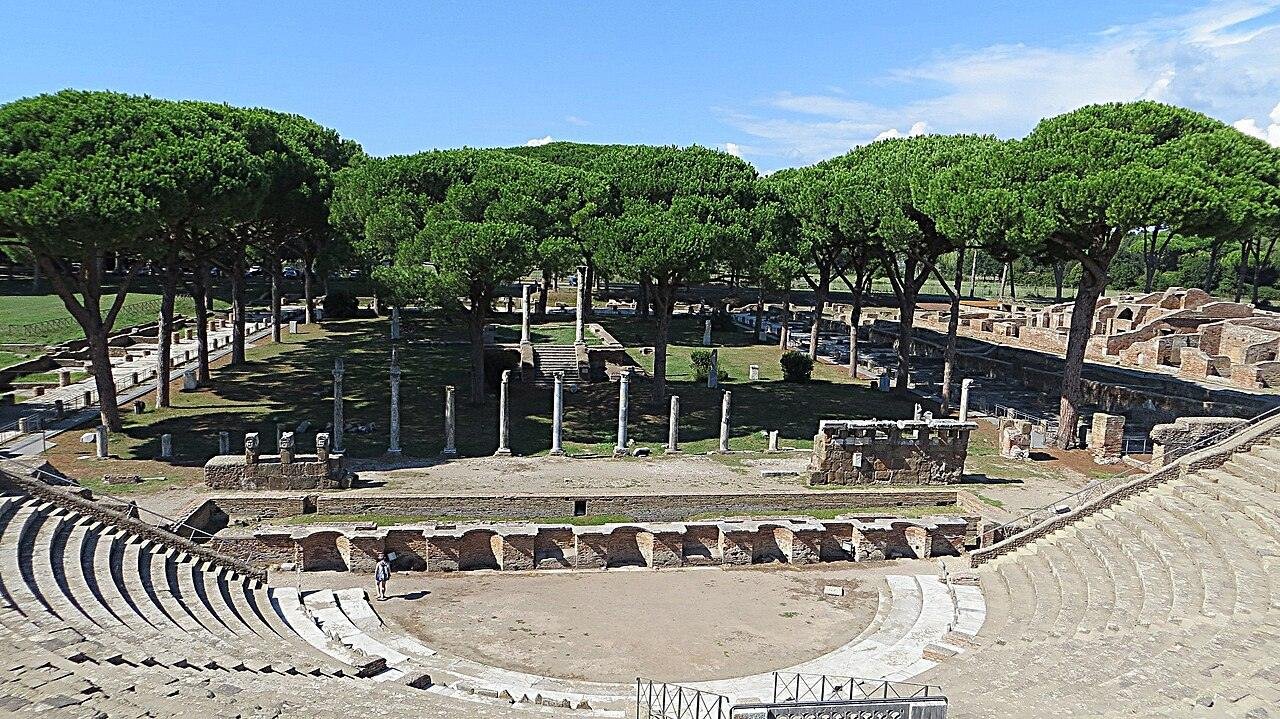
The beautiful panoramic view above captures the Foro di Ostia as seen from the Teatro Romano 📱🔄️. From this perspective alone, you can already appreciate the remarkable attractions you will discover during this 1-day itinerary in Ostia Antica.
See also:
- Back to Complete Tour 2
- Guide to Rome
- Itineraries: 1d, 3d, CT1
- See: Attractions
- Do: Experiences
- Eat: Where and What
- Getting Around, Pass, Stay
Route Description
For those wishing to immerse themselves for an entire day in the history of the ancient Roman city of Ostia, this itinerary offers a fascinating route through the most important sites of the Parco Archeologico di Ostia Antica and the surrounding historical areas connected to it.
Located just a short distance from Rome, the park is one of the best-preserved archaeological sites in Italy. Covering approximately 50 hectares, it allows visitors to explore Roman streets, temples, and buildings that reveal the daily life of this ancient port city.
The route we have designed follows a linear itinerary of approximately 11 km, to be covered by car, featuring 8 main stops with an estimated total visit time of around 9 hours.
The itinerary begins in the morning with a visit to the Parco Archeologico di Ostia Antica, the heart of the experience and an extraordinary example of a remarkably preserved Roman city, explored through its most important monuments and representative buildings.
In the afternoon, the itinerary continues to the nearby Borgo di Ostia Antica and the sites associated with ancient Rome’s port system in the Fiumicino area, including necropolises, imperial harbors, and remarkable archaeological remains.
OSTIA ANTICA IN 1 DAY
- Open Route Map📍
- Distance: 11.7* km by car
- Driving time: 21* min. by car
- Visit duration: 9 hours
- Stops: 8 main (X → G)* + 7 secondary
- Parco Archeologico di Ostia Antica (X) → Castello di Giulio II (A) → Basilica di Sant’Aurea (B) → Borgo di Ostia Antica (C) → Necropoli di Porto (D) → Basilica di Sant’Ippolito e Antiquarium (E) → Area Archeologica Porti di Claudio e Traiano (F) → Museo delle Navi Romane (G)
- For days, times, prices and other info see Itinerary Table 📊
* These values may differ from those shown on Google Maps, as they are continuously recalculated in real time. See also Itinerary Info and Navigator + See here for Shared Stop 🧩
Steps Details
📌 All the stops summarized here are structured in the Itinerary Table 📊 with days, opening hours, prices, and Wikipedia 🌐 and Google Maps insights.
Morning
⬇️ starting point
X. Parco Archeologico di Ostia Antica (ticket office) – The tour begins at the park’s main entrance, where you can purchase tickets and obtain a site map. This is where your journey into the ruins of Ostia Antica begins, allowing you to discover some of the most important remains of the ancient Roman city:
X1. Teatro Romano di Ostia
One of the symbols of the archaeological park, it was built during the Augustan period and could accommodate thousands of spectators. Even today, it remains one of the best-preserved buildings in Ostia Antica, offering magnificent views over the Foro and the city’s ancient streets.
✨ Climbing the theater’s seating tiers offers a unique panoramic view of the ancient Roman city, providing an exceptional perspective over the ruins and the monumental heart of Ostia.
⬇️
X2. Terme di Nettuno
One of the most important bath complexes in Ostia Antica, they are especially famous for their large mosaics depicting marine and mythological scenes. They represent one of the most fascinating testimonies to everyday life in the ancient Roman city.
✨ The magnificent mosaics create one of the most memorable moments of the visit, transforming a simple bath complex into a true journey through the Roman imagination.
⬇️
X3. Piazzale delle Corporazioni
Located next to the Teatro Romano, it was the center of commercial activities connected to the port of Ostia. Its famous mosaics bear witness to the presence of merchants’ guilds from across the Mediterranean.
⬇️
X4. Foro di Ostia
The political and religious heart of the ancient city, the Foro was Ostia’s main public space. It was home to some of the city’s most important buildings, including the Capitolium and the principal places of worship and administration.
⬇️
X5. Capitolium
The city’s main temple, dedicated to the Capitoline Triad, still dominates the Foro today. Its impressive dimensions testify to the importance achieved by Ostia as the port of Rome.
✨ One of the most scenic spots in ancient Ostia, where you can truly appreciate the grandeur of Rome’s great port city.
⬇️
X6. Domus di Amore e Psiche – One of the finest private residences in Ostia Antica, it preserves magnificent mosaics and marble decorations that reflect the wealth attained by the city’s most prosperous families.
⬇️
X7. Museo di Ostia Antica – The museum houses statues, mosaics, and archaeological artifacts discovered during the excavations, offering valuable insight into the daily, religious, and commercial life of ancient Ostia.
Afternoon
⬇️
A. Castello di Giulio II
The Castello di Giulio II was built in the 15th century to defend the Ostia area from maritime incursions. It represents an extraordinary example of Renaissance military architecture and is surrounded by perfectly preserved walls and towers.
✨ Climbing the castle walls offers an unusual perspective over Ostia Antica, between the medieval village, the Tiber River, and the remains of the ancient Roman city.
⬇️
B. Basilica di Sant’Aurea
Next to the castle stands the Basilica di Sant’Aurea, an early Christian church that bears witness to the importance of Christianity in Ostia since ancient times. The church houses the tomb of Santa Aurea, a martyr from the 3rd century, and represents a fascinating place of worship for those interested in religious history.
⬇️
C. Borgo di Ostia Antica
A charming small medieval village, with narrow streets, picturesque squares, and a unique atmosphere that seems to evoke the medieval era thanks to its stone houses and authentic appearance.
✨ Walking through the medieval village streets after the archaeological visit creates a fascinating contrast between ancient Rome and the more recent history of the area.
⬇️
D. Necropoli di Porto
Located in the area of the ancient port, the necropolis is a funerary complex dating back to the imperial period. The tombs, decorated with inscriptions and bas-reliefs, tell the story of Ostia’s noble families and provide an insight into the social and cultural life of that era.
⬇️
E. Basilica di Sant’Ippolito
This stop on the route leads to the Basilica di Sant’Ippolito and the antiquarium, where Christian and early Christian artifacts from the catacombs of Ostia are preserved. The antiquarium houses a collection of mosaics and religious objects that testify to Christian worship in ancient Ostia.
📌 The Basilica di Sant’Ippolito and Antiquarium can be visited upon request. You can find the phone number in the Google Maps listing accessible through the link in the table.
⬇️
F. Area Archeologica dei Porti di Claudio e di Traiano
One of the most significant stops for understanding the commercial importance of Ostia, with the remains of the ancient ports that made this city a true crossroads of goods and people from across the Roman Empire. Visitors can admire the remains of large warehouses, docks, and port structures.
⬇️
G. Museo delle Navi Romane
The itinerary ends at the Museo delle Navi Romane in Fiumicino, where ancient vessels recovered near the port of Ostia are preserved. This museum provides an interesting overview of the ancient city’s port activities and the strategic role of the Tiber River as a commercial route.
💡 The ancient vessels preserved in the museum represent a rare direct testimony of Roman navigation and the commercial importance of the port of Ostia.
❌ The museum is located in an area separate from the archaeological park: check travel arrangements before including it in the itinerary to avoid unexpected detours.
Dinner
After a day dedicated to discovering Ostia and its extraordinary archaeological heritage, the best way to end the itinerary is with a dinner based on Roman and Lazio traditions, featuring dishes capable of combining the flavors of Roman cuisine with those of the coastal area. Among the specialties not to be missed are:
- Filetti di baccalà fritti, one of the most representative appetizers of Roman tradition, crispy on the outside and soft inside;
- Spaghetti alla checca, a simple and tasty first course from Roman cuisine, prepared with fresh tomatoes, mozzarella, and basil;
- Fritto misto alla romana, a specialty of Lazio cuisine that combines different fried ingredients in a rich and traditional dish;
- Maritozzo, the famous Roman sweet filled with whipped cream, perfect for ending the dinner.
To taste these specialties, you can stop at some restaurants in the Ostia Antica area, such as Arianna al Borghetto, a characteristic Roman trattoria located in the historic village just a few steps from the Archaeological Park, Ristorante Monumento dal 1884, a historic restaurant offering Italian and Roman cuisine, or Il Frantoio, an ideal choice for those looking for traditional dishes near the archaeological excavations.
For a complete overview of where and what to eat in Rome, visit our dedicated guides: Where to eat in Rome and What to eat in Rome.
Sleeping
For this one-day itinerary in Ostia, the best area to stay is Ostia Antica, ideal for those who want to be close to the Archaeological Park and start their visit without long transfers. The presence of the historic village and the proximity to the excavations allow visitors to enjoy a peaceful stay surrounded by history.
An excellent alternative is Ostia Lido, a recommended choice for those who want to combine the archaeological visit with a seaside stay. The area offers a wider selection of hotels, restaurants, and services, while maintaining convenient connections with Ostia Antica and the Roman coastline.
For those who instead want to optimize travel times towards the sites of the ancient Roman port system, such as the Necropoli di Porto, the Porti di Claudio e Traiano, and the Museo delle Navi Romane, staying in Fiumicino can be a strategic choice, particularly convenient also for those arriving from or departing to the airport.

📊 Itinerary Table
In the table below you will find all the attractions included in the itinerary, to enhance and better guide your visit.
- Scroll the table down and to the right 📱🔄 Rotate your phone horizontally to get an overview of opening days, hours, prices of attractions, and for further details on Wikipedia 🌐 and Google Maps ➡️.
- ⚠️ Always check the opening days and hours of attractions through the Google Maps entries linked in the table. See also Itinerary Info.
- To see the explanation of each data column, click its title (e.g. Attractions Index, Ratings, Org, etc.) at the top of the table.
⏳ Caricamento tabella in corso…
📌 This table is updated every 6–12 months.
🛡️ The tables on Tourplan360.com are original content protected by copyright © and monitored through anti-plagiarism tracking systems.
FAQ
You can open the Route Map📍 also from here. Alternatively, you can consult the dedicated section with all the details.
📌 See the Route Description
How long does this Ostia Antica itinerary take?
The complete itinerary requires about 9 hours and includes the morning visit to the Parco Archeologico di Ostia Antica and the afternoon route through the historic village and the archaeological sites of the ancient port system.
Can this Ostia Antica itinerary be done on foot?
Yes, but with some considerations. The visit to the Parco Archeologico di Ostia Antica takes place mainly on foot, with the possibility of using rental bicycles or golf carts. To complete the itinerary including all the stops outside the park, however, it is recommended to use a car, considering a total distance of approximately 11.7 km.
📌 See also Getting around Rome
Which experiences can be booked in Ostia Antica?
To make your visit more complete, you can consider guided tours, archaeological visits, and experiences dedicated to discovering Ostia Antica.
📌 See also Ostia Antica: Tours, Tickets and Useful Info
Is it possible to do this itinerary in half a day?
Yes. In half a day, you can choose to focus on the Parco Archeologico di Ostia Antica or dedicate the available time to the other attractions along the route, depending on your interests.
Where can I find opening days, times and ticket prices for the attractions?
All updated information is available in the dedicated itinerary table, where you can also find direct links to Google Maps ➡️ and Wikipedia 🌐 for each attraction.
📌 See the Itinerary Table 📊
See also
- Back to Complete Tour 2
- Complete Tour 1
- Rome in 1 day
- Rome in 3 days
- Guide to Rome
- Itineraries: 1d, 3d, CT1, CT2
- See: Attractions
- Do: Experiences
- Eat: Where and What
- Getting Around, Pass, Stay
Other Destinations
🔐 Some images on this page are used under Creative Commons licenses:
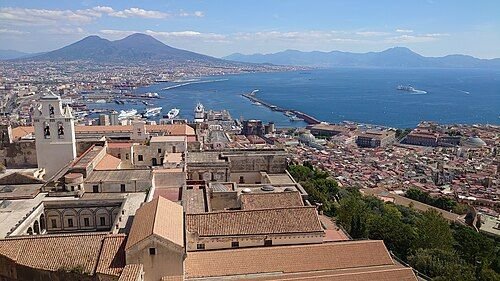
By Richard Nevell – Naples, panoramic view of the city and Mount Vesuvius – Own work – CC BY-SA 4.0 – Wikimedia Commons
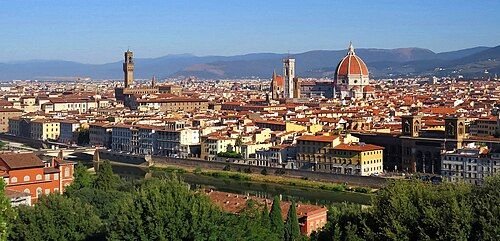
By PROPOLI87 – Florence, panorama from Piazzale Michelangelo – Own work – CC BY-SA 4.0 – Wikimedia Commons
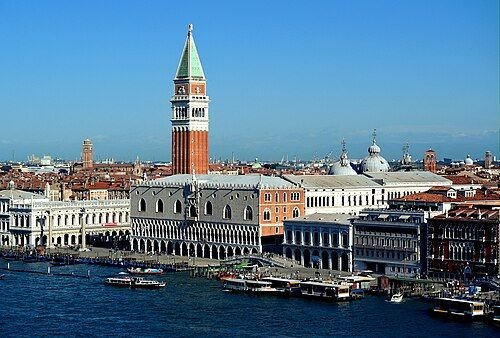
By Luca Aless – Venice, panoramic view of Doge’s Palace and St. Mark’s Campanile – Own work – CC BY-SA 4.0 – Wikimedia Commons
By Mister No– Roma, Parco Archeologico di Ostia Antica – Opera propria – CC BY 3.0 – Wikimedia Commons

.jpg)