
Rome, Rione Borgo and Gianicolense: what to see and complete itinerary
Travel guide, opening hours, prices, map


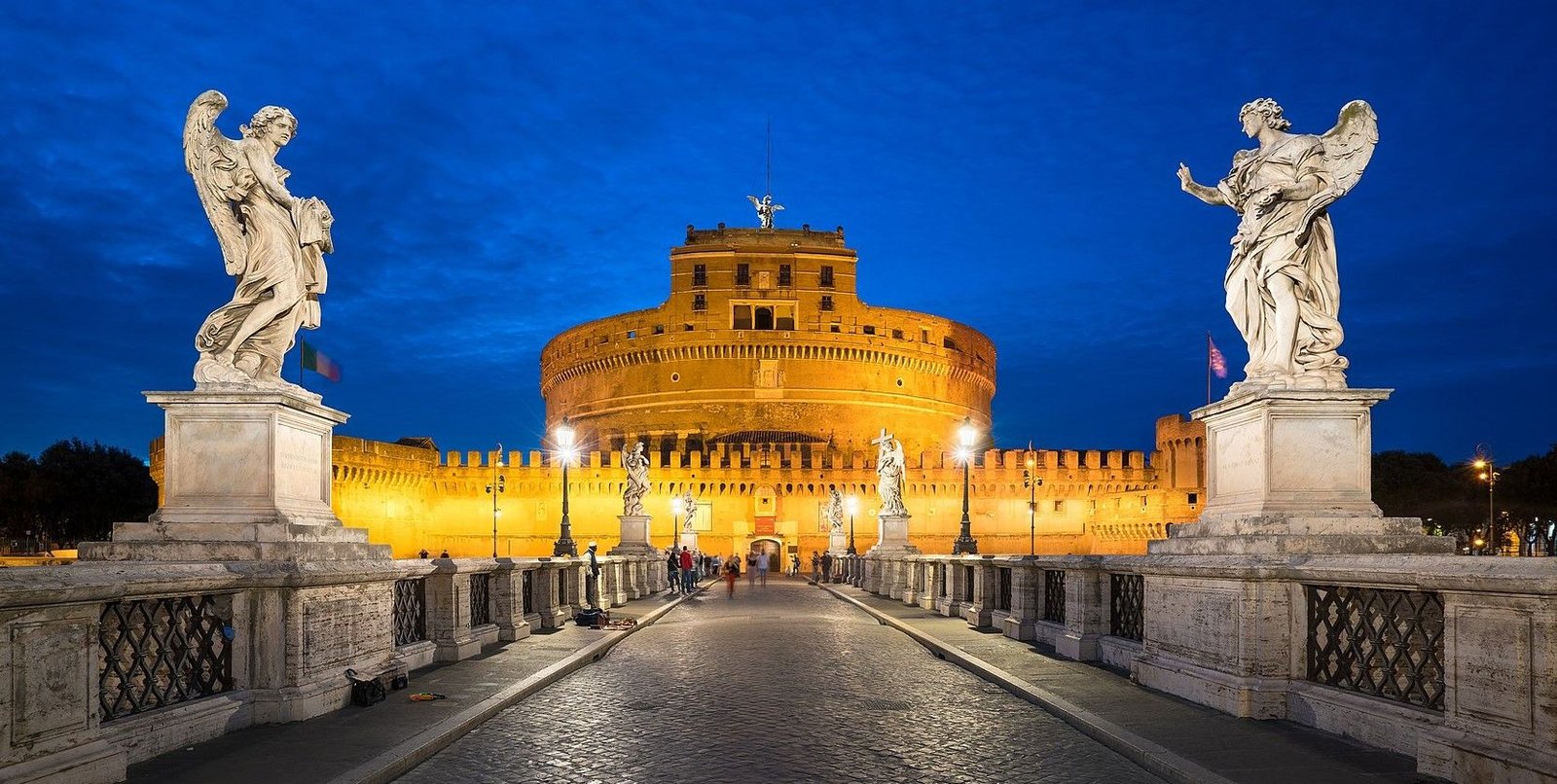
The spectacular view of Castel Sant’Angelo from the bridge over the Tiber 📱🔄️ introduces one of the most charming itineraries in Rome. Between the charm of the Rione Borgo and the panoramic views of the Gianicolense.
See also:
- Back to Complete Tour 2
- Guide to Rome
- Itineraries: 1d, 3d, CT1
- See: Attractions
- Do: Experiences
- Eat: Where and What
- Getting Around, Pass, Stay
Route Description
This itinerary covers approximately 8.8 km on foot in total, connecting the Rione Borgo, the historic heart of the Vatican area, with the Gianicolo and the Gianicolense district. Along the way, you’ll discover some of the most charming places in western Rome, with a total visit time of approximately 12 hours, divided over 2 days.
Day 1
The first day explores the charm of the Rione Borgo, starting from the majestic St. Peter’s Square and continuing to the historic fortress of Castel Sant’Angelo, one of Rome’s most iconic landmarks, overlooking the Tiber and the picturesque Ponte Sant’Angelo.
🚩 The Google Maps itinerary is set to walking mode, ideal for visiting the Rione Borgo, where the main attractions of the first day are concentrated within approximately 2.2 km, making them easy to explore on foot through squares, monuments and historic sites.
Day 2
The second day is dedicated to the panoramic viewpoints and green spaces of the Gianicolo and Gianicolense, including the spectacular Passeggiata del Gianicolo, renowned for its breathtaking views over the city, and the historic Villa Doria Pamphilj, one of Rome’s largest and most beautiful historic parks.
🚩 This second part of the itinerary covers approximately 4.8 km on foot through the Gianicolense. If you prefer to travel by car or public transport, you can easily change the navigation mode directly from the Google Maps panel.
RIONE BORGO and GIANICOLENSE
- Open Route Map 📍
- Distance: 8.8* km on foot
- Walking time: 2 hr 05 min*
- Visit duration: 12 hours, evenly distributed over 2 days
- Stops: 10 main (X → I)* + 12 secondary
- Piazza San Pietro (X) → Museo Storico dell’Arma dei Carabinieri (A) → Castel Sant’Angelo (B) → Palazzo dei Penitenzieri (C) → Leonardo da Vinci Experience (D) → Orto Botanico di Roma (E) → Fontana dell’Acqua Paola (F) → Chiesa di San Pietro in Montorio (G) → Basilica di San Pancrazio (H) → Villa Doria Pamphilj (I)
- For days, times, prices and other info see Itinerary Table 📊
* These values may differ from those shown on Google Maps, as they are continuously recalculated in real time. See also Itinerary Info and Navigator + See here for Shared Stop 🧩
Steps Details
📌 All the stops summarized here are structured in the Itinerary Table 📊 with days, opening hours, prices, and Wikipedia 🌐 and Google Maps insights.
Day 1
⬇️ starting point
X. St. Peter’s Square
We begin at the majestic St. Peter’s Square, one of the symbolic places of Christianity and one of the world’s most famous squares. Designed by Gian Lorenzo Bernini in the 17th century, with its impressive colonnade and the view of St. Peter’s Basilica, it is one of the most evocative starting points for discovering the historic heart of the Vatican and the Rione Borgo.
✨ The first view of Bernini’s colonnade and St. Peter’s Basilica offers one of the world’s most iconic scenes, immediately conveying the grandeur and magnificence of Rome.
❌ During peak season and major religious celebrations, visitor numbers can increase significantly. For a quieter experience, it is best to arrive early in the morning.
⬇️
A. Museo Storico dell’Arma dei Carabinieri
Continue to the Museo Storico dell’Arma dei Carabinieri, home to an extensive collection of memorabilia and historical exhibits dedicated to the Carabinieri, offering a unique insight into the history of Italian law enforcement.
⬇️
B. Castel Sant’Angelo
Your next stop is Castel Sant’Angelo, one of Rome’s most fascinating monuments. Originally built as the mausoleum of Emperor Hadrian, it was transformed over the centuries into a military fortress, a papal refuge and a prison. Today it houses a museum featuring historic rooms and panoramic terraces.
✨ Climbing to the terraces of Castel Sant’Angelo rewards you with one of the most spectacular panoramic views of Rome, overlooking the Tiber, Ponte Sant’Angelo and the dome of St. Peter’s Basilica.
Also cross the picturesque Ponte Sant’Angelo, adorned with its famous Baroque angel statues, visit the Parco della Mole Adriana, and admire the imposing building of the Supreme Court of Cassation.
✨ Walking across Ponte Sant’Angelo among the angel statues creates one of the most scenic moments of the itinerary, with a unique view of Castel Sant’Angelo and the Tiber.
📌 Visits to Castel Sant’Angelo require a reservation. You can find the phone number in the Google Maps listing accessible via the link in the table.
Book one of the recommended experiences here:
✅ Castel Sant’Angelo: Priority Entry Ticket and Optional Audio Guide
✅ Castel Sant’Angelo: Admission Ticket + Audio Guide App
✅ Castel Sant’Angelo Entry Ticket and Optional Tour
✅ Guided Tour of the Secrets Beneath Castel Sant’Angelo
⬇️
C. Palazzo dei Penitenzieri
Not far from Castel Sant’Angelo stands the Palazzo dei Penitenzieri, renowned for its Ceiling of the Demigods, a Renaissance masterpiece filled with mythological details that will delight art history enthusiasts.
📌 The Palazzo dei Penitenzieri and its Ceiling of the Demigods can be visited by appointment. You can find the phone number in the Google Maps listing accessible via the link in the table.
⬇️
D. Leonardo da Vinci Experience
End the day with a visit to the Leonardo da Vinci Experience, an interactive museum displaying faithful reproductions of Leonardo’s inventions and masterpieces. It offers a unique opportunity to appreciate the genius and vision of the great master.
Day 2
⬇️
E. Orto Botanico di Roma
Start the day with a green stop at the Orto Botanico di Roma, a peaceful oasis at the foot of the Gianicolo, rich in rare botanical species, themed gardens and charming corners such as the Japanese garden and its historic collections.
❌ If you have limited time, consider that the complete route requires around 90 minutes to be fully appreciated without rushing.
Afterwards, head to the Parco del Gianicolo, one of the best panoramic viewpoints in the city, where you can admire the Monumento a Giuseppe Garibaldi (National Monument) and the charming Faro del Gianicolo.
✨ Every day, from the Gianicolo, a cannon shot announces midday in Rome: a historic tradition that began in the 19th century and is still respected today, offering visitors a curious and fascinating experience connected to the city’s life.
💡 The cannon is fired at 12:00 from the Gianicolo terrace. If you would like to witness this particular Roman tradition, plan your itinerary considering the scheduled time.
⬇️
F. Fontana dell’Acqua Paola
Descending from the Gianicolo, stop at the Fontana dell’Acqua Paola, known as “Er Fontanone”, one of Rome’s most famous monumental fountains, also made renowned by its spectacular panoramic position overlooking the city.
⬇️
G. Chiesa di San Pietro in Montorio
Continue towards the Chiesa di San Pietro in Montorio, built on the site where, according to tradition, the martyrdom of Saint Peter took place. In the courtyard of the complex you will find the famous Tempietto del Bramante, considered one of the absolute masterpieces of Italian Renaissance architecture for its harmony and geometric perfection.
⬇️
H. Basilica di San Pancrazio
Then explore the Basilica di San Pancrazio, an important place of worship surrounded by the greenery of the Gianicolense district, and visit the Catacombe di San Pancrazio, a fascinating testimony of ancient Christian Rome, with underground environments linked to the history of the first centuries of Christianity.
📌 Visiting the Catacombe di San Pancrazio requires mandatory reservation. You can find the phone number in the Google Maps listing accessible via the link in the table.
⬇️
I. Villa Doria Pamphili
End the itinerary at Villa Doria Pamphili, one of the largest and most fascinating historic parks in Rome, where you can walk among Italian gardens, green areas and scenic tree-lined avenues, while admiring the charming Casino del Bel Respiro, one of the most elegant architectural features of the complex.
❌ As it is a very large park, visiting it can extend the itinerary time: if you have a shorter schedule, it is advisable to focus on the main areas.
Dinner
After admiring the attractions of the Rione Borgo and the views from the Gianicolo, it is time to enjoy another typically Roman experience: a dinner featuring the traditional flavours of the Capital’s cuisine. Here are some specialities not to be missed:
- Filetti di baccalà fritti, one of the most characteristic Roman traditional appetizers, crispy on the outside and soft inside;
- Spaghetti alla gricia, a great Roman classic prepared with guanciale, pecorino cheese and pepper, considered the “ancestor” of carbonara;
- Saltimbocca alla romana, a speciality of Roman cuisine based on veal, cured ham and sage;
- Maritozzo, the quintessential Roman dessert, perfect for ending the evening with a traditional touch.
To taste these specialities, you can choose some restaurants in the area and nearby districts, such as L’Arcangelo, appreciated for its traditional Roman cuisine and located near the Vatican, Checco er Carettiere, a historic Roman trattoria in the heart of Trastevere, or Antico Arco, overlooking the Gianicolo and ideal for dinner after enjoying the panoramic views of the area.
For a complete overview of where and what to eat in Rome, visit our dedicated guides: Where to eat in Rome and What to eat in Rome.
Sleeping
For this itinerary to discover the Rione Borgo, the Gianicolo and the Gianicolense, the best area to stay is Prati and San Pietro, ideal for starting the visit from Piazza San Pietro and comfortably reaching the main attractions along the route. This location also allows you to experience the charm of the Vatican during the quieter hours, when the area becomes less crowded after the daytime tourist flows.
An excellent alternative is the Rione Borgo, perfect for those who want to stay just a few steps from Castel Sant’Angelo, Ponte Sant’Angelo and Basilica di San Pietro, with the possibility of starting the itinerary directly on foot.
For those who prefer a more authentic and lively atmosphere in the evening, the Trastevere area is an excellent choice: located at the foot of the Gianicolo, it allows easy access to the hilltop viewpoints and offers numerous traditional restaurants and venues where you can continue your Roman experience after the visit.
For more information on where to stay in the city, you can consult our dedicated guide: Where to sleep in Rome: Info and Tips.

📊 Itinerary Table
In the table below you will find all the attractions included in the itinerary, to enhance and better guide your visit.
- Scroll the table down and to the right 📱🔄 Rotate your phone horizontally to get an overview of opening days, hours, prices of attractions, and for further details on Wikipedia 🌐 and Google Maps ➡️.
- ⚠️ Always check the opening days and hours of attractions through the Google Maps entries linked in the table. See also Itinerary Info.
- To see the explanation of each data column, click its title (e.g. Attractions Index, Ratings, Org, etc.) at the top of the table.
⏳ Caricamento tabella in corso…
📌 This table is updated every 6–12 months.
🛡️ The tables on Tourplan360.com are original content protected by copyright © and monitored through anti-plagiarism tracking systems.
FAQ
You can open the Route Map📍 also from here. Alternatively, you can consult the dedicated section with all the details.
📌 See the Route Description
How long does it take to visit the Rione Borgo and Gianicolense?
The itinerary allows you to visit the main attractions in about 12 hours, divided into 2 days.
Can this Rione Borgo and Gianicolense itinerary be done on foot?
Yes. The route is set in pedestrian mode and covers approximately 8.8 km on foot, connecting the main attractions between the Vatican, the Gianicolo and the Gianicolense district.
📌 See also Getting around Rome
Is it worth booking the main attractions in advance?
Yes. Some attractions along the route have limited availability or can be very busy: booking in advance is recommended to better organise your visit.
📌 See also Experiences in Rome
Is it possible to do this itinerary in one day?
Yes. In one day, it is possible to visit only the main attractions. You can adapt the route according to the time available and your interests.
Where can I find opening days, times and ticket prices for the attractions?
All updated information is available in the dedicated itinerary table, which also includes direct links to Google Maps ➡️ and Wikipedia 🌐 for each attraction.
📌 See the Itinerary Table 📊
See also
- Back to Complete Tour 2
- Complete Tour 1
- Rome in 1 day
- Rome in 3 days
- Guide to Rome
- Itineraries: 1d, 3d, CT1, CT2
- See: Attractions
- Do: Experiences
- Eat: Where and What
- Getting Around, Pass, Stay
Other Destinations
🔐 Some images on this page are used under Creative Commons licenses:
By Richard Nevell – Naples, panoramic view of the city and Mount Vesuvius – Own work – CC BY-SA 4.0 – Wikimedia Commons
By PROPOLI87 – Florence, panorama from Piazzale Michelangelo – Own work – CC BY-SA 4.0 – Wikimedia Commons
By Luca Aless – Venice, panoramic view of Doge’s Palace and St. Mark’s Campanile – Own work – CC BY-SA 4.0 – Wikimedia Commons
By Thomas Wolf, www.foto-tw.de – Il Ponte e Castel Sant’Angelo visti di sera – Opera propria – CC BY-SA 3.0 – Wikimedia Commons

