
Rome, Rione Campitelli: what to see and complete itinerary
Travel guide, opening hours, prices, map


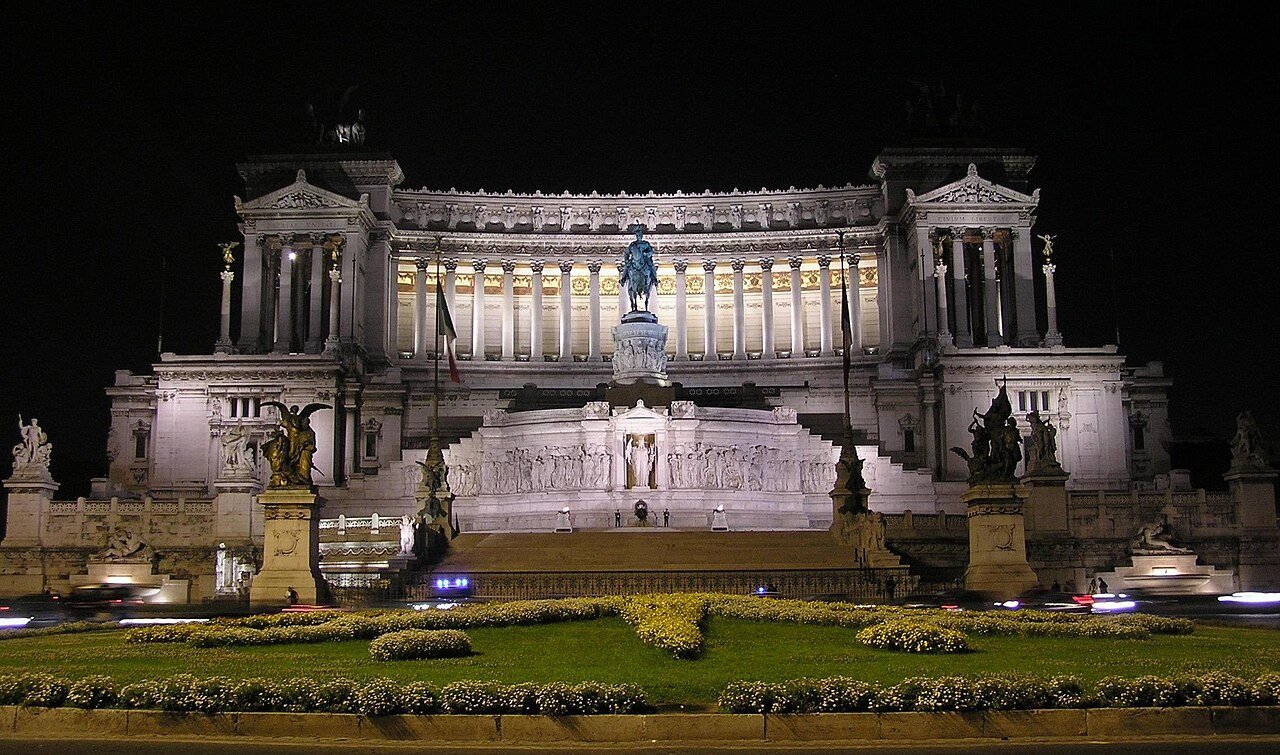
With the suggestive shot of the Altare della Patria and Vittoriano, masterfully illuminated in the night version 📱🔄️, we begin exploring the attractions of the Rione Campitelli, in the heart of Rome.
See also:
- Back to Complete Tour 2
- Guide to Rome
- Itineraries: 1d, 3d, CT1
- See: Attractions
- Do: Experiences
- Eat: Where and What
- Getting Around, Pass, Stay
Route Description
This 2-day itinerary leads you to discover the Rione Campitelli, in the heart of Rome, along a walking route of just 2 km that winds through some of the city’s most fascinating places, with an estimated visiting time of around 7 hours per day.
Among the most interesting attractions of the first day are the prestigious Galleria Doria Pamphilj, famous for its extraordinary collection of artworks, alongside the Galleria Colonna, and the Palazzo Venezia, which houses important testimonies of Italian history and art.
The second day is instead dedicated to the great symbols of the district, such as the Monumento a Vittorio Emanuele II – Vittoriano, the spectacular Piazza del Campidoglio, an urban masterpiece designed by Michelangelo, and the prestigious Musei Capitolini, considered the oldest public museum in the world.
RIONE CAMPITELLI
- Open Route Map📍
- Distance: 2* km on foot
- Time: 0.29* min. on foot
- Visit duration: 14 hours evenly distributed over 2 days
- Stops: 10 main ones (X → I)* + 19 secondary ones
- Palazzo e Galleria Colonna (X) → Museo delle Cere di Roma (A) → Galleria Doria Pamphilj (B) → Museo Nazionale di Palazzo Venezia (C) → Chiesa del Gesù (D) → Basilica di San Marco al Campidoglio (E) → Monumento a Vittorio Emanuele II – Vittoriano (F) → Basilica di Santa Maria in Aracoeli (G) → Piazza del Campidoglio (H) → Chiesa Santa Maria della Consolazione (I)
- For days, times, prices and other info see Itinerary Table 📊
* These values may differ from those shown on Google Maps, as they are continuously recalculated in real time. See also Itinerary Info and Navigator + See here for Shared Stop 🧩
Steps Details
📌 All the stops summarized here are structured in the Itinerary Table 📊 with days, opening hours, prices, and Wikipedia 🌐 and Google Maps insights.
Day 1
⬇️ starting point
X. Palazzo e Galleria Colonna
Begin your tour with the magnificent Palazzo Colonna, one of the oldest historic residences in Rome. Admire the splendid interiors, the decorated rooms and the Galleria Colonna, rich in Renaissance and Baroque artworks, and discover the history of the noble Colonna family, which played a central role in the history of the city.
✨ The Galleria degli Specchi is the most spectacular moment of the visit.
📌 The visit to Palazzo Colonna requires mandatory reservation. You can find the phone number in the Google Maps card accessible from the link in the table.
Book here one of the recommended experiences:
✅ Palazzo Colonna entrance ticket
✅ Tickets for Galleria Colonna
⬇️
A. Museo delle Cere di Roma
Just a few steps from Palazzo Colonna, the Museo delle Cere di Roma will surprise you with its realistic representations of historical and contemporary figures. From Caesar to Dante and modern personalities, it is the perfect place for an informal and entertaining break.
⬇️
B. Galleria Doria Pamphilj
Continue with the Galleria Doria Pamphilj, famous for its private art collection. The Galleria degli Specchi is an attraction in itself, with luxurious decorations reminiscent of the famous style of Versailles. Do not miss masterpieces by artists such as Caravaggio and Raphael, which make this collection an unmissable stop.
✨ A journey into the atmosphere of a true Roman aristocratic residence that has remained intact.
💡 The Galleria degli Specchi is one of the most surprising rooms along the route.
📌 The visit to Galleria Doria Pamphilj is available with reservation. You can find the phone number in the Google Maps card accessible from the link in the table.
Book here one of the recommended experiences:
✅ Reserved entrance to Palazzo Doria Pamphilj
✅ Palazzo Doria Pamphilj: Skip-the-line ticket
⬇️
C. Museo Nazionale di Palazzo Venezia
The Museo Nazionale di Palazzo Venezia awaits you with its exhibitions of Renaissance, medieval and Baroque art, including Italian and international works. The building itself, an ancient Renaissance palace, is an architectural masterpiece and a historic icon of Rome.
⬇️
D. Chiesa del Gesù
The Chiesa del Gesù is the first Baroque church in Rome and represents an influential architectural model for sacred art. Inside, you will find the spectacular Cappella del Sacro Cuore, decorated with marble and gilded stucco, and the Chapel of Sant’Ignazio di Loyola, featuring one of the most beautiful frescoes in the city.
⬇️
E. Basilica di San Marco al Campidoglio
End the first day with a visit to the Basilica di San Marco al Campidoglio, an ancient church that preserves treasures such as its golden ceiling and Byzantine mosaics. It is one of the oldest churches in Rome, founded in the 4th century, and represents an important testimony to Roman Christianity.
Day 2
⬇️
F. Monumento a Vittorio Emanuele II – Vittoriano
The second day begins with a visit to the majestic Monumento a Vittorio Emanuele II (National Monument), also known as the Vittoriano or Altare della Patria. Here you can explore its main attractions, including the panoramic elevator leading to the Terrazza delle Quadrighe, from which you can admire a spectacular view over the rooftops and monuments of Rome.
The visit continues with the Sacrario delle Bandiere delle Forze Armate and the Museo Centrale del Risorgimento, two places dedicated to national memory and the history of Italian unification, completing the experience inside one of the most important symbols of the Capital.
✨ Going up to the Terrazza delle Quadrighe offers one of the most spectacular panoramic views of Rome, with a unique perspective over the monuments of the historic centre.
💡 The elevator ride is one of the most fascinating experiences of the Vittoriano.
❌ To visit terraces and elevators without slowing down the itinerary, it is advisable to arrive early: during busy periods, waiting times can significantly extend the visit.
Book here one of the recommended experiences:
✅ Glass panoramic elevator with audio app
✅ Vittoriano with panoramic terrace and guided entrance to Palazzo Venezia
⬇️
G. Basilica di Santa Maria in Aracoeli
The Basilica di Santa Maria in Aracoeli is another masterpiece to discover. The Cappella Bufalini, famous for the frescoes by Pinturicchio, offers an extraordinary representation of the life of Saint Bernardino. The scenic Scalinata dell’Aracoeli, leading to the basilica, is an icon in itself. Inside, you will find the Biblioteca di Archeologia e Storia dell’Arte.
✨ Climbing the Scalinata dell’Aracoeli leads to one of the most fascinating churches of the Campidoglio, with an atmosphere far removed from the chaos of the city centre.
⬇️
H. Piazza del Campidoglio
Piazza del Campidoglio, designed by Michelangelo, is a Renaissance masterpiece. Here you can admire the Statue of Marcus Aurelius, the Cordonata Capitolina and the Musei Capitolini, which include the Palazzo dei Conservatori and the Palazzo Nuovo. It is the perfect square to explore the history and art of Rome, with a stop at the Villa Caffarelli and a visit to the Palazzo Senatorio.
✨ From the square opens one of the most beautiful views towards the Foro Romano.
❌ The Musei Capitolini require time: if visited carefully, they can take several hours, so evaluate the duration according to the time available.
📌 The Palazzo Senatorio is open to visitors upon request. You can find the phone number in the Google Maps card accessible from the link in the table.
Book here one of the recommended experiences:
✅ Musei Capitolini and multimedia video
✅ Musei Capitolini Tickets
⬇️
I. Chiesa Santa Maria della Consolazione al Foro Romano
Conclude the second day at the Chiesa Santa Maria della Consolazione al Foro Romano, a small Renaissance gem offering a splendid view over the Foro Romano. The church, known for its main altar, is the perfect place to end the tour immersed in the tranquillity and spirituality of ancient Rome.
Dinner
After a day discovering the wonders of the Rione Campitelli, among the Vittoriano, the Campidoglio and the ancient sites of Imperial Rome, the best way to end the itinerary is with dinner in a typical Roman trattoria or restaurant in the historic centre, where you can taste the great classics of Roman cuisine. Among the specialities not to be missed are:
- Supplì, the famous Roman appetiser with a stringy mozzarella centre, one of the most beloved specialities of Capitoline street food;
- Spaghetti alla carbonara, the iconic first course of Roman tradition, prepared with guanciale, eggs, pecorino romano cheese and black pepper;
- Abbacchio alla romana, the typical second course of Lazio cuisine, cooked with garlic, rosemary and Mediterranean herbs;
- Maritozzo, the quintessential Roman dessert, soft and filled with whipped cream, ideal for ending the dinner.
To taste these specialities, you can stop at some historic restaurants located near the Rione Campitelli, such as Da Armando al Pantheon, famous for traditional Roman cuisine just a few steps from the Pantheon, L’Arcangelo, appreciated for the quality of its Capitoline recipes, or Casa Coppelle, an elegant venue in the historic centre with a gastronomic proposal linked to Italian tradition.
For a complete overview of where and what to eat in Rome, visit our dedicated guides: Where to eat in Rome and What to eat in Rome.
Sleeping
For this 2-day itinerary to discover the Rione Campitelli, the best area to stay is the Centro Storico, between Piazza Venezia, the Pantheon, Piazza Navona and Campo de’ Fiori. This location allows you to easily reach the Vittoriano, the Campidoglio, the Musei Capitolini and the main attractions along the route on foot, minimising transfers.
An excellent alternative is the Monti district, one of the most characteristic areas of Rome, located a short distance from the Rione Campitelli and ideal for those who want to stay close to the Imperial Fora, the Colosseum and the main testimonies of ancient Rome.
For those who prefer to experience the atmosphere of the city even after sightseeing, the Centro Storico allows you to easily reach some of the most charming squares in Rome on foot, such as Piazza di Spagna, Fontana di Trevi and Piazza del Popolo, completing the Roman experience also during the evening hours.
For more information on where to stay in the city, you can consult our dedicated guide: Where to sleep in Rome: Info and Tips.

📊 Itinerary Table
In the table below you will find all the attractions included in the itinerary, to enhance and better guide your visit.
- Scroll the table down and to the right 📱🔄 Rotate your phone horizontally to get an overview of opening days, hours, prices of attractions, and for further details on Wikipedia 🌐 and Google Maps ➡️.
- ⚠️ Always check the opening days and hours of attractions through the Google Maps entries linked in the table. See also Itinerary Info.
- To see the explanation of each data column, click its title (e.g. Attractions Index, Ratings, Org, etc.) at the top of the table.
⏳ Caricamento tabella in corso…
📌 This table is updated every 6–12 months.
🛡️ The tables on Tourplan360.com are original content protected by copyright © and monitored through anti-plagiarism tracking systems.
FAQ
You can open the Route Map📍 also from here. Alternatively, you can consult the dedicated section with all the details.
📌 See the Route Description
How long does it take to visit the Rione Campitelli?
The itinerary allows you to visit the main attractions in about 14 hours, evenly distributed over 2 days with an average duration of 7 hours per day.
Can this Rione Campitelli itinerary be done on foot?
Yes. The route is entirely pedestrian and covers approximately 2 km on foot between the main attractions of Rome’s historic centre.
📌 See also Getting around Rome
Is it worth booking the main attractions in advance?
Yes. Some of the most important attractions of the Rione Campitelli require or recommend advance ticket reservations, especially during periods of higher tourist attendance.
- Altare della Patria e Vittoriano
- Galleria Doria Pamphilj
- Galleria Colonna
- Musei Capitolini
- Palazzo Venezia
📌 See also Experiences in Rome
Is it possible to do this itinerary in one day?
Yes. In one day, it is possible to visit only the main attractions. You can adapt the route according to the time available and your interests.
Where can I find opening days, times and ticket prices for the attractions?
All updated information is available in the dedicated itinerary table, which also includes direct links to Google Maps ➡️ and Wikipedia 🌐 for each attraction.
📌 See the Itinerary Table 📊
See also
- Back to Complete Tour 2
- Complete Tour 1
- Rome in 1 day
- Rome in 3 days
- Guide to Rome
- See: Attractions
- Do: Experiences
- Eat: Where and What
- Getting Around, Pass, Stay
Other Destinations
🔐 Some images on this page are used under Creative Commons licenses:
By Richard Nevell – Naples, panoramic view of the city and Mount Vesuvius – Own work – CC BY-SA 4.0 – Wikimedia Commons
By PROPOLI87 – Florence, panorama from Piazzale Michelangelo – Own work – CC BY-SA 4.0 – Wikimedia Commons
By Luca Aless – Venice, panoramic view of Doge’s Palace and St. Mark’s Campanile – Own work – CC BY-SA 4.0 – Wikimedia Commons
By Roberto Larcher (w:it:Utente:Larky) – Il Vittoriano di notte magnificamente illuminato – Opera propria – CC BY-SA 3.0 – Wikimedia Commons

