
Rome, Rione Esquilino: what to see and complete itinerary
Travel guide, opening hours, prices, map


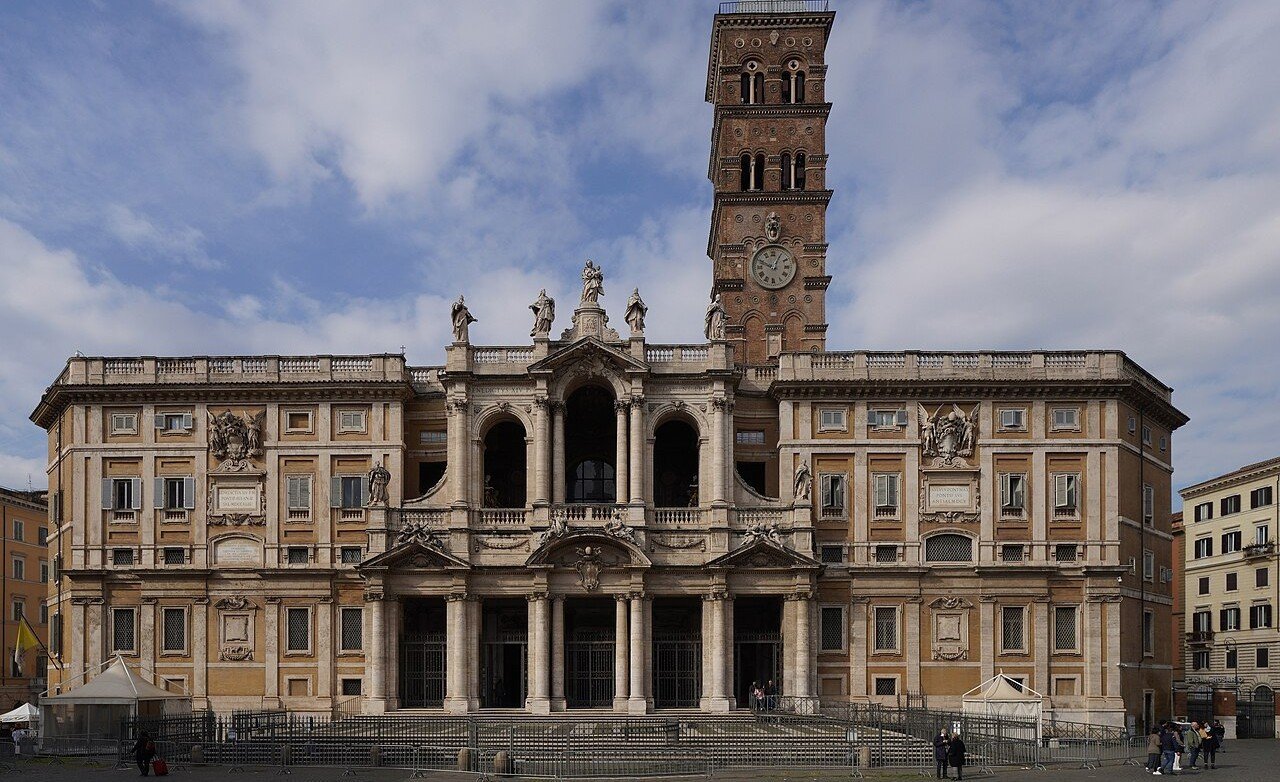
The Basilica di Santa Maria Maggiore shown above, one of the 4 Papal Basilicas, introduces this itinerary dedicated to discovering another of Rome’s hills, the Esquilino, and the district of the same name.
See also:
- Back to Complete Tour 1
- Guide to Rome
- Itineraries: 1d, 3d, CT2
- See: Attractions
- Do: Experiences
- Eat: Where and What
- Getting Around, Pass, Stay
Route Description
This itinerary in the heart of the Rione Esquilino will take you to discover one of the most fascinating districts of Rome. The walking route, approximately 4.7 km long, has an estimated visiting time of around 10 hours, spread over two days.
The highlight of the visit is the majestic Basilica di Santa Maria Maggiore, a UNESCO World Heritage Site. The itinerary also includes other places of great interest, such as the Basilica di San Clemente al Laterano, the Anfiteatro Castrense, a precious testimony of the Imperial era, and the lively Piazza Vittorio Emanuele II, where the mysterious Porta Alchemica is located.
RIONE ESQUILINO
- Open Route Map📍
- Distance: 4.7* km on foot
- Time: 1.06* min. on foot
- Visit duration: 10 hours evenly distributed over 2 days
- Stops: 10 main ones (X → I)* + 18 secondary ones
- Basilica di Santa Maria Maggiore (X) → Auditorium di Mecenate (A) → Basilica di San Clemente (B) → Museo Storico della Liberazione (C) → Camminamento delle Mura Aureliane (D) → Basilica di Santa Croce in Gerusalemme (E) → Terme Eleniane (F) → Chiesa di Santa Bibiana (G) → Nuovo Mercato Esquilino (H) → Piazza Vittorio Emanuele II (I)
- For days, times, prices and other info see Itinerary Table 📊
* These values may differ from those shown on Google Maps, as they are continuously recalculated in real time. See also Itinerary Info and Navigator + See here for Shared Stop 🧩
Steps Details
📌 All the stops summarized here are structured in the Itinerary Table 📊 with days, opening hours, prices, and Wikipedia 🌐 and Google Maps insights.
Day 1
⬇️ starting point
X. Basilica Papale di Santa Maria Maggiore
The itinerary begins with one of the most important monuments of Christianity: the Basilica di Santa Maria Maggiore (UNESCO World Heritage). Admire the mosaics, visit the Museo del Tesoro Liberiano (UNESCO World Heritage) and the archaeological excavations, for an immersive experience in the history of this ancient site.
The basilica overlooks Piazza di Santa Maria Maggiore, while in its apse area, you can admire the elegant Obelisco located in Piazza dell’Esquilino.
✨ Entering this basilica means admiring one of the most extraordinary masterpieces of Christianity, where art, faith and history have coexisted for more than sixteen centuries.
❌ Arrive in the early morning hours to visit it with greater tranquillity: during the central hours of the day, the flow of visitors can increase considerably.
Book one of the recommended experiences here:
✅ Priority entrance ticket for the Upper Areas of Santa Maria Maggiore
✅ Explore the Basilica di Santa Maria Maggiore and additional options
✅ Guided tour of the Basilica di Santa Maria Maggiore
⬇️
A. Auditorium di Mecenate
The Auditorium di Mecenate is a small theatre dating back to ancient Rome, commissioned by the famous Maecenas as a cultural space. Today it is possible to visit its remains and admire beautiful frescoes depicting garden scenes and idyllic landscapes.
📌 Visiting the Auditorium di Mecenate requires mandatory reservation. You can find the phone number in the Google Maps card accessible through the link in the table.
⬇️
B. Basilica di San Clemente al Laterano
Continue the itinerary with the Basilica di San Clemente al Laterano, one of the most surprising places in Rome due to its extraordinary historical stratification.
By descending into its underground areas, you can travel through almost two thousand years of history, moving from the medieval basilica to the remains of an earlier 4th-century church.
The route continues into the oldest areas, where you can admire the Roman buildings below, including an ancient mithraeum. A unique journey through time, where archaeology and spirituality meet in the heart of the city.
✨ Few places in Rome allow you to experience such a fascinating journey through the centuries.
❌ Dedicate enough time to the underground areas as well: limiting your visit only to the basilica means missing the most surprising part of the experience.
📌 Visiting the Underground Areas of the Basilica di San Clemente requires mandatory reservation. You can find the phone number in the Google Maps card accessible through the link in the table.
Book one of the recommended experiences here:
✅ Basilica di San Clemente: underground temples tour
✅ Guided tour of the underground areas and Basilica di San Clemente
⬇️
C. Museo Storico della Liberazione
The first day of the visit ends at the Museo Storico della Liberazione, which documents the Roman resistance and the suffering endured by the city during the Nazi occupation. This museum is an important historical testimony, preserving and honouring the more recent history of the city.
Day 2
⬇️
D. Camminamento delle Mura Aureliane
The second day of the itinerary begins with the Camminamento delle Mura Aureliane, where you can walk along one of the best-preserved sections of Rome’s ancient defensive walls. Continue through the Giardini di Viale Carlo Felice, a pleasant green area perfect for a short break, and reach the historic Porta Asinaria, one of the most important gates of the ancient city.
⬇️
E. Basilica di Santa Croce in Gerusalemme
The next stop is the Basilica di Santa Croce in Gerusalemme, an important place of worship that preserves relics connected to the Passion of Christ. You can also admire the ancient Anfiteatro Castrense and the nearby Piazza di Santa Croce in Gerusalemme.
✨ The Basilica di Santa Croce in Gerusalemme houses some of the most venerated relics of Christianity, making this place one of the most important pilgrimage destinations in Rome.
📌 The Anfiteatro Castrense can be visited upon request. You can find the phone number in the Google Maps card accessible through the link in the table.
⬇️
F. Terme Eleniane
The Terme Eleniane, built during the empire of Helena, mother of Constantine, offer a glimpse of the ancient Roman baths. Although only some fragments remain, they represent an interesting opportunity to imagine how daily and social activities took place in ancient Rome.
⬇️
G. Chiesa di Santa Bibiana
The Chiesa di Santa Bibiana is a small Baroque gem where you will find works by Bernini, who also created the statue of the saint here. It is an intimate place of rare beauty, perfect for discovering another aspect of Roman sacred art.
⬇️
H. Nuovo Mercato Esquilino
The penultimate stop of the second day takes you to the Nuovo Mercato Esquilino, a place where different cultures and traditions come together. Walking among its stalls, you can discover a more authentic side of Roman life, among Italian specialities, international products, spices, fruit and flavours from all over the world.
⬇️
I. Piazza Vittorio Emanuele II
The itinerary in the Rione Esquilino ends with Piazza Vittorio Emanuele II, one of the most characteristic places in the district, where you can admire the gardens and the archaeological remains of the mysterious Porta Alchemica, a testimony to the interest in alchemy during the 17th century.
Continue towards the Chiesa di Sant’Eusebio all’Esquilino, an ancient place of worship that preserves an intimate atmosphere, and finish your visit at the Museo Ninfeo, where the remains of the Horti Lamiani, the elegant imperial gardens of ancient Rome, come back to light.
Dinner
After a day discovering the Rione Esquilino, among historic basilicas, archaeological remains and hidden corners of ancient Rome, the best way to end the itinerary is with dinner in a typical Roman trattoria, where you can taste the authentic flavours of Roman cuisine. Among the specialities not to be missed are:
- Filetti di baccalà fritti, one of the most beloved Roman traditional starters, crispy on the outside and soft inside;
- Pasta alla gricia, one of the symbolic first courses of Roman cuisine, prepared with guanciale and pecorino romano;
- Abbacchio alla romana, a typical dish of Lazio cuisine based on lamb slowly cooked with garlic, rosemary and aromatic herbs;
- Maritozzo, the famous Roman dessert with its characteristic elongated shape, traditionally filled with whipped cream.
To taste these specialities, you can choose some historic Roman cuisine restaurants, such as L’Arcangelo, appreciated for the care given to traditional recipes, Da Armando al Pantheon, one of the best-known trattorias in the historic centre, or Checchino dal 1887, a historic Roman venue famous for its traditional dishes.
For a complete overview of where and what to eat in Rome, visit our dedicated guides: Where to eat in Rome and What to eat in Rome.
Sleeping
For this itinerary to discover the Rione Esquilino, the best area to stay is precisely the Esquilino district, between Basilica di Santa Maria Maggiore, Piazza Vittorio Emanuele II and Stazione Termini. This location allows you to easily reach the main stops of the route and move comfortably towards the rest of the city thanks to the numerous metro and bus connections.
An excellent alternative is the nearby Monti district, one of the most characteristic areas of Rome, ideal for those who wish to stay in an environment full of restaurants, venues and historic streets, while still remaining just a few steps from the Esquilino itinerary.
For those who prefer a more central location, the Centro Storico area also offers a valid solution: from here it is possible to easily reach the Esquilino district on foot or with short journeys, combining the visit to the district with the discovery of iconic places such as Fori Imperiali, Piazza Venezia and Fontana di Trevi.
For more information on where to stay in the city, you can consult our dedicated guide: Where to sleep in Rome: Info and Tips.

📊 Itinerary Table
In the table below you will find all the attractions included in the itinerary, to enhance and better guide your visit.
- Scroll the table down and to the right 📱🔄 Rotate your phone horizontally to get an overview of opening days, hours, prices of attractions, and for further details on Wikipedia 🌐 and Google Maps ➡️.
- ⚠️ Always check the opening days and hours of attractions through the Google Maps entries linked in the table. See also Itinerary Info.
- To see the explanation of each data column, click its title (e.g. Attractions Index, Ratings, Org, etc.) at the top of the table.
⏳ Caricamento tabella in corso…
📌 This table is updated every 6–12 months.
🛡️ The tables on Tourplan360.com are original content protected by copyright © and monitored through anti-plagiarism tracking systems.
FAQ
You can open the Route Map📍 also from here. Alternatively, you can consult the dedicated section with all the details.
📌 See the Route Description
How long does it take to visit the Rione Esquilino?
The complete Esquilino itinerary requires about 10 hours, evenly distributed over 2 days, to calmly visit basilicas, museums, archaeological areas and historic places of the district.
Can this itinerary be done on foot?
Yes. The route is entirely pedestrian and extends for approximately 4.7 km among the main attractions of the Rione Esquilino.
📌 See also Getting around Rome
Is it worth booking the main attractions in advance?
Yes. For some attractions, visiting through guided tours with advance booking is recommended:
📌 See also Experiences in Rome
Is it possible to do this itinerary in one day?
Yes, by selecting the main attractions and adapting the itinerary according to your interests and available time.
Where can I find opening days, times and ticket prices for the attractions?
All updated information is available in the dedicated itinerary table, where direct links to Google Maps ➡️ and Wikipedia 🌐 are also provided for each attraction.
📌 See the Itinerary Table 📊
See also
- Back to Complete Tour 1
- Complete Tour 2
- Rome in 1 day
- Rome in 3 days
- Guide to Rome
- See: Attractions
- Do: Experiences
- Eat: Where and What
- Getting Around, Pass, Stay
Other Destinations
🔐 Some images on this page are used under Creative Commons licenses:
By Richard Nevell – Naples, panoramic view of the city and Mount Vesuvius – Own work – CC BY-SA 4.0 – Wikimedia Commons
By PROPOLI87 – Florence, panorama from Piazzale Michelangelo – Own work – CC BY-SA 4.0 – Wikimedia Commons
By Luca Aless – Venice, panoramic view of Doge’s Palace and St. Mark’s Campanile – Own work – CC BY-SA 4.0 – Wikimedia Commons
By NikonZ7II– Roma, Basilica papale di Santa Maria Maggiore – Opera propria – CC BY-SA 4.0 – Wikimedia Commons

